
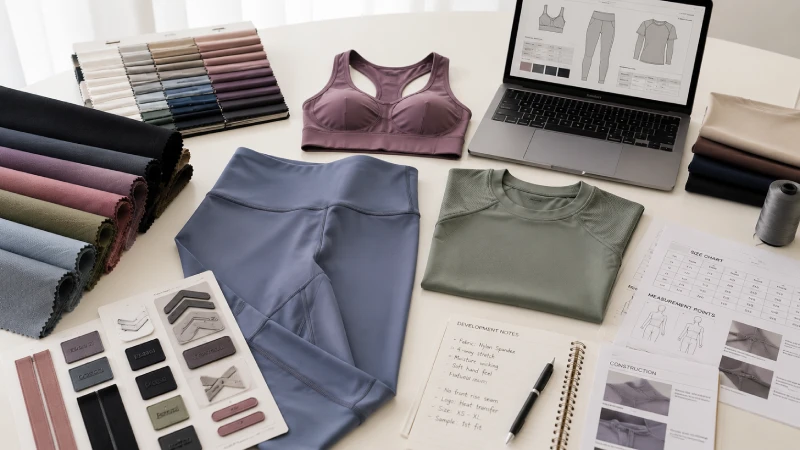
Choosing an activewear manufacturer is not the same as sourcing basic T-shirts or casual apparel. Activewear has to perform while the wearer moves, stretches, sweats, bends, trains, travels, and washes the garment repeatedly. A pair of leggings may look acceptable in a product photo but fail when stretched. A sports bra may look stylish but lack support. A gym top may feel soft at first but lose shape after washing.
This guide is written for overseas apparel brands, startup clothing brands, private label buyers, wholesalers, retailers, and sourcing managers who want to compare activewear manufacturers more carefully before placing an order. Instead of ranking suppliers or claiming that one manufacturer is the universal best choice, this article focuses on practical sourcing decisions: supplier type, fabric selection, MOQ, sampling, customization, quality control, documentation, and red flags.
If you are building a custom activewear line, you may eventually need support from a manufacturer such as Seetime Luxury, a China-based OEM/ODM/private label apparel manufacturer offering Activewear Manufacturer, Sportswear Manufacturer, Fabric & Material Sourcing, Custom Printing, Embroidery, Low MOQ Clothing Manufacturing, sample development, and full-package production. But before contacting any supplier, it is important to understand what you should compare and what risks you should avoid.
What Type of Activewear Supplier Do You Actually Need?
Many sourcing problems begin because buyers use the word “manufacturer” too broadly. In activewear sourcing, a wholesaler, trading company, ODM factory, OEM factory, and full-package manufacturer can all appear similar online, but they serve different business needs.
If you only want ready-made gym clothing with minimal branding, a wholesaler may be enough. If you want existing styles with your own logo, colors, labels, and packaging, an ODM or private label supplier may be more suitable. If you have original designs, size charts, fabric requirements, and performance details, you likely need an OEM activewear manufacturer. If you need help from concept to bulk production, including fabric sourcing, sampling, trims, labels, packaging, and export coordination, a full-package manufacturer may be the better fit.
| Supplier Type | Best For | Customization Level | Main Advantage | Main Limitation |
|---|---|---|---|---|
| Wholesaler | Quick product testing | Low | Fast access to ready-made styles | Limited originality and branding control |
| ODM Manufacturer | Startup collections using existing styles | Medium | Faster launch than full custom development | Style uniqueness may be limited |
| OEM Manufacturer | Original designs and tech-pack-based production | High | Better control over fit, fabric, and construction | Requires clearer specifications |
| Private Label Manufacturer | Branded activewear collections | Medium to high | Labels, logo, packaging, and brand presentation | Depends on supplier’s development depth |
| Full-Package Manufacturer | Buyers needing end-to-end support | High | Fabric, sampling, branding, packaging, and production coordination | Requires more planning and communication |
This distinction matters because activewear is performance-driven. A supplier that can produce basic blank T-shirts may not be able to handle squat-proof leggings, supportive sports bras, compression tops, or high-stretch seams. Before requesting quotes, define whether you need speed, low MOQ, custom branding, product originality, or technical development.
A Practical Buyer Decision Framework
A useful way to evaluate activewear manufacturers is to ask five questions before comparing prices.
First, what is the technical difficulty of your product? Gym tanks and training T-shirts are usually less complex than leggings, sports bras, or compression wear. Second, how original does your design need to be? If you can work from existing patterns, ODM may be efficient. If you need your own fit and construction, OEM is more suitable. Third, how important is fabric performance? For leggings, sports bras, and compression apparel, fabric is not just a material choice; it defines the product experience.
Fourth, how much branding control do you need? Private label buyers should consider neck labels, wash labels, hang tags, packaging, logo methods, barcode stickers, and retail presentation. Fifth, what risk level can your brand accept? A first-time startup may prefer lower MOQ and simpler designs, while an established brand may prioritize consistency, scalability, stronger QC systems, and repeat-order stability.
A simple decision rule is this: the more performance-sensitive the product, the more carefully you should evaluate the manufacturer’s fabric knowledge, sampling process, and quality control standards.
Product-Specific Activewear Sourcing Challenges
Activewear covers many product categories, and each category has different manufacturing risks.
Leggings and yoga pants are among the most demanding items. Buyers should focus on four-way stretch, opacity, stretch recovery, waistband stability, gusset construction, and seam comfort. A fabric may look thick when relaxed but become transparent when stretched. This is why squat-proof testing, movement testing, and sample fitting are important before bulk production.
Sports bras require another level of attention. Support level, elastic quality, lining, padding, strap shape, underband tension, and size grading all influence comfort and performance. A sports bra is not simply a cropped top. If the factory does not understand support categories and fit balance, bulk production can lead to inconsistent sizing or poor wearer comfort.
Gym tops, tanks, and training T-shirts seem simpler, but they still require activewear-specific thinking. Breathability, moisture control, fabric recovery, shrinkage, and print durability should be checked. If the garment uses mesh panels, raglan sleeves, contrast stitching, or heat-transfer logos, these details should be confirmed during sampling.
Joggers, shorts, and tracksuits often involve waistband elasticity, drawcord quality, pocket construction, rib cuffs, fabric weight, and color matching across top and bottom pieces. For athleisure collections, the challenge is balancing performance, comfort, and everyday styling.
| Product Category | Key Sourcing Challenge | What Buyers Should Verify |
|---|---|---|
| Leggings / Yoga Pants | Opacity, stretch recovery, waistband stability | Squat test, fabric composition, gusset, seam comfort |
| Sports Bras | Support, elastic quality, size grading | Support level, lining, strap construction, fit sample |
| Gym Tops / Tanks | Breathability, shrinkage, logo durability | Fabric hand feel, print method, wash performance |
| Shorts / Joggers | Waistband, pocket, drawcord, fit | Elastic recovery, stitching, size chart, trims |
| Tracksuits / Sets | Fabric consistency and color matching | Dye lot, fit balance, packaging details |
| Compression Wear | Tension, comfort, seam strength | Stretch ratio, recovery, movement testing |
Fabric and Material Considerations
Fabric is one of the biggest reasons activewear suppliers differ in quality. Common activewear materials include polyester/spandex blends, nylon/spandex blends, cotton blends, ribbed stretch fabric, mesh, brushed fabrics, and lightweight performance fabrics. Each option affects hand feel, stretch, compression, breathability, durability, and cost.
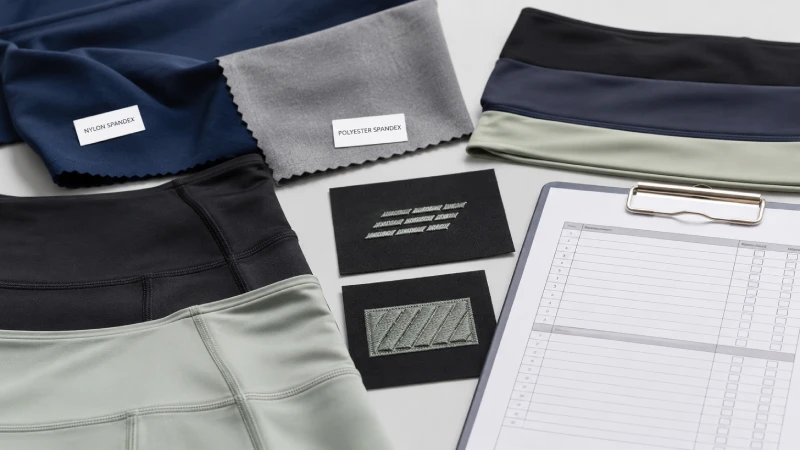
Nylon/spandex fabrics are often selected for a softer hand feel and stretch performance. Polyester/spandex fabrics may be used for training tops, teamwear, and moisture-management applications. Cotton blends may work better for athleisure or lifestyle-focused activewear, but they may not offer the same performance as synthetic stretch fabrics. Ribbed activewear fabric can create a fashionable texture, but buyers should check recovery and stability carefully.
A strong supplier should be able to explain fabric composition, weight, stretch direction, hand feel, and suitable product use. Vague descriptions such as “premium sports fabric” or “high-quality stretch material” are not enough. Buyers should request actual fabric details and physical samples before approving production.
For U.S.-focused private label brands, label planning should not be treated as a last-minute packaging detail. The FTC textile labeling guidance explains that textile labels must identify fiber content, country of origin, and the responsible company name or RN for many textile products. For brands selling into the EU, the Your Europe textile label guidance notes that textile fiber names used on labels must follow the approved EU list.
Soft CTA: If you are unsure which fabric is suitable for leggings, gym tops, sports bras, or athleisure sets, Seetime Luxury’s Fabric & Material Sourcing support can help compare practical fabric options before sampling.
Customization: Logo, Labels, Printing, Embroidery, and Packaging
Customization is where many activewear projects become more complex than expected. A logo on stretch fabric must move with the garment. A print that works well on a cotton T-shirt may crack, peel, or distort on leggings or compression wear. Buyers should compare heat transfer, screen printing, silicone logo, embroidery, woven labels, heat-sealed labels, hang tags, and custom packaging based on product use.
Heat transfer can be clean and flexible, but durability should be tested. Screen printing may work well for tops but should be evaluated carefully on high-stretch areas. Silicone logos can create a premium activewear feel, but the buyer should confirm placement and flexibility. Embroidery can work for hoodies, athleisure pieces, polos, joggers, and some outer layers, but it may not be ideal for tight compression areas.
Private label buyers should also think beyond the visible logo. Neck labels, care labels, size labels, hang tags, barcode stickers, poly bags, and carton markings all affect brand presentation and fulfillment efficiency. Care instructions should also be considered early. ISO describes care labelling symbols as a system for communicating the most severe treatment that should not cause irreversible damage to textile articles, and buyers can review the ISO 3758 care labelling standard page when planning care label systems for international markets.
Relevant internal links may include Private Label Clothing Manufacturing, Custom Printing, Embroidery, and Full-Package Clothing Production.
MOQ, Sampling, Pricing, and Lead Time Considerations
MOQ for activewear depends on more than the factory’s general policy. It can change based on fabric availability, color quantity, size range, custom dyeing, trims, logo method, packaging, and whether the style is based on an existing pattern or a fully custom design.
Low MOQ can be useful for startup brands, but it usually involves trade-offs. A small order may need to use stock fabrics, standard trims, limited colors, or simpler branding methods. A fully custom fabric, special color, unique elastic, or complex pattern may require a higher commitment. This does not mean low MOQ is impossible; it means buyers should understand what is flexible and what is not.
Sampling should not be skipped. For activewear, samples help verify fabric feel, fit, stretch, opacity, stitching, logo durability, and packaging. A normal sample process may include a prototype, fit sample, size set sample, and pre-production sample, depending on product complexity. Buyers should not approve bulk production only from digital mockups.
Pricing should be compared only when the specification is the same. If one supplier quotes with stock fabric and basic packaging while another includes custom labels, upgraded fabric, logo testing, and packaging, the unit price is not directly comparable.
| Cost Factor | Why It Matters | Buyer Question to Ask |
|---|---|---|
| Fabric composition | Impacts stretch, comfort, opacity, and cost | What is the exact fabric composition and weight? |
| Order quantity | Affects unit cost and production planning | Is MOQ based on style, color, or size? |
| Logo method | Affects durability and appearance | Is this method suitable for stretch fabric? |
| Sampling rounds | Reduces bulk production risk | How many sample revisions are available? |
| Packaging | Affects branding and fulfillment | Are labels, hang tags, and bags included in the quote? |
| QC requirements | Impacts consistency and risk control | What checks are performed before shipment? |
Lead time also depends on design complexity, fabric sourcing, sample revisions, production queue, custom trims, packaging, inspection, and shipping method. Instead of asking only “How fast can you deliver?”, buyers should ask what steps are included in the timeline.
Quality Control Checklist for Activewear Orders
Activewear quality should be checked through movement, stretching, washing, and fit evaluation. A garment that looks good on a table may not perform well during training.
Before approving bulk production, buyers should review:
- Fabric composition, weight, hand feel, and stretch recovery.
- Opacity under stretch, especially for leggings and biker shorts.
- Waistband stability and roll-down risk.
- Seam comfort and seam strength.
- Sports bra support level and elastic recovery.
- Measurement tolerance and size grading.
- Logo placement, flexibility, and wash durability.
- Color consistency across pieces and sets.
- Shrinkage and twisting after washing.
- Label, hang tag, packaging, and carton details.
For performance claims, it is better to rely on recognized testing language rather than supplier descriptions alone. AATCC publishes textile test methods covering areas such as liquid moisture management, colorfastness, dimensional changes after laundering, and vertical wicking, which can be useful reference points when buyers discuss performance testing with suppliers or third-party labs. See the AATCC standard test methods and procedures for examples of relevant textile testing categories.
For garments sold in the U.S., buyers should also be aware that clothing textiles may fall under flammability requirements. The U.S. eCFR page for 16 CFR Part 1610 states that the standard provides methods for testing and rating the flammability of clothing textiles and prohibits dangerously flammable clothing textiles.
Red Flags Before Placing an Order
A reliable activewear manufacturer should be able to communicate product details clearly. Be cautious if a supplier cannot explain fabric composition, avoids sample revisions, uses only generic product photos, or gives a price without confirming your design, size range, fabric, logo method, and packaging.
Another warning sign is an unrealistic promise. If a supplier says every custom option can be made at very low MOQ, very low price, and very fast timing, ask what is actually included. In many cases, the offer may be based on stock products, limited colors, or simplified branding.
Poor documentation is also a risk. Before paying a deposit, confirm the final fabric, color, size chart, measurement tolerance, logo artwork, label details, packaging method, production timeline, inspection process, payment terms, and shipping responsibilities in writing.
| Red Flag | Why It Matters | What Buyers Should Ask |
|---|---|---|
| Vague fabric descriptions | Fabric drives activewear comfort and performance | Can you provide composition, weight, stretch, and sample fabric? |
| No clear sampling process | Bulk production risk becomes higher | What sample stages are available before production? |
| Unrealistically low price | Important details may be excluded | What exactly is included in the quotation? |
| No size chart confirmation | Fit problems can affect the whole order | What tolerance and grading rules will be used? |
| Weak logo guidance | Prints may crack or peel on stretch fabric | Which logo method is suitable for this fabric? |
| Poor written documentation | Misunderstandings become harder to resolve | Can all approved details be confirmed in writing? |
When Seetime Luxury May Fit Your Activewear Project
Seetime Luxury may be relevant for buyers who need custom activewear production with OEM/ODM or private label support. Its service scope includes activewear, sportswear, custom T-shirts, polo shirts, hoodies, streetwear, fabric sourcing, custom printing, embroidery, low MOQ, sample development, and full-package production.
This does not mean every buyer should choose the same supplier. A brand that only needs ready-made blanks may prefer a wholesaler. A buyer with highly technical performance requirements may need deeper testing and development planning. But if your project involves custom styles, fabric selection, logo application, private label packaging, and sampling before bulk production, Seetime can be considered as one possible manufacturing partner to evaluate.
FAQ
كيف أختار مصنع الملابس الرياضية المناسب؟
ابدأ بمطابقة المورد مع تعقيد منتجك ونموذج عملك. تحقق مما إذا كان المصنع لديه خبرة في فئة منتجك، مثل اللياقين، حمالات الصدر الرياضية، قمم الجيم، الشورت، بنطلونات الجري، أو مجموعات الأثليج. ثم قم بتقييم مصادر الأقمشة، الكمية الدنيا للطلب، عملية العينات، خيارات التخصيص، مراقبة الجودة، التواصل، ودعم التصدير.
ما الفرق بين مصنع الملابس الرياضية وتاجر الجملة؟
عادةً ما يبيع تاجر الجملة منتجات جاهزة مع تخصيص محدود. يمكن للمصنع دعم الإنتاج المخصص، اختيار الأقمشة، تعديلات الأنماط، العلامات التجارية الخاصة، الشعارات، التعبئة والتغليف، والإنتاج بالجملة. إذا كنت تريد علامة تجارية فريدة للملابس الرياضية، فإن المصنع عادة ما يكون أكثر ملاءمة من تاجر الجملة.
هل يمكنني بدء علامة تجارية للملابس الرياضية بكمية دنيا منخفضة؟
نعم، لكن الكمية الدنيا المنخفضة تعمل بشكل أفضل عندما تختار تصاميم عملية، أقمشة متاحة، ألوان محدودة، وخيارات علامة تجارية قابلة للإدارة. التصاميم الأكثر تعقيدًا، الأقمشة المصبوغة حسب الطلب، الزركشة الخاصة، أو متطلبات الأداء المتقدمة قد تتطلب كميات أعلى.
ما الأقمشة المستخدمة عادة للملابس الرياضية؟
تشمل الخيارات الشائعة بوليستر/سباندكس، نايلون/سباندكس، قماش مطاطي مضلع، شبكة، أقمشة ممسوحة، قماش أداء خفيف الوزن، ومزيج القطن للأثليج. يعتمد الاختيار الصحيح على نوع المنتج، السعر المستهدف، مستوى الراحة، متطلبات الضغط، وتحديد موقع العلامة التجارية.
ما الذي يجب أن أفحصه في عينة الملابس الرياضية؟
تحقق من ملمس القماش، المرونة، الشفافية، المقاس، القياسات، راحة الدرز، ثبات حزام الخصر، متانة الشعار، وضع العلامة، وأداء الغسيل. بالنسبة للياقين، اختبر الحركة وشفافية القرفصاء. بالنسبة لحمالات الصدر الرياضية، تحقق من الدعم والراحة. بالنسبة للقمم، تحقق من الانكماش وجودة الطباعة.
هل يجب أن أختار التصنيع الأصلي أو التصنيع حسب التصميم للملابس الرياضية؟
اختر التصنيع الأصلي إذا كان لديك تصاميم أصلية، حزم تقنية، قياسات، ومتطلبات أقمشة محددة. اختر التصنيع حسب التصميم إذا كنت تريد إطلاق أسرع باستخدام أنماط موجودة مع تعديلات مثل اللون، الشعار، العلامات، والتعبئة والتغليف. تجمع العديد من مشاريع الملابس الرياضية ذات العلامات التجارية الخاصة بين أنماط التصنيع حسب التصميم والعلامة التجارية المخصصة.
هل يمكن لمصنعي الملابس الرياضية إضافة شعارتي وعلامتي التجارية الخاصة؟
يمكن لمعظم مصنعي الملابس الرياضية ذات العلامات التجارية الخاصة دعم تطبيق الشعار، علامات الرقبة، علامات الغسيل، علامات التعليق، التعبئة والتغليف، وعلامات الكرتون. ومع ذلك، تعتمد أفضل طريقة للشعار على مرونة القماش، نوع المنتج، حجم الشعار، والمتانة المتوقعة.
ما هي العلامات الحمراء الشائعة عند البحث عن مصنعي الملابس الرياضية؟
تشمل العلامات الحمراء الشائعة تفاصيل أقمشة غامضة، قواعد كمية دنيا غير واضحة، عدم وجود عملية عينات، جداول مقاسات مفقودة، تواصل ضعيف، تسعير غير واقعي، ضغط لتخطي الموافقة على العينة، وعروض أسعار لا تشرح ما هو مدرج.
Final CTA: Turning an Activewear Idea Into a Production-Ready Project
Choosing an activewear manufacturer is not only about finding a supplier that can sew garments. It is about finding a partner that understands fabric performance, fit, movement, branding, sampling, quality control, and production risk.
If you are planning a custom activewear collection and need support with product development, fabric selection, low MOQ sampling, custom logos, private labels, or full-package production, Seetime Luxury can help you review your project requirements and turn them into a clearer manufacturing plan.
Suggested CTA button: Discuss Your Activewear Project