
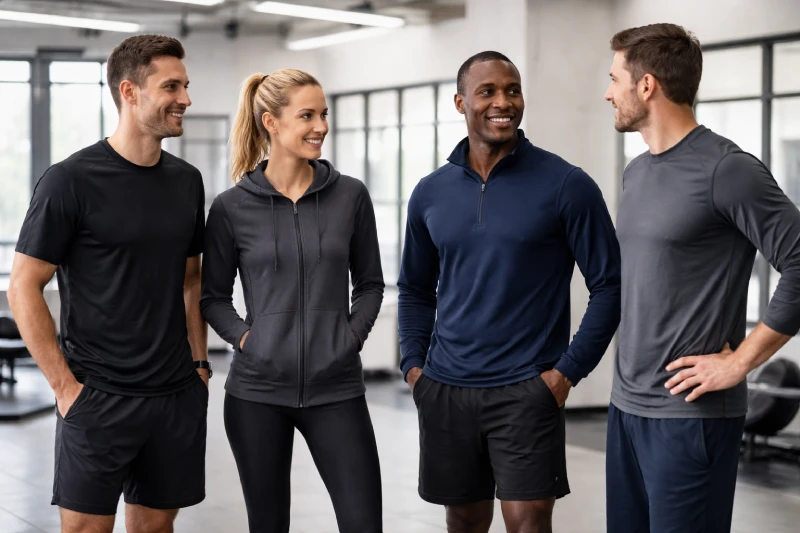
Selecting sportswear for team and gym programs is a procurement decision with long-term operational impact. Unlike consumer purchases, B2B sportswear buying must balance performance, durability, brand consistency, customization feasibility, and supply reliability—often across multiple product categories and user scenarios.
This buying guide is written for overseas B2B buyers working with custom apparel manufacturers. It is category-agnostic and applicable whether you are sourcing headwear, T-shirts, hoodies, activewear, or workwear-style sports apparel for structured programs such as sports teams, fitness chains, training institutions, or corporate wellness initiatives.
1. Clarify the Program Context Before Choosing Sportswear
Before evaluating fabrics or pricing, buyers should define how and where the sportswear will be used. This context determines nearly every downstream decision.
Key Questions to Answer Internally
- Is the program team-based, gym-based, or multi-location?
- Are wearers athletes, coaches, staff, or mixed roles?
- Is the apparel used daily, seasonally, or event-based?
- Will garments be worn indoors, outdoors, or both?
Why This Matters
- Team programs prioritize consistency, sizing accuracy, and replacement continuity.
- Gym programs emphasize wash durability, repeat ordering, and brand visibility.
- Corporate fitness or training programs often require a balance between athletic function and uniform appearance.
Defining the program context early prevents over-specification or under-engineering later in the buying process.
2. Establish Performance Requirements Across Categories
Sportswear performance expectations vary by category, but B2B buyers should evaluate them through a unified decision framework.
Core Performance Dimensions
| Dimension | What to Evaluate | Why It Matters |
|---|---|---|
| Breathability | Moisture management, ventilation | Comfort during extended use |
| Stretch & Recovery | Elasticity, shape retention | Fit consistency over time |
| Durability | Abrasion resistance, seam strength | Cost per wear |
| Weight | Fabric GSM, layering capability | Seasonal adaptability |
| Care Requirements | Wash temperature, shrinkage | Operational efficiency |
In B2B sportswear programs, performance requirements are often underestimated during early procurement discussions. Buyers frequently rely on supplier descriptions or material names, without fully evaluating how garments will perform under real operational conditions such as daily training, frequent washing, or extended wear.
For team and gym programs, performance should be assessed not only at the individual garment level, but also at the program level. For example, fabrics that feel comfortable during short-term testing may lose elasticity or breathability after repeated laundering. Similarly, garments designed for occasional sports use may not withstand continuous commercial usage in gyms or training centers.
A structured performance evaluation helps buyers avoid mismatches between design intent and actual use. By defining minimum acceptable performance thresholds—rather than aiming for the highest specification—procurement teams can balance durability, cost control, and wearer comfort across different apparel categories.
Category-Specific Notes
- T-Shirts & Polos: Focus on moisture control and wash stability.
- Sportswear & Activewear: Prioritize stretch, recovery, and sweat management.
- Hoodies & Sweatshirts: Evaluate warmth vs. bulk and pilling resistance.
- Headwear & Caps: Structure, ventilation, and shape retention matter more than stretch.
- Workwear-inspired sports apparel: Durability and safety compliance may override lightweight comfort.
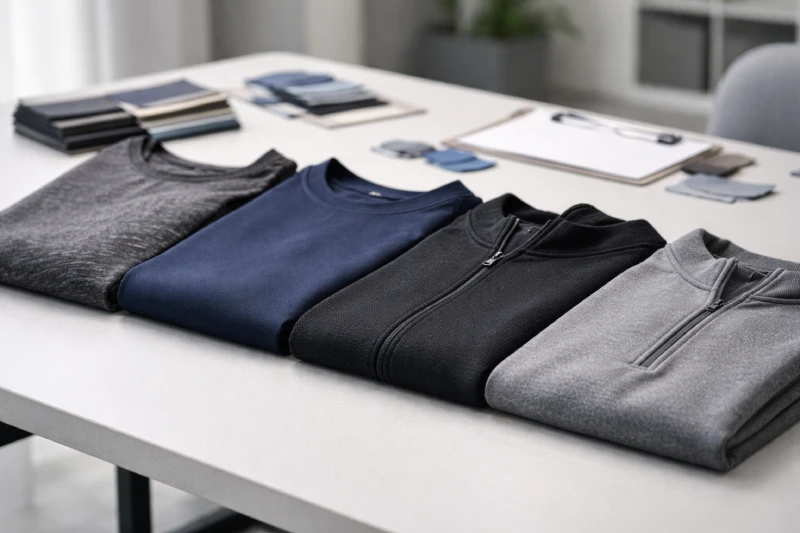
3. Fabric Selection: Think in Use Cases, Not Materials Alone
Many overseas buyers compare suppliers by fabric names alone. A better approach is to evaluate fabrics based on functional outcomes.
Fabric Decision Checklist
- Does the fabric support high-movement activities?
- Is it suitable for frequent industrial washing?
- Does it maintain appearance after repeated logo application?
- Can the same fabric be reordered consistently over time?
Cross-Category Fabric Considerations
- Caps vs. garments: Caps require structural stability; garments require drape and skin comfort.
- Layering pieces vs. base layers: Hoodies tolerate heavier fabrics; base layers require moisture control.
- Indoor gyms vs. outdoor teams: UV resistance and thermal regulation may differ.
One common risk in overseas sourcing is over-reliance on fabric composition alone. While material labels provide basic information, they rarely reflect how fabrics behave once cut, sewn, printed, and repeatedly washed. For sportswear programs, the same fabric may perform differently depending on garment construction, panel layout, and intended activity level.
From a procurement perspective, fabric selection should also consider supply continuity. Programs that require ongoing replenishment must ensure that selected fabrics are stable in long-term availability and color consistency. Changes in dye lots or material sourcing can create visible differences across production batches, affecting brand uniformity.
Evaluating fabrics through real-world use cases—rather than technical descriptions alone—helps reduce rework, disputes, and unexpected performance issues after deployment.
4. Fit Strategy and Size System Planning
Fit inconsistency is one of the most common causes of dissatisfaction in B2B sportswear programs.
Key Fit Decisions
- Standard size grading vs. custom size sets
- Gender-specific vs. unisex patterns
- Regional sizing adjustments for overseas markets
Risk Areas to Watch
- Activewear often fits tighter than casual garments.
- Caps require head-circumference accuracy; returns are difficult.
- Mixed-category orders increase complexity if size systems are not aligned.
Fit strategy becomes even more critical when sportswear programs span multiple regions or countries. Size expectations can vary significantly between markets, and a size set that works well in one region may cause dissatisfaction elsewhere. This is particularly relevant for activewear, where tighter fits can amplify perceived sizing issues.
For team-based or gym programs with ongoing staff turnover, buyers should also consider future onboarding needs. A well-planned size system simplifies reordering and reduces the need for ad-hoc adjustments. Investing time in fit validation during the first production cycle can prevent long-term complications and ensure consistency across future replenishment orders.
5. Customization Methods and Brand Application Logic
Customization is central to team and gym sportswear—but not all methods suit all categories.
Common Customization Options
| Method | Best For | Considerations |
|---|---|---|
| Screen Printing | T-shirts, hoodies | Cost-effective at scale |
| Heat Transfer | Activewear | Flexibility, breathability |
| Embroidery | Caps, polos | Durability, thickness |
| Woven Labels | All categories | Brand consistency |
Cross-Category Differences
- Stretch garments require flexible print methods.
- Caps and structured items limit placement areas.
- High-wash environments demand wash-resistant applications.
Buyers should align customization choices with fabric behavior and usage frequency, not just visual preference.
6. Bulk Ordering Strategy: MOQ, Assortments, and Risk Control
Bulk sportswear orders often involve multiple SKUs, sizes, and colors. Structuring the order correctly reduces risk.
MOQ Planning
- MOQs may differ by category, color, or customization method.
- Mixed orders (e.g. caps + garments) often have separate MOQ logic.
Assortment Planning Tips
- Prioritize core sizes with higher volume.
- Limit color variations in initial orders.
- Plan buffer quantities for replacement or onboarding.
Risk Mitigation Checklist
- Confirm MOQ per item, not per order.
- Validate color consistency across categories.
- Align reorder terms before first production.
Bulk ordering decisions often involve trade-offs between cost efficiency and operational flexibility. Lower MOQs can reduce upfront risk but may increase unit costs or limit customization options. Conversely, higher-volume commitments can unlock better pricing but require accurate demand forecasting.
For multi-category sportswear programs, buyers should assess MOQs at both the item and category level. Aligning order quantities with actual usage patterns—rather than distributing volumes evenly—helps optimize inventory flow and reduces excess stock. A structured bulk strategy supports both financial control and long-term program sustainability.
7. Lead Time and Production Scheduling for Programs
For team and gym programs, delivery timing is often non-negotiable.
Typical Lead Time Components
- Sampling and approval
- Customization setup
- Bulk production
- Quality inspection
- International logistics
Category-Driven Lead Time Differences
- Caps may require longer setup for structure and embroidery.
- Activewear may need additional testing for stretch prints.
- Multi-category programs require synchronized production planning.
Procurement teams should build in contingency time for first-time programs.
8. Quality Control Standards for Sportswear Programs
Quality expectations vary by buyer, but structured QC processes are essential for scale.
What to Define Upfront
- Fabric tolerance levels
- Logo placement deviation limits
- Size measurement allowances
- Packaging and labeling rules
Why QC Matters More in Programs
- Inconsistent items disrupt team uniformity.
- Replacements are harder once programs launch.
- Overseas returns are costly and slow.
A manufacturer with in-house QC capability is better positioned to support long-term programs.
9. Comparing Sportswear vs. General Apparel in B2B Programs
| Aspect | Sportswear Programs | General Apparel Orders |
|---|---|---|
| Usage Frequency | High | Moderate |
| Performance Needs | Critical | Secondary |
| Customization Stress | High | Medium |
| Reorder Sensitivity | High | Low–Medium |
| Fit Precision | Essential | Flexible |
Understanding this distinction helps buyers set realistic expectations with manufacturers.
10. Final Pre-Order Checklist for B2B Buyers
Before confirming a bulk sportswear order, review the following:
- Program use case clearly defined
- Performance requirements aligned to categories
- Fabric tested or validated
- Fit samples approved
- Customization method confirmed
- MOQ and assortments locked
- Lead time and delivery window agreed
- QC standards documented
Conclusion: A Structured Approach Leads to Reliable Programs
Choosing sportswear for team and gym programs is not about selecting individual products—it is about building a repeatable, scalable apparel system that supports performance, branding, and operations over time.
By focusing on decision logic rather than SKUs, overseas B2B buyers can reduce risk, control costs, and establish long-term partnerships with manufacturers capable of supporting multi-category sportswear programs.
If you are planning or optimizing a team or gym sportswear project, discussing your program structure, category mix, and customization goals with a manufacturer early can significantly improve outcomes.