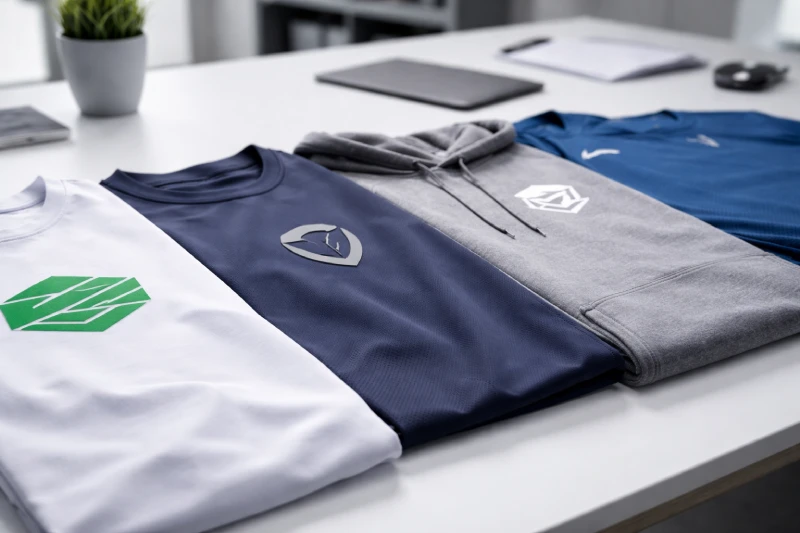
Logo application in sportswear and activewear is not a decorative choice—it is a functional production decision that directly affects garment performance, durability, compliance risk, and long-term brand consistency. For overseas B2B buyers managing bulk orders across multiple apparel categories, selecting the right logo printing method is as critical as choosing the fabric itself.
This guide provides a category-agnostic decision framework for evaluating logo printing options for sportswear & activewear, while remaining applicable to headwear, corporate garments, and workwear programs. It focuses on manufacturing logic, procurement risk, and scalability rather than specific SKUs or promotional claims.
Why Logo Printing Decisions Matter in Performance Apparel
Unlike lifestyle apparel, sportswear and activewear fabrics are engineered to perform. Stretch recovery, moisture management, breathability, and abrasion resistance must all remain intact after branding is applied.
When logo printing is selected without considering fabric behavior and end use, overseas buyers often encounter issues such as:
- Cracking or peeling logos after repeated washing
- Restricted stretch leading to wearer discomfort
- Reduced breathability in high-sweat zones
- Inconsistent logo appearance across production batches
- Higher rejection rates during quality inspection
Because international sourcing involves longer lead times and higher rework costs, logo printing mistakes are rarely easy—or inexpensive—to correct after production begins.
Core Logo Printing Technologies Used in Sportswear & Activewear
Understanding the functional trade-offs of each logo method allows buyers to screen options before sampling.
Screen Printing (Plastisol or Water-Based)
Best suited for:
- Large logo areas
- Medium to high production volumes
- Flat and dimensionally stable fabrics
Manufacturing considerations:
- Plastisol offers strong opacity but limits stretch
- Water-based inks improve hand feel but require precise curing
- Elastic additives may be needed for performance fabrics
Category notes:
- Common for T-shirts and sweatshirts
- Less suitable for compression wear or structured caps
Heat Transfer Printing (PU / Vinyl / Digital Transfer)
Best suited for:
- Small to medium logos
- Short production runs or multi-logo programs
- Rapid customization requirements
Manufacturing considerations:
- Adhesion varies significantly by fabric coating and texture
- Heat and pressure control are critical
- Film fatigue may appear on high-stretch garments over time
Category notes:
- Widely used in teamwear and promotional activewear
- Less reliable for industrial washing or safety apparel
Sublimation Printing
Best suited for:
- Polyester-based sportswear
- Integrated or all-over logo designs
- Lightweight performance garments
Manufacturing considerations:
- Ink becomes part of the fabric, adding no physical layer
- No impact on breathability or stretch
- Limited to light-colored polyester fabrics
Category notes:
- Ideal for running tops, cycling jerseys, and training wear
- Not applicable to caps or cotton-rich garments
Embroidery
Best suited for:
- Corporate identity logos
- Premium positioning
- Low-abrasion garment zones
Manufacturing considerations:
- Adds weight and stiffness
- Stitch density affects comfort and fabric distortion
- Requires digitization and careful placement
Category notes:
- Excellent for caps, polos, and outer layers
- Generally unsuitable for lightweight or compression apparel
Silicone / High-Density Printing
Best suited for:
- Performance-focused branding
- Stretch garments requiring elastic recovery
- Modern athletic aesthetics
Manufacturing considerations:
- Higher setup and unit cost
- Requires precise application control
- Excellent durability under repeated wash and stretch cycles
Category notes:
- Common in premium activewear programs
- Rarely used for caps or cost-sensitive uniforms
Comparing Logo Printing Options at a Decision Level
| Printing Method | Stretch Compatibility | Durability | MOQ Flexibility | Cost Level | Typical Use Cases |
|---|---|---|---|---|---|
| Screen Printing | Medium | High | Medium–High | Low | T-shirts, hoodies |
| Heat Transfer | Medium–Low | Medium | High | Medium | Teamwear, short runs |
| Sublimation | Excellent | Excellent | Medium | Medium | Polyester sportswear |
| Embroidery | Low | Very High | Low–Medium | High | Caps, polos |
| Silicone Print | Excellent | High | Medium | High | Premium activewear |
This table should be used as an initial screening tool. Final decisions should always consider fabric type, logo size, placement, and washing requirements.
Fabric & Performance Compatibility: The Non-Negotiable Check
Before confirming any logo printing option for sportswear & activewear, buyers should align closely with manufacturers on fabric behavior.
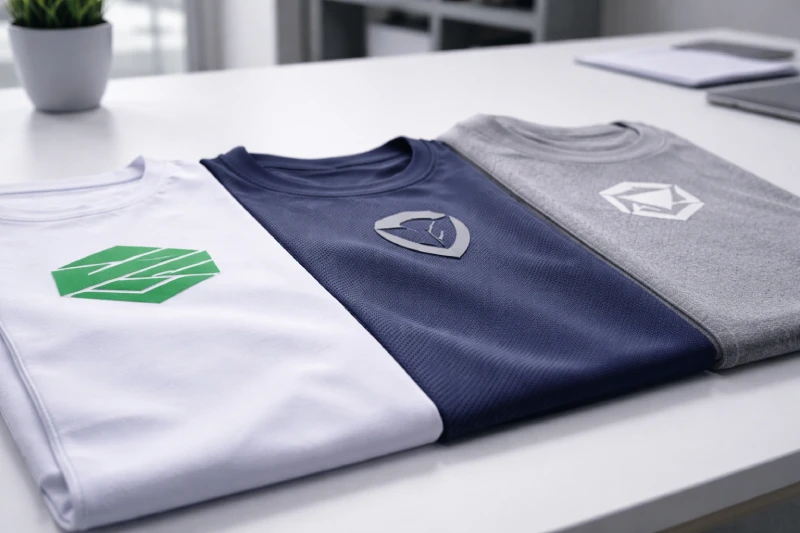
Key fabric variables to review:
- Fiber composition (polyester, nylon, cotton blends)
- Stretch direction and recovery rate
- Fabric weight (GSM)
- Surface texture (smooth, mesh, brushed)
- Moisture-wicking or coating treatments
Decision principle:
The logo method must adapt to the fabric—not the other way around.
Placement Strategy Across Apparel Categories
Logo placement affects comfort, compliance, and long-term durability.
Sportswear & Activewear
- Avoid high-sweat zones such as center chest and lower back
- Keep rigid prints away from stretch-critical panels
- Reflective or tonal logos are often preferred for performance aesthetics
Caps & Headwear
- Seam lines and panel structure limit usable logo areas
- Embroidery dominates but increases rigidity
- Heat transfers require reinforced panels to prevent distortion
Workwear & Safety Apparel
- Logos must not interfere with reflective strips or safety markings
- Industrial wash durability is critical
- Placement may be regulated by safety standards or client policy
Common bulk-order risk: placement approved visually but causes fabric distortion or discomfort after wear testing.
MOQ and Bulk Order Implications
Logo printing methods have a direct and often underestimated impact on minimum order quantities and unit economics.
Why logo choice affects MOQ:
- Screen printing requires setup, color separation, and ink calibration
- Embroidery involves digitization and machine changeover
- Silicone printing may require custom molds or tooling
- Each change increases setup cost and production complexity
For manufacturers, these factors determine whether an order is viable at low volume.
Typical MOQ behavior by method:
- Screen printing: higher MOQ to amortize setup
- Embroidery: lower MOQ, but higher per-unit cost
- Heat transfer: flexible MOQ, higher labor component
- Sublimation: depends on whether logos are integrated into fabric panels
Bulk order insight:
For multi-category programs (e.g. caps + activewear + outerwear), forcing a single logo method across all items often increases cost and risk. Mixed logo strategies are usually more efficient.
Lead Time & Production Planning Considerations
Logo printing should be planned as part of the critical production path, especially for overseas orders.
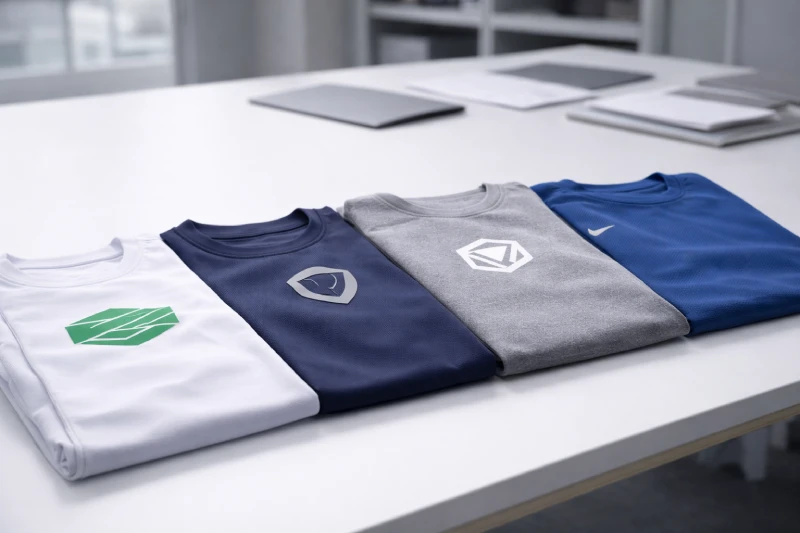
Typical lead time components:
- Artwork separation or embroidery digitization
- Pre-production sampling and approval
- Printing setup and process testing
- Inline and final quality inspection
Key planning differences:
- First orders require longer lead time due to file setup and validation
- Repeat orders move faster once files are approved
- Silicone and embroidery methods often add 7–14 days initially
Common delay risks:
- Incomplete logo files or incorrect formats
- Late changes to placement or size
- Additional sampling required for stretch or wash validation
Buyers coordinating multiple SKUs should clarify whether logo processes run in parallel or sequentially, as this can significantly affect delivery timelines.
Quality Control Checklist for Logo Printing
Before approving mass production, overseas buyers should confirm:
- ✔ Logo integrity after wash and stretch testing
- ✔ No cracking, peeling, or color bleeding
- ✔ Consistent logo positioning across sizes
- ✔ No negative impact on fabric performance
- ✔ Alignment with care label instructions
Requesting pre-production samples is standard best practice and should be treated as a non-negotiable step.
How Logo Strategy Changes Across Apparel Categories
While this guide focuses on logo printing options for sportswear & activewear, effective sourcing recognizes category-specific priorities:
- Caps emphasize structure and visibility
- Activewear emphasizes stretch and comfort
- Workwear emphasizes durability and compliance
- Corporate polos emphasize brand formality
A capable manufacturer should recommend category-appropriate adaptations, rather than applying a single universal solution.
Conclusion: Logo Printing Is a Production Decision, Not a Decoration
Selecting the right logo printing method is a technical, operational, and strategic decision. For overseas B2B buyers managing multi-category apparel programs, success depends on early alignment with manufacturers around fabric behavior, usage conditions, order scale, and long-term consistency.
Ready to move forward?
If you are planning a sportswear or activewear project—or coordinating branding across multiple apparel categories—initiate a structured discussion with your manufacturer. Evaluating logo options from a performance, production, and scalability perspective early in the process helps reduce risk, control cost, and ensure consistent results at scale.