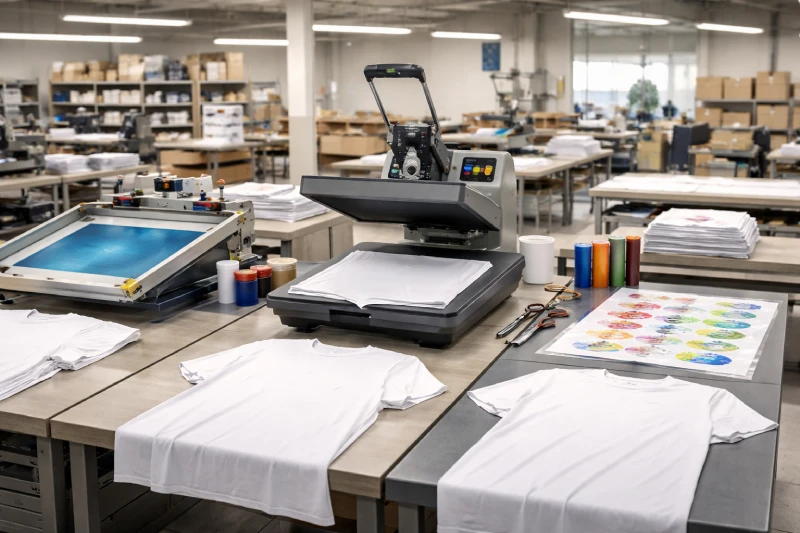
Selecting the right decoration method is a strategic decision for B2B apparel projects. Whether you are sourcing corporate uniforms, promotional merchandise, retail collections, workwear programs, or sports team apparel, the choice between screen printing vs heat transfer vs DTF for T-shirts impacts cost structure, brand perception, durability, and supply chain efficiency.
For procurement managers and brand owners working across categories—Headwear & Caps, T-Shirts & Polos, Hoodies & Sweatshirts, Sportswear & Activewear, and Workwear & Safety Apparel—this guide provides a clear selection framework to help you evaluate which printing method best fits your project requirements.
Understanding the Three Core Printing Methods
Before making a decision, it’s important to understand how each method functions from a production standpoint.
1. Screen Printing (Silk Screen Printing)
Process: Ink is pushed through a mesh stencil onto fabric, layer by layer per color.
Best suited for:
- Large-volume uniform programs
- Corporate promotional campaigns
- Distributor bulk orders
- Workwear logo applications
- Hoodie and sweatshirt branding
Key B2B advantages:
- Low unit cost at scale
- Excellent durability
- Strong color opacity
- Suitable for thick fabrics
Limitations:
- Setup cost per design/color
- Less flexible for small MOQ
- Complex artwork increases cost
2. Heat Transfer Printing (Vinyl or Printed Transfer)
Process: Design is pre-printed or cut on transfer material and applied to garment using heat and pressure.
Best suited for:
- Small batch customization
- Numbering and name personalization
- Short lead-time programs
- Sampling and pilot runs
Key B2B advantages:
- No complex setup
- Suitable for low MOQ
- Flexible artwork application
- Faster turnaround for small orders
Limitations:
- Slightly thicker hand feel
- Durability varies by material
- May not be ideal for heavy industrial washing
3. DTF (Direct to Film Printing)
Process: Design is digitally printed onto film, powdered with adhesive, cured, and heat transferred onto fabric.
Best suited for:
- Multi-color detailed designs
- Medium-volume orders
- Sportswear and performance fabrics
- Brand graphics with gradients
Key B2B advantages:
- High design flexibility
- No color limitation
- Works on cotton, polyester, blends
- Balanced MOQ suitability
Limitations:
- Slightly higher per-unit cost than screen printing at very large scale
- Requires proper washing compliance testing
Screen Printing vs Heat Transfer vs DTF for T-Shirts: Strategic Comparison
| Criteria | Screen Printing | Heat Transfer | DTF Printing |
|---|---|---|---|
| Best for Volume | High volume | Low volume | Medium volume |
| MOQ Flexibility | Medium–High | Very flexible | Flexible |
| Setup Cost | High (per design) | Low | Moderate |
| Artwork Complexity | Limited by color count | Moderate | High flexibility |
| Durability | Excellent | Moderate | Very good |
| Fabric Compatibility | Cotton, fleece | Most fabrics | Cotton, polyester, blends |
| Unit Cost at Scale | Lowest | Higher | Moderate |
| Ideal Categories | T-shirts, hoodies, workwear | Caps, polos, customization | Sportswear, retail graphics |
Key Decision Factors for B2B Buyers
When evaluating custom apparel printing methods, procurement decisions should go beyond cost per piece.
1. Order Volume and Repeat Frequency
- One-time event order (500 pcs): DTF or heat transfer may be more flexible.
- Annual uniform program (10,000+ pcs): Screen printing reduces total cost.
- Seasonal collection launches: DTF offers artwork flexibility.
For distributors managing multiple small clients, DTF often balances flexibility and efficiency.
2. Fabric Type and Apparel Category
Different apparel types respond differently to printing methods.
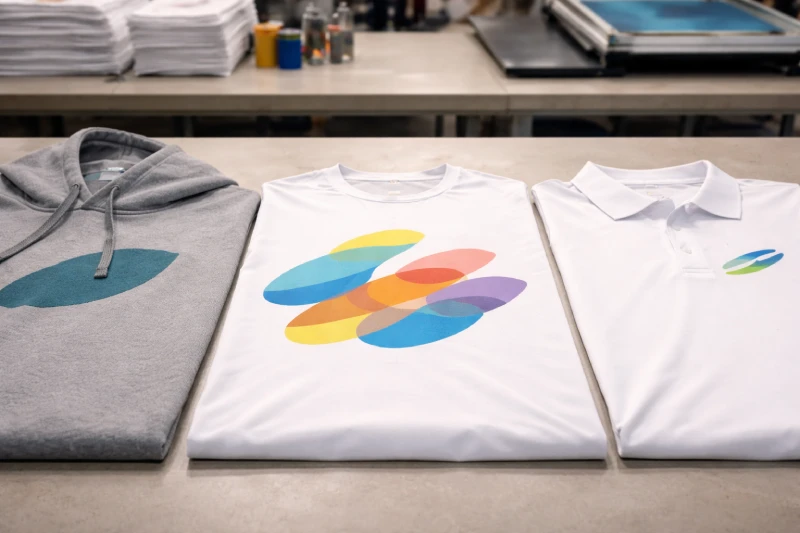
T-Shirts & Polos
- Screen printing remains cost-efficient for bulk cotton tees.
- DTF performs well on blended polos.
Hoodies & Sweatshirts
- Thicker fleece supports screen printing durability.
- DTF handles complex retail-style graphics.
Sportswear & Activewear
- Polyester performance fabrics favor DTF.
- Heat transfer is common for jersey numbers.
Workwear & Safety Apparel
- Screen printing preferred for industrial wash durability.
- Reflective heat transfer suitable for compliance zones.
Headwear & Caps
Caps require special consideration:
- Limited print area
- Curved surface
- Often embroidery preferred
- Heat transfer may be used for flat panels
3. Design Complexity
Ask the following:
- How many colors?
- Are gradients involved?
- Is photographic detail required?
- Are there variable data elements (names/numbers)?
Simple 1–2 color logo → Screen printing; Multi-color retail graphic → DTF; Personalized numbering → Heat transfer.
4. Durability Requirements
For B2B buyers, lifecycle performance matters.
| Application Type | Recommended Method |
|---|---|
| Industrial workwear | Screen printing |
| Hospitality uniforms | Screen printing or DTF |
| Sports training gear | DTF |
| Promotional giveaways | Any method depending on budget |
Consider:
- Washing cycles
- Abrasion exposure
- Heat drying conditions
- Compliance standards
5. Lead Time and Production Planning
Screen printing requires:
- Artwork separation
- Screen setup
- Color matching
DTF and heat transfer reduce setup complexity.
If your supply chain requires:
- Quick sampling
- Low MOQ test orders
- Rapid replenishment
DTF or heat transfer may shorten production time.
Bulk Order Economics: Understanding Cost Structures
Screen Printing Cost Model
- High initial setup
- Very low marginal cost per unit
- Best ROI for large volume
Heat Transfer Cost Model
- Minimal setup
- Higher cost per unit
- Suitable for flexible ordering
DTF Cost Model
- Moderate setup
- Stable unit cost across volumes
- Balanced option for growing brands
Procurement teams should calculate total landed cost, not only per-piece print cost.

MOQ and Scalability Considerations
| Business Scenario | Recommended Method |
|---|---|
| Startup brand testing market | DTF |
| Corporate nationwide rollout | Screen printing |
| Distributor mixed-size orders | DTF |
| Event-based small batch | Heat transfer |
When working with overseas manufacturers, confirm:
- Minimum order quantity per design
- MOQ per color
- Mixed size allowance
- Artwork revision policy
Cross-Category Printing Differences
Decoration strategy may differ across product groups.
| Category | Preferred Method | Why |
|---|---|---|
| Heavy fleece hoodie | Screen printing | Ink penetration stability |
| Lightweight performance tee | DTF | Flexibility on stretch fabrics |
| Cotton polo uniform | Screen printing | Clean logo finish |
| Reflective safety vest | Heat transfer | Reflective compliance |
| Flat front cap panel | Heat transfer | Limited surface area |
Selecting a single method across all categories may not be optimal. Large programs often combine methods strategically.
B2B Evaluation Checklist
Before confirming your printing method, review:
- □ Confirm fabric composition
- □ Define expected wash cycles
- □ Clarify order volume forecast
- □ Assess artwork complexity
- □ Confirm MOQ thresholds
- □ Evaluate timeline constraints
- □ Review compliance or certification needs
- □ Request pre-production sample
This structured approach reduces post-production disputes and quality risks.
Risk Mitigation for Overseas Sourcing
For international buyers, ensure your manufacturer can:
- Conduct wash testing
- Provide color matching reports
- Offer pre-shipment inspection photos
- Maintain artwork consistency for repeat orders
- Document production lead times clearly
DTF and heat transfer require careful curing control, while screen printing demands ink consistency management.
Making the Final Decision: A Practical Framework
Instead of asking “Which method is best?”, consider:
- What is my projected volume over 12 months?
- How complex is my artwork?
- What durability level is required?
- How price-sensitive is this program?
- Do I require personalization?
- Is fabric stretch or technical material involved?
Often, the right answer is not choosing one method universally, but aligning the method with the product category and commercial objective.
Conclusion: Align Printing Method with Business Objectives
Choosing between screen printing vs heat transfer vs DTF for T-shirts is ultimately a strategic procurement decision. Each method serves a distinct purpose depending on volume, fabric type, artwork complexity, durability requirements, and supply chain flexibility.
For B2B buyers managing multi-category apparel programs—across headwear, uniforms, activewear, and workwear—the most efficient approach is to evaluate printing methods within a broader sourcing framework rather than focusing solely on price.
If you are planning a new apparel project or reviewing your current decoration strategy, we welcome a discussion about your product category, target market, volume forecast, and timeline requirements. Our technical team can help you assess which printing method best aligns with your operational and branding goals.