

Selecting appropriate safety apparel for construction projects is not a matter of style or individual preference—it is a structured procurement decision that directly affects worker safety, regulatory compliance, operational efficiency, and long-term cost control.
For overseas B2B buyers such as procurement managers, uniform program owners, distributors, and project contractors, the challenge lies in aligning safety requirements, customization needs, order scale, and lead times across different apparel categories and project environments.
This buying guide is category-agnostic and applicable to a wide range of safety-related products, including headwear, workwear garments, and high-visibility apparel. It focuses on decision logic and evaluation frameworks, not individual SKUs, helping buyers make informed, scalable choices for construction projects of different sizes and regions.
1. Start With Project Risk Assessment and Use Scenarios
Before comparing materials or designs, buyers should clearly define how and where the safety apparel will be used.
Key questions to clarify
- Is the project infrastructure, residential, industrial, or energy-related?
- Are workers exposed to vehicle traffic, heavy machinery, heat, sparks, or chemicals?
- Is the environment outdoor, indoor, high-temperature, or high-humidity?
- Will the apparel be used short-term (project-based) or as part of a long-term uniform program?
Different use scenarios influence whether visibility, flame resistance, weather protection, or durability should be prioritized.
Decision principle: Risk exposure and job function should define apparel requirements—not product category alone.
2. Understand Safety Standards and Compliance Expectations
Compliance requirements vary by country and project owner, but safety apparel for construction projects is typically expected to align with recognized international or regional standards.
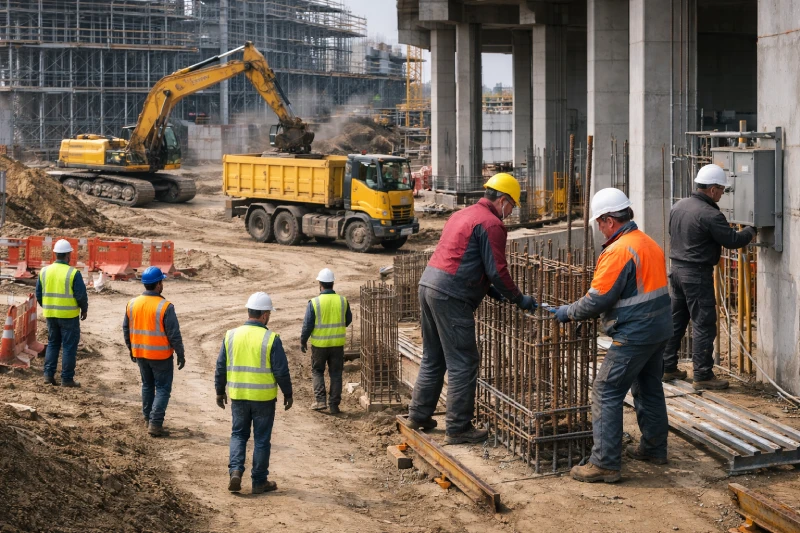
Common compliance considerations
- High-visibility performance (reflective elements, contrast colors)
- Fabric performance (tear strength, abrasion resistance)
- Fire or heat resistance (for welding or industrial sites)
- Electrical or anti-static requirements (specific environments)
Practical guidance for overseas buyers
- Clarify whether the project follows local regulations, international standards, or client-specific specifications
- Confirm if test reports or certifications are required at tender or delivery stage
- For multi-country projects, choose specifications that can be applied consistently across regions
Note: Caps, vests, and outer garments often have different compliance scopes. Buyers should verify requirements by apparel type rather than assuming one standard fits all.
3. Fabric and Material Selection: Performance Over Price
Material choice is one of the most critical factors in safety apparel procurement, directly impacting comfort, lifespan, and compliance.
Core material considerations
- Durability: Resistance to tearing, abrasion, and repeated washing
- Breathability: Especially important for hot or humid construction sites
- Weight and flexibility: Affects worker comfort and productivity
- Protective properties: Flame retardant, water resistance, or UV protection
Differences across categories
- Workwear garments (jackets, pants, vests): Require balanced durability and comfort for long shifts
- High-visibility apparel: Needs stable color fastness and reflective performance over time
- Headwear & caps: Focus more on lightweight materials, sweat management, and compatibility with helmets or PPE
Procurement tip: Lower fabric cost may reduce unit price but often increases replacement frequency and total project cost.
4. Fit, Sizing Systems, and Workforce Diversity
Construction projects often involve large, diverse teams, sometimes across multiple regions. Poor sizing strategies can lead to wastage, low adoption, or safety risks.
Best practices for B2B buyers
- Use standardized size grading suitable for international teams
- Consider unisex vs. gender-specific fits depending on workforce composition
- Plan for size ratio forecasting instead of equal-size ordering
- For headwear, account for adjustability ranges rather than fixed sizes
Operational insight: Consistent fit improves compliance—workers are more likely to wear safety apparel correctly when it fits well.
5. Customization and Identification Requirements
Most construction projects require some level of customization for identification, compliance, or brand alignment, even when branding is not a priority.
Common customization elements
- Company or project logos
- Reflective printing or embroidery
- Role or department identification
- Color differentiation by site or contractor
Category-specific considerations
- Caps & headwear: Limited surface area; simpler logos or text work best
- Garments: Offer more flexibility but require durability-tested decoration methods
- High-visibility apparel: Customization must not compromise reflective performance
Key question to ask suppliers: Does customization affect compliance, lead time, or minimum order quantity?
6. MOQ, Order Structure, and Scalability Planning
For overseas B2B buyers, minimum order quantity (MOQ) and scalability often influence supplier selection as much as product performance.
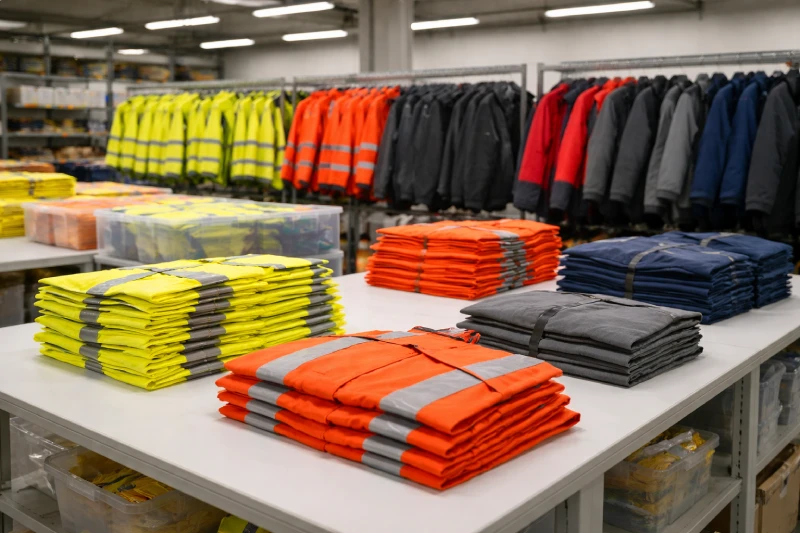
Typical procurement scenarios
- Large one-time orders for project mobilization
- Phased orders aligned with construction stages
- Replenishment orders for workforce changes or replacements
What to evaluate
- MOQ differences between standard items and customized versions
- Ability to repeat orders with consistent specifications
- Flexibility to scale quantities up or down without redesign
Strategic advice: A slightly higher initial MOQ may reduce long-term complexity if it enables consistent reorders and stable pricing.
7. Lead Time and Production Planning for Overseas Orders
International procurement adds complexity to lead time planning, especially when customization or compliance testing is involved.
Lead time components
- Sample development and approval
- Material sourcing
- Production
- Quality inspection
- International logistics
Risk mitigation tips
- Lock specifications early to avoid redesign delays
- Allow buffer time for sample revisions
- Confirm whether lead times change during peak production seasons
Best practice: Align apparel procurement timelines with overall project milestones, not just site opening dates.
8. Quality Control and Consistency Across Batches
For multi-site or long-term construction projects, batch consistency is critical.
What buyers should check
- Fabric consistency across production runs
- Color and reflective material stability
- Logo placement and durability
- Packaging and labeling accuracy
A structured quality control process helps ensure that safety apparel delivered months apart still meets the same standards.
9. Decision Checklist for Safety Apparel Procurement
Before finalizing a supplier or specification, review the following checklist:
- ☐ Project risk profile clearly defined
- ☐ Applicable safety standards confirmed
- ☐ Material performance aligned with site conditions
- ☐ Fit and sizing strategy planned
- ☐ Customization requirements evaluated
- ☐ MOQ and scalability understood
- ☐ Lead time aligned with project schedule
- ☐ Quality control process clarified
Conclusion: Align Safety, Compliance, and Operational Reality
Choosing the right safety apparel for construction projects is a strategic procurement decision that goes beyond individual products. The most effective programs align risk assessment, compliance requirements, material performance, customization needs, and supply chain planning into a single, repeatable framework.
For overseas B2B buyers managing complex projects or multiple apparel categories, working with a manufacturer that understands cross-category production, bulk order logic, and international delivery constraints can significantly reduce risk and administrative burden.
If you are evaluating safety apparel solutions for an upcoming construction project or long-term uniform program, consider discussing your project scope, compliance requirements, and order structure early to ensure the right decisions are made from the start.