
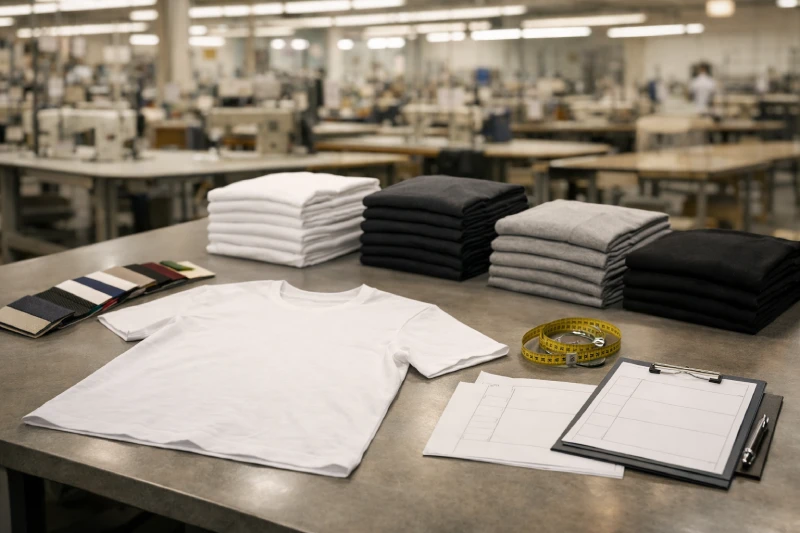
For overseas B2B buyers, bulk apparel ordering is not simply about placing a purchase order. It is a structured process that moves from concept validation and sampling to controlled mass production and delivery.
Whether you are sourcing T-shirts, polos, hoodies, sportswear, caps, or workwear, the underlying framework remains consistent — define requirements clearly, validate samples carefully, and align production conditions before scaling.
This guide outlines a practical decision-making structure for bulk apparel procurement, helping procurement managers, brand owners, and uniform buyers move confidently from sampling to production.
1. Clarifying Project Objectives Before Sampling
Before requesting samples, buyers should define the commercial and operational objectives of the project.
Core Questions to Answer
- What is the primary application?
(Retail brand launch, promotional event, corporate uniform, safety compliance, distributor inventory) - What is the expected lifecycle of the garment?
- What price tier is required (entry, mid-market, premium)?
- What target markets and climate conditions apply?
- What compliance or certification standards are necessary?
Category-Specific Considerations
| Category | Key Early Consideration |
|---|---|
| Headwear & Caps | Structured vs unstructured, embroidery feasibility |
| T-Shirts & Polos | Fabric weight, drape, print compatibility |
| Hoodies & Sweatshirts | Fabric GSM, shrinkage control, color consistency |
| Sportswear & Activewear | Stretch ratio, moisture management, recovery |
| Workwear & Safety Apparel | Durability, safety standards, reinforcement areas |
Clear alignment at this stage prevents costly sample revisions later.
2. Fabric & Material Selection Framework
Material selection is the foundation of bulk T-shirt ordering and applies similarly across apparel categories.
Key Evaluation Factors
1. Fabric Composition
- 100% cotton (breathability, print clarity)
- Cotton-poly blends (durability, wrinkle resistance)
- Polyester (moisture-wicking, activewear)
- Technical blends (sports or safety applications)
2. Fabric Weight (GSM)
- Lightweight (130–160gsm): promotional, summer retail
- Midweight (180–220gsm): standard retail or uniforms
- Heavyweight (240gsm+): premium retail or structured garments
Caps differ structurally: instead of GSM, buyers evaluate panel material thickness, buckram reinforcement, and brim structure.
3. Surface Compatibility
For decorated garments:
- DTG requires smooth, high-cotton surfaces
- Screen printing benefits from stable knit structures
- Embroidery requires fabric with adequate stability
3. Customization & Decoration Planning
Customization decisions significantly affect production cost, MOQ, and lead time.
Common Decoration Methods
| Method | Best For | Impact on MOQ | Impact on Lead Time |
|---|---|---|---|
| Screen Printing | T-shirts, hoodies | Moderate | Standard |
| DTG | Small runs, detailed graphics | Lower | Slightly longer per piece |
| Embroidery | Caps, polos, uniforms | Moderate | Stable |
| Heat Transfer | Sportswear, numbers | Flexible | Quick |
| Reflective/Functional Prints | Workwear | Higher | Extended |
Placement Planning
Decoration zones vary by category:
- T-Shirts / Hoodies: chest, back, sleeve
- Caps: front panel, side panel, back strap
- Workwear: chest pocket, sleeve, reflective zones
- Sportswear: chest logo, number placement, sponsor zones
Early placement confirmation prevents production delays during bulk approval.
4. Sampling Stage: What to Validate
The sampling phase is not for aesthetics alone — it is for risk control.
Sampling Checklist
Fabric Validation
- Weight accuracy
- Hand feel consistency
- Color accuracy under different lighting
- Shrinkage test results
Construction Review
- Stitch density
- Seam strength
- Collar rib recovery (for T-shirts)
- Zipper quality (for hoodies)
- Panel symmetry (for caps)
Fit & Measurement
- Tolerance control (±1–2 cm depending on garment)
- Size grading consistency
- Fit alignment with target market
Decoration Accuracy
- Placement alignment
- Thread density (embroidery)
- Ink penetration & cracking resistance
Pre-Production Sample (PPS)
Before mass production, a final pre-production sample should confirm:
- Approved color standard
- Final label & packaging details
- Bulk fabric lot confirmation
Skipping PPS approval is one of the most common causes of bulk inconsistency.
5. MOQ Strategy in Bulk T-Shirt Ordering
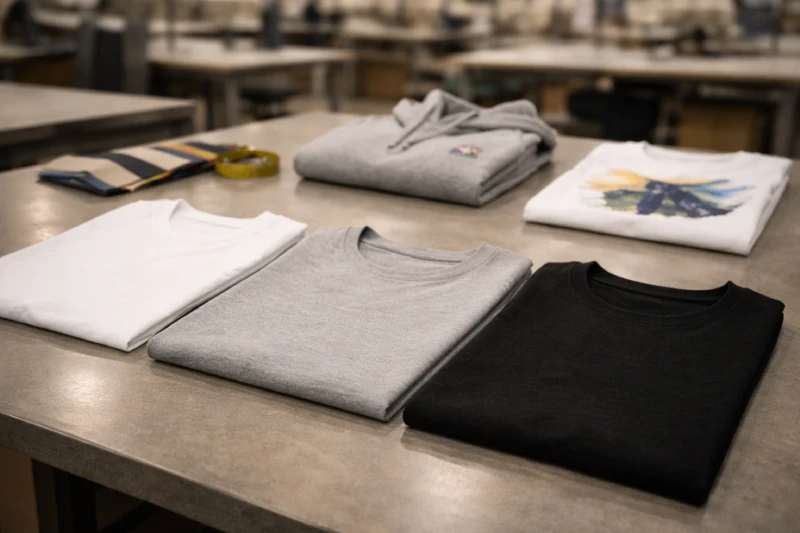
MOQ (Minimum Order Quantity) varies depending on:
- Fabric availability
- Custom color requirements
- Decoration complexity
- Size ratio distribution
Typical MOQ Drivers
| Factor | Effect on MOQ |
|---|---|
| Stock Fabric | Lower MOQ possible |
| Custom Pantone Dye | Higher MOQ |
| Multi-Color Print | Higher |
| Multiple Sizes | Increases total order volume |
Caps may have panel-based MOQs.
Workwear may require higher MOQs due to compliance-certified materials.
Buyers should clarify whether MOQ applies:
- Per color
- Per style
- Per size range
- Or total production batch
6. Lead Time Planning: From Sampling to Shipment
Lead time is influenced by both internal production capacity and external supply chain conditions.
Typical Timeline Structure
- Sample Development: 7–14 days
- Sample Revision (if required): 5–10 days
- Bulk Production: 20–35 days
- Quality Inspection & Packing: 3–7 days
- Shipping (air/sea): Variable
Category Variations
| Category | Lead Time Sensitivity |
|---|---|
| Basic T-Shirts | Shorter |
| Hoodies | Moderate |
| Caps (multi-panel embroidery) | Slightly longer |
| Sportswear (technical fabrics) | Extended |
| Workwear (certification required) | Longest |
Seasonal projects require earlier confirmation due to peak production periods.
7. Quality Control Framework for Bulk Production
Professional B2B buyers should define quality checkpoints before production begins.
Recommended QC Stages
- Raw material inspection
- Inline production inspection
- Mid-production check (20–30%)
- Final AQL inspection
- Random carton check before shipment
Common Risk Areas
- Fabric shade variation between batches
- Size tolerance inconsistency
- Embroidery alignment drift
- Print cracking after wash test
- Accessory quality (zippers, buttons)
For safety apparel, additional compliance testing may be required.
8. Packaging & Labeling Considerations
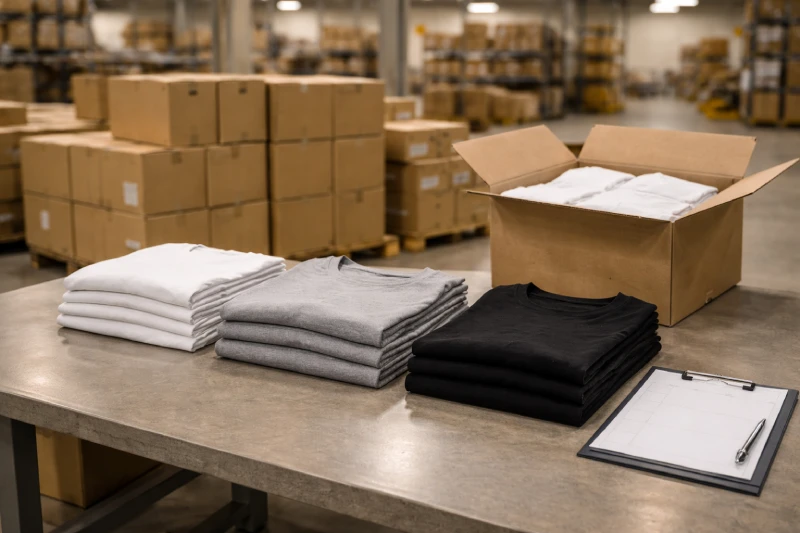
Packaging affects logistics cost and retail presentation.
Decision Points
- Individual polybag vs bulk pack
- Barcode labeling
- FNSKU or retail tag insertion
- Size stickers or internal labeling
- Carton dimension optimization
Caps require protective inner shaping to prevent brim deformation.
Hoodies increase carton volume significantly compared to T-shirts.
9. Risk Management in Overseas Bulk Apparel Orders
International procurement introduces additional risk variables:
- Communication clarity
- Technical specification documentation
- Sample confirmation records
- Production milestone confirmation
- Shipping method & Incoterms alignment
Clear documentation reduces misunderstandings across time zones and languages.
10. Decision Summary Checklist for Bulk T-Shirt Ordering
Before confirming production, verify:
✔ Fabric composition & GSM confirmed
✔ Size chart approved
✔ Decoration placement locked
✔ Pre-production sample signed
✔ MOQ structure understood
✔ Lead time confirmed
✔ QC checkpoints defined
✔ Packaging requirements specified
✔ Shipping terms agreed
This structured approach applies not only to T-shirts but across hoodies, sportswear, caps, and workwear categories.
Conclusion: Structured Planning Reduces Production Risk
Moving from sampling to production requires disciplined decision-making. Successful bulk apparel projects are not defined by a single product but by how well buyers manage fabric selection, customization planning, MOQ alignment, and production control.
Whether sourcing T-shirts, caps, sportswear, or safety uniforms, the same framework ensures consistency, scalability, and predictable lead times.
If you are planning a bulk apparel project, we welcome the opportunity to review your specifications and discuss the most suitable production strategy based on your category, timeline, and target market requirements.