
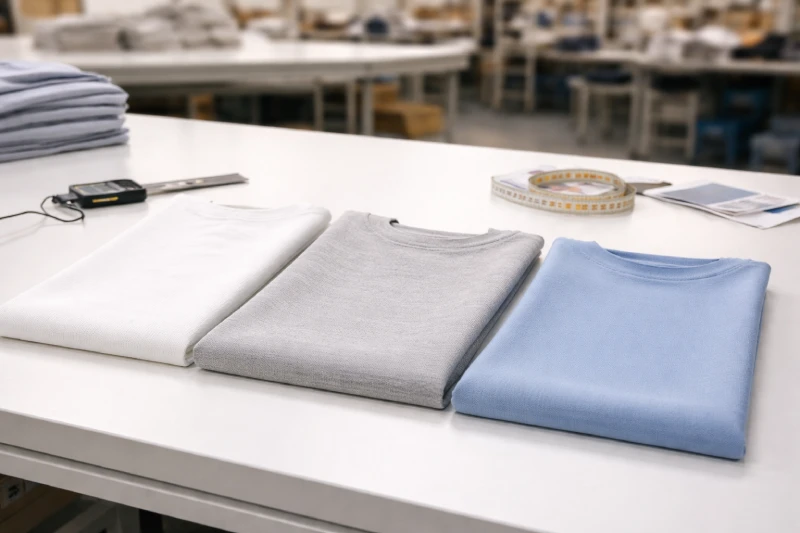
For B2B buyers, fabric selection is one of the most critical decisions in any custom apparel project. Whether you are sourcing custom T-shirts in bulk, corporate uniforms, promotional apparel, sportswear collections, or retail-ready merchandise, fabric directly impacts cost structure, print performance, durability, compliance, and long-term brand perception.
This guide provides a structured decision framework to help procurement managers, brand owners, and distributors evaluate fabric choices logically—beyond marketing claims and beyond individual SKUs.
Why Fabric Selection Matters in Bulk Custom Orders
In bulk production, small fabric differences can create large operational and financial impacts:
- ±20 GSM can significantly affect shipping weight and cost
- Fiber composition affects print compatibility (DTG, screen print, embroidery, heat transfer)
- Fabric stability impacts defect rates
- Shrinkage tolerance affects customer satisfaction
- Material choice influences compliance with safety and sustainability standards
For B2B buyers, fabric selection should align with:
- End-use scenario
- Branding method
- Target price band
- Production scale
- Market regulations
Step 1: Define the End-Use Environment
Before comparing cotton versus polyester or lightweight versus heavyweight, clarify the functional environment.
A. Casual & Promotional Wear
Common for:
- Brand merchandise
- Events
- Retail basics
- Corporate giveaways
Priorities:
- Comfort
- Print clarity
- Cost control
- Moderate durability
B. Corporate Uniform Programs
Common for:
- Retail chains
- Hospitality groups
- Franchise operations
Priorities:
- Color consistency across batches
- Wash durability
- Shrinkage control
- Stable supply continuity
C. Performance & Sports Applications
Common for:
- Sportswear & activewear
- Outdoor events
- Fitness brands
Priorities:
- Moisture-wicking
- Breathability
- Shape retention
- Lightweight structure
D. Industrial & Workwear
Common for:
- Construction
- Logistics
- Manufacturing
- Safety apparel
Priorities:
- Abrasion resistance
- Structural stability
- Safety compliance
- Higher GSM durability
Decision Rule:
Fabric must match operational stress level. Avoid selecting purely on cost without considering usage intensity.
Step 2: Understand Fiber Composition Options
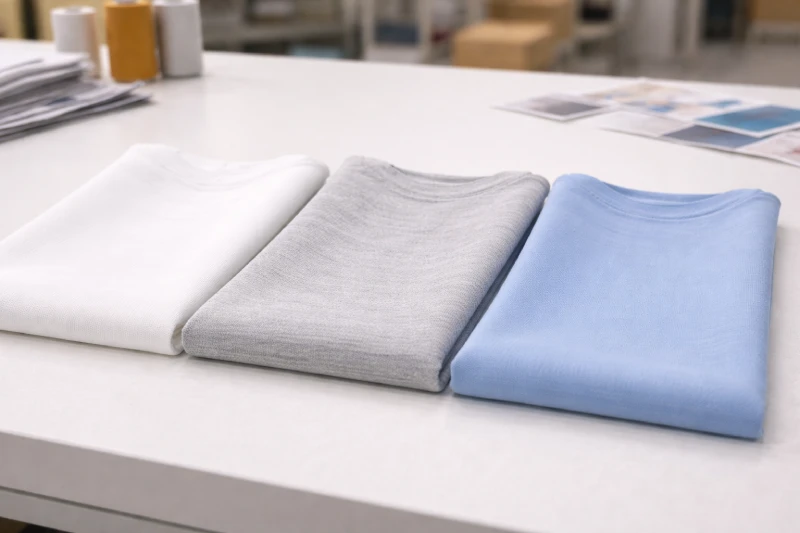
Common Fiber Types in Custom T-Shirts
| Fiber Type | Key Advantages | Limitations | Best For |
|---|---|---|---|
| 100% Cotton | Soft, breathable, excellent for DTG printing | May shrink if untreated | Retail, promo, lifestyle |
| Ring-Spun Cotton | Smoother surface, better print clarity | Slightly higher cost | Premium merchandise |
| Cotton-Poly Blend | Better durability, wrinkle resistance | Slightly less breathable | Corporate uniforms |
| 100% Polyester | Lightweight, moisture-wicking | Not ideal for some print types | Sportswear |
| Tri-Blend | Soft hand feel, modern retail look | Higher unit cost | Fashion-forward brands |
Bulk Insight:
For large corporate programs, cotton-poly blends often provide better long-term stability than pure cotton, especially for repeated industrial washing.
Step 3: Evaluate Fabric Weight (GSM) Strategically
Fabric weight (grams per square meter) impacts:
- Perceived quality
- Drape and structure
- Durability
- Shipping cost
- Seasonal suitability
General GSM Reference for T-Shirts
| GSM Range | Typical Feel | Application Scenario |
|---|---|---|
| 140–160 GSM | Lightweight | Promotions, summer campaigns |
| 160–180 GSM | Standard midweight | Corporate uniforms, retail |
| 180–220 GSM | Heavyweight | Premium retail, structured fits |
| 220+ GSM | Very heavy | Workwear-inspired styles |
Bulk Consideration:
Heavier fabrics increase total freight cost. For international buyers, shipping volume and duty calculation should be evaluated alongside GSM.
Step 4: Match Fabric with Customization Method
Fabric selection must align with branding techniques.
Screen Printing
- Works well on cotton and cotton blends
- Requires smooth surface
- Good for high-volume runs
DTG (Direct-to-Garment)
- Best on 100% cotton
- Requires consistent fabric surface
- Ideal for complex multi-color designs
Heat Transfer
- Works on cotton and polyester
- Sensitive to fabric texture
- Suitable for logo placements
Embroidery
- Works across most fabrics
- Requires structural stability
- Heavy GSM fabrics support embroidery better
Cross-Category Insight:
While this guide focuses on custom T-shirts in bulk orders, similar logic applies to hoodies, sweatshirts, and workwear. However, caps and headwear require different structural considerations (e.g., panel stiffness, crown construction) rather than GSM-based evaluation.
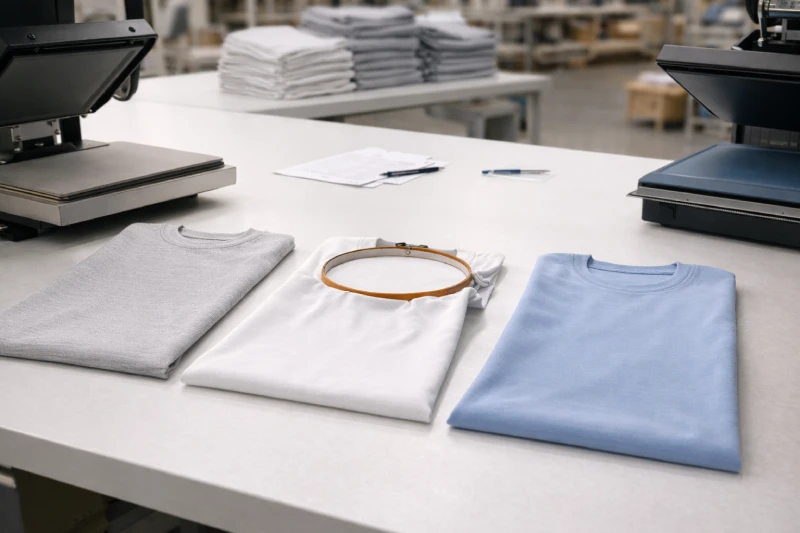
Step 5: Assess Fabric Stability & Quality Control Factors
Bulk apparel sourcing requires evaluating technical stability.
Key Stability Indicators
- Shrinkage rate (pre-shrunk or enzyme washed?)
- Colorfastness (especially for dark colors)
- Pilling resistance
- Seam strength compatibility
- Fabric torque or twisting risk
Questions to Ask Manufacturers
- What is the shrinkage tolerance percentage?
- Is fabric batch-tested?
- Are lab test reports available?
- What quality inspection level is applied?
For long-term corporate contracts, fabric stability should outweigh minimal unit price differences.
Step 6: Consider MOQ and Fabric Sourcing Strategy
Fabric selection influences Minimum Order Quantity (MOQ).
Fabric Type vs MOQ Dynamics
| Fabric Type | Typical MOQ Impact |
|---|---|
| Stock cotton fabric | Lower MOQ |
| Custom-dyed fabric | Higher MOQ |
| Custom blended yarn | Higher MOQ |
| Performance fabrics | May require fabric mill minimums |
In bulk custom T-shirts, buyers must clarify whether fabric is:
- Stock fabric (ready inventory)
- Custom-milled
- Special dyed to Pantone
Custom dye lots may require higher order volumes but improve color consistency.
Step 7: Lead Time Implications of Fabric Choice
Fabric decisions directly affect production schedule.
Typical Lead Time Components
- Fabric knitting/weaving
- Dyeing
- Fabric inspection
- Cutting and sewing
- Printing or embroidery
- Quality control and packing
| Scenario | Estimated Impact |
|---|---|
| Stock fabric | Shorter lead time |
| Custom color | +7–14 days |
| Special performance treatment | +10–20 days |
For overseas procurement managers managing launch timelines, fabric complexity must align with delivery deadlines.
Step 8: Category-Specific Fabric Differences
Although this guide focuses on T-shirts, fabric selection logic varies across product categories:
Headwear & Caps
- Fabric stiffness matters more than GSM
- Structure retention is critical
- Twill, canvas, or polyester blends common
Hoodies & Sweatshirts
- Fleece composition (brushed vs loopback)
- Weight often 280–400 GSM
- Interior texture influences comfort
Sportswear & Activewear
- Moisture management priority
- Stretch ratio (elastane content)
- Lightweight structure preferred
Workwear & Safety Apparel
- Higher GSM
- Abrasion resistance
- May require flame-retardant or high-visibility compliance
Decision Framework:
Fabric must match category performance requirement, not just aesthetic preference.
Step 9: Cost Structure Beyond Fabric Price
Fabric cost is only part of total landed cost.
Consider:
- Freight (affected by weight)
- Import duties (some fiber types have different tariff classifications)
- Printing compatibility
- Rejection rates due to instability
- Reorder consistency
Lower fabric price with higher defect rate increases total operational cost.
Bulk Fabric Selection Checklist
Before finalizing your fabric choice, confirm:
✔ End-use scenario clearly defined
✔ Fiber composition aligns with branding method
✔ GSM matches price positioning
✔ Shrinkage rate tested
✔ Colorfastness verified
✔ MOQ aligns with budget
✔ Lead time fits project timeline
✔ Compliance requirements reviewed
✔ Fabric supply continuity confirmed
Strategic Decision Matrix for Custom T-Shirts in Bulk Orders
| Priority | Recommended Fabric Direction |
|---|---|
| Lowest Cost | Midweight cotton, stock colors |
| Premium Retail | Ring-spun cotton 180–220 GSM |
| Corporate Uniform | Cotton-poly blend 170–200 GSM |
| Sports Program | Polyester performance fabric |
| Heavy-Duty Use | Higher GSM structured fabric |
Final Considerations for Overseas B2B Buyers
When selecting fabric for custom T-shirts in bulk orders, avoid focusing solely on softness or marketing labels. Instead:
- Think in terms of durability cycles
- Analyze freight efficiency
- Consider reorder consistency
- Evaluate customization compatibility
- Align with long-term brand positioning
Fabric is not just a material decision—it is a supply chain decision.
Conclusion: Align Fabric Strategy with Project Objectives
Choosing fabric for bulk apparel production requires balancing performance, customization compatibility, cost efficiency, and operational scalability.
If you are planning a large-volume apparel program across T-shirts, uniforms, sportswear, or workwear, our production team can review your target market, branding method, and timeline to recommend fabric structures aligned with your operational goals.
We welcome discussions with procurement managers and brand teams to evaluate fabric strategy at the early planning stage—before sampling and production begin.