
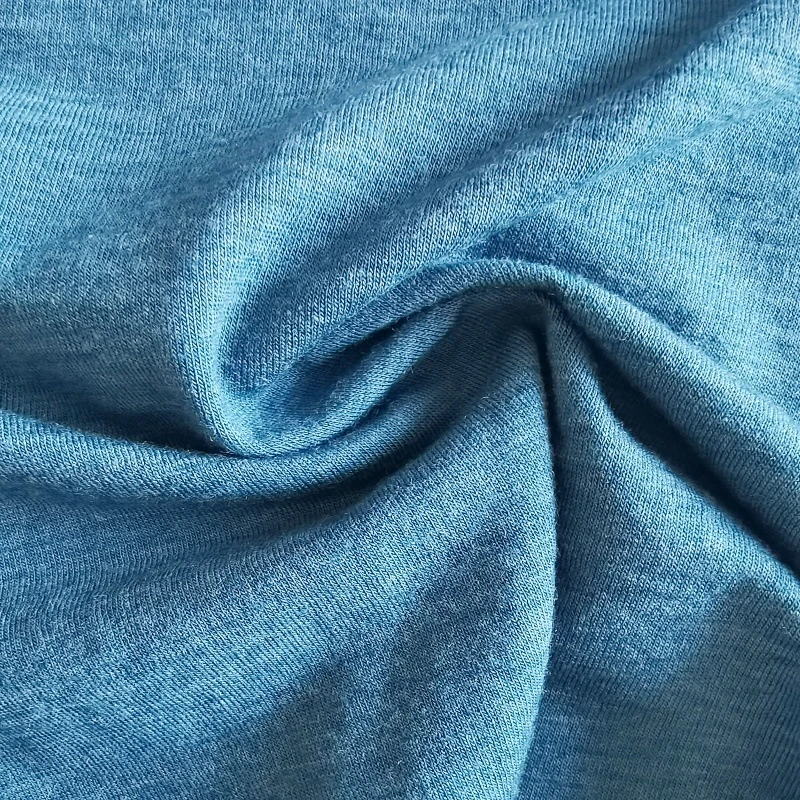
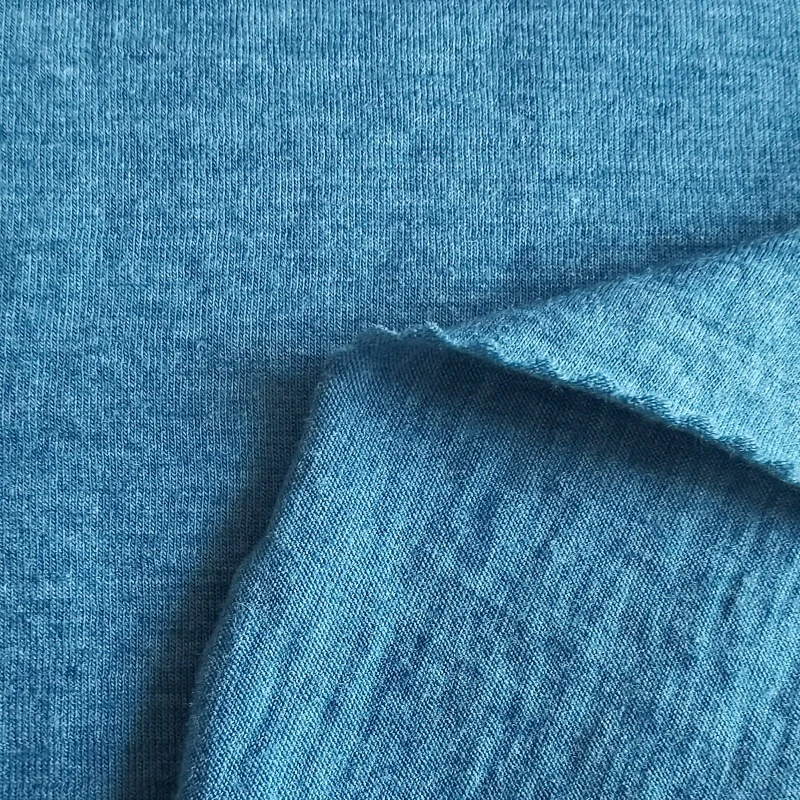
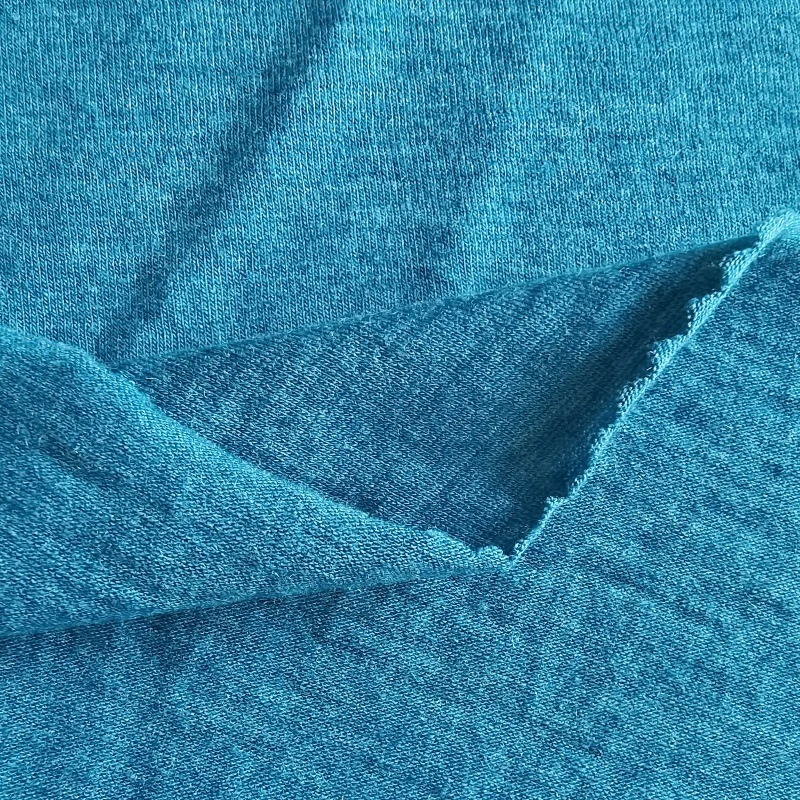
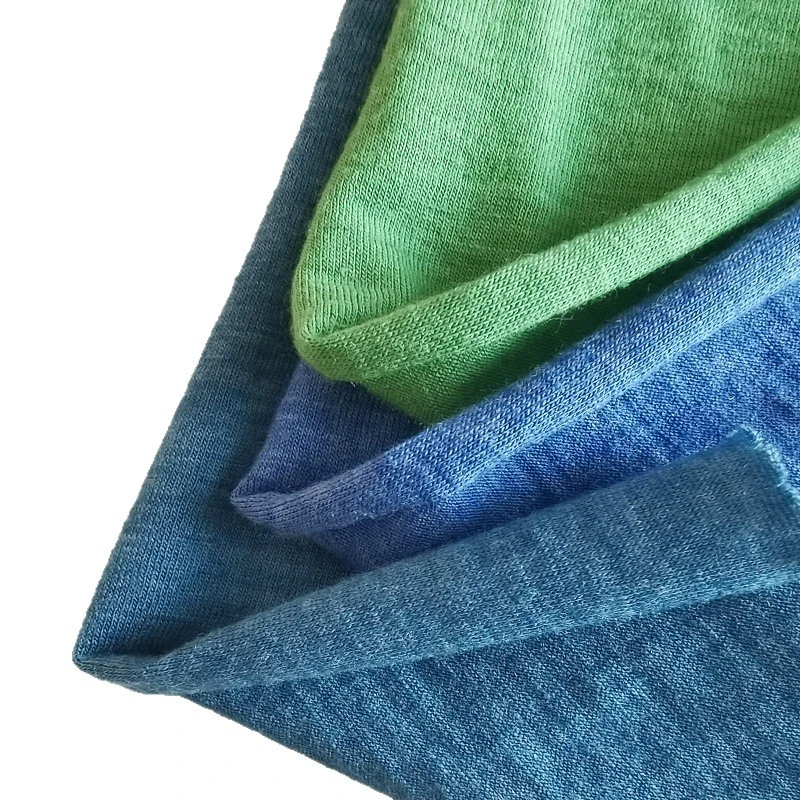
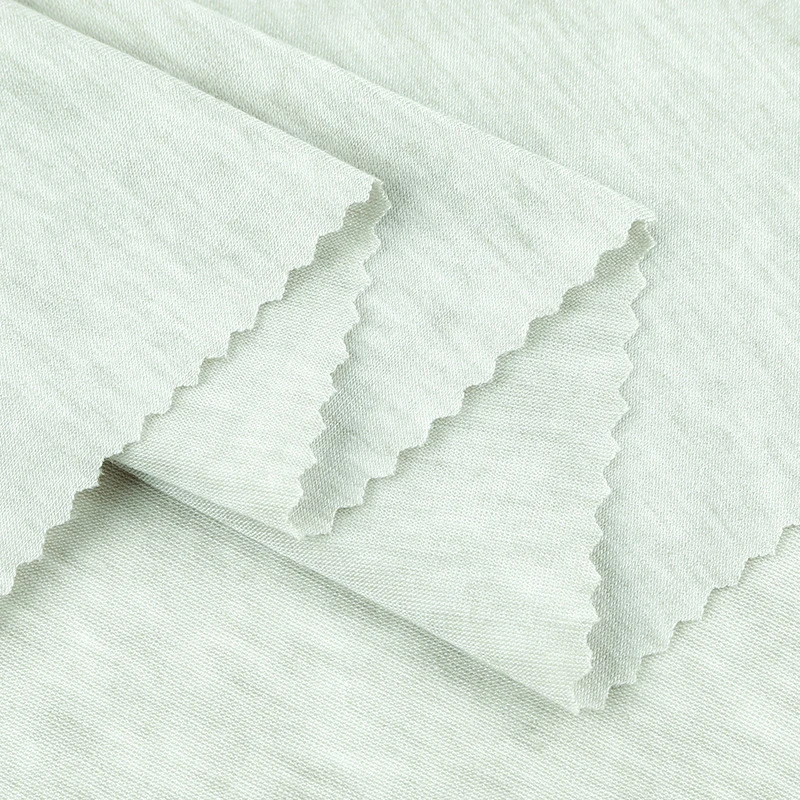
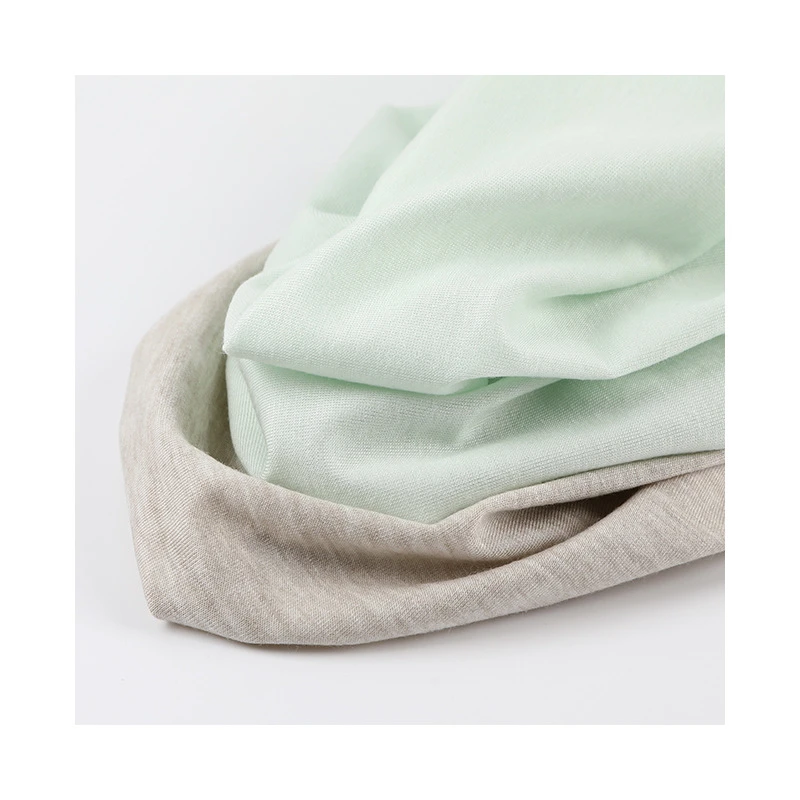
Wool Jersey Fabric for T-Shirts, Base Layers and Casual Apparel
Wool jersey fabric is commonly used for T-shirts, base layers, casual wear, children’s clothing, underwear, and lightweight knit tops. Its soft touch, breathable structure, and comfortable stretch make it suitable for close-to-skin garments and seasonal layering pieces.
| Fabric Specifications | |||
|---|---|---|---|
| Material | Wool Blend Jersey | Fabric Structure | Single Jersey Knit |
| Composition | Wool blended with Tencel, Nylon or Polyester | Weight (GSM) | 140–210 GSM |
| Yarn Count | 32S typical | Width | 160–185 cm |
| Knitting Style | Weft Knitted Jersey | Elasticity | Soft natural stretch |
| Fiber Content Range | Wool 17–30%, blended fibers 70–83% | Fabric Finish | Dyed, Softened, Combed |
| Season | Spring / Summer / Autumn / Winter | MOQ | Available on request |


Product Overview & Key Features
Wool jersey fabric is a single jersey knitted fabric developed for soft, breathable, and comfortable apparel applications. Based on the product information shown in the reference listings, this fabric is commonly produced as a wool-blend jersey, combining wool with fibers such as Tencel, nylon, or polyester to improve softness, stability, and daily wear performance.
The single jersey construction gives the fabric a smooth face, flexible drape, and comfortable stretch, making it suitable for T-shirts, lightweight tops, base layers, and close-fitting casual garments. Compared with heavier wool knits, wool jersey offers a lighter handle and better versatility for modern garment production.
With proper dyeing and softening processes, it delivers a skin-friendly touch, breathable wear comfort, and a balanced combination of natural wool character and practical manufacturing performance.
Key Features:
- Single jersey knit with soft drape
- Breathable and comfortable for close-to-skin wear
- Wool-blend construction for balanced softness and durability
- Suitable for lightweight tops, T-shirts, and base layers
- Available in dyed solid colors for apparel production
Customization Options
- Fabric weight customization by GSM
- Wool blend ratio adjustment
- Yarn count selection based on end use
- Fabric width customization for different marker plans
- Solid dyeing in custom colors
- Softening and hand-feel finishing
- Printing and garment-wash compatibility evaluation
- Anti-pilling or performance finish options