Quick answer: Approve a custom activewear sample only after checking measurements, fit, fabric, construction, colour, branding, labels and packaging against the written product brief. Record the approved version before bulk cutting so the production team has one reference to follow.
A sample is more than a preview image. It is the point where a buyer can find a fit issue, fabric mismatch or branding error before the same specification is used for a larger order. A short written approval record makes later QC easier to compare.
What should an activewear sample approval confirm?
The sample should answer the practical questions that affect the finished product: Does it fit as intended? Does the fabric feel and perform as expected? Are seams, panels and trims built correctly? Are the logo, labels and packaging ready for the target market? If an answer is unclear, resolve it before bulk production.
Seven checks before approving a custom activewear sample
1. Measurements and fit
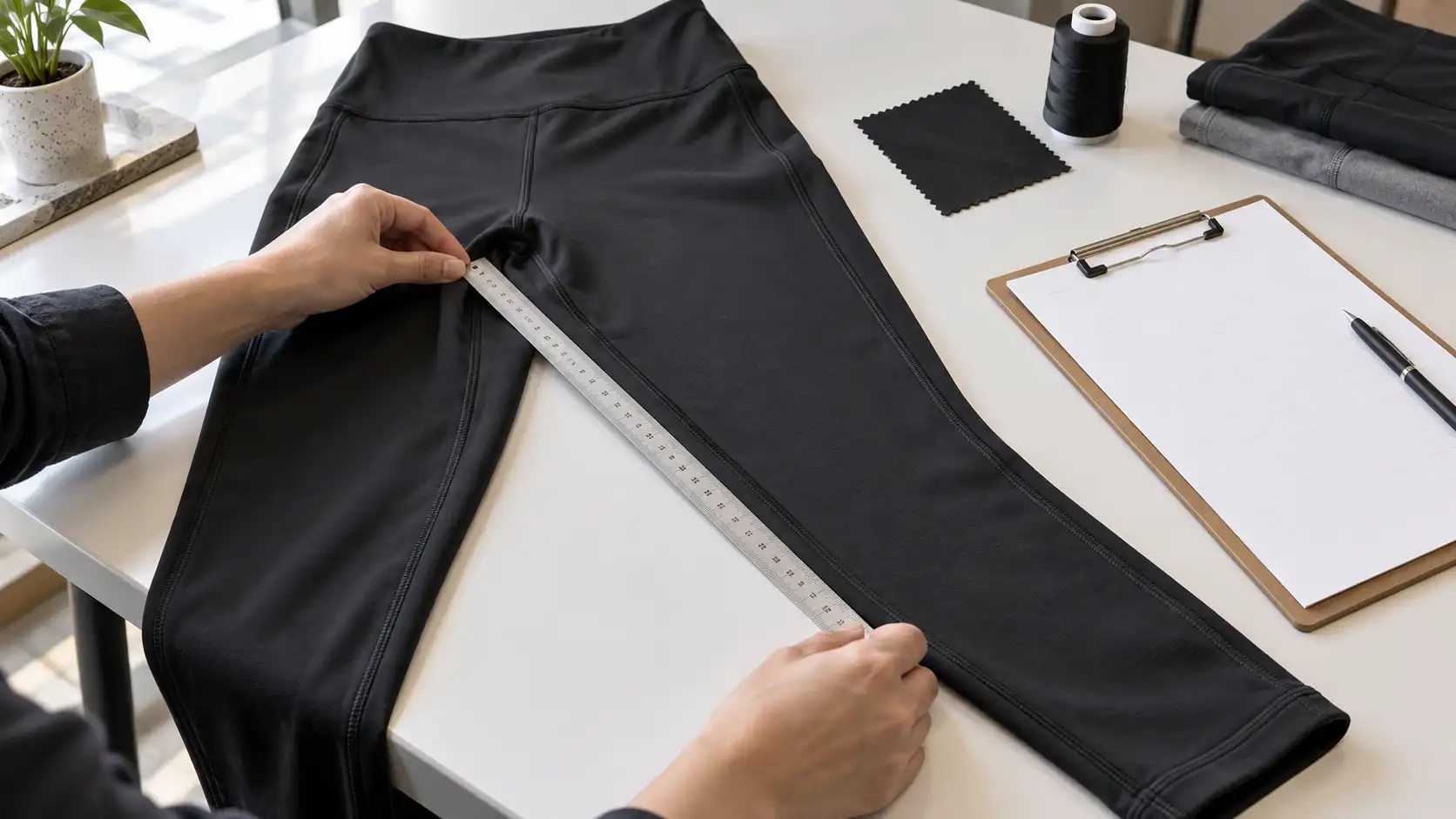
Compare the sample with the approved measurement chart. Check key points such as body length, waistband height, rise, bust or chest width, sleeve or inseam length and the intended ease. Try the garment on the intended body type or use a consistent fit model so the notes are comparable.
2. Fabric hand feel and stretch
Record whether the fabric feels, stretches and recovers as expected for the product. For leggings or fitted tops, review coverage and opacity during movement. If the fabric is a reference rather than a confirmed production material, ask the manufacturer to identify the material that will be used for bulk.
3. Construction and seams
Inspect the seam placement, stitch appearance, panel alignment, waistband construction, hems, pockets and other functional details. Note any puckering, uneven stitching or uncomfortable edge before approval. The sample should match the construction information in the brief.
4. Colour and logo placement
Compare the colour with the approved reference under consistent lighting. Check logo size, position, print or embroidery method and edge quality. Keep the approved artwork with the sample record so a later production check is not based on memory.
5. Labels and branding details
Check the main label, care label, size label, hangtag and any required packaging mark. Confirm spelling, country-of-origin information and the size information required for the target market. If a label or document depends on a market rule, identify that requirement before approval.
6. Packaging and packing instructions
Confirm how each piece should be folded, bagged, labelled and packed. If cartons or master-pack instructions matter to your warehouse, document the expected quantity and marking before bulk production. Packaging should be treated as part of the specification, not an afterthought.
7. Approval record and change control
Write down the approved sample version, measurements, fabric, artwork, labels, packaging and any accepted deviations. If a change is requested after approval, ask for the impact on quantity, timing and cost before it is added to the bulk instruction.
Sample approval checklist for buyers
| Checkpoint | Record before approval |
|---|---|
| Product identity | Style name, sample version, size and intended use. |
| Measurements | Approved chart, tolerance notes and fit comments. |
| Material | Fabric reference, hand feel, stretch, recovery and coverage notes. |
| Construction | Seams, panels, waistband, hems, pockets and trims. |
| Branding | Artwork file, placement, size, colour and application method. |
| Packaging | Fold, bag, label, carton and shipping-mark instructions. |
| Approval | Approver, date, approved version and any open item. |
What happens after the sample is approved?
Bulk production should follow the approved sample, materials, artwork and order specifications. For custom fitness clothing projects, MOQ and production timing are confirmed per project after the required materials, specifications and approvals are reviewed.
QC should be connected to the same approved reference. The production workflow covers specification review, material and trim checks, pre-production approval, in-process inspection, and final product and packing inspection. Review the factory and QC workflow when comparing a manufacturer.
When should you request third-party testing?
Ask about testing when the destination market, buyer policy or product requirement calls for a third-party report. Testing can be arranged for an additional fee, with the laboratory, scope, sample and timing confirmed separately. Do not treat a planned test as an issued certification; the final compliance statement should follow the report for the submitted sample and requirement.
Related manufacturing routes
If you are building a branded collection from an existing or semi-developed style, see the private-label fitness clothing guide. If the project needs new fit or construction development, review custom activewear OEM/ODM manufacturing. For a smaller first order, use the low MOQ activewear route and the fitness clothing manufacturer guide.
Frequently asked questions
Why is sample approval important?
It gives the buyer and manufacturer one agreed reference for fit, fabric, construction and branding before bulk production. That reduces avoidable differences between the approved product and the bulk instruction.
Can I change the design after approving the sample?
You can request a change, but review its effect on the specification, quantity, timing and cost before treating the revised version as approved.
Does sample approval guarantee a test certificate?
No. If third-party testing is required, the testing scope, fee and report must be confirmed separately. Any compliance claim should be based on the issued report for the submitted sample and requirement.
Send a complete sample brief
Share your reference, measurement chart, fabric direction, artwork, labels, packaging instructions, quantity split and destination market through the custom quote form. The more complete the brief, the easier it is to review the sample and plan the next step.
Last reviewed: 28 October 2026.
Discuss Your Apparel Sourcing Requirements
Whether you're launching a startup clothing brand, expanding a streetwear label, or looking for a reliable OEM apparel manufacturer, speaking directly with an experienced production team can help you avoid costly sourcing mistakes.
Talk With Our Manufacturing Team