

For B2B buyers sourcing custom apparel for industrial, infrastructure, or public-sector use, ANSI safety apparel standards are often referenced—but not always clearly understood. This overview explains the intent and practical impact of ANSI high-visibility requirements in plain language, helping procurement teams specify compliant products without over- or under-buying.
The most commonly referenced framework is ANSI/ISEA 107, developed by the American National Standards Institute in coordination with industry safety experts. While the standard itself is U.S.-based, it is frequently used as a benchmark for visibility performance in international tenders and projects.
What the ANSI Safety Apparel Standard Is (and Is Not)
What it is
ANSI/ISEA 107 is a performance-based visibility standard for apparel worn by workers exposed to moving vehicles or heavy equipment. Its purpose is simple:
ensure the wearer is conspicuous in complex, high-risk environments, day and night.
Rather than dictating fashion or branding, the standard focuses on:
- Minimum visible surface areas
- Approved fluorescent background colors
- Reflective material placement and performance
- Garment coverage and configuration
What it is not
- It is not a general quality standard for all clothing
- It does not certify factories, brands, or companies
- It does not automatically apply to casual wear, promotional apparel, or off-duty uniforms
Understanding this distinction is critical when sourcing mixed product categories from the same supplier.
Apparel Categories Affected by ANSI Standards
Directly affected categories
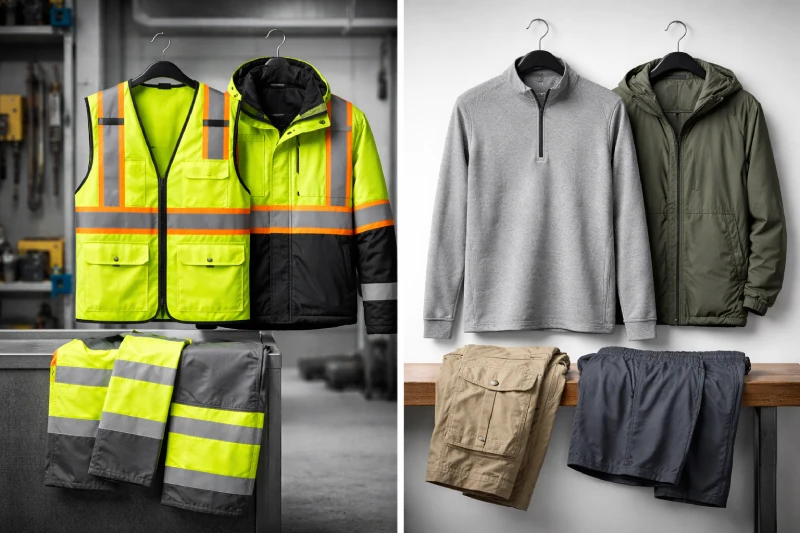
ANSI/ISEA 107 primarily applies to high-visibility safety apparel, including:
- Safety vests
- High-visibility jackets and parkas
- Reflective work shirts and trousers
- Industrial rainwear designed for traffic-exposed environments
These garments are typically used in:
- Construction and roadwork
- Ports, airports, and logistics hubs
- Utilities and public works
- Mining, oil & gas, and heavy manufacturing
Conditionally affected categories
Some products may fall under ANSI requirements depending on use case:
- Workwear with integrated reflective elements
- Functional sportswear used in industrial or traffic-adjacent tasks
- Functional headwear (caps, helmets covers) when marketed or used as visibility aids
In these cases, partial compliance or component-level requirements may apply.
Not covered by the standard
ANSI/ISEA 107 does not apply to:
- Casual sportswear or lifestyle apparel
- Promotional T-shirts or event clothing
- Fashion headwear with decorative reflective accents
- PPE governed by other standards (e.g., flame-resistant or arc-rated garments)
Misapplying ANSI claims to these categories is a common procurement error.
Practical Implications for Product Design and Manufacturing
Materials and colors
ANSI-compliant garments require fluorescent background materials that enhance daytime visibility. Common approved colors include:
- Fluorescent yellow-green
- Fluorescent orange-red
These fabrics are engineered to reflect UV light, making the wearer stand out against natural and industrial backgrounds.
Key implication for buyers: Not all “bright” fabrics qualify. Color matching alone is insufficient without appropriate material performance.
Reflective elements and construction
Retroreflective tape or trims must:
- Meet minimum width and performance levels
- Be placed in defined configurations (often encircling the torso and limbs)
- Maintain visibility when the wearer is in motion
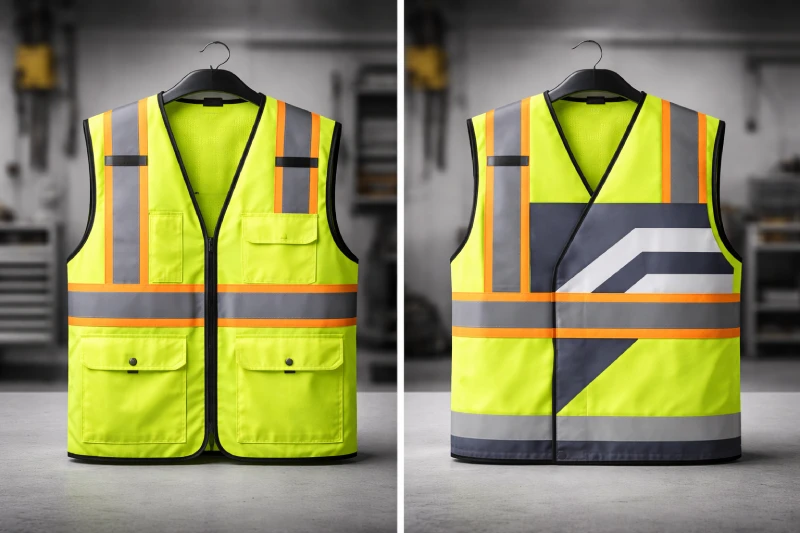
Garment pattern design, panel breaks, seams, and pockets all affect whether required visible areas are preserved.
Design takeaway: Over-segmentation or decorative paneling can unintentionally reduce compliant surface area.
Printing, logos, and customization
Custom branding is allowed—but with limits.
Common considerations:
- Large logos printed over fluorescent areas can reduce effective background visibility
- Dense ink coverage may interfere with reflective performance
- Heat transfer, screen printing, and embroidery must be planned around visibility zones
Best practice: Branding should be positioned so it does not interrupt required fluorescent or reflective areas.
Common Compliance Mistakes Buyers Should Avoid
1. Assuming all “hi-vis” products are compliant
High-visibility appearance ≠ ANSI compliance. Without proper material specs and layout, garments may fail performance thresholds.
2. Over-branding safety garments
Large logos, full-panel prints, or dark overlays can invalidate otherwise compliant designs.
3. Mixing standards without clarity
ANSI standards are different from:
- EN ISO 20471 (Europe)
- AS/NZS standards (Australia/New Zealand)
Products designed for one region are not automatically interchangeable.
4. Requesting unsupported certification claims
Suppliers should not be asked to “certify” products without testing or documentation. Unsupported claims create legal and reputational risk for buyers.
5. Ignoring end-use context
The required class or configuration depends on where and how the garment will be worn—not just who is buying it.
How Buyers Can Ensure Compliance in Bulk Orders
Define the use scenario clearly
Before requesting quotes, specify:
- Work environment (roadside, warehouse, port, etc.)
- Exposure to vehicle traffic
- Day/night or low-light conditions
This determines whether ANSI standards are relevant—and to what extent.
Request design validation, not just samples
Ask suppliers to:
- Confirm visible area calculations
- Review logo placement against visibility zones
- Explain how materials and trims meet performance intent
Separate compliant and non-compliant SKUs
If ordering mixed apparel categories:
- Keep ANSI-intended items as separate SKUs
- Avoid applying compliance language to non-covered products
Plan customization early
Logo size, placement, and method should be finalized before production, not adjusted after sampling.
Compliance-Focused Conclusion
ANSI safety apparel standards are not about labels or marketing claims—they are about measurable visibility performance in real-world risk environments. For overseas B2B buyers, the key to successful compliance lies in understanding when the standard applies, what it actually controls, and how design decisions affect visibility outcomes.
By approaching ANSI requirements as a design and procurement framework, rather than a checkbox, buyers can source workwear, functional apparel, and headwear that meet safety expectations without unnecessary cost, redesign, or compliance risk.
Discuss Your Apparel Sourcing Requirements
Whether you're launching a startup clothing brand, expanding a streetwear label, or looking for a reliable OEM apparel manufacturer, speaking directly with an experienced production team can help you avoid costly sourcing mistakes.
Talk With Our Manufacturing Team