

Choosing the best sweatshirt for DTG printing is not about brand names or trends — it’s about fabric performance, structural stability, and production consistency. In direct-to-garment (DTG) printing, the blank garment directly determines print clarity, color vibrancy, ink absorption behavior, and long-term durability. Even small differences in cotton content, surface smoothness, or fabric weight can significantly affect final output quality.
For a broader understanding of how fabric, cost, and production decisions connect in DTG manufacturing, refer to our complete DTG T-shirt printing guide.
For B2B buyers, private label brands, and OEM sourcing managers, selecting the right DTG-ready sweatshirt also impacts scalability. Bulk production requires consistent dye lots, controlled shrinkage rates, and stable knit structures to maintain uniform print results across thousands of pieces.
This guide breaks down the key technical factors behind DTG-compatible sweatshirts — from fiber composition and GSM selection to dark garment printing considerations and wholesale sourcing criteria. Whether you are launching a streetwear line, planning promotional merchandise, or scaling a print-on-demand operation, understanding these fundamentals helps reduce production risk and improve repeatability.
What Makes a Sweatshirt Good for DTG Printing?
A sweatshirt suitable for DTG printing must provide a stable, ink-friendly surface that supports high-resolution detail and consistent color reproduction. The following technical factors determine whether a garment performs well under DTG production:
1. Cotton Content
Higher cotton content (ideally 80–100%) allows water-based DTG inks to absorb properly into the fibers. Cotton bonds naturally with pigment ink, producing sharper details and more vibrant colors. Lower cotton ratios may reduce saturation and wash durability.
2. Surface Smoothness
A tightly knit, smooth outer surface ensures better ink placement accuracy. Excessive fuzziness, brushed texture, or uneven yarn structure can cause ink diffusion, leading to blurred edges or reduced image clarity — particularly in fine graphics.
3. GSM Balance (Fabric Weight)
Fabric weight affects ink absorption and garment stability. Extremely lightweight fabrics may warp during printing, while overly thick fleece can absorb too much ink or slow drying time. A balanced GSM improves print consistency and hand feel.
4. Shrinkage Control
Post-wash shrinkage can distort printed artwork. Pre-shrunk or shrinkage-controlled fabrics help maintain graphic alignment and sizing accuracy after laundering.
5. Color Consistency
Uniform dye lots are critical in bulk DTG production. Inconsistent base color tones can alter how printed colors appear, especially in brand-sensitive applications.
Best Fabric Types for DTG Sweatshirts
Fabric composition directly influences color vibrancy, edge definition, drying efficiency, and long-term wash performance in DTG printing. While multiple blends are available in the wholesale market, not all structures respond equally to water-based pigment ink. Below are the most commercially relevant fabric options for DTG sweatshirts.
100% Cotton (80–100%)
High-cotton sweatshirts deliver the most accurate color reproduction and sharpest detail. Because DTG ink chemically bonds with cotton fibers, prints appear brighter and more saturated compared to synthetic-heavy blends. Fine lines, gradients, and photographic designs benefit most from this fiber composition.
However, pure cotton garments often carry higher material costs. They may also require stricter shrinkage control during manufacturing to maintain sizing stability in bulk production.
Cotton–Poly Blend
Cotton-polyester blends (typically 50/50 to 80/20) offer improved structural stability and reduced shrinkage. Polyester fibers increase durability and help garments retain shape after repeated washing.
The trade-off is slightly reduced color saturation. Because polyester does not absorb DTG ink the same way cotton does, prints may appear marginally less vibrant. For commercial programs prioritizing durability and cost control, blends remain a practical option.
French Terry vs. Brushed Fleece
Beyond fiber content, fabric construction matters:
- French Terry features a smoother outer surface and looped interior. The flat exterior is ideal for detailed DTG artwork and smaller typography.
- Brushed Fleece has a soft, raised interior and sometimes a slightly fuzzier outer surface. While comfortable and popular in streetwear, excessive surface texture can soften fine graphic details.
Fabric Comparison Overview
| Fabric Type | Color Vibrancy | Detail Sharpness | Structural Stability | Typical Cost Level |
|---|---|---|---|---|
| 100% Cotton | Excellent | Excellent | Moderate | Higher |
| Cotton-Poly Blend | Good | Good | High | Moderate |
| French Terry | Very Good | Very Good | High | Moderate |
| Brushed Fleece | Good | Moderate | High | Moderate |
Selecting the right fabric ultimately depends on your brand positioning, artwork complexity, and production scale requirements.
Recommended GSM for DTG Sweatshirts
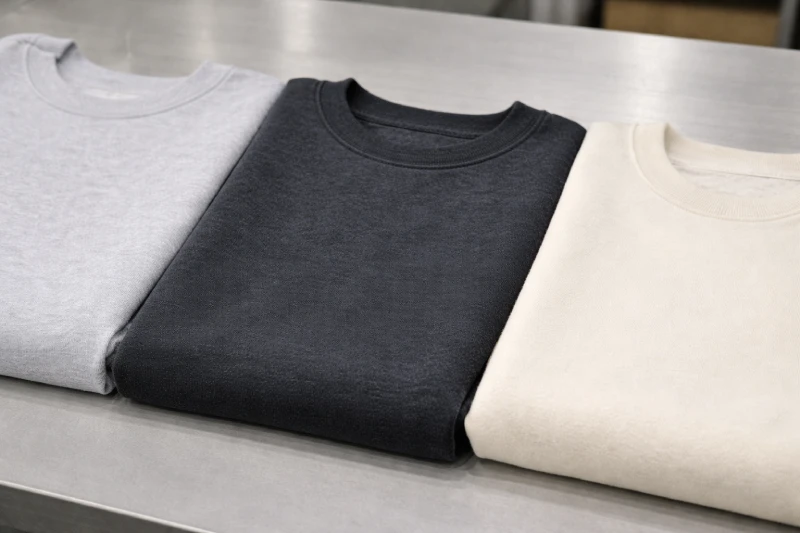
Fabric weight, measured in GSM (grams per square meter), plays a critical role in DTG print performance. GSM influences ink absorption, drying behavior, garment structure, and overall hand feel. Selecting the appropriate weight depends on your target market positioning and production goals.
240–280 GSM (Lightweight)
Lightweight sweatshirts in the 240–280 GSM range are suitable for transitional seasons and fashion-forward retail collections. From a DTG perspective, thinner fabrics allow faster ink penetration and quicker drying times.
However, lower GSM garments may be more prone to slight fabric movement during printing. Proper platen adjustment and fabric stability are important to maintain edge sharpness, especially for high-detail artwork.
300–350 GSM (Commercial Mainstream)
This range represents the most widely used category for DTG sweatshirts in bulk production. The fabric provides enough structure to remain stable during printing while still allowing consistent ink absorption.
300–350 GSM garments balance durability, comfort, and print clarity. Drying times remain manageable, and the hand feel after printing is generally smooth without excessive ink buildup. For most B2B programs, this range offers the safest balance between cost efficiency and print quality.
400+ GSM (Premium Heavyweight)
Heavyweight sweatshirts above 400 GSM are typically positioned as premium or luxury streetwear. The thicker structure improves garment drape and perceived value.
In DTG printing, heavier fabrics can absorb more ink, especially on dark garments with white underbase layers. This may extend curing time and slightly increase production cost. However, when properly calibrated, heavyweight cotton fleece can still produce strong, durable prints.
Printing on Dark Sweatshirts: Underbase & Pretreatment
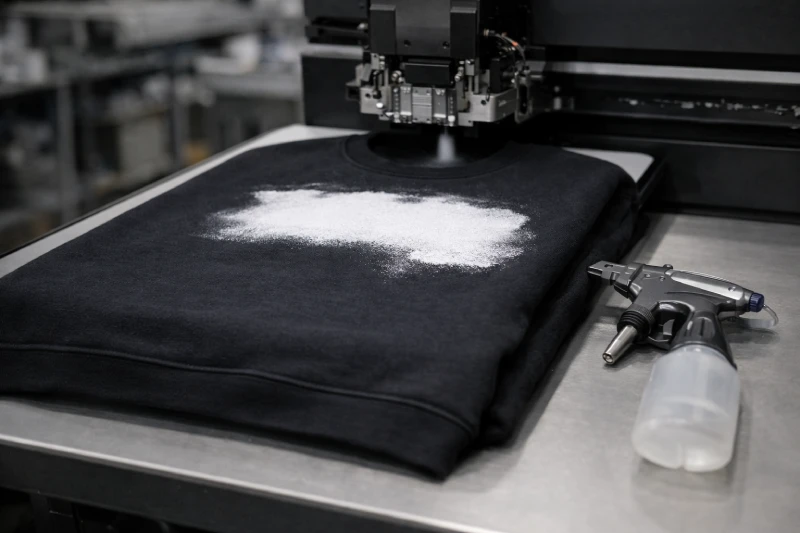
Printing on dark sweatshirts introduces additional technical steps compared to light garments. The primary reason is contrast. DTG inks are water-based and semi-translucent, meaning they rely on the fabric surface to reflect color. On dark fabrics, colors would appear muted or invisible without a white foundation layer.
Why a White Underbase Is Required
A white underbase acts as a primer layer beneath the colored ink. It blocks the dark garment color from interfering with the printed design and allows top colors to appear vibrant and accurate. Without this layer, reds, yellows, and lighter tones may lose saturation or shift in hue.
The underbase also influences hand feel. Excessive white ink can create a heavier print texture, especially on thicker fleece fabrics.
Risks with Dark Fleece
Dark brushed fleece presents specific challenges:
- Surface fibers may interfere with precise ink placement
- Raised texture can reduce edge sharpness
- Excess ink absorption may increase drying time
Maintaining a smooth outer surface and consistent fabric density helps reduce these risks.
Is Pretreatment Always Necessary?
For dark garments, pretreatment is generally required. Pretreatment solution prepares the fabric surface to properly bond with white ink and prevents bleeding. Improper or uneven pretreatment is one of the most common causes of print defects.
Common Failure Causes
- Uneven pretreatment application
- Excess moisture before printing
- Inconsistent white underbase thickness
- Poor curing control
Best Wholesale Sweatshirts for DTG Printing (B2B View)
From a B2B perspective, the “best” DTG sweatshirt is not defined only by print quality on a single sample. It is defined by how consistently that quality can be repeated across hundreds or thousands of units. Bulk DTG production demands fabric stability, dye uniformity, and structural durability that hold up over time.
Fabric Consistency
Consistent knit density and yarn quality ensure predictable ink absorption. Variations in surface texture between production batches can lead to visible differences in color saturation or edge clarity. For scalable DTG programs, suppliers must maintain stable fabric specifications across repeat orders.
Dye Lot Stability
Color consistency between dye lots is critical. Even slight variations in base garment shade can alter how printed colors appear. This is especially important for brands with strict visual identity guidelines or recurring seasonal restocks.
Pilling Control
Surface pilling affects both garment appearance and print longevity. Lower-quality fleece may develop fiber balls after washing, which can distort printed graphics over time. Higher-grade yarns and proper finishing processes help reduce this risk.
Rib Cuff & Hem Durability
Sweatshirts used for retail or promotional programs must maintain structural integrity. Weak rib cuffs or poor elasticity can reduce perceived quality, even if the print itself remains intact. For wholesale buyers, trim durability is part of overall product performance.
Bulk Repeatability
Ultimately, the strongest indicator of a reliable DTG sweatshirt supplier is repeatability. Can the same fabric composition, GSM, shrinkage rate, and color tone be delivered consistently across large production cycles? Scalable sourcing depends on controlled manufacturing standards rather than one-time sampling success.
For OEM and private label programs, evaluating these stability factors is as important as evaluating the print itself.
DTG Sweatshirt Printing Cost Considerations
Understanding DTG sweatshirt cost structure helps buyers plan margins and select the right blank garment category. While DTG eliminates screen setup fees, total cost still depends on garment selection and artwork specifications.
Blank Garment Cost
The base sweatshirt price varies by fabric composition, GSM, and construction quality.
- 100% cotton, heavyweight fleece blanks typically cost more.
- Cotton-poly blends or midweight garments offer a more cost-efficient entry point.
For B2B buyers, consistent bulk pricing and stable supply matter more than small unit price differences.
Ink Coverage
DTG pricing is often influenced by print size and ink usage.
- Small chest logos use minimal ink and reduce per-piece cost.
- Large front graphics or full-back prints require higher ink coverage.
More ink also means longer curing time, slightly increasing production cycle time.
Dark Garment Extra Cost
Printing on dark sweatshirts generally costs more than printing on light colors. The additional white underbase layer increases ink consumption and processing time. Pretreatment is also mandatory, adding another operational step.
This difference becomes significant in bulk production, especially for high-coverage designs.
Production Speed
DTG is ideal for short runs and flexible designs, but it is slower than traditional screen printing for very large volumes. Complex artwork with heavy ink layering can reduce machine throughput.
DTG vs DTF for Sweatshirts
When selecting a decoration method for sweatshirts, DTG and DTF serve different commercial needs. Both technologies support full-color graphics, but they differ in flexibility, surface behavior, and scalability.
Print Flexibility
DTG prints directly onto the garment surface, allowing soft-hand feel and natural ink absorption — particularly effective on high-cotton sweatshirts. It works best for smooth, stable fabrics.
DTF (Direct-to-Film), by contrast, transfers a printed film onto the garment using heat and adhesive powder. This makes it more adaptable across blended fabrics, including higher polyester ratios.
Durability
Properly cured DTG prints on cotton garments offer strong wash resistance and breathable comfort. However, durability depends heavily on fabric quality and pretreatment consistency.
DTF prints form a thin transfer layer on top of the fabric. They generally provide high stretch resistance and consistent results across various material types, though the hand feel may be slightly less breathable compared to DTG.
Large Graphic Suitability
For oversized graphics or designs requiring heavy white underbase on dark sweatshirts, DTF can sometimes offer more predictable coverage. DTG remains highly effective but may require additional ink layering and curing time.
MOQ Impact
DTG is well suited for short runs, on-demand production, and variable designs because it does not require film preparation or transfer staging.
DTF can be efficient for mid-volume production when multiple garments share the same graphic, as transfers can be prepared in batches.
The choice between DTG and DTF depends on fabric composition, artwork size, production volume, and desired hand feel.
How to Choose a DTG-Ready Sweatshirt Supplier
Selecting a DTG-ready sweatshirt supplier requires more than evaluating sample print quality. For scalable programs, the supplier must demonstrate measurable fabric control, consistent production standards, and repeatable bulk performance.
Fabric Test Reports
Reliable manufacturers should provide technical documentation covering fiber composition, GSM tolerance range, and fabric construction details. Lab testing for shrinkage rate, dimensional stability, and pilling resistance helps reduce production risk before mass printing begins.
Shrinkage Rate Control
Uncontrolled shrinkage can distort printed graphics after washing. A DTG-compatible supplier should maintain shrinkage within predictable tolerances and ideally offer pre-shrunk or stabilized fabric programs.
Colorfastness & Dye Stability
Color consistency between batches is essential. Request colorfastness testing results and dye lot control processes. Even slight tone variations can alter how DTG colors appear on repeated orders.
Production Repeatability
The most important factor is repeatability at scale. Can the supplier deliver the same cotton ratio, surface smoothness, rib elasticity, and finishing quality across multiple production cycles?
For OEM and private label brands, long-term DTG success depends on stable manufacturing standards — not one-time sample performance.
FAQs
What is the best fabric for DTG sweatshirts?
The best fabric for DTG sweatshirts is typically 100% cotton or high-cotton blends (80%+). Cotton fibers absorb water-based DTG ink more effectively, producing sharper detail and stronger color vibrancy. A smooth, tightly knit surface further improves print clarity and wash durability.
Is 100% cotton better than blends for DTG?
For color saturation and fine detail, 100% cotton generally performs better. However, cotton-poly blends offer improved structural stability and reduced shrinkage. The best choice depends on whether your priority is maximum print vibrancy or long-term garment durability and cost control.
What GSM works best for DTG sweatshirts?
300–350 GSM is considered the most commercially balanced range. It provides stable structure for printing, good ink absorption, and manageable drying time. Lightweight options print faster, while heavyweight sweatshirts may require more ink and extended curing.
Do sweatshirts need pretreatment for DTG?
Light-colored sweatshirts may not always require pretreatment, but dark garments typically do. Pretreatment ensures proper bonding of white ink underbase and prevents color bleeding. Uneven pretreatment is a common cause of print defects and reduced durability.
Is DTG durable on fleece?
Yes, DTG can be durable on fleece if the outer surface is smooth and properly prepared. Excessively brushed or textured fleece may soften fine details. Correct curing temperature and stable fabric construction are key to maintaining long-term print performance.
Discuss Your Apparel Sourcing Requirements
Whether you're launching a startup clothing brand, expanding a streetwear label, or looking for a reliable OEM apparel manufacturer, speaking directly with an experienced production team can help you avoid costly sourcing mistakes.
Talk With Our Manufacturing Team