
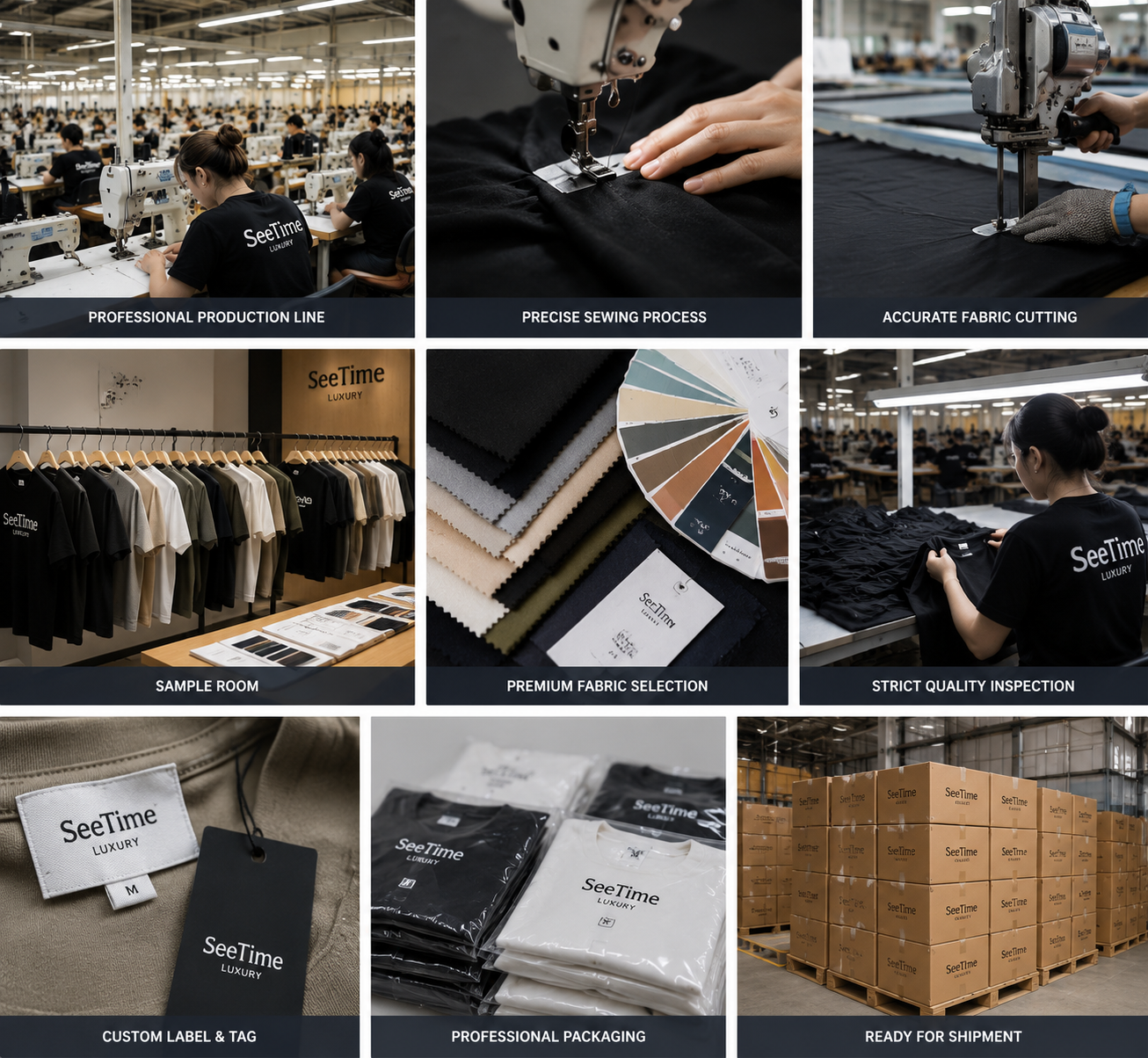
How to Choose a Reliable Custom Apparel Manufacturer for Your Clothing Brand
Launching a successful clothing brand requires more than creative designs and market research. Behind every successful apparel business is a reliable manufacturing partner who can transform ideas into high-quality garments, maintain consistent production standards, and support long-term growth.
Choosing the right custom apparel manufacturer is one of the most important decisions for fashion brands, startups, retailers, and corporate merchandise companies.
A professional manufacturer does more than produce clothing. They help with fabric sourcing, product development, sampling, bulk production, quality control, and delivery management.
For brands looking for OEM clothing production, working with an experienced partner such as SeeTime Luxury can simplify the entire manufacturing process, from initial concept to finished apparel.
Why Choosing the Right Clothing Manufacturer Matters
Your clothing manufacturer directly affects your brand reputation.
A poor manufacturing partner can lead to:
- inconsistent garment quality
- incorrect sizing
- delayed production
- increased return rates
- higher operational costs
According to industry research, apparel brands often lose significant revenue due to production defects, poor inventory planning, and unreliable suppliers. For growing fashion companies, manufacturing consistency is just as important as product design.
A reliable custom clothing manufacturer helps brands achieve:
✔ Stable product quality
✔ Accurate sizing and fitting
✔ Better production efficiency
✔ Competitive manufacturing costs
✔ Reliable delivery schedules
Whether you are building a private label clothing brand or ordering bulk apparel for retail, choosing the right supplier determines your ability to scale.
Factory, Supplier, and Manufacturer: What Is the Difference?
Many brands confuse these three terms. However, they represent different roles in the apparel supply chain.
What Is an Apparel Factory?
An apparel factory is the physical production facility where garments are cut, sewn, assembled, and finished.
The factory is responsible for:
- fabric cutting
- sewing operations
- garment assembly
- pressing
- packaging
- production line management
A factory focuses mainly on production execution.
What Is an Apparel Supplier?
An apparel supplier provides materials or components needed for clothing production.
Examples include:
- fabric suppliers
- zipper suppliers
- button suppliers
- label suppliers
- packaging suppliers
Fabric suppliers usually manage specifications such as:
- GSM (fabric weight)
- fiber composition
- color standards
- shrinkage rate
- durability testing
What Is a Clothing Manufacturer?
A clothing manufacturer manages the complete production process.
Unlike a factory that only handles manufacturing operations, a professional manufacturer coordinates:
- product development
- pattern making
- fabric sourcing
- sampling
- bulk production
- quality inspection
- logistics
A manufacturer acts as the bridge between a brand’s creative idea and a finished product.
For most brands, working with a full-service OEM apparel manufacturer is more efficient than managing multiple suppliers and factories independently.
Understanding the Custom Apparel Manufacturing Process
A professional apparel production process usually includes several key stages.
1. Design and Product Development
Everything starts with a product concept.
Brands provide:
- design sketches
- technical drawings
- measurements
- fabric requirements
- branding details
A detailed tech pack helps manufacturers understand construction requirements, stitching methods, trims, and finishing.
2. Fabric and Material Selection
Fabric selection directly affects:
- comfort
- durability
- appearance
- production cost
Common apparel materials include:
- cotton
- organic cotton
- polyester
- nylon
- fleece
- blended fabrics
Experienced manufacturers help brands select materials based on product positioning and target customers.
3. Pattern Making and Sampling
Before mass production, manufacturers create samples.
Sampling allows brands to evaluate:
- garment fitting
- fabric performance
- stitching quality
- logo placement
- overall appearance
Most professional manufacturers recommend multiple sample adjustments before bulk production.
4. Bulk Production
Once the sample is approved, production begins.
Depending on product complexity and order volume:
- Small batch production: 100-500 pieces
- Medium production: 500-5,000 pieces
- Large production: 5,000+ pieces
Production timelines usually range from:
- Sample development: 7-20 days
- Bulk production: 30-60 days
Actual timelines depend on materials, quantity, customization requirements, and factory capacity.
5. Quality Control
Quality control is essential for maintaining brand standards.
Professional manufacturers typically inspect:
Fabric Quality
Checking:
- color consistency
- fabric defects
- shrinkage
Production Quality
Checking:
- stitching strength
- measurements
- finishing details
Final Inspection
Checking:
- appearance
- packaging
- quantity accuracy
A strong QC system reduces defective products and protects brand reputation.
Key Factors When Choosing a Custom Apparel Manufacturer
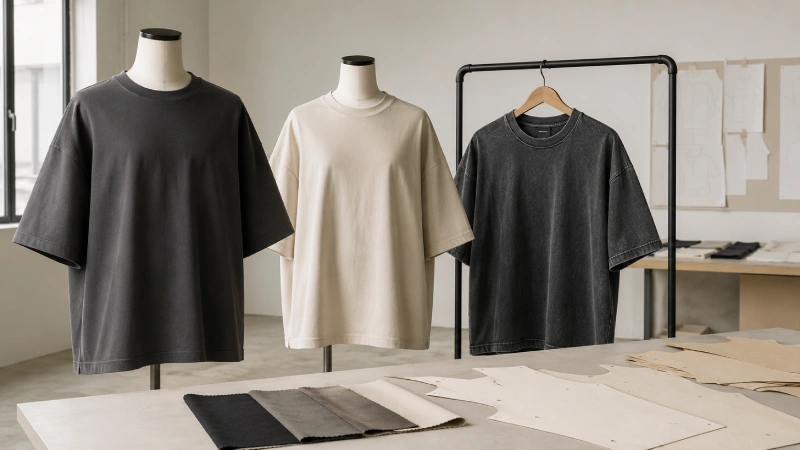
1. Manufacturing Experience
Choose a manufacturer with experience producing similar products.
For example:
- streetwear brands need different expertise than uniform suppliers
- luxury apparel requires different craftsmanship than basic T-shirts
Review previous production examples before making a decision.
2. Minimum Order Quantity (MOQ)
MOQ is one of the biggest concerns for emerging brands.
Different manufacturers have different requirements.
Typical MOQ ranges:
| Production Type | MOQ Range |
|---|---|
| Private label apparel | 50-300 pcs/style |
| Custom apparel production | 300-1,000 pcs/style |
| Large-scale manufacturing | 5,000+ pcs |
Finding the right MOQ allows brands to test products without excessive inventory risk.
3. OEM and Private Label Capability
Many modern brands prefer private label manufacturing because it allows them to customize:
- clothing labels
- packaging
- logos
- fabrics
- colors
- designs
A professional private label clothing manufacturer helps brands create unique products without building their own factory.
4. Production Transparency
Reliable manufacturers should clearly communicate:
- production timeline
- material sourcing
- quality standards
- possible risks
Avoid suppliers who cannot provide:
- production samples
- factory information
- previous projects
- clear communication
Why Many Brands Choose Overseas Clothing Manufacturers
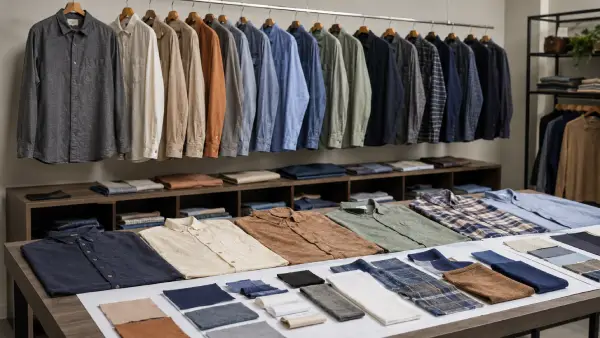
Many global brands work with overseas manufacturers because they provide:
Competitive Production Costs
Countries with mature textile supply chains can offer:
- lower material costs
- experienced workers
- complete supply networks
Larger Production Capacity
Established manufacturers can support:
- seasonal collections
- repeat orders
- global distribution
Strong Supply Chain Integration
Major apparel manufacturing regions provide access to:
- fabric mills
- printing factories
- embroidery services
- packaging suppliers
How SeeTime Luxury Supports Apparel Brands
Choosing a manufacturing partner means choosing someone who understands your product goals.
SeeTime Luxury provides professional apparel manufacturing solutions for brands looking for:
- custom apparel production
- OEM clothing manufacturing
- private label clothing
- bulk apparel orders
From product development and material selection to sampling and final production, SeeTime Luxury helps brands build reliable apparel collections.
Internal links:
- Custom Apparel Manufacturing Services → /custom-apparel-manufacturer
- Private Label Clothing Solutions → /private-label-clothing
- OEM Clothing Production → /oem-clothing-manufacturer
- Apparel Manufacturing Process → /manufacturing-process
Common Mistakes Brands Should Avoid
Choosing Only Based on Price
The cheapest supplier is not always the best option.
Low prices may indicate:
- lower material quality
- limited QC
- production delays
Skipping Sample Approval
Never start bulk production without reviewing samples.
Samples reveal potential issues before large investments are made.
Ignoring Communication
Poor communication often leads to:
- incorrect specifications
- missed deadlines
- production mistakes
A reliable manufacturer should provide regular updates throughout production.
Frequently Asked Questions
What is a custom apparel manufacturer?
A custom apparel manufacturer produces clothing according to a brand’s designs, specifications, materials, and branding requirements.
What is the difference between OEM and private label clothing?
OEM manufacturing creates products based on a brand’s specifications, while private label allows brands to customize existing products with their own branding.
How much MOQ do clothing manufacturers require?
MOQ depends on product type and customization level. Many manufacturers offer 100-500 pieces for smaller brands, while larger orders may require thousands of units.
How long does apparel manufacturing take?
Most custom apparel projects require 30-60 days for bulk production after sample approval.
Conclusion
Finding the right custom apparel manufacturer is a critical step for any clothing brand.
The ideal partner should provide:
- manufacturing expertise
- reliable quality control
- flexible MOQ options
- transparent communication
- scalable production capability
By choosing an experienced OEM apparel manufacturer like SeeTime Luxury, brands can turn creative ideas into high-quality products and build a stronger apparel business.
Discuss Your Apparel Sourcing Requirements
Whether you're launching a startup clothing brand, expanding a streetwear label, or looking for a reliable OEM apparel manufacturer, speaking directly with an experienced production team can help you avoid costly sourcing mistakes.
Talk With Our Manufacturing Team