

Selecting hoodies for workwear programs, corporate events, or team apparel is not a simple product choice—it is a procurement decision that affects brand visibility, employee comfort, and long-term supply stability.
For overseas B2B buyers, the process must go beyond style preference and focus on functionality, customization feasibility, bulk production planning, and supplier capability.
This guide provides a structured decision framework to help procurement managers, brand owners, and distributors evaluate hoodie sourcing projects efficiently—while understanding how considerations may differ across other apparel categories such as caps, polos, or safety garments.
1. Define the Primary Use Case Before Choosing Hoodies for Workwear
Before discussing fabric or customization, clarify the functional objective. Hoodies serve different purposes depending on the scenario.
A. Workwear Hoodies (Operational Environments)
- Industrial workshops
- Warehouses
- Logistics operations
- Construction sites
- Outdoor service teams
Key priorities:
- Durability and abrasion resistance
- Reinforced seams
- Practical pocket structures
- Compatibility with safety vests or PPE
B. Event or Promotional Hoodies
- Corporate exhibitions
- Marketing campaigns
- Product launches
- Brand roadshows
Key priorities:
- Visual impact
- Print compatibility
- Lightweight comfort
- Fast production turnaround
C. Teamwear & Corporate Uniform Hoodies
- Retail staff
- Franchise chains
- Campus programs
- Internal team identity
Key priorities:
- Consistent color matching
- Long-term reorder capability
- Structured size grading
- Brand alignment
Decision Principle: Always define the operational scenario first. Fabric, weight, and customization method should follow the application—not the other way around.
2. Fabric Selection Framework: Weight, Composition & Performance
Fabric choice directly impacts cost, durability, and user comfort.
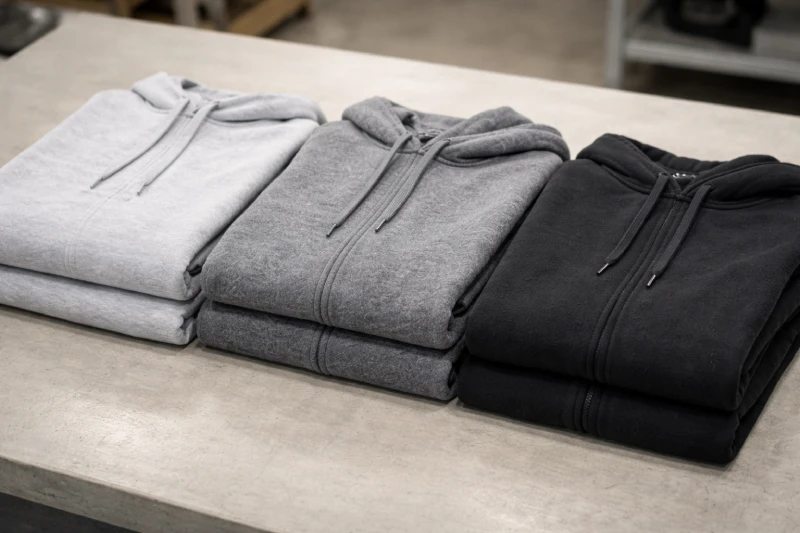
Key Hoodie Fabric Options
| Fabric Type | Typical Use | Advantages | Considerations |
|---|---|---|---|
| Cotton | Teamwear, Events | Soft, breathable, good print surface | Higher shrinkage if untreated |
| Cotton/Poly Blend | Workwear, Retail | Better shape retention, durability | Slightly less breathable |
| Polyester | Sports & Activewear | Lightweight, quick-drying | Less suitable for heavy-duty industrial work |
| Brushed Fleece | Cold environments | Warm, comfortable | Higher fabric weight |
| Technical Fabric | Performance teams | Moisture-wicking, stretch | Higher cost |
GSM (Fabric Weight) Guidance
- 220–280 GSM: Lightweight, suitable for indoor events or promotional use
- 300–350 GSM: Standard corporate uniform hoodies
- 380+ GSM: Heavy-duty workwear and cold-climate operations
For overseas bulk orders, confirm:
- Fabric shrinkage rate
- Colorfastness
- Pilling resistance
- Wash durability
These technical details are particularly important for long-term uniform programs.
3. Construction & Durability Standards
When choosing hoodies for workwear programs, construction quality becomes critical.
Structural Features to Evaluate
- Double-stitched seams
- Reinforced shoulder areas
- Rib cuff elasticity recovery
- Zipper quality (if applicable)
- Fabric brushing consistency
For comparison:
| Feature | Hoodies | Caps | Polos |
|---|---|---|---|
| Seam stress importance | High | Medium | Medium |
| Fabric thickness impact | High | Low | Medium |
| Fit tolerance complexity | High | Low | Medium |
| Size grading range | Wide | Limited | Moderate |
Garments such as hoodies involve complex size grading and fit tolerances compared to caps or headwear. This increases production planning complexity and sampling importance.
4. Customization Methods & Brand Application
Customization is often the core driver behind bulk hoodie sourcing.
Common Branding Methods
- Screen printing
- Embroidery
- Heat transfer
- Puff print
- Reflective print (for safety programs)
Selection Logic
| Method | Suitable For | Best On | Notes |
|---|---|---|---|
| Screen Print | Event bulk orders | Cotton surfaces | Cost-efficient for high volumes |
| Embroidery | Corporate uniforms | Fleece / thicker fabrics | Premium appearance |
| Heat Transfer | Sportswear | Polyester blends | Fine detail reproduction |
| Reflective Print | Safety apparel | Workwear hoodies | Visibility compliance |
For workwear & safety apparel, confirm whether reflective elements comply with regional safety standards if applicable.
Customization on caps differs significantly from garments due to curved surfaces and smaller print areas. Buyers managing multi-category sourcing should coordinate artwork adaptation across product types.
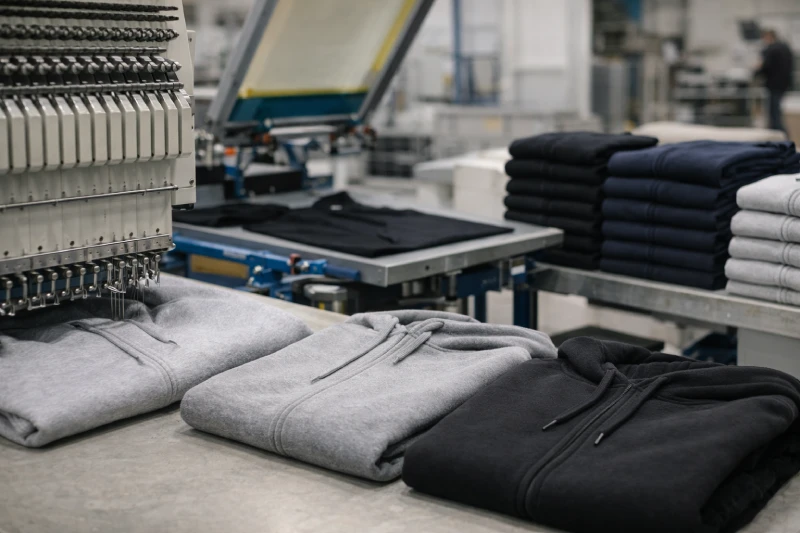
5. Bulk Order Planning & MOQ Considerations
For overseas procurement, MOQ and production structure are strategic factors.
Typical MOQ Scenarios
- Standard hoodie design: Moderate MOQ
- Custom fabric color: Higher MOQ
- Special dyeing or custom pantone match: Higher MOQ
- Multiple size ratios: May affect carton planning
Questions Buyers Should Clarify
- Is MOQ per color or total order?
- Does embroidery require separate minimum quantity?
- Can size ratios be adjusted within one bulk order?
- Is there flexibility for trial orders?
In comparison:
- Caps often have lower size complexity but similar logo MOQ.
- Safety apparel may require certification testing, impacting MOQ and lead time.
6. Lead Time & Production Scheduling
Lead time depends on customization complexity and supply chain coordination.
General Production Phases
- Fabric sourcing
- Sampling & approval
- Bulk cutting & sewing
- Printing/embroidery
- Quality inspection
- Packing & export
Estimated Timeline Structure (Example Framework)
| Stage | Estimated Duration |
|---|---|
| Sampling | 5–10 days |
| Fabric production | 10–20 days |
| Bulk production | 20–30 days |
| Custom decoration | 5–10 days |
| Final QC & packing | 3–7 days |
Actual timelines vary based on order volume and complexity.
For event-driven projects, reverse scheduling is recommended. Work backward from the required delivery date to determine production cutoff.
7. Quality Control & Compliance
Quality consistency is essential for brand credibility.
Recommended QC Checkpoints
- Pre-production sample confirmation
- Fabric inspection (shrinkage, GSM verification)
- In-line sewing inspection
- Logo placement accuracy check
- Final random inspection before shipment
For safety-oriented hoodies:
- Verify reflective tape placement accuracy
- Confirm wash durability performance
- Review applicable regional compliance standards
Buyers handling cross-category programs should standardize inspection criteria across hoodies, caps, polos, and sportswear for brand consistency.
8. Packaging & Logistics Planning
Hoodies occupy more volume compared to caps or T-shirts.
Packaging Factors
- Individual polybag vs bulk packing
- Carton dimension planning
- Labeling requirements
- Barcoding (for retail programs)
Heavy fleece hoodies significantly increase freight cost compared to lightweight activewear garments. For large international shipments, carton optimization and freight method selection should be evaluated early.
9. Comparing Hoodies Across Different Application Scenarios
| Scenario | Fabric Weight | Branding Method | Priority Focus |
|---|---|---|---|
| Industrial Workwear | 350–400 GSM | Embroidery / Reflective | Durability |
| Corporate Uniform | 300–350 GSM | Embroidery | Brand consistency |
| Event Giveaway | 220–280 GSM | Screen Print | Cost efficiency |
| Sports Teamwear | 250–320 GSM | Heat Transfer | Performance |
This matrix helps procurement managers align product specifications with operational needs rather than relying on general hoodie categories.
10. Risk Management for Overseas Buyers
When sourcing internationally, consider:
- Clear technical specification sheets
- Written confirmation of fabric composition
- Pantone color matching agreement
- Logo size & placement diagrams
- Pre-shipment inspection option
Establishing repeatable production standards is more important than focusing on a single shipment.
Long-term buyers often benefit from:
- Production file archiving
- Reorder color continuity management
- Seasonal forecast planning
Final Decision Checklist
Before confirming your hoodie project, ensure:
✔ Use case clearly defined
✔ Fabric weight and composition selected
✔ Customization method matched to fabric
✔ MOQ and size ratios confirmed
✔ Lead time aligned with delivery deadline
✔ QC checkpoints established
✔ Packaging and freight strategy reviewed
This structured approach minimizes risk and improves supply chain predictability.
Conclusion: Planning Your Hoodie Sourcing Strategy
Choosing hoodies for workwear, events, or teamwear requires more than selecting a style—it requires a procurement strategy built around application, customization feasibility, and production scalability.
For overseas B2B buyers managing multi-category apparel programs, aligning hoodie specifications with operational needs while coordinating branding across caps, polos, activewear, and safety apparel ensures long-term consistency and efficiency.
If you are planning a bulk hoodie program or evaluating multi-category uniform sourcing, we welcome the opportunity to review your project requirements and provide structured production guidance tailored to your market.
Discuss Your Apparel Sourcing Requirements
Whether you're launching a startup clothing brand, expanding a streetwear label, or looking for a reliable OEM apparel manufacturer, speaking directly with an experienced production team can help you avoid costly sourcing mistakes.
Talk With Our Manufacturing Team