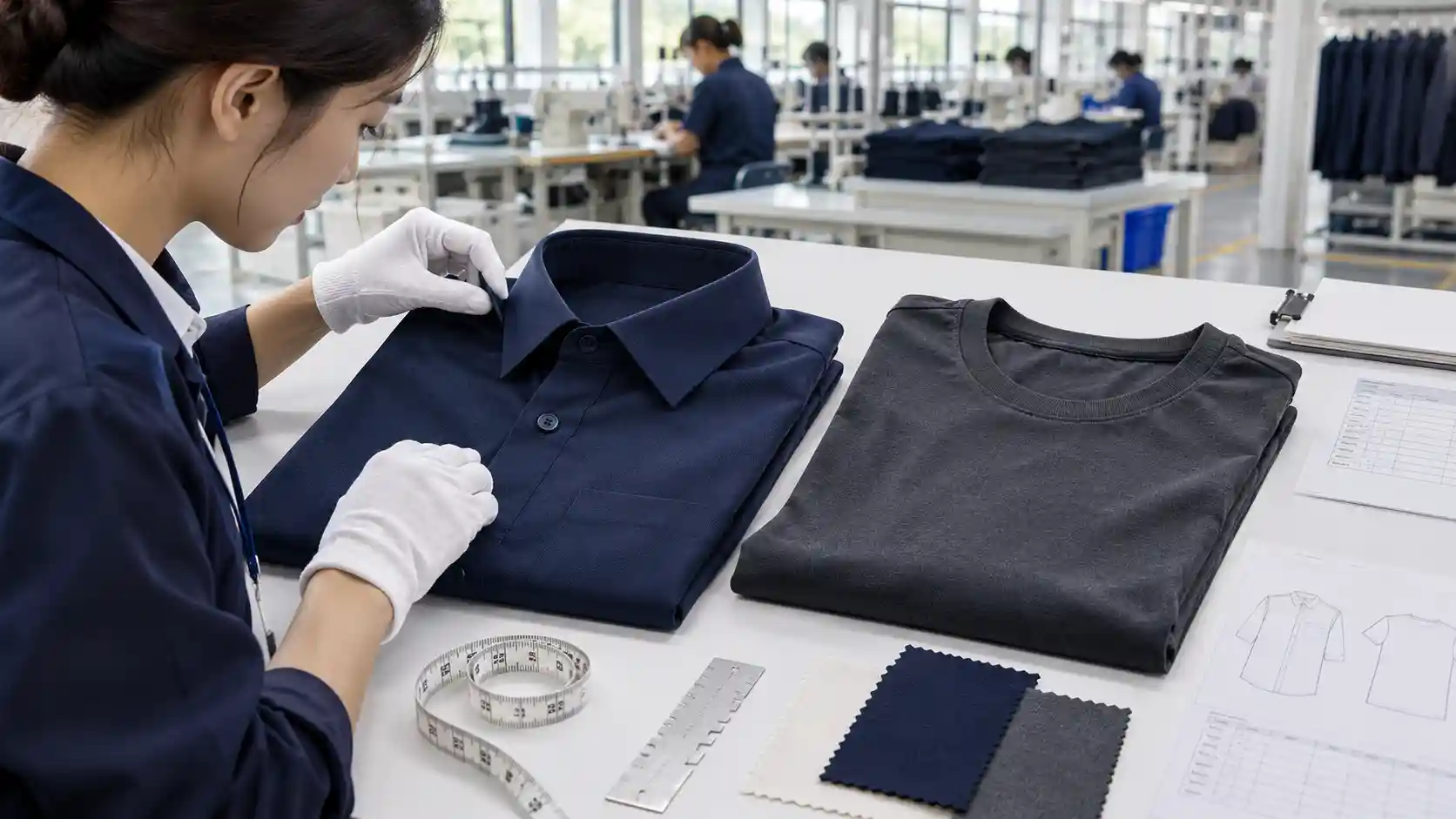
An approved sample confirms the design direction, but it does not automatically guarantee that bulk production will match. Clothing manufacturer quality control means checking the fabric, measurements, construction, decoration, labels and packaging against an approved specification at the right production stages. Before bulk production, buyers should lock the reference sample, material version, measurement points, decoration artwork and packing requirements.
This guide explains the checks that reduce the most common bulk-order problems for T-shirts, shirts, hats and leather jackets. MOQ, sample timing, production timing and pricing should be confirmed per project.
What does clothing manufacturer quality control include?
Quality control (QC) is the inspection of materials, work in progress and finished garments against agreed requirements. Quality assurance (QA) is the wider system that prevents defects through specifications, approvals and process controls. In practice, a buyer needs both:
- Pre-production control: confirm the tech pack, fabric, trims, decoration, labels, packaging and approved sample before cutting.
- In-line control: check cutting, sewing, construction and decoration while production is still being completed.
- Final control: check measurements, appearance, function, labeling, assortment and packing before shipment.
Industry inspection guides commonly group garment checks around fabric, cutting, sewing, finishing, packaging, sizing and defect classification. Tetra Inspection’s clothing QC guide and Eurofins’ garment QC overview both place the approval and inspection stages around the buyer’s agreed specifications.
Why can bulk clothing look different from the approved sample?
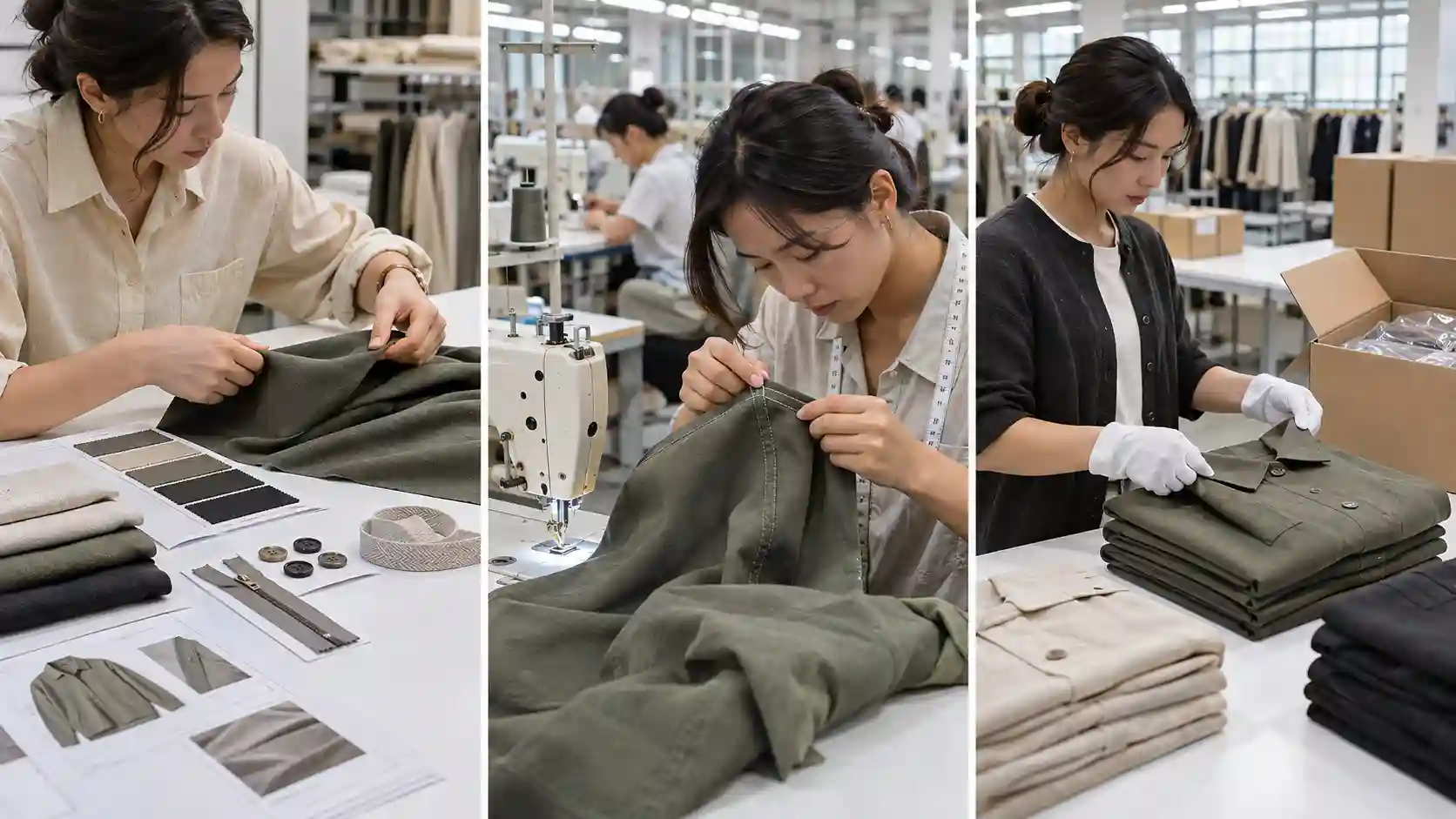
The usual problem is not that a sample was useless. The problem is that the sample was approved without defining which parts of it must be reproduced in bulk. Common gaps include:
- The sample uses a provisional fabric or trim rather than the bulk-approved version.
- Only one size is reviewed, so grading problems are missed across the size range.
- Shrinkage, colorfastness or wash behavior is not checked before cutting.
- Print, embroidery or logo placement is approved visually but not locked by artwork, dimensions and position.
- Labels, hangtags and packaging are handled as a late-stage detail.
- The factory and buyer are working from different revisions of the tech pack or artwork.
- There is no written process for recording and correcting a deviation before shipment.
Public discussions in clothing-startup communities repeatedly raise these concerns: sample-to-bulk material changes, unclear size charts, damaged hangtags and white-label details that do not match the brand’s instructions. These are buyer-reported pain signals, so they should be used as questions to verify on a project rather than treated as universal factory facts.
9 quality checks before bulk clothing production
Use the following table as a buyer-facing apparel pre-production quality checklist. The control point is more useful than a generic promise of “high quality.”
| Buyer symptom | Possible root cause | What to lock before bulk |
|---|---|---|
| Bulk measurements do not match the sample | Measurement points or tolerances were not defined | POM measurement diagram, size chart, tolerances and a size-set review |
| Garments shrink or twist after washing | Fabric or garment dimensional stability was not checked | Fabric/garment wash test, post-wash measurements and care instructions |
| Color or hand feel changes between sample and bulk | Fabric lot, dye lot, composition or finish changed | Material composition, weight direction, color reference and lot approval |
| Pilling or surface wear appears early | Fiber blend, yarn, finish or fabric quality changed | Material specification and any agreed performance test or sample comparison |
| Print cracks, fades or sits in the wrong place | Print method, curing, artwork scale or placement was not fixed | Strike-off/print sample, artwork version, dimensions, placement and wash review |
| Embroidery is crooked or too dense | Digitizing file, thread density or placement was not approved | Embroidery file, placement map, thread direction and first-piece approval |
| Labels or hangtags are wrong | Artwork version, content or attachment method was not locked | Final label/hangtag artwork, placement, size and packing instruction |
| Cartons arrive mixed or damaged | Packing, assortment, carton marks or protection were unclear | Packing sample, size/color assortment, carton marks and transit protection |
| Leather jacket feel, smell or hardware differs | Leather selection, finish, thickness or hardware was not confirmed | Leather reference, finish, thickness direction, hardware, lining and fit sample |
1. Freeze the technical specification and revision
Before cutting, make one project version the reference. It should identify the garment style, construction details, fabric direction, trims, measurements, artwork, labels and packaging. Mark the approved sample with a date or version name and keep the same version in the quote, production instructions and approval records.
If a change is needed after approval, record what changed, why it changed and whether the change affects cost, timing, fit or appearance. This simple version-control step prevents the factory and buyer from approving different instructions.
2. Approve the fabric and trims that represent bulk
Ask which fabric and trims will be used for production. Confirm composition, weight direction, color reference, surface finish and the feel expected from the approved sample. For shirts and T-shirts, the fabric decision affects drape, shrinkage, color, print behavior and the final size.
For hats, confirm the crown material, brim structure, closure, sweatband and any patch or embroidery backing. For leather jackets, confirm the leather reference, surface finish, thickness direction, lining and hardware before the pattern is finalized.
3. Review a size set, not only one size
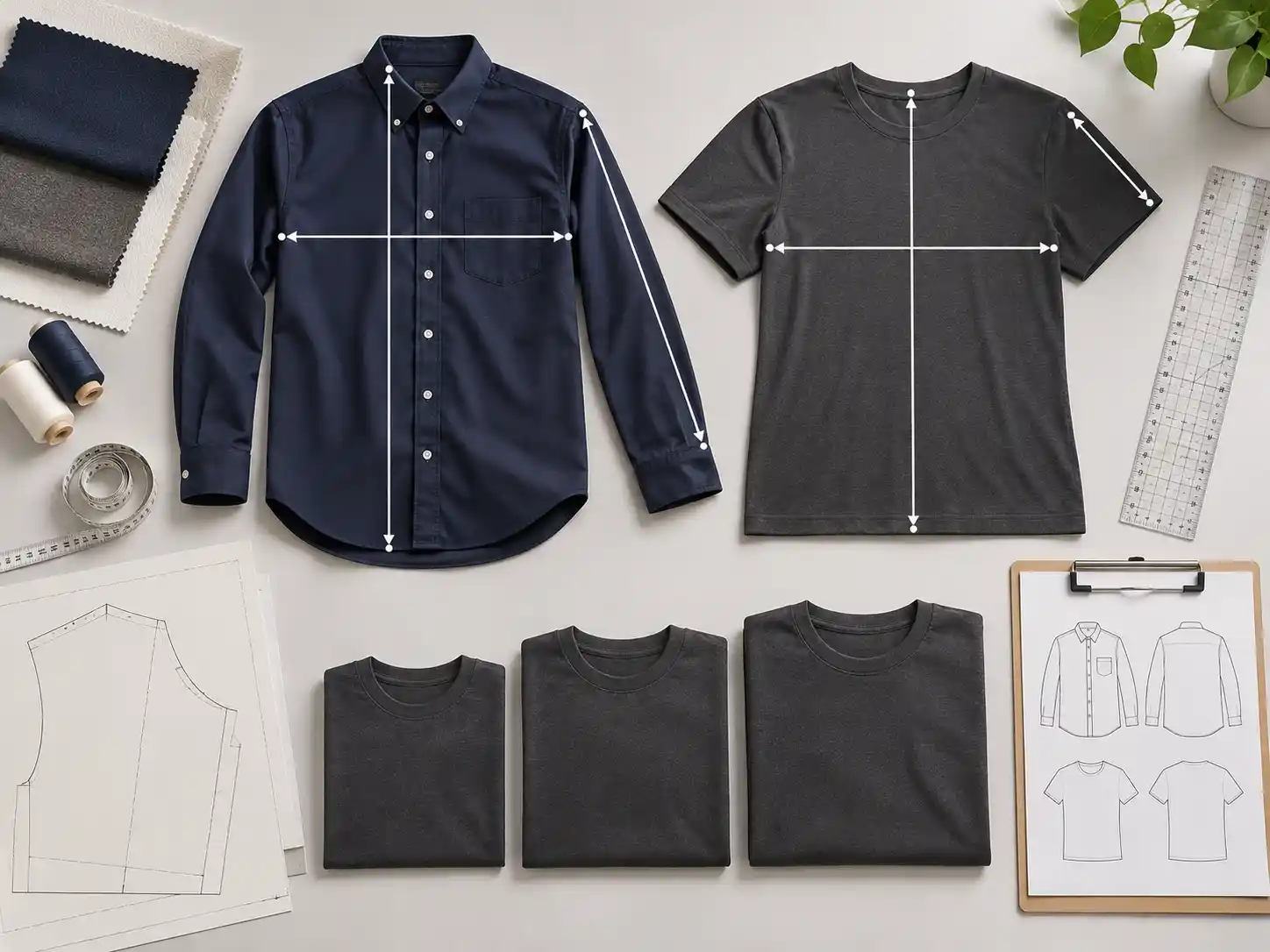
One sample can look correct while grading between sizes is wrong. Use a measurement diagram with named points of measure (POM), then compare the sample or size set at the key sizes relevant to the project. Check chest or body width, length, shoulder, sleeve, collar, waist, hip and opening measurements as applicable to the garment.
The goal is not to impose a universal tolerance. The goal is to agree which measurements matter, how they are taken and which project tolerance applies.
4. Check shrinkage, color and wash behavior
If the product will be washed, tumble-dried or exposed to repeated wear, verify how the material and finished garment behave. Check dimensional change, color transfer or fading risk, surface appearance and care-label instructions. The applicable test method depends on the material, product and destination market; confirm the required test or inspection with the project’s testing partner.
Do not use an AQL sample as a substitute for a wash or safety requirement. AQL is a sampling and acceptance method; it does not define the garment’s fit, legal compliance or performance by itself.
5. Approve construction details before the line is running
Review seam type, stitch appearance, seam allowance, hems, collar and cuff construction, buttonholes, buttons, snaps, zippers and reinforcement points. Check the areas most likely to affect fit, durability or customer perception.
For a T-shirt, this usually includes the neck rib, shoulder seam, sleeve hem, body hem and print area. For a woven shirt, include collar points, cuffs, plackets, buttons and pocket alignment. For a leather jacket, include zipper operation, pocket construction, lining attachment, seam strength and hardware finish.
6. Lock print, embroidery and logo execution
The artwork file is only one part of the approval. Record the decoration method, scale, position from a named reference point, color direction, thread or ink appearance and any wash or rubbing review required for the project.
Approve a physical or visual strike-off before production continues. If the artwork is revised, replace the old file instead of leaving multiple versions in the project folder.
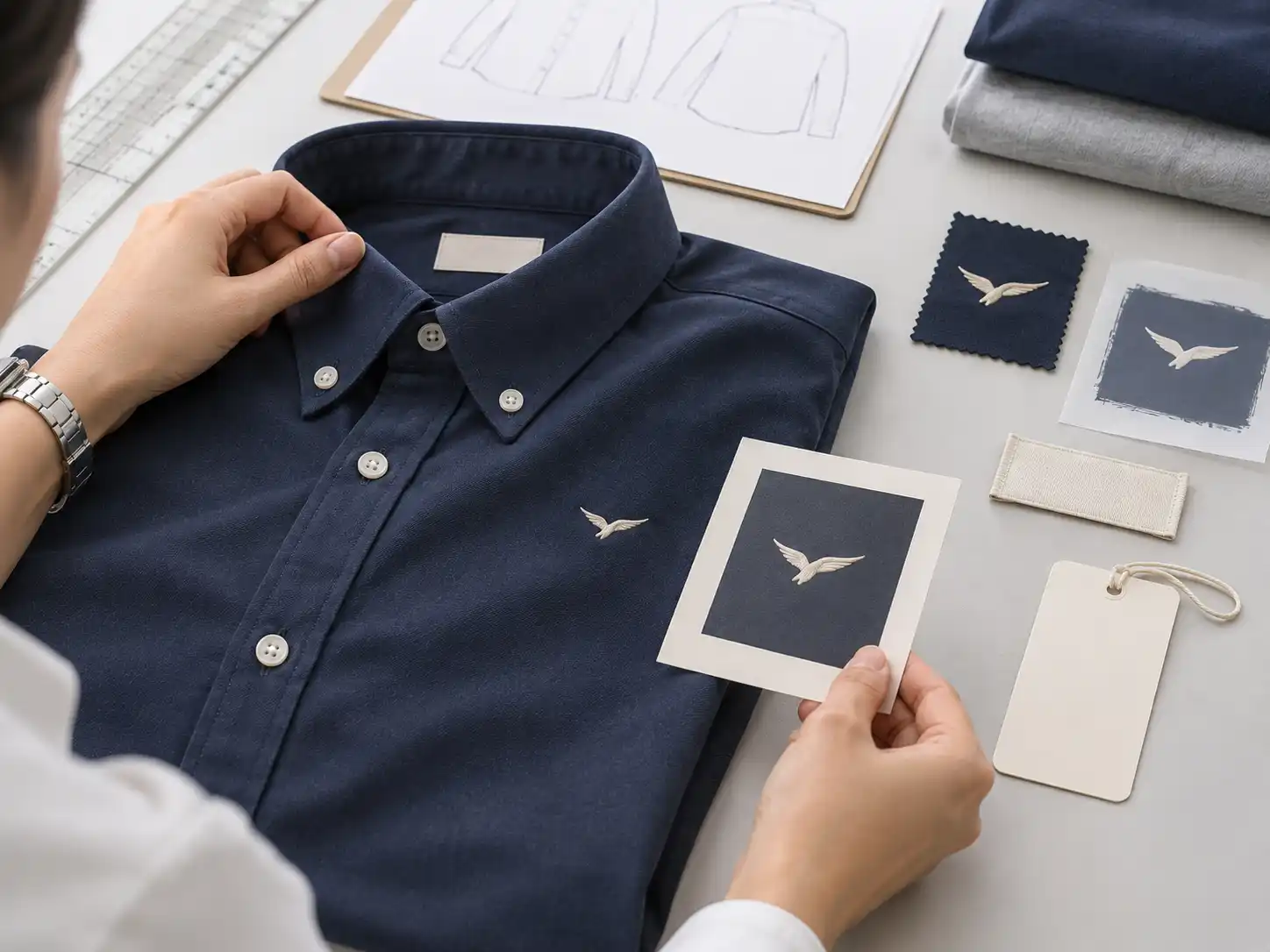
7. Check private-label labels and hangtags as a product component
Private-label details affect both compliance and brand presentation. Confirm the exact wording, size, placement, attachment method, care content and packaging of woven labels, printed labels, hangtags and stickers. Make sure the label version matches the product version and the destination-market requirements supplied by the buyer.
For a new private-label project, send the label artwork together with the product brief rather than adding it after production has started. This gives the factory enough information to identify placement, attachment and packing requirements before the first production pieces are made.
8. Approve the packing and assortment instructions
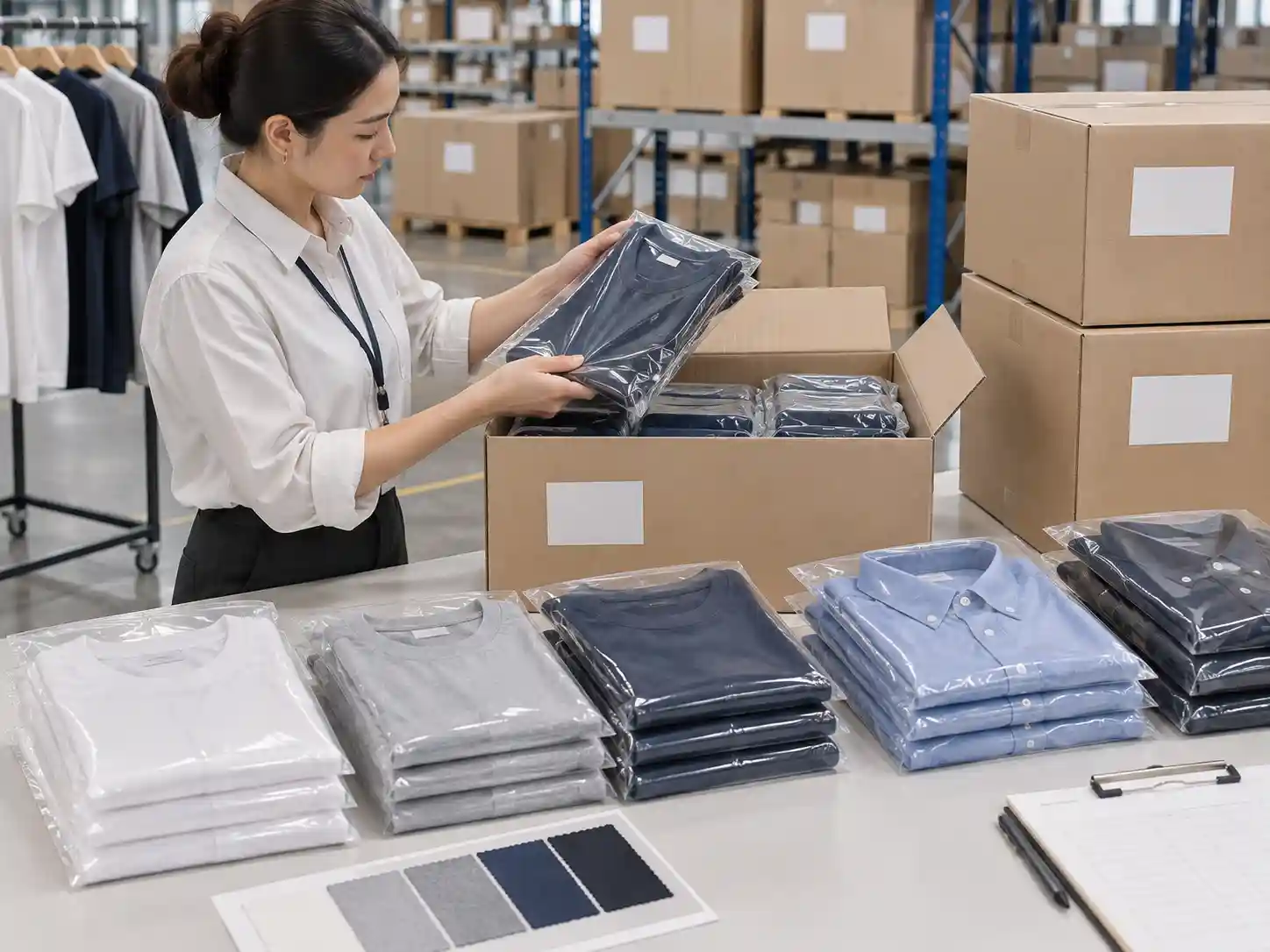
Packing is part of quality control because it can create damage, mix sizes or make the product difficult to receive and count. Define folding or hanging method, polybag or protective material, size/color assortment, carton marks, quantity per carton and any retail-ready requirements that apply to the project.
Ask for a packing sample or clear packing reference before the full order is packed. If the product is a structured hat or leather jacket, include protection against crushing, abrasion, moisture and hardware marks where appropriate.
9. Request evidence before the shipment is released
The evidence should match the risks in the order. Useful records can include approved sample photos, measurement records, material and trim confirmations, decoration approvals, label and packaging approvals, production photos, issue logs and packing photos. The exact evidence package should be agreed per project.
If an inspection finds a deviation, record the affected style, size, color, quantity, issue, correction and re-check result. A buyer should know whether the issue was corrected, accepted with written approval or held for further review.
Product-specific checks for common apparel programs
T-shirts and casual shirts
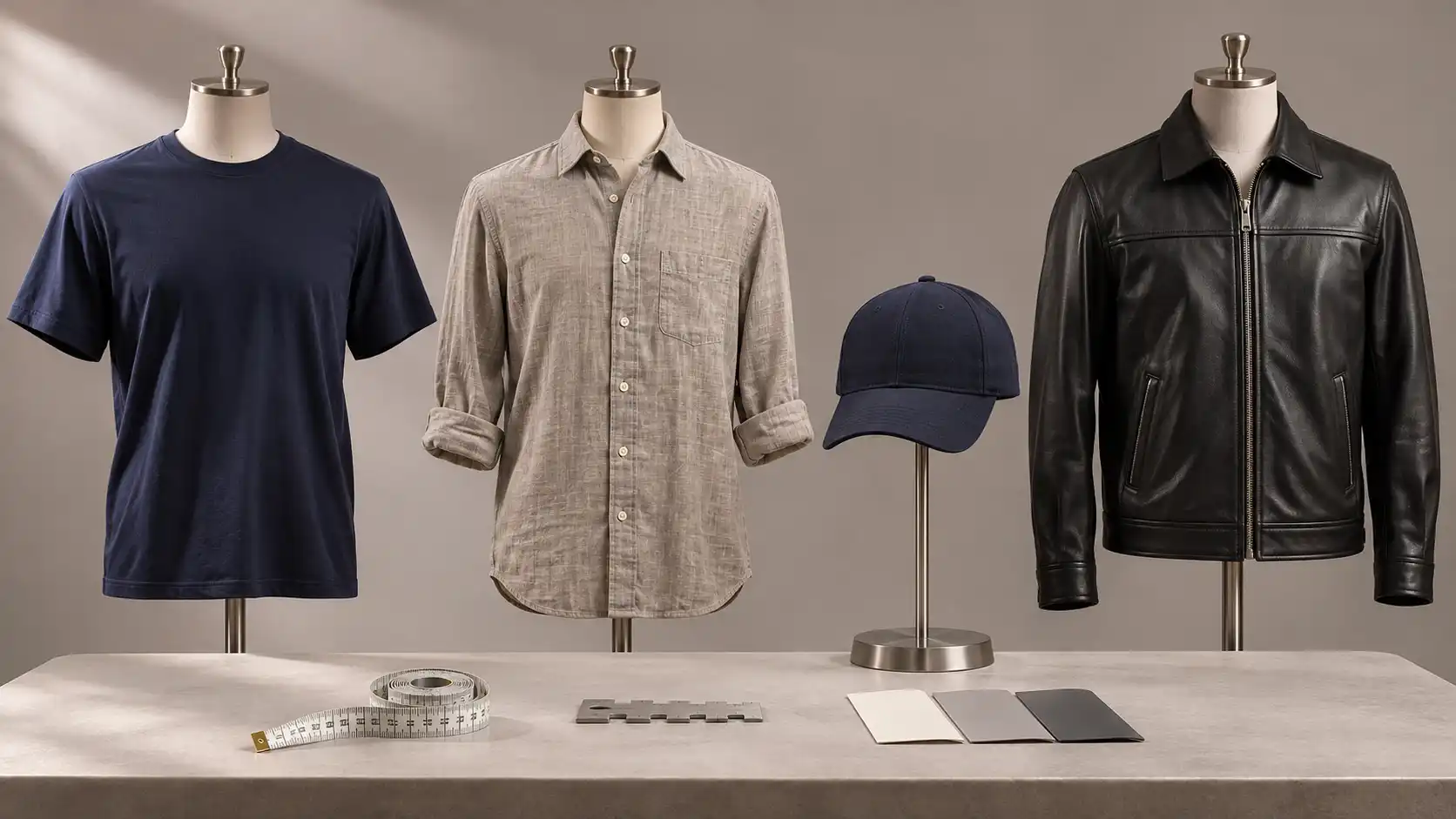
Focus on fabric weight and hand feel, shrinkage, neck and cuff recovery, seam appearance, print or embroidery placement, placket and button alignment, pocket position and size measurements. A sample should show the intended fabric and decoration direction whenever possible. See our T-Shirts & Polo Shirts and Casual Shirts categories for related product directions.
Custom hats
Focus on crown shape, brim curve, closure strength, sweatband, embroidery or patch position, interior finishing and packing protection. Check the appearance after the hat has been packed and unpacked, because compression can change the shape. See our Headwear & Caps category for related product options.
Leather jackets
Focus on the approved leather reference, surface finish, thickness direction, smell, color variation, lining, zippers, snaps, pocket construction and fit measurements. Confirm the hardware and lining together with the leather because they change the weight, drape and wearing experience of the finished jacket. See our Outerwear & Jackets category for related product options.
What should a buyer request before approving bulk production?
Ask for a project-specific evidence pack that covers:
- the final tech pack or product specification;
- the approved sample and its revision/date;
- material, trim and color confirmations;
- print, embroidery, logo and placement approvals;
- size measurements or size-set records;
- label, hangtag and packaging artwork;
- packing and assortment instructions;
- any agreed testing or inspection requirement;
- a clear way to record and re-check deviations.
This is more useful than asking a supplier to promise “premium quality” without defining what premium means for the product.
What should you send for a clothing OEM or ODM quote?
To receive a useful project review, send:
- Product category and reference photos or a reference garment.
- Sketches, tech-pack pages or construction notes.
- Target size range and measurement chart.
- Fabric direction, color references and trim preferences.
- Logo, print, embroidery, private-label and hangtag files.
- Expected quantity, destination market and delivery location.
- Any inspection, testing, packing or compliance requirement already known.
MOQ, sample timing, production timing, pricing and shipping are confirmed per project after the requirements are reviewed.
For a project review, visit Custom OEM or send the same information through Get a Quote.
Frequently asked questions
Why can bulk clothing differ from the approved sample?
Bulk clothing can differ when the production material, size grading, decoration method, artwork version, construction instruction or packaging instruction is different from the approved reference. The solution is to lock the version, material and measurements before cutting and to record any change in writing.
Should the bulk fabric be used for the pre-production sample?
The sample should represent the material direction intended for bulk whenever the project allows it. If a substitute is used, record the difference and confirm which properties still need to be re-checked when the production material is available.
How can a buyer verify a clothing size chart?
Use a named measurement diagram, agree the measurement method and compare the relevant sizes against the approved sample or size set. Do not rely on a generic chart without checking the finished garment measurements.
How can brands reduce print cracking after washing?
Lock the print method, artwork scale, placement, ink or transfer direction and curing requirements in the production approval. Review a strike-off and confirm any wash or rubbing check required for the product and destination market.
What should be checked before approving bulk production?
Check the technical specification, production-representative material, measurements, construction, decoration, labels, packaging and any required testing or inspection. Keep one dated approved reference and one current instruction version.
Are MOQ, sample timing and production timing fixed?
They should be confirmed per project because the product type, materials, decoration, quantity, customization and destination can change the requirements.
Final checklist
Before approving bulk production, ask:
- Are we using one current specification and one approved sample version?
- Does the material and trim represent the intended bulk order?
- Are the measurement points and project tolerances clear?
- Has decoration been approved for position, scale and appearance?
- Are private-label labels, hangtags and packaging locked?
- Do we know what evidence will be checked before shipment?
- Is there a written process for recording and correcting a deviation?
A clear approval trail gives both sides a practical reference. It also lets a buyer compare a finished garment with the same requirements that were used to approve the order.
Discuss Your Apparel Sourcing Requirements
Whether you're launching a startup clothing brand, expanding a streetwear label, or looking for a reliable OEM apparel manufacturer, speaking directly with an experienced production team can help you avoid costly sourcing mistakes.
Talk With Our Manufacturing Team