
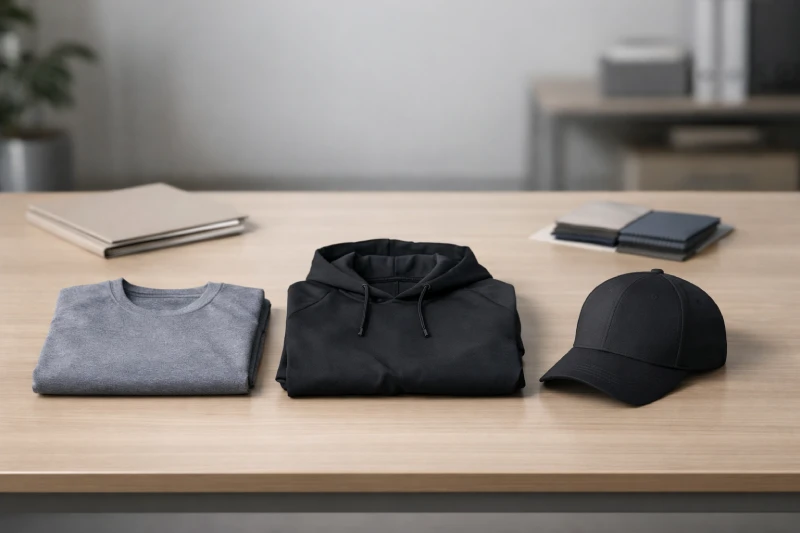
Ordering sportswear in bulk for international markets is not simply a matter of choosing styles and placing a large order. For procurement managers, brand owners, corporate uniform buyers, and distributors, bulk sportswear purchasing is a multi-variable decision process involving material performance, customization feasibility, production constraints, logistics, and long-term brand or project risk.
Many bulk orders fail not because of supplier quality alone, but because critical decisions are made too late, based on incomplete assumptions, or using consumer-level logic. These mistakes become especially costly in overseas sourcing, where lead times are longer, communication cycles are slower, and corrections are expensive.
This buying guide outlines the most common mistakes when ordering sportswear in bulk, explains why they occur, and provides decision frameworks applicable across categories—from caps and T-shirts to hoodies, activewear, and performance-oriented workwear.
Why Bulk Sportswear Orders Fail in B2B Projects
Bulk sportswear sits at the intersection of performance apparel and brand or functional requirements. Unlike casual garments, sportswear is expected to perform under movement, heat, moisture, or repeated washing—often while carrying logos, safety identifiers, or corporate branding.
Failures typically arise when buyers:
- Apply retail or sample-level thinking to production-scale orders
- Focus on unit price before confirming technical suitability
- Underestimate the impact of customization methods on lead time and MOQ
- Treat different apparel categories as operationally identical
Most of these risks are not visible at the quotation stage, which is why a structured decision framework is critical before committing to bulk production.
Mistake 1: Treating Sportswear as a Single Category
One of the most frequent errors is assuming that “sportswear” follows one uniform set of sourcing rules. In reality, sportswear is an umbrella term covering multiple production logics.
Why This Matters
What appears as a single order category to procurement teams may represent very different manufacturing processes. Applying the same decision logic across all sportswear types often leads to misaligned expectations on MOQ, fit tolerance, customization feasibility, and lead time.
This issue becomes more pronounced in overseas sourcing, where correcting category-level assumptions typically means restarting sampling or reworking materials.
Category Differences Buyers Often Overlook
| Element | Caps | Knit Garments (T-shirts, Polos) | Sportswear / Activewear |
|---|---|---|---|
| Sizing sensitivity | Low | Medium | High |
| Fabric stretch impact | Minimal | Moderate | Critical |
| Logo placement risk | Structured areas | Flat areas | Stretch & distortion risk |
| MOQ flexibility | Often higher | Moderate | Varies by fabric |
| Fit approval cycles | Short | Medium | Long |
Decision takeaway:
Before requesting quotations, clarify which sportswear sub-category your project truly belongs to and align expectations accordingly.
Mistake 2: Prioritizing Fabric Names Over Performance Requirements
Many buyers specify fabrics using marketing-driven labels such as “polyester sports fabric” or “breathable mesh,” without defining the actual performance requirements behind those terms.
The Correct Decision Framework
Instead of starting with fabric names, buyers should first define functional outcomes, such as:
- Moisture management and drying speed
- Stretch direction and recovery
- Abrasion and pilling resistance
- Weight versus durability balance
- Expected washing frequency and garment lifespan
Fabric naming conventions often vary by region and supplier, making performance-based definitions far more reliable in overseas procurement.
Practical Checklist: Fabric Decision Inputs
- Intended activity intensity (low / medium / high)
- Climate and usage environment
- Planned decoration method
- Target lifespan (event-based vs long-term program)
- End-user laundering conditions
Decision takeaway:
Performance requirements should drive fabric selection—not marketing terminology.
Mistake 3: Ignoring How Customization Affects Production Constraints
Customization is often treated as a visual branding decision, but in bulk sportswear manufacturing, it is a structural production variable.
Common Oversights
- Assuming all logo methods perform equally across fabrics
- Ignoring stretch distortion on prints for activewear
- Overlooking embroidery impact on lightweight or breathable fabrics
- Misaligning logo placement with pattern seams
Customization Impact by Category
- Caps: Panel structure and crown height limit logo size and position
- T-shirts & Polos: Generally flexible, but fabric weight affects print clarity
- Sportswear & Activewear: Stretch fabrics require specialized inks or bonding
- Hoodies: Thick fabrics limit fine detail reproduction
Customization Planning Table
| Decision Area | Why It Matters |
|---|---|
| Logo method | Affects durability, cost, and lead time |
| Placement | Influences pattern design and yield |
| Color count | Impacts setup cost and consistency |
| Testing requirements | Prevents peeling, cracking, or distortion |
Decision takeaway:
Customization decisions should be finalized before confirming cost and production schedules.
Mistake 4: Underestimating MOQ and Size Ratio Complexity
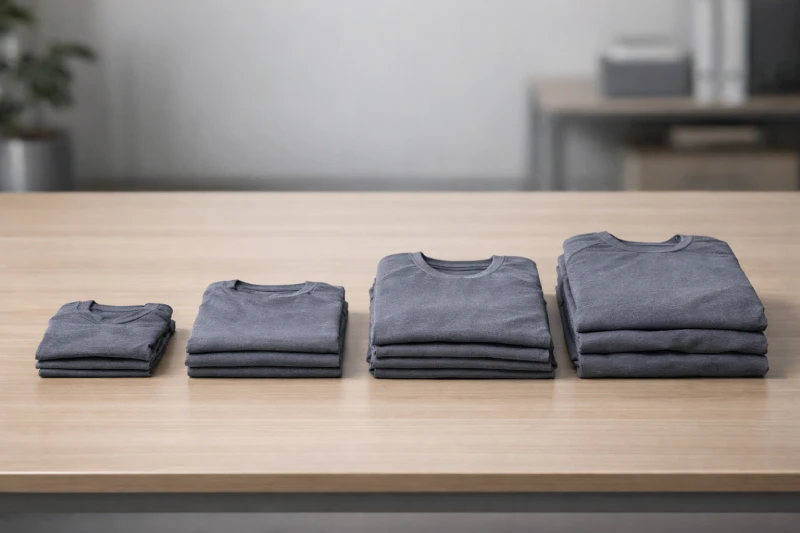
MOQ is often viewed as a negotiable number, but in reality it reflects manufacturing efficiency thresholds tied to material sourcing, cutting optimization, and production setup.
Where Buyers Commonly Go Wrong
- Treating MOQ as a supplier policy rather than a production constraint
- Aggregating quantities across colors or sizes without confirming feasibility
- Overlooking how size ratios affect cutting efficiency and yield
How MOQ Varies Across Categories
- Caps: Higher MOQs per color due to tooling and structured assembly
- Knit garments: More flexibility through shared fabric runs
- Activewear: Often separate MOQs per fabric composition or elasticity level
Why Size Ratios Matter More Than Expected
An imbalanced size breakdown can:
- Increase fabric waste
- Reduce cutting efficiency
- Cause delivery delays for underrepresented sizes
- Create inventory imbalance in uniform or distribution programs
Size Ratio Planning Checklist
- Confirm realistic size distribution by region or user group
- Avoid extreme size skews unless volume supports it
- Validate grading rules for athletic versus standard fits
- Align size planning with end-user demographics, not assumptions
Decision takeaway:
MOQ should be evaluated per configuration (fabric, color, size range), not only on total order volume.
Mistake 5: Compressing Lead Time Without Adjusting Risk
Lead time is frequently shortened on paper without adjusting upstream decisions, resulting in quality or consistency issues—especially in overseas projects spanning multiple time zones.
Lead Time Is a Chain, Not a Single Number
Typical bulk sportswear timelines include:
- Fabric confirmation or sourcing
- Sample development and approval
- Bulk material preparation
- Production
- Quality inspection
- Packing and export logistics
Reducing time in one stage often shifts risk elsewhere.
Risk vs Speed Trade-Off Table
| Action | Hidden Risk |
|---|---|
| Skipping pre-production samples | Fit or logo errors |
| Parallel sampling & production | Costly rework |
| Late artwork changes | Production delays |
| Rushed inspections | Inconsistent quality |
Decision takeaway:
Shorter lead times require earlier commitment and faster approvals, not fewer control steps.
Mistake 6: Applying Garment Logic to Caps—or Vice Versa
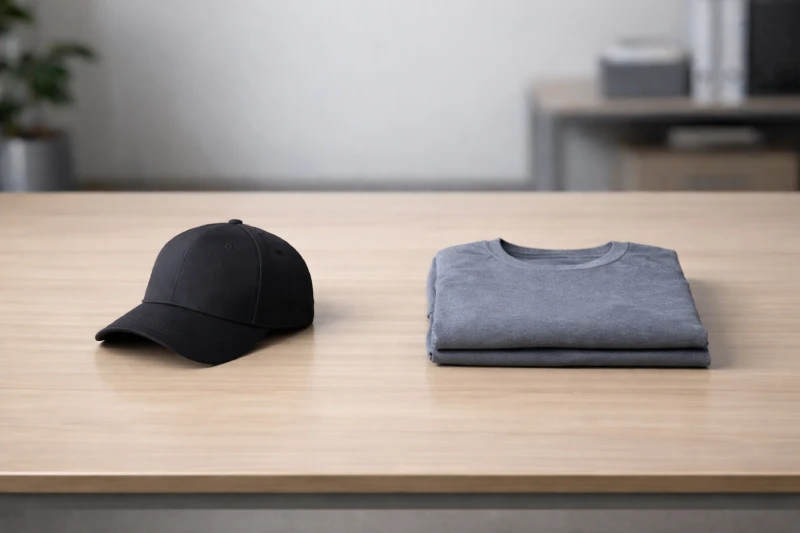
Caps are frequently grouped with garments in procurement planning, but their production logic differs fundamentally from apparel manufacturing.
Key Differences Buyers Often Miss
- Caps rely on structure, panel construction, and assembly precision
- Garments rely on fabric behavior, fit tolerance, and grading
- Cap tooling is less flexible once confirmed
- Size issues in caps are structural, not numerical
Common Assumption vs Reality
| Assumption | Reality |
|---|---|
| Caps are simpler than garments | Caps have tighter structural constraints |
| Logo changes are easy | Placement is limited by seams and panels |
| One size fits all | Head circumference tolerances still apply |
Mini Checklist for Mixed Orders
- Separate approval workflows for caps and garments
- Confirm decoration limits for structured headwear
- Avoid last-minute logo size changes on caps
- Plan MOQs independently for each category
Decision takeaway:
Using distinct decision frameworks for headwear and garments significantly reduces cross-category errors.
Mistake 7: Evaluating Suppliers Only on Quotation Sheets
Price comparisons alone often mask long-term operational risk.
What Quotation Sheets Do Not Reveal
- Category-specific production experience
- Customization failure rates
- Communication efficiency during revisions
- Material sourcing stability
Smarter Supplier Evaluation Criteria
- Demonstrated experience in your apparel category
- Clear sampling and approval workflows
- Transparency on MOQ and lead time constraints
- Ability to explain trade-offs, not just accept instructions
Decision takeaway:
Supplier reliability should be measured by risk reduction, not unit price alone.
Final Pre-Order Decision Checklist
Before confirming any bulk sportswear order, ensure you have:
- Defined performance requirements by category
- Finalized customization methods and placements
- Validated MOQ by fabric, color, and size range
- Aligned lead time expectations with approval cycles
- Applied category-specific logic (caps vs garments)
Conclusion: Reduce Risk Through Structured Decisions
Most bulk sportswear ordering mistakes stem from decision framework gaps, not manufacturing defects. Overseas B2B buyers who apply category-aware logic, early customization planning, and realistic lead time management consistently achieve better outcomes.
If you are planning a bulk sportswear project across one or multiple apparel categories and want to validate assumptions before committing, early-stage technical discussion can significantly reduce downstream risk.
We welcome project-based conversations focused on clarifying specifications, constraints, and production pathways—before decisions become irreversible.
Discuss Your Apparel Sourcing Requirements
Whether you're launching a startup clothing brand, expanding a streetwear label, or looking for a reliable OEM apparel manufacturer, speaking directly with an experienced production team can help you avoid costly sourcing mistakes.
Talk With Our Manufacturing Team