
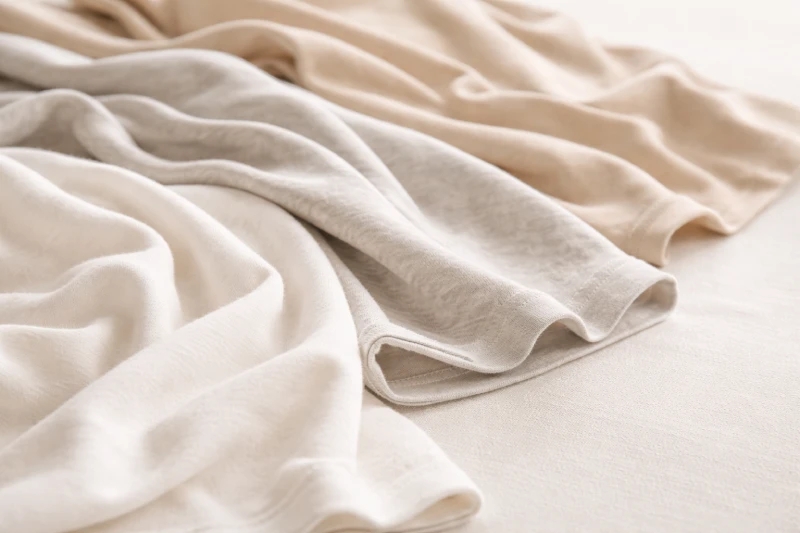
Quick Answer: How Should You Choose Cotton Jersey Fabric?
Start with the garment use, target weight, composition, stretch, finish and care requirement. GSM helps define a starting range, but the approved sample still decides coverage, drape, hand feel and appearance.
- Choose the weight range from the intended garment and season.
- State cotton, blend and stretch preferences in the RFQ.
- Check the fabric after the intended finishing process.
- Approve color, measurements and construction before bulk production.
Need a product-specific fabric recommendation?
Share the garment type, target weight range, preferred composition, stretch expectation, color direction, quantity and destination market through the Seetime project brief. These details give the development team a workable starting point for reviewing fabric options and sampling requirements.
Cotton jersey fabric is one of the most widely used materials in modern apparel manufacturing, valued for its softness, flexibility, and versatility. As a knitted fabric, it offers a unique balance between comfort and performance, making it a standard choice across a wide range of garments, from everyday basics to lightweight seasonal wear.
In manufacturing environments, cotton jersey knit fabric is especially favored for its efficient production, adaptability to different designs, and consistent wearability. Whether used in T-shirts, casualwear, or layering pieces, it plays a central role in product development. This guide provides a structured overview of what cotton jersey fabric is, how it is made, and how it performs—helping manufacturers make informed material decisions without unnecessary complexity.
What Is Cotton Jersey Fabric?
Cotton jersey fabric is a type of knitted textile made primarily from cotton fibers, characterized by its smooth surface on one side and a slightly textured back on the other. Unlike woven fabrics, which are constructed by interlacing yarns at right angles, cotton jersey knit fabric is formed through interlooping yarns, giving it inherent stretch and flexibility without the need for additional elastic fibers.
This structure makes cotton jersey fabric lightweight, soft to the touch, and highly adaptable to body movement—key reasons why it is widely used in apparel manufacturing. It is commonly recognized as the standard material behind many everyday garments, especially those requiring comfort and ease of wear.
From an engineering perspective, the defining feature of cotton jersey lies in its knit construction, which directly influences its drape, breathability, and surface appearance. These characteristics make it suitable for both basic and slightly more refined garment applications, depending on finishing processes and yarn quality.
For a deeper technical breakdown of structure, variations, and classification, refer to what is cotton jersey fabric.
How Cotton Jersey Fabric Is Made
Cotton jersey fabric is produced through a continuous knitting process that transforms cotton yarn into a flexible, breathable textile. Unlike woven fabrics, the manufacturing flow relies on loop formation rather than interlacing, allowing for efficient and scalable production in apparel manufacturing environments.
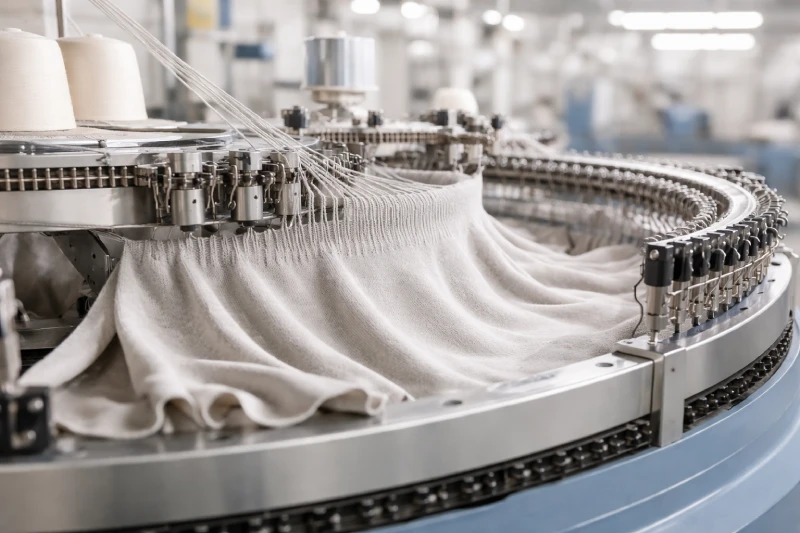
The overall process can be understood as a series of structured stages:
Yarn Preparation
Cotton fibers are first spun into yarns with controlled thickness and consistency. The quality of the yarn at this stage directly influences the final fabric’s softness and surface uniformity.
Knitting Process
The yarn is fed into circular knitting machines, where loops are interlinked to form a single jersey structure. This step defines the fabric’s natural stretch and its characteristic front-and-back appearance.
Fabric Formation
As the knitting continues, the fabric is produced in a continuous tubular or open-width form. The looped construction creates a smooth outer surface and a slightly textured inner side.
Dyeing and Finishing
The raw fabric undergoes dyeing and finishing processes to achieve the desired color, hand feel, and stability. These treatments can also enhance performance characteristics such as shrinkage control.
Inspection and Rolling
Before being used in garment production, the fabric is inspected for defects and then rolled or folded for downstream cutting and manufacturing processes.
Overall, the way cotton jersey knit fabric is made plays a fundamental role in determining its performance, appearance, and suitability for different apparel applications.
Key Properties of Cotton Jersey Fabric
The performance of cotton jersey fabric is primarily defined by its knitted structure combined with the natural characteristics of cotton fibers. Together, these factors create a material that is widely valued in apparel manufacturing for both comfort and versatility. The following are the key properties that define its behavior in end-use applications:
Softness and Comfort
Cotton jersey knit fabric is known for its soft hand feel, making it comfortable for direct skin contact. This property is essential for garments designed for everyday wear.
Breathability
The looped knit structure allows air to circulate more freely compared to many woven fabrics. This contributes to a cooling effect, especially in warm-weather garments.
Natural Stretch
Unlike rigid woven materials, cotton jersey fabric has inherent stretch due to its loop construction. This allows the fabric to adapt to body movement without requiring synthetic elastics.
Drape and Fit
The flexibility of the knit gives cotton jersey a natural drape, enabling it to follow body contours. This makes it suitable for both relaxed and fitted garment designs.
Moisture Absorption
Cotton fibers can absorb moisture effectively, helping improve wearer comfort in daily use. This characteristic is particularly relevant for casual and active garments.
Surface Appearance
The fabric typically features a smooth outer face and a slightly textured inner side. This visual distinction contributes to both aesthetic and functional aspects of garment construction.
These combined properties influence how the material performs across different product categories. For a more detailed breakdown and technical analysis, see cotton jersey fabric properties.
Common Types of Cotton Jersey Fabric
Cotton jersey fabric is not limited to a single material composition. In apparel manufacturing, it can be developed in different variations based on fiber content, blending techniques, and performance requirements. These variations allow manufacturers to adapt the fabric to different product categories and functional needs.
100% Cotton Jersey
This is the most basic and widely used type, made entirely from cotton fibers. It offers a natural feel and is commonly used in everyday garments where comfort is a priority.
Cotton Spandex Jersey
By adding a small percentage of elastane (spandex), this type provides enhanced stretch and recovery. It is often used in garments that require a closer fit or greater flexibility.
Organic Cotton Jersey
Produced using organically grown cotton, this variation focuses on environmentally responsible sourcing. It is typically used in products where sustainability is a key consideration.
Bamboo Cotton Jersey
This blend combines cotton with bamboo fibers to achieve a softer feel and improved moisture-related performance. It is often selected for comfort-driven apparel categories.
Hemp Cotton Jersey
Blending cotton with hemp fibers creates a fabric with added durability and a slightly more structured texture. It is increasingly used in modern apparel collections that emphasize both performance and natural materials.
For product-level specifications and applications, see hemp cotton jersey fabric.
Each type of cotton jersey fabric offers a different balance of comfort, performance, and structure. Understanding these variations helps guide more accurate material selection in apparel development.
Typical GSM Ranges and Fabric Weight
GSM (grams per square meter) is a standard measurement used to indicate the weight of cotton jersey fabric. It provides a practical reference for understanding fabric thickness, density, and overall feel. In apparel manufacturing, GSM is an important parameter because it directly affects how a garment performs and how it is perceived by the end user.
Cotton jersey fabric is generally categorized into several weight ranges, each suited to different applications:
Lightweight (120–160 GSM)
Fabrics in this range are soft, breathable, and lightweight. They are commonly used for summer garments, base layers, and applications where airflow and comfort are prioritized.
Midweight (160–200 GSM)
This is the most commonly used range in apparel production. It offers a balanced combination of durability and comfort, making it suitable for standard T-shirts and everyday wear.
Heavyweight (200+ GSM)
Heavier cotton jersey fabrics provide a more substantial feel and improved durability. They are often used in premium garments or designs that require more structure and opacity.
Most cotton jersey fabric for T-shirts typically falls within the midweight range, as it provides the optimal balance between comfort, performance, and cost efficiency.
It is important to note that GSM alone does not determine fabric quality, but rather serves as one of several factors in material selection. For a more detailed guide on choosing the right weight, see cotton jersey fabric gsm.
Cotton Jersey Buyer Comparison: Weight, Use and RFQ Checks
Use these ranges as a starting point for a sourcing brief, not as a substitute for an approved sample. The final choice should be confirmed against the intended garment, fit, color, finishing and care requirements.
| Starting weight range | Typical product direction | What the buyer should assess | Include in the RFQ |
|---|---|---|---|
| 120–160 GSM | Lightweight T-shirts, summer layers and base-layer directions | Hand feel, coverage and suitability for the intended color and fit | Target weight, garment use, color range, preferred feel and sample requirement |
| 160–200 GSM | Standard T-shirts and everyday casualwear | Balance of comfort, durability, recovery and the required finish | Target weight, composition, fit reference, decoration method and care expectation |
| 200 GSM and above | More substantial T-shirts and structured casualwear | Drape, bulk, opacity, surface finish and the desired garment silhouette | Target weight, desired structure, finishing direction, print or embroidery plan and sample checks |
GSM is only one part of the brief. Composition, knit construction, stretch, finishing and the approved garment sample should be reviewed together before bulk production.
What Is Cotton Jersey Fabric Used For?
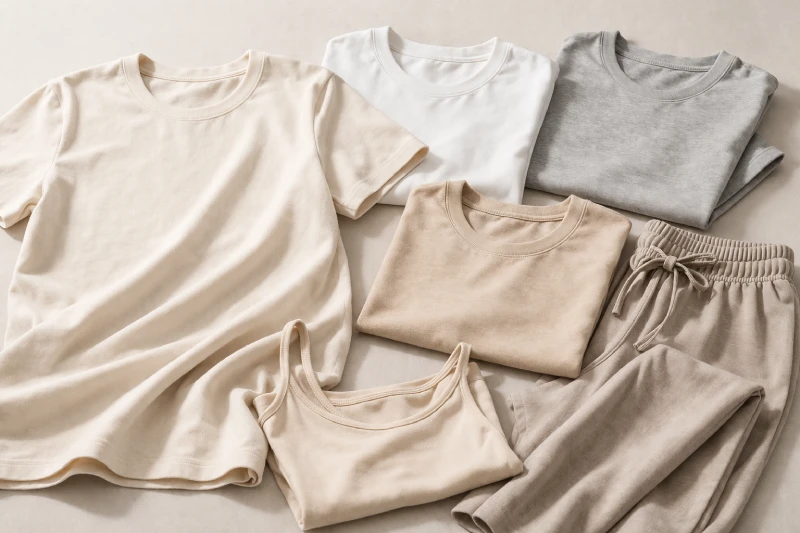
Cotton jersey fabric is widely used across multiple apparel categories due to its balance of comfort, flexibility, and ease of manufacturing. Its knitted structure allows it to adapt to different garment types, making it a versatile material in both basic and functional clothing lines.
T-Shirts and Casual Wear
This is the most common application of cotton jersey fabric. Its softness, breathability, and natural stretch make it ideal for everyday garments that require comfort and ease of movement. For more insights into material selection, see cotton jersey fabric for t shirts.
Underwear and Base Layers
Cotton jersey is frequently used in garments worn close to the skin. Its smooth surface and moisture-absorbing properties contribute to a comfortable wearing experience throughout the day.
Active and Stretch Apparel
When blended with elastane, cotton jersey fabric becomes suitable for light activewear. It offers enough flexibility for movement while maintaining a natural feel compared to fully synthetic fabrics.
Loungewear and Sleepwear
The soft hand feel and breathable nature of cotton jersey make it a preferred choice for relaxed garments. It supports comfort in low-intensity, home-based use scenarios.
Lightweight Seasonal Garments
Cotton jersey fabric is often used in spring and summer collections, where lightweight construction and airflow are important. Its adaptability allows it to be used in a range of designs, from simple tops to layered pieces.
The specific application of cotton jersey fabric depends on factors such as fabric type, GSM, and finishing processes, all of which influence how the material performs in different product categories.
Advantages and Limitations
Cotton jersey fabric is widely used in apparel manufacturing due to its balanced performance and versatility. However, like any material, it comes with both strengths and limitations. Understanding these factors is essential for making appropriate fabric choices in different product applications.
Advantages
Comfort and Softness
Cotton jersey fabric offers a soft hand feel that makes it highly suitable for garments worn directly against the skin.
Breathability
Its knit structure allows for better air circulation, contributing to comfort in everyday and warm-weather clothing.
Natural Stretch
The looped construction provides inherent flexibility, enabling ease of movement without relying on synthetic fibers.
Production Efficiency
Cotton jersey knit fabric can be produced efficiently using circular knitting machines, making it suitable for scalable apparel manufacturing.
Limitations
Limited Structure
Compared to woven fabrics, cotton jersey has less rigidity, which may not be ideal for garments requiring a defined shape.
Potential Shrinkage
Without proper finishing, cotton-based fabrics may shrink after washing, affecting garment sizing and consistency.
Surface Wear
Over time, cotton jersey fabric may show signs of pilling or surface distortion, especially with frequent use.
Less Suitable for Formal Garments
Due to its casual appearance and soft structure, it is generally not used in formal or highly structured apparel categories.
Overall, cotton jersey fabric performs best in applications where comfort and flexibility are prioritized over structure and rigidity, making material selection highly dependent on the intended garment use.
How to Choose the Right Cotton Jersey Fabric
Selecting the right cotton jersey fabric requires evaluating multiple factors rather than relying on a single specification. In apparel manufacturing, the suitability of a fabric depends on how well it aligns with the intended product, performance expectations, and design requirements.
End Use and Product Type
The intended application is the primary factor in fabric selection. Different garments—such as T-shirts, base layers, or casualwear—require different balances of comfort, durability, and structure.
Fabric Weight (GSM)
GSM influences how the fabric feels and performs in use. Lighter fabrics are typically preferred for breathability, while heavier fabrics provide more structure and coverage.
Fiber Composition
Variations in fiber content, such as blends with elastane, bamboo, or hemp, can significantly affect the fabric’s performance characteristics. The choice of composition should align with functional and aesthetic goals.
Stretch Requirements
Depending on the garment design, additional stretch may be necessary. Fabrics with elastane offer improved flexibility and recovery, making them suitable for more fitted or movement-oriented apparel.
Surface Feel and Appearance
The tactile quality and visual finish of the fabric play an important role in product perception. Factors such as smoothness, drape, and overall look should match the intended positioning of the garment.
There is no single “best” cotton jersey fabric. The optimal choice depends on how these factors are balanced to meet specific product requirements, making informed evaluation essential in the material selection process.
Conclusion
Cotton jersey fabric is a fundamental material in modern apparel manufacturing, known for its softness, flexibility, and adaptability across a wide range of garment types. Its knitted structure, combined with the natural properties of cotton fibers, makes it a reliable choice for comfort-driven applications.
From everyday T-shirts to lightweight seasonal garments, cotton jersey continues to play a central role in product development due to its balanced performance and manufacturing efficiency. Its versatility allows it to be adapted through variations in composition, weight, and finishing.
Ultimately, selecting the right cotton jersey fabric depends on aligning material characteristics with specific product requirements. Factors such as GSM, fabric type, and intended use all contribute to achieving the desired outcome in both performance and design.
Cotton Jersey Fabric Buyer FAQs
Which GSM should I start with for a T-shirt brief?
Start with the intended product use and target feel, then use a weight range as a discussion point. A sample is still needed to confirm coverage, drape, comfort and the result after the chosen finishing process.
Is 100% cotton jersey the only option?
No. The appropriate composition depends on the required hand feel, stretch, recovery, appearance and garment use. State the preferred composition in the brief and compare it against the approved sample.
What should a cotton jersey fabric RFQ include?
Include the garment type, target weight range, preferred composition, stretch expectation, color direction, decoration plan, care expectation, quantity and destination market. These details make it easier to assess whether a proposed fabric matches the intended product.
Compare Cotton Jersey With Other Cotton Fabrics
If you are deciding between a knitted jersey and a woven cotton fabric, see our cotton jersey vs cotton fabric comparison. It focuses on the structural and use-case differences rather than repeating this material guide.
Discuss Your Material Brief
For an apparel development inquiry, share the intended garment, target feel, weight range, stretch expectation and care requirements. Contact Seetime Luxury to start the discussion.
Discuss Your Apparel Sourcing Requirements
Whether you're launching a startup clothing brand, expanding a streetwear label, or looking for a reliable OEM apparel manufacturer, speaking directly with an experienced production team can help you avoid costly sourcing mistakes.
Talk With Our Manufacturing Team