
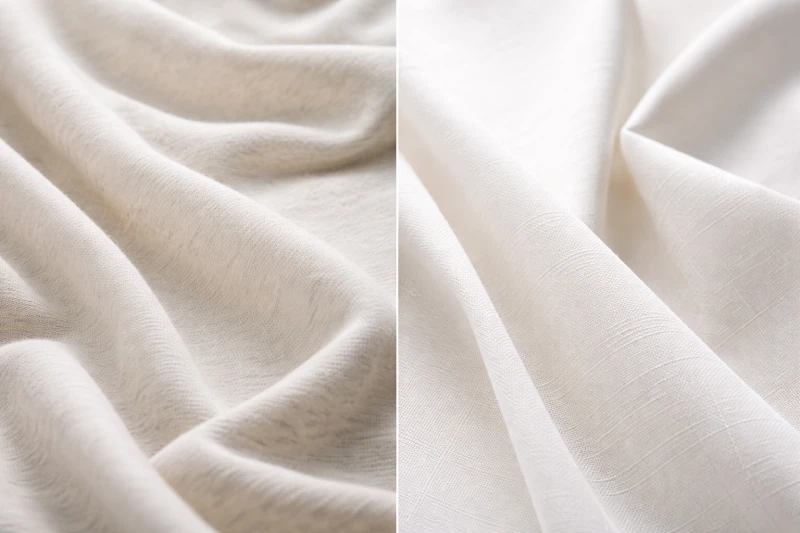
When comparing cotton jersey vs cotton fabric, many buyers assume they are nearly the same—after all, both are made from cotton fibers.
However, the real difference lies not in the material itself, but in how it is constructed. This structural distinction significantly affects how the fabric feels, stretches, drapes, and performs in garments. For apparel manufacturers and sourcing teams, understanding the difference between cotton and jersey fabric is essential for selecting the right material for specific product categories.
In this article, we break down the key differences in a clear, practical way to support informed fabric decisions.
What Is Cotton Jersey Fabric vs Regular Cotton Fabric?
The key difference between cotton jersey fabric and regular cotton fabric lies in their construction: one is knitted, while the other is woven.
Cotton jersey is a knitted fabric made from cotton fibers, created through a loop structure that allows the material to stretch and move more freely. This construction gives it a naturally soft and flexible feel, which is why it is widely used in everyday apparel. For a deeper explanation, see what is cotton jersey fabric.
In contrast, regular cotton fabric typically refers to woven cotton, where yarns are interlaced at right angles to form a stable and structured textile. This woven construction results in a firmer fabric with little to no stretch, making it more suitable for garments that require shape retention.
This structural difference directly influences how each fabric behaves in terms of flexibility, comfort, and overall garment performance.
Knit vs Woven: Core Structural Differences
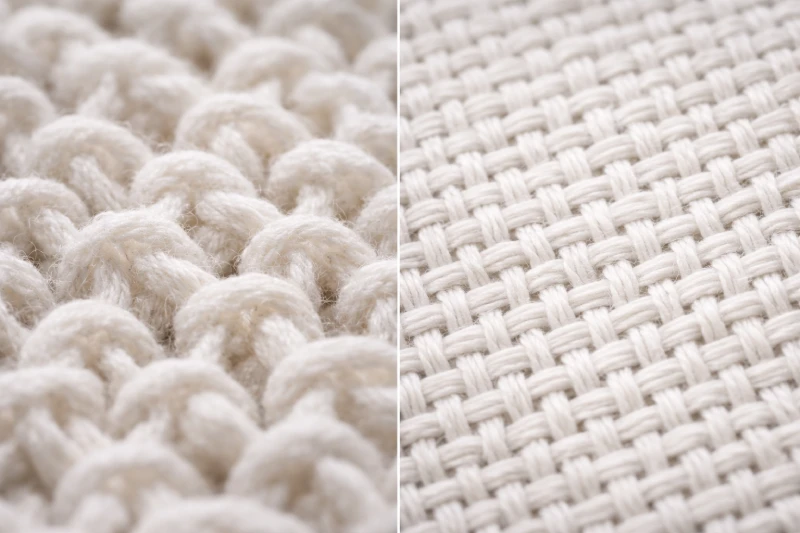
To truly understand the difference between cotton jersey and regular cotton fabric, it is essential to look at how the fabrics are constructed at the yarn level.
| Structure Aspect | Cotton Jersey (Knit) | Regular Cotton (Woven) |
|---|---|---|
| Yarn structure | Interlocking loops | Interlaced yarns |
| Flexibility | High | Low |
| Stretch behavior | Natural stretch | Minimal or no stretch |
| Shape stability | Lower | Higher |
| Production method | Knitting | Weaving |
In knitted fabrics like cotton jersey, yarns are formed into a series of interlocking loops. This loop structure allows the yarns to move more freely relative to each other, creating inherent flexibility and stretch without the need for added elastic fibers.
In woven cotton fabrics, yarns are arranged in an over-under pattern and locked at fixed intersection points. This interlaced structure restricts yarn movement, resulting in a firmer and more stable fabric with greater dimensional consistency.
As a result, knitted fabrics prioritize flexibility and comfort, while woven fabrics emphasize structure and durability.
Differences in Feel, Stretch, and Comfort
Beyond construction, the most noticeable difference between jersey fabric and woven cotton lies in how they feel, stretch, and perform during wear.
Cotton jersey typically offers a softer and smoother hand feel due to its looped knit structure, allowing the fabric surface to sit more gently against the skin. This makes it particularly comfortable for direct-contact garments. In contrast, woven cotton fabrics tend to feel firmer and more structured, sometimes with a slightly crisp texture depending on the weave, which gives a more defined tactile impression.
In terms of stretch, cotton jersey has a clear advantage. Its knitted construction provides natural elasticity, allowing the fabric to adapt to body movement without added fibers. Woven cotton, on the other hand, generally has little to no stretch because of its fixed yarn intersections, which can feel more restrictive in motion.
Both fabrics are breathable due to the natural properties of cotton fibers, but their comfort differs in use. Cotton jersey tends to offer a more relaxed, body-conforming experience, while woven cotton delivers a more stable and controlled feel. For a deeper understanding of these characteristics, see cotton jersey fabric properties.
Overall, cotton jersey is often preferred for comfort-focused applications, whereas woven cotton is better suited for situations where structure and form are more important.
Appearance and Drape Differences
In addition to feel and stretch, cotton jersey and woven cotton also differ significantly in their visual appearance and how they drape on the body.
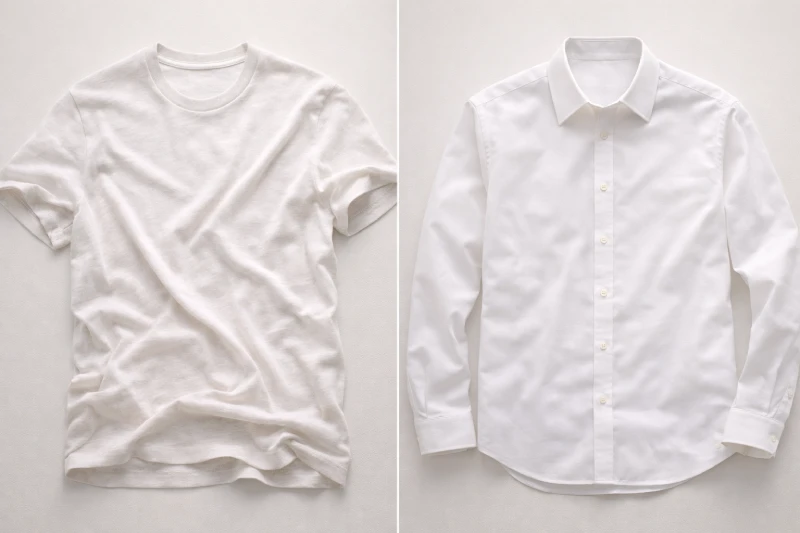
Cotton jersey typically presents a smooth, slightly matte surface with a subtle texture created by its knit construction. Visually, it appears softer and less rigid. In terms of drape, jersey fabric falls more fluidly and naturally follows the body’s contours, creating a relaxed and less structured silhouette.
Woven cotton fabrics, by contrast, tend to show a more defined surface texture due to their interlaced yarn structure. Depending on the weave, the fabric can appear crisp and more visually structured. When it comes to drape, woven cotton holds its shape more firmly, resulting in a cleaner and more structured silhouette that does not flow as freely as jersey.
While jersey fabric creates a relaxed and natural look, woven cotton delivers a cleaner and more structured appearance. This difference plays an important role in determining the overall style and form of the final garment.
Common Use Cases: When to Choose Each Fabric
Based on their structural and performance differences, cotton jersey and woven cotton are suited to different types of garments and design requirements.
Cotton jersey is commonly used in casualwear, especially for t-shirts and other close-to-skin garments where comfort and flexibility are essential. Its soft feel and natural stretch make it well-suited for everyday apparel that prioritizes ease of movement. For more context, see cotton jersey fabric for t shirts.
Woven cotton, on the other hand, is more often used in garments that require structure and shape retention, such as shirts and other semi-structured designs. Its stable construction helps maintain a clean appearance, making it suitable for styles where form and definition are important.
When comfort and stretch are priorities, jersey is often preferred, whereas woven cotton is chosen when structure and form are more important. Ultimately, the right choice depends on the intended function and design of the garment.
Advantages and Limitations of Each
Each fabric type offers distinct advantages and limitations depending on the intended use and design requirements.
| Aspect | Cotton Jersey (Knit) | Woven Cotton |
|---|---|---|
| Comfort | Very soft, skin-friendly | Moderate, varies by weave |
| Stretch | Natural stretch | Little to no stretch |
| Structure | Flexible, less structured | Firm, well-structured |
| Durability | Moderate, may lose shape | High, more stable over time |
| Shape retention | Lower | Strong |
While cotton jersey excels in comfort and flexibility, woven cotton offers superior structure and stability. Neither fabric is universally better than the other; the right choice depends on the specific requirements of the garment, including how it needs to feel, move, and maintain its shape over time.
Which Fabric Should You Choose?
Choosing between cotton jersey and woven cotton ultimately comes down to the specific requirements of the garment.
If you need a fabric that offers softness, natural stretch, and the ability to move comfortably with the body, cotton jersey is often the better choice. It is particularly suitable for designs that prioritize ease of wear and a more relaxed feel.
If you need a fabric that provides structure, holds its shape, and delivers a cleaner, more defined appearance, woven cotton is typically more appropriate. It works well for garments where form and stability are important.
In simple terms, jersey is ideal for comfort and flexibility, while woven cotton is better for structure and form. There is no one-size-fits-all answer—each fabric serves a different purpose depending on the design intent.
Need the Full Cotton Jersey Material Guide?
For fabric properties, common types, GSM ranges and apparel uses, read our complete cotton jersey fabric guide. This page remains focused on the comparison between jersey knit and woven cotton fabric.
Discuss Your Apparel Material Requirements
Share the intended garment, target market, fabric hand feel, weight range and performance expectations. Contact Seetime Luxury to begin a project discussion.
Discuss Your Apparel Sourcing Requirements
Whether you're launching a startup clothing brand, expanding a streetwear label, or looking for a reliable OEM apparel manufacturer, speaking directly with an experienced production team can help you avoid costly sourcing mistakes.
Talk With Our Manufacturing Team