
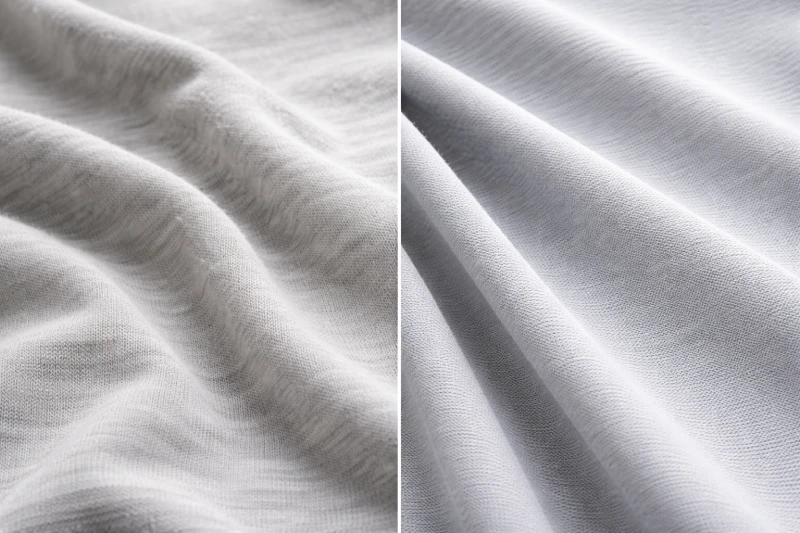
Cotton jersey and polyester jersey are two of the most widely used knit fabrics in modern apparel manufacturing, yet they differ significantly in performance, comfort, and end-use suitability. Understanding the difference between cotton and polyester jersey is essential for making informed material decisions, especially when balancing wearer experience with functional requirements.
This comparison explores how these two fabrics behave across key technical dimensions, including fiber composition, breathability, durability, and fabric structure. Rather than positioning one as universally better, the goal is to clarify how each performs under different conditions, helping designers, product developers, and sourcing teams choose the most appropriate option for their specific application.
What Are Cotton Jersey and Polyester Jersey?
Cotton jersey and polyester jersey are both knit fabrics made using a similar looped structure, but they differ fundamentally in fiber origin—cotton being natural and polyester being synthetic. This distinction influences how each fabric performs in terms of comfort, durability, and moisture behavior.
Cotton Jersey
Cotton jersey is a knit fabric made from natural cotton fibers, known for its softness and breathable structure. It typically features a smooth face and a slightly textured back, making it widely used in everyday garments. For a deeper explanation, see what is cotton jersey fabric.
Polyester Jersey
Polyester jersey is produced from synthetic polymer fibers engineered for durability and performance. It maintains a similar knit construction but offers a smoother, more uniform surface and greater resistance to stretching and shrinking compared to natural fibers.
While both fabrics share the same knit structure, the difference between cotton and polyester jersey primarily lies in their fiber composition, which directly affects how they feel, perform, and behave in different environments.
Material Composition and Fiber Differences
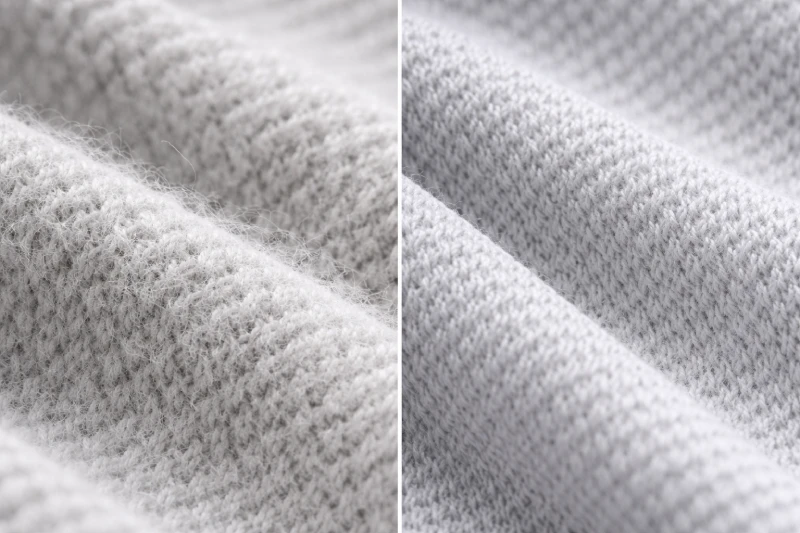
The primary difference between cotton vs polyester jersey fabric lies in fiber composition, which directly determines how each material interacts with moisture, heat, and mechanical stress. While both share a knit structure, their fiber-level behavior is fundamentally different.
| Attribute | Cotton Jersey | Polyester Jersey |
|---|---|---|
| Fiber type | Natural cellulose fiber | Synthetic polymer fiber |
| Source | Plant-based (cotton plant) | Petroleum-based |
| Molecular structure | Hydrophilic (absorbs water) | Hydrophobic (repels water) |
| Moisture behavior | Absorbs and retains moisture | Wicks moisture and dries quickly |
| Thermal response | Breathable, heat-sensitive | Insulating, heat-resistant |
| Biodegradability | Biodegradable | Non-biodegradable |
These differences stem from the inherent nature of the fibers. Cotton fibers contain hydroxyl groups that attract and hold water, contributing to softness and breathability but also slower drying. In contrast, polyester fibers are engineered to repel water and maintain structural stability, allowing for faster moisture evaporation and greater resistance to environmental stress.
As a result, the difference between cotton and polyester jersey extends beyond feel, influencing performance characteristics that become more evident in comfort, breathability, and wear conditions.
Differences in Comfort, Breathability, and Feel
When comparing comfort, cotton jersey is generally perceived as softer and more breathable, while polyester jersey offers a smoother surface with more controlled moisture behavior. The difference between cotton and polyester jersey in this aspect is closely tied to how each fiber interacts with air and moisture.
Cotton Jersey: Softness and Breathability
Cotton jersey is known for its natural softness and skin-friendly feel, making it comfortable for extended wear. Its fiber structure allows air to circulate more freely, helping regulate body temperature in moderate conditions. These characteristics are closely related to key cotton jersey fabric properties, particularly its ability to absorb moisture and enhance breathability.
Polyester Jersey: Smoothness and Moisture Control
Polyester jersey tends to have a smoother, more uniform surface that feels slightly cooler to the touch initially. While it is less breathable in terms of airflow, it is designed to move moisture away from the skin through wicking, which can help maintain a dry surface during activity.
From a technical perspective, cotton absorbs moisture into the fiber itself, which enhances softness but can lead to a damp sensation over time. Polyester, by contrast, transports moisture along the fabric surface, allowing it to evaporate more quickly, which changes how comfort is perceived under different conditions.
These differences become even more relevant when evaluating durability, maintenance, and long-term performance.
Durability, Moisture Handling, and Maintenance
In terms of durability and maintenance, polyester jersey generally offers greater stability and lower care requirements, while cotton jersey provides comfort but requires more careful handling over time. These differences are especially relevant in repeated wear and washing cycles.
Durability and Shape Retention
Polyester jersey is more resistant to abrasion, stretching, and deformation, allowing it to maintain its shape after frequent use. Cotton jersey, while comfortable, is more prone to shrinkage and may lose its original structure over time, especially if exposed to high temperatures during washing or drying.
Moisture Handling and Drying
Cotton absorbs moisture into the fiber, which can lead to a heavier, slower-drying fabric after exposure to sweat or water. Polyester, on the other hand, is designed to move moisture along the fabric surface, enabling faster drying and more consistent performance in dynamic conditions.
Care, Washing, and Longevity
Polyester jersey typically requires less maintenance, as it resists wrinkling and retains its form with minimal effort. Cotton jersey may require more controlled washing conditions to prevent shrinkage and maintain fabric quality, particularly over repeated laundering cycles.
From a material engineering perspective, these differences result from the consistency of synthetic fibers versus the natural variability of cotton. Polyester’s engineered structure provides predictable performance, while cotton’s natural composition introduces variability in long-term durability.
These performance differences also influence how each fabric behaves visually, including drape, texture, and overall appearance.
Appearance, Drape, and Fabric Behavior
Cotton jersey and polyester jersey differ noticeably in visual appearance and fabric behavior, with cotton offering a more natural drape and polyester providing a more structured and consistent look. These differences affect how garments hang, move, and present over time.
Cotton Jersey: Natural Drape and Texture
Cotton jersey tends to drape more softly, conforming to the body with a relaxed and fluid appearance. Its surface may show slight natural irregularities due to the variability of cotton fibers, resulting in a more matte and organic texture that is often associated with casual garments.
Polyester Jersey: Structured Form and Surface Consistency
Polyester jersey maintains a more defined shape, with a smoother and more uniform surface. It often appears slightly more polished, sometimes with a subtle sheen, depending on the yarn and finishing process. This consistency allows garments to retain a more controlled silhouette.
These differences are influenced by fiber stiffness and yarn uniformity. Polyester fibers are engineered for consistency and structural stability, while cotton fibers vary naturally, leading to a softer drape and less uniform surface behavior.
These visual and structural characteristics play a role in determining how each fabric is used across different types of garments.
Typical Use Cases for Each Fabric
Cotton jersey and polyester jersey are typically selected based on whether comfort or performance is the primary requirement. While both fabrics can be used across various garment types, their inherent properties make them more suitable for different use conditions.

Cotton Jersey: Comfort-Oriented Applications
Cotton jersey is commonly used in garments where softness and breathability are prioritized. It is often chosen for everyday wear items that are in direct contact with the skin, such as T-shirts and casual tops. These applications align with typical cotton jersey fabric for t shirts scenarios, where comfort plays a central role.
Polyester Jersey: Performance-Oriented Applications
Polyester jersey is more frequently used in garments that require durability and moisture management. It is commonly applied in activewear and performance-oriented clothing, where quick-drying behavior and shape retention are important under repeated movement or environmental exposure.
Rather than being limited to specific categories, the choice between polyester jersey vs cotton jersey fabric ultimately depends on whether the intended use prioritizes comfort, performance, or a balance of both.
Advantages and Limitations of Each
Cotton jersey and polyester jersey each offer distinct advantages and limitations, and neither material is universally better across all conditions. Their differences reflect trade-offs between comfort, performance, and maintenance.
Cotton Jersey: Advantages and Limitations
Advantages:
- Soft and comfortable against the skin
- High breathability and natural feel
- Suitable for extended wear in moderate conditions
Limitations:
- Absorbs moisture and dries slowly
- Prone to shrinkage and deformation
- Requires more careful maintenance
Polyester Jersey: Advantages and Limitations
Advantages:
- Durable and resistant to stretching
- Quick-drying with effective moisture management
- Maintains shape after repeated washing
Limitations:
- Less breathable compared to natural fibers
- May feel less soft or natural on the skin
- Can retain odors under certain conditions
Overall, the difference between cotton and polyester jersey is not about superiority, but about how each fabric balances comfort, durability, and performance depending on the intended use.
Which One Should You Choose?
When deciding between cotton jersey vs polyester jersey, the better option depends on the specific requirements of comfort, performance, and maintenance rather than a single universal standard.
Choose Cotton Jersey if:
- Softness and natural feel are a priority
- Breathability is important for everyday wear
- Comfort during extended use is the main concern
Choose Polyester Jersey if:
- Durability and shape retention are required
- Moisture control and quick-drying are important
- The garment is intended for active or performance conditions
Ultimately, the difference between cotton and polyester jersey is best understood as a balance of trade-offs, where the right choice is determined by how the fabric will be used rather than which one is inherently better.
Discuss Your Apparel Sourcing Requirements
Whether you're launching a startup clothing brand, expanding a streetwear label, or looking for a reliable OEM apparel manufacturer, speaking directly with an experienced production team can help you avoid costly sourcing mistakes.
Talk With Our Manufacturing Team