Quick answer: Seetime Luxury confirms MOQ for custom fitness clothing projects per project. Feasibility depends on the style, fabric, colours, size range, branding and packaging. Confirm the complete specification and approve a sample before bulk production.
A low MOQ can reduce the risk of launching a new activewear product, but the number on a quote is only one part of the decision. A buyer also needs to know what the quantity applies to, which details affect the production plan, and what must be approved before the order moves into bulk.
What does MOQ mean for custom activewear?
MOQ means minimum order quantity. In custom activewear, it normally describes the minimum number of pieces that a manufacturer can produce for a defined product brief. That brief may include one style, several colours, a size range, a logo method, labels and packaging.
MOQ should be treated as a project-specific point for discussion. It does not mean that every style, colour split or construction detail will have the same production conditions. A clear brief lets the manufacturer confirm whether the requested combination can be produced as planned.
What quantity is suitable for a first activewear launch?
It can be a sensible starting quantity when a brand wants to test one focused product direction before committing to a larger collection. A small run can help a buyer review the fit, fabric hand feel, branding and customer response while keeping the initial stock position easier to manage.
The most useful way to plan a first activewear launch is to keep the brief specific. Start with one product type or a tightly defined capsule, document the size and colour split, and review any specification changes after sampling for their impact on quantity, timing or cost.
Which project details affect the activewear quote?
| Specification | Why it matters | What to send |
|---|---|---|
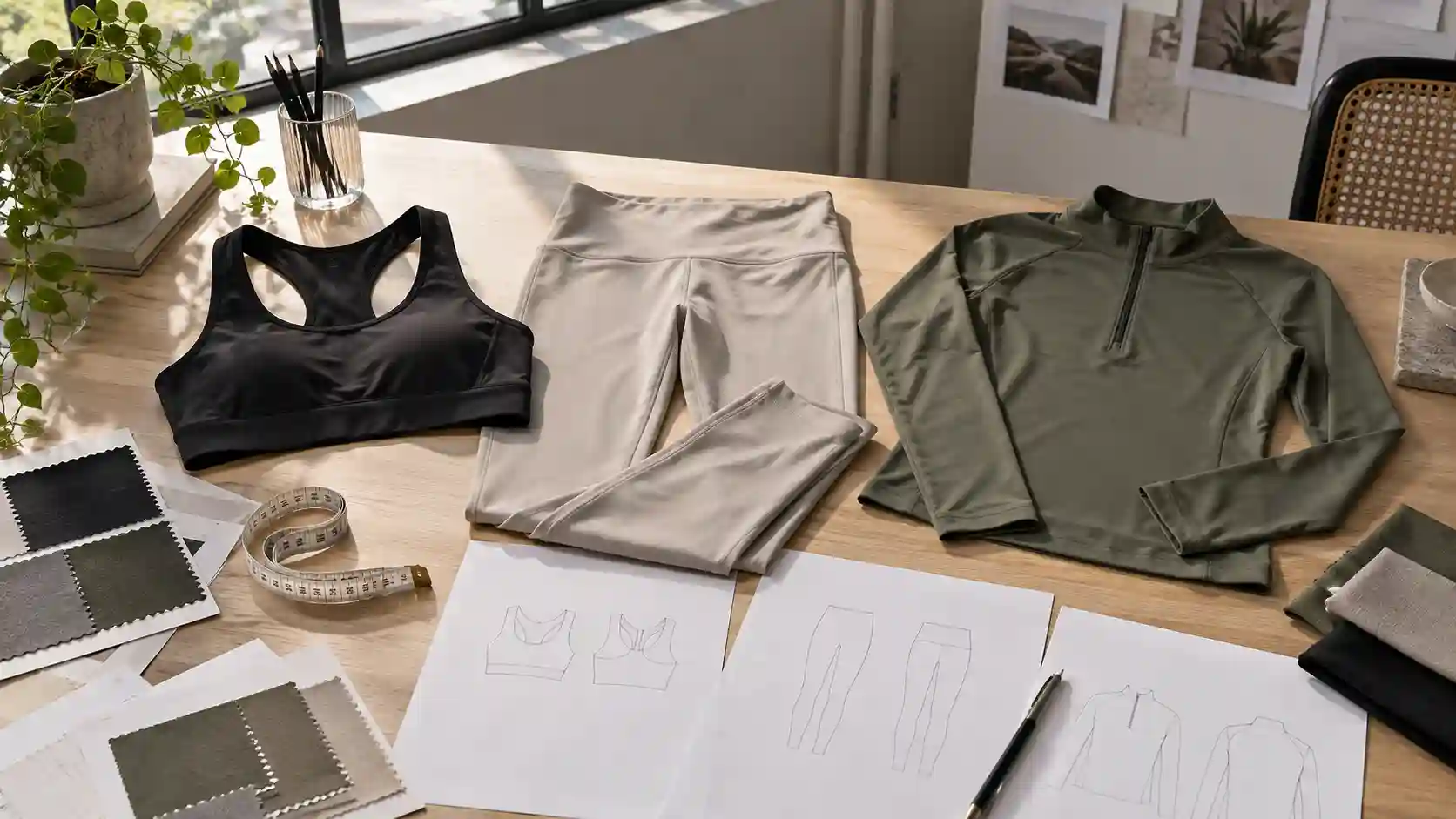
| Product style | Leggings, tops, shorts and sets have different construction requirements. | Reference images, sketches or a tech pack. |
| Colour and size split | The total quantity must be allocated across colours and sizes. | A quantity table by colour and size. |
| Fabric | Fabric choice affects fit, stretch, opacity and production feasibility. | Preferred composition, weight or a reference fabric. |
| Branding | Labels, logos and packaging add approval points to the brief. | Artwork, label information and packaging references. |
| Target market | Some markets require a specific testing or documentation scope. | Destination market and any testing requirement. |
What to include in a low MOQ activewear request
- Product direction: state whether you need private label, OEM or ODM support.
- Quantity plan: list the total pieces and the colour and size breakdown.
- Fit and construction: note the intended fit, waistband, seams, coverage and key measurements.
- Fabric requirements: describe the hand feel, stretch, opacity or performance requirement you need the sample to confirm.
- Branding and packaging: attach logo artwork and explain labels, hangtags, bags or cartons that need review.
- Delivery target: share the destination and the date by which the order needs to be ready.
For a broader supplier comparison, see the fitness clothing manufacturer guide. If the project needs a new pattern or fabric direction, review the custom activewear manufacturing route. For an existing style with branded labels, compare the private-label fitness clothing route.
What happens after the MOQ is agreed?
The quantity should be treated as one part of an approval sequence. The sample, materials, artwork, measurements and order specifications need to be reviewed before bulk production. The production schedule is confirmed per project after those requirements and approvals are reviewed.
Quality checks should follow the approved specification. The QC flow covers order and specification review, material and trim checks, pre-production approval, in-process inspection, and final product and packing inspection. The factory production workflow explains these checkpoints in more detail.
Low MOQ, private label or OEM: which route fits?
| Route | Best fit | First question to answer |
|---|---|---|
| Low MOQ activewear | A focused launch or market test planned around project requirements. | Which one or two products should the first run validate? |
| Private label | An existing or semi-developed style with your branding. | Which labels, colours and packaging need to be customised? |
| OEM / ODM | A product that needs a new fit, fabric or construction direction. | Which details must the sample prove before bulk? |
Frequently asked questions
What is the MOQ for custom activewear?
Seetime Luxury confirms MOQ for custom fitness clothing projects per project against the style, materials, colours, sizes and branding requirements.
Can an order include different sizes?
A size breakdown can be discussed as part of the project brief. Send the intended size range and quantity split so the production conditions can be reviewed before approval.
How long does bulk production take?
Bulk production timing is confirmed per project after the sample, materials, artwork and order specifications are approved. The confirmed plan depends on the final brief and delivery requirements.
Can third-party testing be arranged?
Third-party testing can be arranged when a destination market requires it, with the testing fee quoted separately. Any compliance statement should follow the report issued for the submitted sample and requirement.
Ready to plan a custom activewear launch?
Send the product reference, quantity split, fabric direction, branding artwork and destination market through the custom quote form. A clear brief makes it easier to confirm feasibility, sampling and the next production step.
Last reviewed: 28 October 2026.
Discuss Your Apparel Sourcing Requirements
Whether you're launching a startup clothing brand, expanding a streetwear label, or looking for a reliable OEM apparel manufacturer, speaking directly with an experienced production team can help you avoid costly sourcing mistakes.
Talk With Our Manufacturing Team