
End-Use Oriented Selection
Materials selected based on real application scenarios, not generic categories.

A wide range of textile and functional materials to support apparel, headwear, active products, promotional items, and other custom manufacturing needs.
We work with a broad range of textile and functional materials to support diverse custom manufacturing needs.
Rather than limiting material selection to a single product category, our approach focuses on end use, performance requirements, durability expectations, and branding compatibility. This allows us to support projects across apparel, headwear, active products, promotional items, and other textile-based applications.
With stable material sourcing and flexible specifications, we help clients select suitable fabrics for bulk production, long-term programs, and OEM/ODM manufacturing projects.
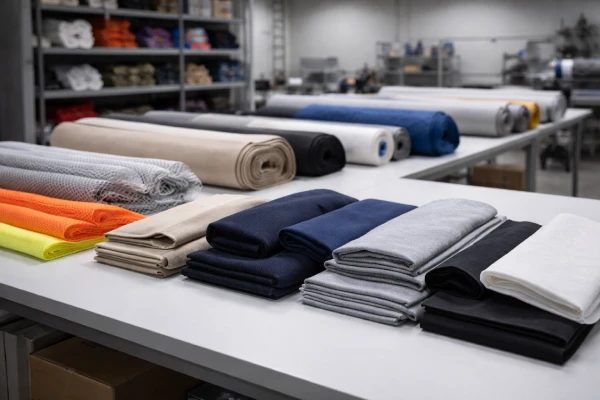
Materials selected based on real application scenarios, not generic categories.
Support for different weights, compositions, and performance requirements.
Materials evaluated for printing, embroidery, and logo application results.
Consistent sourcing to support repeat orders and long-term programs.
We group materials by structure, performance, and functional use rather than specific end products, making it easier to select the right materials for custom manufacturing needs.
Comfort-oriented materials selected for balanced wearability, appearance, and production stability.
Comfort-oriented materials selected for balanced wearability, appearance, and production stability.
Lightweight materials focused on airflow, ventilation, and heat management.
Soft and insulating materials developed for warmth and comfort in cooler conditions.
Materials selected for strength, structure, and long-term durability.
Specialized materials developed to meet specific functional or project-based requirements.
A versatile synthetic material widely used for its durability and consistency in bulk production.
Why it’s used
Maintains shape and color over long-term use
Suitable for high-volume and repeat orders
Performs well in functional and active environments
Typical use considerations
Ideal when durability and cost control are priorities
Works well for functional, uniform, and performance-focused projects
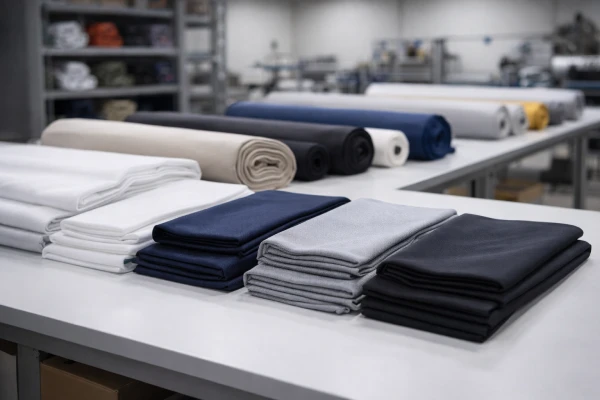
A natural fiber valued for comfort, breathability, and everyday wearability.
Why it’s used
Comfortable for extended wear
Skin-friendly and breathable
Preferred for comfort-driven products
Typical use considerations
Suitable for casual, lifestyle, or comfort-oriented applications
Often selected when hand feel is a key decision factor
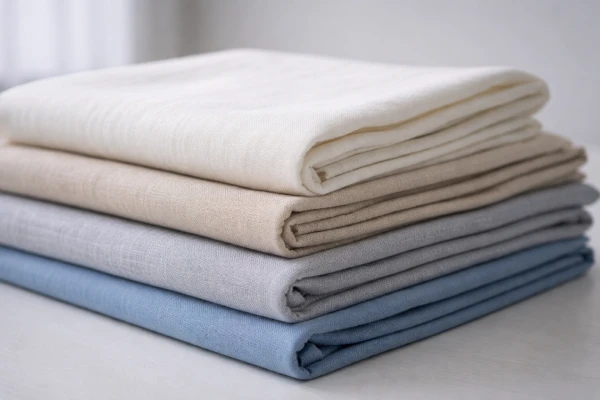
Blended materials designed to balance comfort with durability and production stability.
Why it’s used
Combines softness with improved shape retention
More stable than pure cotton for bulk production
Cost-effective for long-term programs
Typical use considerations
Suitable for uniform programs and branded apparel
Good balance for projects requiring both comfort and longevity

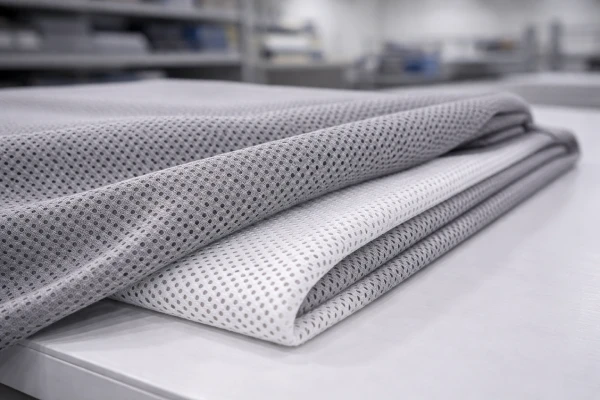
Open-structure fabrics designed to enhance airflow and reduce overall weight.
Why it’s used
Improves ventilation in active or warm conditions
Lightweight and breathable
Commonly integrated as panels or full-surface materials
Typical use considerations
Used where airflow and heat management are required
Often applied in safety, outdoor, or functional designs
Soft insulating material developed for warmth and comfort.
Why it’s used
Provides thermal comfort without excessive weight
Soft inner surface for comfortable wear
Suitable for layered or seasonal products
Typical use considerations
Selected for cooler climates or seasonal programs
Often used in long-term uniform or casual collections

Materials engineered to provide flexibility, movement, and functional performance.
Why it’s used
Supports stretch and freedom of movement
Enhances comfort during physical activity
Retains shape after repeated use
Typical use considerations
Suitable for performance-oriented or movement-focused designs
Common in active, functional, and project-specific developments
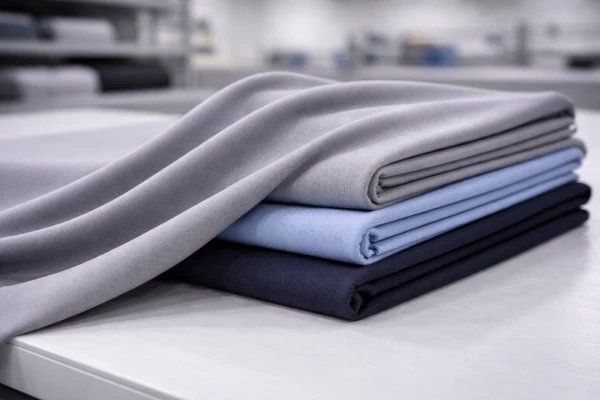
Instead of selecting fabrics by name alone, we help match materials to real application scenarios, ensuring performance, durability, and production feasibility across custom OEM projects.
Materials selected for consistency, long-term wear, and branding clarity.
Focused on stable supply, color consistency, and reliable performance for repeat orders.
Materials optimized for movement, flexibility, and functional performance.
Suitable for projects requiring stretch, breathability, and shape retention.
Materials selected to adapt to changing environments and usage conditions.
Focused on durability, ventilation, or insulation depending on application needs.
Materials chosen for cost efficiency, branding visibility, and fast production.
Ideal for bulk orders with tight timelines and budget control requirements.
Materials evaluated for stability across multiple production cycles.
Ensures consistent quality and material availability for ongoing projects.
Materials selected based on unique design or performance requirements.
Supports custom specifications, mixed-material structures, and scalable production.
We evaluate materials not only for performance, but also for how well they work with different processing and branding methods.
Suitable for flat and stable fabric surfaces. Works best with materials that maintain shape during processing, ensuring consistent color coverage and clean logo edges.

Compatible with a wide range of synthetic and blended materials. Ideal for detailed graphics and flexible production requirements, especially for mixed designs and short runs.
Best suited for thicker or structured materials that can support stitching. Often used where durability, texture, and premium appearance are required.
Suitable for materials that support additional layers or attachments. Allows flexible branding placement without direct fabric processing.
Combining different materials within one product requires compatibility between fabrics, processing methods, and final assembly.
For special or project-specific requirements, we assess material and processing compatibility before production to reduce risk and ensure scalable results.
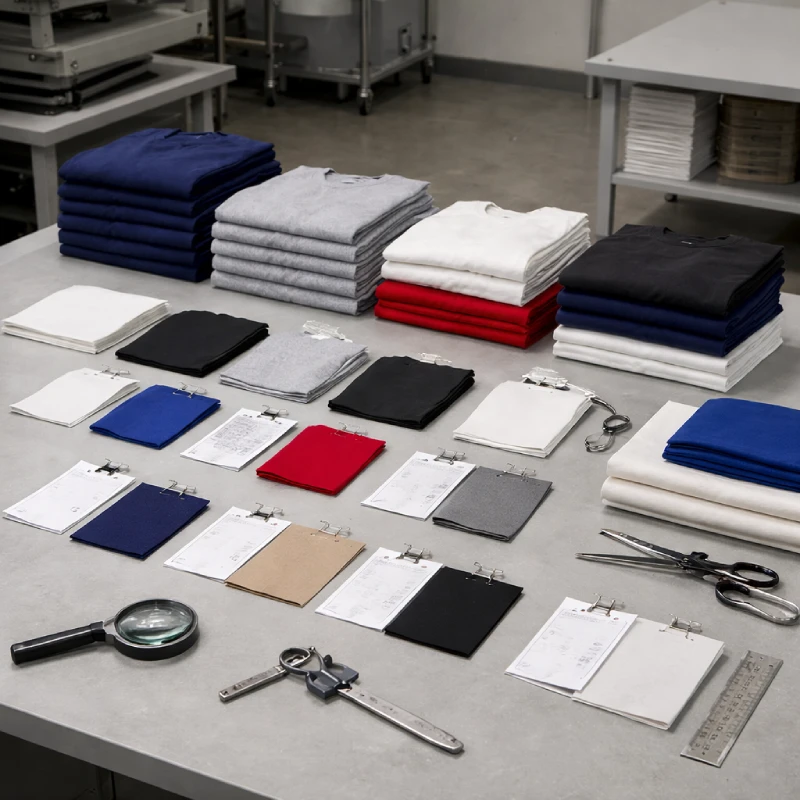
Consistent quality is critical for custom OEM manufacturing, especially for bulk orders and long-term programs. Our quality control process focuses on material consistency, production stability, and repeatability across multiple production cycles, helping reduce variation and ensure reliable outcomes for our clients.
Quality is managed throughout the entire process, not inspected only at the final stage.
Before production, materials are reviewed and confirmed based on project requirements. During manufacturing, key checkpoints help monitor consistency in structure, appearance, and processing compatibility. For repeat orders, we prioritize stable sourcing and controlled specifications to minimize batch-to-batch variation.
This approach allows us to support ongoing supply programs, corporate uniform projects, and OEM developments where consistency over time is as important as initial quality.
