Introduction
Choosing the right printing method is one of the most important decisions apparel brands face when producing custom garments. The printing technology used can directly affect production cost, design flexibility, fabric compatibility, and long-term scalability.
To understand how different printing methods fit into a complete apparel production strategy, you can explore our complete DTG printing guide.
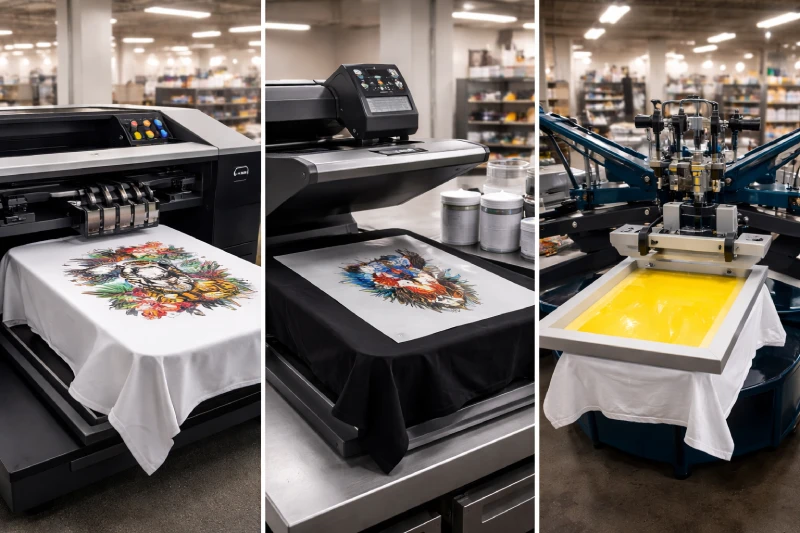
Today, three methods dominate modern apparel decoration: Direct-to-Garment (DTG), Direct-to-Film (DTF), and traditional Screen Printing. Each technology works differently and is optimized for different production scenarios.
Some methods are ideal for small custom orders, while others are designed for high-volume manufacturing. Understanding these differences helps brands avoid unnecessary costs and select a printing approach that matches their product strategy.
This guide compares DTG, DTF, and Screen Printing across key factors such as cost, order volume, fabric compatibility, and print durability, helping apparel brands determine the most suitable solution for their production needs.
DTG vs DTF vs Screen Printing: Quick Comparison
Before diving into the technical details, it helps to look at the three printing methods side by side. While DTG, DTF, and Screen Printing can all produce high-quality apparel prints, they differ significantly in terms of setup cost, scalability, fabric compatibility, and production efficiency.
In general, DTG works best for small custom orders, DTF offers flexible mid-scale production, and Screen Printing remains the most cost-efficient option for large runs. The table below highlights the most important differences that apparel brands should consider when choosing a printing method.
Side-by-Side Printing Method Comparison
| Factor | DTG | DTF | Screen Printing |
|---|---|---|---|
| Setup Cost | Low | Medium | High |
| Best Order Size | 1–50 pcs | 50–500 pcs | 500+ pcs |
| Fabric Compatibility | Cotton | Cotton / Polyester / Blends | Most fabrics |
| Color Complexity | Excellent for detailed artwork | Excellent for multi-color designs | Best for simple color designs |
| Durability | Good | Good | Excellent |
| Production Speed | Slow | Medium | Fast |
| Scalability | Low | Medium | High |
| Best Use Case | Custom orders / POD | Mid-size production | Large-scale manufacturing |
Overall, the main difference between these printing technologies lies in production scale and operational efficiency.
- DTG is ideal for brands that produce small quantities or offer print-on-demand products.
- DTF provides more flexibility across different fabrics and moderate order volumes.
- Screen Printing becomes the most economical option once production reaches larger quantities.
How Each Printing Method Works
Although DTG, DTF, and Screen Printing all produce designs on garments, the way each technology applies ink to fabric is very different. These differences affect not only the printing process itself, but also factors such as fabric compatibility, production speed, and print durability.
Understanding how each method works helps apparel brands better evaluate which printing technology fits their production needs.
How DTG Printing Works
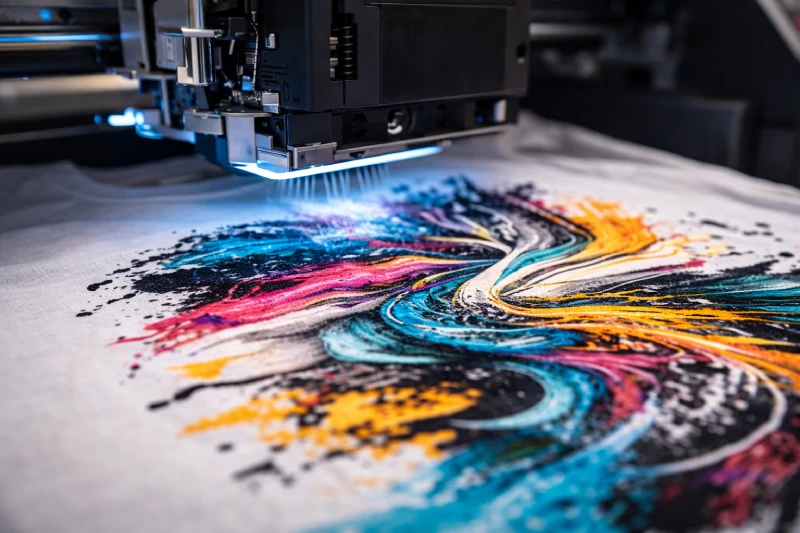
DTG (Direct-to-Garment) printing uses digital inkjet technology to apply water-based ink directly onto the fabric surface. The printer sprays ink onto the garment in a process similar to how a paper printer works.
Before printing, dark garments typically require a pre-treatment solution to help the ink bond properly with the fabric. Once printed, the design is cured using heat so the ink can permanently set into the fibers.
Because the ink is absorbed directly into cotton fibers, DTG can produce highly detailed designs, smooth gradients, and photographic-quality artwork. This makes it particularly suitable for small batches and designs with complex color variations.
How DTF Printing Works
DTF (Direct-to-Film) printing uses a transfer-based process rather than printing directly onto the garment. First, the design is printed onto a special PET transfer film using specialized inks.
After printing, an adhesive powder is applied to the ink layer on the film. The film is then heated to cure the adhesive before being placed onto the garment.
Using a heat press, the design is transferred from the film onto the fabric surface. This process allows DTF prints to adhere to a wide range of materials, including cotton, polyester, and blended fabrics.
How Screen Printing Works
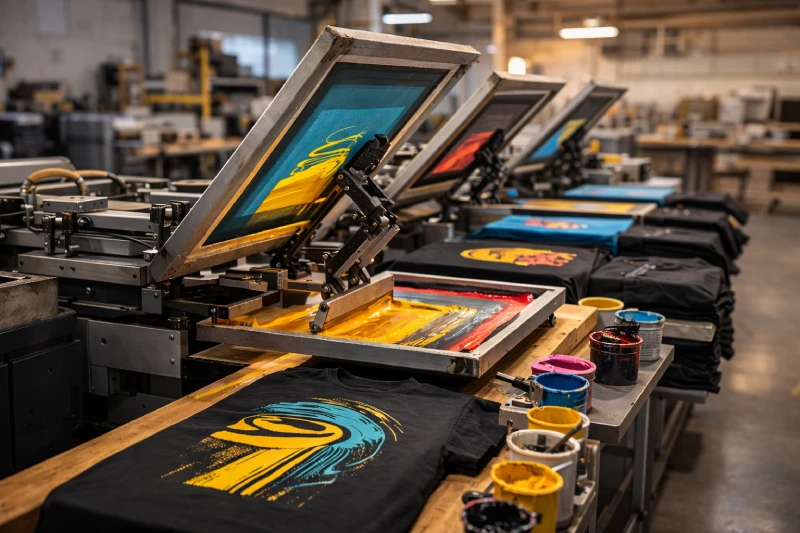
Screen Printing is one of the oldest and most widely used garment printing methods in apparel manufacturing. Instead of digital printing, it uses a mesh screen stencil to apply ink to the fabric.
Each color in the design requires its own screen. Ink is pushed through the screen using a squeegee, transferring the design onto the garment layer by layer.
After printing, the garment is cured in a high-temperature dryer to permanently set the ink. Because of its ability to produce durable prints at high production speeds, screen printing is commonly used for large-scale apparel orders such as retail collections, promotional merchandise, and corporate uniforms.
Cost Comparison: Small Orders vs Large Orders
Printing cost is often the most important factor when apparel brands choose a decoration method. While DTG, DTF, and Screen Printing can all produce high-quality prints, their cost structures differ significantly depending on production volume.
Some methods have almost no setup cost but higher unit prices, while others require higher preparation costs but become cheaper at scale. Understanding this cost logic helps brands select the most economical solution for their production size.
Small Orders (Under 50 Pieces)
For small production runs, DTG printing is usually the most cost-effective option. Because DTG is a digital printing process, it does not require screens, film preparation, or expensive setup procedures.
This means garments can be printed one by one without additional setup fees, making DTG ideal for small fashion drops, test products, or print-on-demand businesses. Although the per-shirt printing time is slower, the absence of setup cost keeps the total project cost low for small quantities.
Medium Orders (50–500 Pieces)
As order sizes increase, DTF printing often becomes more efficient than DTG. DTF allows multiple designs to be printed on transfer film in advance and then applied to garments through heat transfer.
This workflow improves production efficiency while maintaining good flexibility across different fabric types. For many apparel brands producing medium-sized collections, DTF offers a balanced solution between cost, speed, and print quality.
Large Orders (500+ Pieces)
For large production runs, Screen Printing typically offers the lowest cost per garment. Although screen printing requires preparation time and screen setup, these costs are spread across a large number of units.
Once the screens are prepared, printing can be performed quickly and consistently, making the process extremely efficient for high-volume production. This is why screen printing is widely used for retail collections, promotional merchandise, and corporate apparel programs.
Typical Setup Cost Comparison
The initial setup cost is one of the main differences between the three methods.
| Printing Method | Typical Setup Cost |
|---|---|
| DTG | $0 |
| DTF | Low |
| Screen Printing | $50–$200 per design |
In general, DTG works best for small orders, DTF suits medium production, and Screen Printing becomes the most economical choice at large scale.
Fabric Compatibility: Cotton vs Polyester vs Blends
Another important factor when choosing a printing method is fabric compatibility. Different printing technologies interact with textile fibers in different ways, which directly affects color performance, durability, and overall print quality.
While some printing methods work best on natural fibers like cotton, others perform better on synthetic materials such as polyester. Understanding how each method behaves on different fabrics helps apparel brands select the most suitable printing approach for their product line.
100% Cotton
For 100% cotton garments, DTG printing typically delivers the best results. Because DTG uses water-based inks that absorb directly into the cotton fibers, the prints often appear softer and more natural on the fabric surface.
This deep ink absorption also allows DTG to produce highly detailed artwork, gradients, and photographic images. As a result, DTG is commonly used for cotton T-shirts in fashion brands and print-on-demand businesses.
Polyester & Performance Fabrics
Printing on polyester or performance fabrics can be more challenging for DTG because synthetic fibers do not absorb water-based inks as effectively as cotton.
In these cases, DTF and Screen Printing usually perform more consistently. DTF transfers the design onto the fabric surface using adhesive bonding, which allows it to work well across many synthetic materials. Screen printing also performs reliably on polyester when appropriate inks are used.
Cotton-Poly Blends
Many modern garments use cotton-polyester blends, which combine the comfort of cotton with the durability of synthetic fibers.
For blended fabrics, DTF printing often offers the most flexibility because the transfer process allows the design to adhere consistently to different fiber compositions. This makes DTF a reliable option for brands that produce garments using mixed fabrics.
Screen printing can also work well on blended materials, particularly for large production runs where consistent durability is required.
Dark Garments
Printing on dark-colored garments introduces additional challenges because darker fabrics can reduce color visibility.
With DTG printing, dark garments usually require a white underbase layer and fabric pre-treatment to ensure the colors appear vibrant. This adds an extra preparation step before printing.
Both DTF and Screen Printing perform strongly on dark fabrics. DTF transfers include an opaque ink layer that helps colors remain vivid, while screen printing commonly uses a white base layer beneath the design to maintain color brightness.
Because of this, many manufacturers prefer DTF or screen printing for darker garments and heavier fabrics.
Print Quality & Durability Comparison
Beyond cost and fabric compatibility, apparel brands also care about how the print looks and how long it lasts. Print quality affects color vibrancy and design detail, while durability determines how well the print holds up after repeated washing and daily wear.
Although DTG, DTF, and Screen Printing can all produce professional results, the way the ink interacts with the fabric creates noticeable differences in appearance, texture, and long-term durability.
Color Vibrancy
When it comes to detailed artwork and color complexity, DTG printing performs exceptionally well. Because the process uses digital inkjet technology, it can reproduce complex images, gradients, and multi-color artwork with high accuracy.
DTF printing also delivers strong color vibrancy, especially on both light and dark garments. The adhesive transfer layer allows the printed design to maintain bright colors even on fabrics where direct ink absorption is more difficult.
Screen Printing, on the other hand, is known for producing bold and highly opaque colors. While it may not be as flexible for photographic images or complex gradients, it performs extremely well for logos, graphics, and designs with solid color areas.
Wash Durability
In terms of long-term durability, Screen Printing is generally considered the most durable option. The ink layer is thicker and strongly bonded to the fabric, allowing prints to withstand many wash cycles without significant fading or cracking.
DTF printing also provides good wash resistance when properly applied. The adhesive bonding helps the design remain stable on the fabric surface, making it suitable for garments that experience regular wear.
DTG prints are typically durable on cotton garments, but their longevity can depend on factors such as fabric type, washing conditions, and the quality of the printing process.
Hand Feel
The hand feel, or how the print feels when touching the garment, can also vary between methods.
DTG printing usually offers the softest feel, since the ink is absorbed directly into the fabric fibers rather than sitting heavily on top of the material.
DTF prints tend to have a slightly thicker feel because the design is transferred as a thin film layer onto the fabric surface.
With Screen Printing, the ink layer is typically thicker and more noticeable, especially in designs with large solid color areas. However, this thicker layer also contributes to the method’s strong durability.
Which Printing Method Is Best for Different Apparel Brands?
Different apparel brands operate under different production models. Some focus on small custom releases, while others produce large-scale retail collections. Because of these differences, the most suitable printing method often depends on the brand’s order volume, product variety, and growth stage.
Below are several common apparel business scenarios and the printing methods that typically work best for each.
Best for Fashion Startups
For fashion startups launching new products, DTG printing is often the most practical option. Early-stage brands usually produce small batches and frequently test new designs.
Because DTG requires no screen setup and no minimum order quantity, it allows startups to release limited collections without committing to large production runs. This flexibility reduces inventory risk while allowing brands to experiment with new designs.
Best for Print-on-Demand Businesses
For print-on-demand (POD) businesses, DTG is generally the preferred method. POD stores often produce garments only after a customer places an order.
DTG supports this model because designs can be printed individually and on demand, without needing large production setups. This makes it ideal for e-commerce brands that offer customized graphics or personalized products.
Best for Growing Apparel Brands
As brands begin producing medium-sized collections, DTF printing often becomes more attractive. DTF offers strong flexibility across different fabrics while improving production efficiency compared to DTG.
Because DTF transfers can be prepared in advance and applied quickly to garments, it provides a balanced solution for brands that need moderate production volume with design flexibility.
Best for Large Retail Orders
For brands producing large retail orders, Screen Printing remains the most efficient solution. Once screens are prepared, the printing process becomes extremely fast and consistent.
This makes screen printing ideal for high-volume production, such as promotional merchandise, corporate uniforms, or large retail collections where thousands of identical garments must be produced efficiently.
Decision Guide: How to Choose the Right Printing Method
With multiple printing technologies available, selecting the right option often comes down to a few practical factors. Apparel brands typically evaluate order size, fabric type, design complexity, and long-term production plans before deciding on a printing method.
The following steps provide a simple framework to help brands identify the most suitable printing approach for their products.
Step 1: Define Your Order Volume
Order quantity is usually the first factor to consider.
For very small orders or custom pieces, DTG printing is often the most efficient solution because it does not require setup costs. When production volumes increase to medium ranges, DTF becomes more practical due to its improved workflow efficiency. For large-scale production, screen printing typically provides the lowest cost per garment.
Step 2: Identify Your Fabric Types
Different fabrics respond differently to printing technologies.
If your product line focuses mainly on 100% cotton garments, DTG printing can produce excellent results. For brands working with polyester, performance fabrics, or blended materials, DTF and screen printing usually provide more consistent adhesion and color performance.
Step 3: Evaluate Design Complexity
The complexity of your artwork can also influence the printing method.
Designs that include photographic images, gradients, or many colors are well suited for DTG or DTF printing. Screen printing works best for designs with fewer colors and bold graphics, where the screen setup process can remain efficient.
Step 4: Consider Production Scalability
Finally, brands should think about future production growth.
If your business plans to scale quickly with large retail orders, screen printing may offer better long-term efficiency. If your brand focuses on frequent design updates and flexible production, DTG or DTF may better support that workflow.
Final Recommendation
Each printing method offers unique advantages, and the best choice ultimately depends on the production needs of the apparel brand. By evaluating factors such as order volume, fabric type, design complexity, and scalability, brands can identify the most suitable printing technology for their products.
In general, DTG printing works best for small custom orders and print-on-demand production. Because it requires no setup cost and supports detailed artwork, DTG allows brands to produce limited quantities with minimal risk. This makes it a popular choice for startups, online stores, and brands that frequently release new designs.
DTF printing provides greater flexibility across different fabrics and moderate production volumes. It can work well on cotton, polyester, and blended materials while maintaining strong color performance. For growing apparel brands that need both versatility and reasonable production efficiency, DTF often offers a balanced solution.
For large-scale production, Screen Printing remains the most cost-efficient method. Although it requires screen preparation and higher setup costs, the process becomes extremely efficient once production begins. This makes it ideal for retail collections, promotional merchandise, and corporate apparel programs.
The following summary provides a quick reference for selecting the appropriate method:
| Production Scenario | Recommended Method |
|---|---|
| Custom orders / print-on-demand | DTG |
| Medium-size apparel production | DTF |
| Large-scale manufacturing | Screen Printing |
By aligning printing technology with production goals, apparel brands can ensure both efficient manufacturing and consistent product quality.
Discuss Your Apparel Sourcing Requirements
Whether you're launching a startup clothing brand, expanding a streetwear label, or looking for a reliable OEM apparel manufacturer, speaking directly with an experienced production team can help you avoid costly sourcing mistakes.
Talk With Our Manufacturing Team