

High-visibility (hi-vis) apparel plays a critical role in occupational safety, especially in environments where workers must be easily seen by vehicle operators, machinery drivers, or other personnel. For overseas B2B buyers sourcing workwear, sportswear, or functional headwear, EN ISO 20471 is the most widely referenced international standard governing high-visibility clothing.
This article explains EN ISO 20471 in clear, practical terms—focusing on what it means for product design, materials, production decisions, and bulk procurement—without relying on legal language or regulatory text.
What Is EN ISO 20471?
EN ISO 20471 is an international standard that defines performance requirements for high-visibility clothing intended to make the wearer more visible in daylight, low-light, and nighttime conditions.
In simple terms, the standard does not certify a factory or a brand. It evaluates whether a specific garment design, made with specific materials and construction, provides enough visual conspicuity to reduce accident risk in hazardous environments.
The standard focuses on three core elements:
- Fluorescent background material (for daytime visibility)
- Retroreflective material (for nighttime visibility under headlights)
- Minimum surface area and placement rules for those materials
Only garments that meet all relevant requirements can be considered compliant.
Which Apparel Categories Are Affected?
Apparel Commonly Covered by EN ISO 20471
EN ISO 20471 applies primarily to protective and occupational garments where visibility is a safety function, including:
- Industrial and construction workwear
- Traffic control and roadside safety clothing
- Logistics, port, and warehouse safety apparel
- Railway, airport, and utility worker garments
- High-visibility jackets, vests, trousers, coveralls
- Functional outerwear used in hazardous environments
In these cases, visibility is not decorative—it is a risk-mitigation requirement.
Apparel Typically Not Covered
The following categories are generally outside the scope of EN ISO 20471 unless explicitly designed for occupational safety:
- Fashion or promotional apparel
- Casual sportswear and athleisure
- Training or spectator sports clothing
- Lifestyle caps, hats, and accessories
- Headwear used only for branding or sun protection
However, once a product is marketed or specified as high-visibility safety apparel, the expectations of EN ISO 20471 may apply—regardless of category.
Visibility Classes and Why They Matter
EN ISO 20471 defines three visibility classes (Class 1, 2, and 3). These classes are determined by the total visible surface area of compliant materials and their distribution on the garment.
- Class 1: Lowest visibility level, typically for low-risk environments
- Class 2: Medium visibility, often used in moderate traffic or industrial areas
- Class 3: Highest visibility, required for high-risk environments (e.g., highways, heavy machinery zones)
The class is not a label buyers choose arbitrarily—it is a design outcome based on pattern size, panel layout, and material usage.
Practical Implications for Materials and Colors
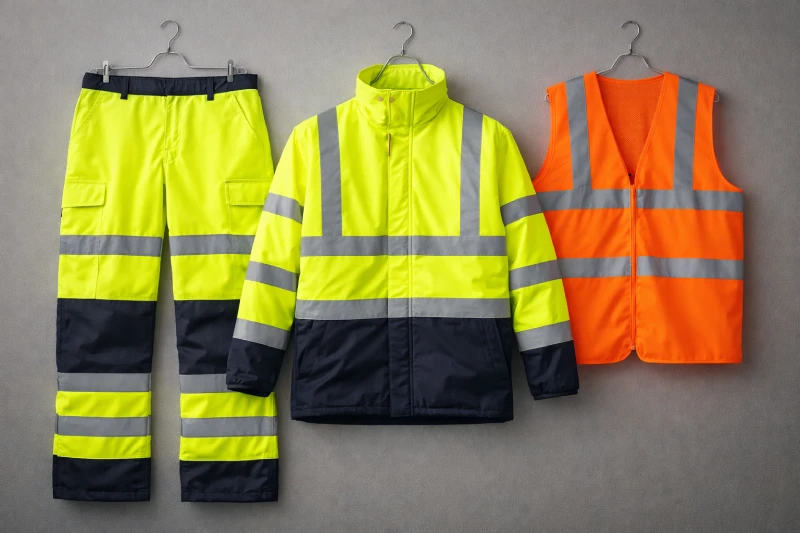
Fluorescent Background Fabrics
Only certain colors are accepted for compliant fluorescent materials, typically:
- Fluorescent yellow
- Fluorescent orange-red
- Fluorescent red (under specific conditions)
These fabrics must meet defined chromaticity and luminance performance, meaning not every “bright” fabric qualifies. Dye selection, fabric structure, and finishing processes all affect compliance.
Retroreflective Materials
Retroreflective tape or panels are required for nighttime visibility. Key considerations include:
- Certified reflective performance
- Durability after washing and abrasion
- Correct width, placement, and orientation
Decorative reflective trims often do not meet performance thresholds.
Construction and Design Considerations
Compliance is not achieved by materials alone. Garment construction matters.
Key factors include:
- Minimum visible area after sizing and pattern grading
- Placement of reflective elements around the torso and limbs
- Continuity of visibility from multiple viewing angles
- Seam placement that does not interrupt reflective performance
For example, reducing panel size to save fabric or altering patterns for aesthetics can unintentionally downgrade the visibility class.
Printing, Logos, and Customization Risks
Customization is one of the most common sources of non-compliance.
Buyers should be aware that:
- Large logo prints on fluorescent areas can reduce effective visible surface
- Dark inks or dense prints may interfere with luminance performance
- Heat transfer or embroidery over reflective tape can invalidate its function
- Unapproved after-market printing may void original test results
A garment may look compliant but fail performance expectations after branding is applied.
Common Compliance Mistakes Buyers Should Avoid
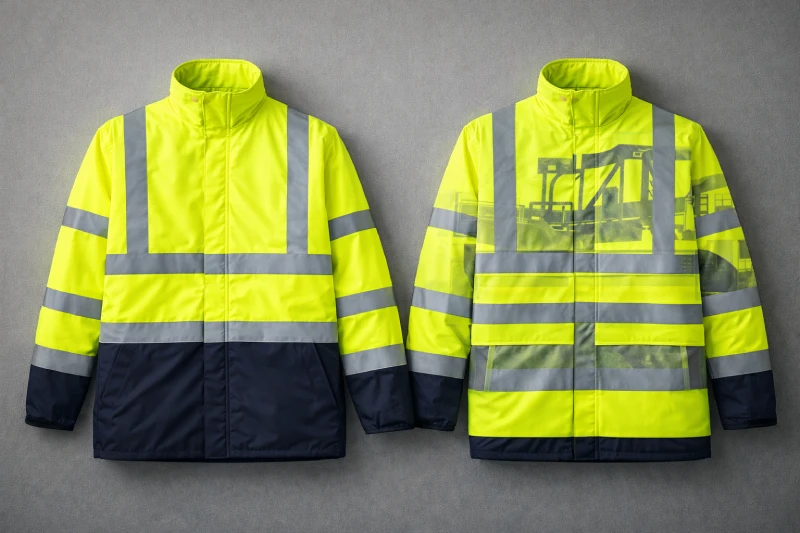
1. Assuming “Hi-Vis Color” Equals Compliance
Not all bright fabrics meet EN ISO 20471 performance criteria.
2. Mixing Certified Components Incorrectly
Using certified fabric and certified tape does not guarantee a certified garment if layout rules are not met.
3. Ignoring Size Variations
Smaller sizes may fail minimum surface area requirements if patterns are not adjusted carefully.
4. Over-customizing Without Review
Logos, color blocks, or design changes introduced late in production often compromise compliance.
5. Relying on Generic Claims
Statements like “ISO-style,” “EN compliant fabric,” or “reflective grade” are not substitutes for proper evaluation.
How Buyers Can Ensure Compliance in Bulk Orders
For overseas procurement teams, compliance control should start before sampling, not after delivery.
Practical steps include:
- Clearly specifying intended use environments and visibility expectations
- Confirming which visibility class is required for the project
- Reviewing garment layouts, not just fabric specs
- Requesting clarification on how branding will affect visibility
- Ensuring consistency between sample approval and mass production
- Avoiding assumptions based on previous styles or suppliers
Compliance is a process, not a checkbox.
Compliance-Focused Conclusion
EN ISO 20471 is fundamentally about risk reduction through visibility, not branding or aesthetics. For B2B buyers sourcing workwear, sports-adjacent apparel, or functional headwear, understanding how this standard works helps prevent costly mistakes, rejected shipments, and—most importantly—safety failures in real working environments.
A compliant high-visibility garment is the result of correct materials, thoughtful design, controlled customization, and disciplined production execution. Buyers who approach EN ISO 20471 as a design and procurement framework—rather than a label—are far more likely to achieve consistent, reliable outcomes across global supply chains.
Discuss Your Apparel Sourcing Requirements
Whether you're launching a startup clothing brand, expanding a streetwear label, or looking for a reliable OEM apparel manufacturer, speaking directly with an experienced production team can help you avoid costly sourcing mistakes.
Talk With Our Manufacturing Team