
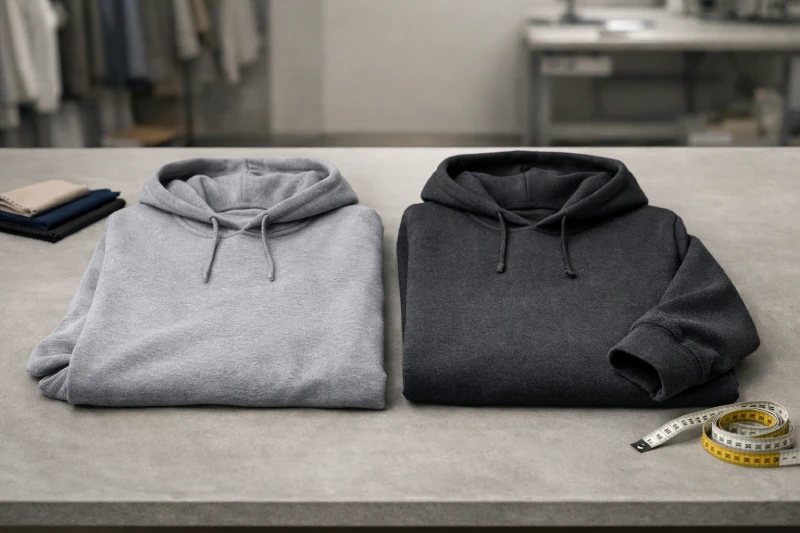
For procurement teams and brand owners sourcing hoodies for corporate uniforms, promotional campaigns, or distributor programs, the choice between fleece and cotton is not simply a fabric preference. It directly affects branding consistency, print performance, cost control, seasonal usability, and long-term wearer satisfaction.
This guide provides a structured decision framework for overseas B2B buyers evaluating fleece vs cotton hoodies for corporate & promotional use, with practical insights applicable across broader apparel categories such as T-shirts, polos, sportswear, and workwear.
Understanding the Functional Differences: Fleece vs Cotton Hoodies
Before evaluating pricing or customization, buyers should understand the structural and performance distinctions.

1. Cotton Hoodies (Natural Fiber-Based)
Cotton hoodies are typically made from:
- 100% cotton fleece
- Cotton-rich blends (e.g., 80/20 cotton-poly)
- French terry cotton constructions
Key characteristics:
- Natural hand feel
- Breathable and comfortable
- Strong compatibility with screen printing
- Perceived as premium or eco-conscious in certain markets
2. Fleece Hoodies (Polyester or Blended Fleece)
In B2B sourcing, “fleece” often refers to:
- Polyester fleece
- Brushed interior fleece blends
- Performance-oriented fleece fabrics
Key characteristics:
- Lightweight warmth
- Good shape retention
- Lower shrinkage risk
- Strong durability in bulk uniform use
The core distinction lies in natural comfort vs performance durability, but decision-making requires deeper evaluation.
Selection Logic: When to Choose Cotton vs Fleece for Corporate Use
Corporate Uniform Programs
| Criteria | Cotton Hoodie | Fleece Hoodie |
|---|---|---|
| Professional Appearance | Softer, lifestyle-oriented | Structured, uniform-like |
| Long-Term Shape Retention | Moderate | Strong |
| Shrinkage Risk | Higher if not pre-shrunk | Low |
| Daily Work Use | Good for office/light duty | Better for field teams |
| Cost Stability in Bulk | Moderate | More predictable |
Decision Insight:
For long-term corporate uniforms, especially for logistics, retail chains, or service teams, fleece blends typically offer better cost predictability and durability. Pure cotton works well for creative industries or premium brand environments.
Promotional Campaigns & Event Merchandise
For trade shows, product launches, and brand giveaways:
- Cotton provides a softer “gift-quality” feel.
- Fleece blends reduce price volatility in large-volume promotional orders.
- Polyester-rich fleece performs better in colder climates and outdoor events.
Printing & Branding Considerations Across Fabric Types
Branding method compatibility is often the deciding factor in B2B hoodie sourcing.
Screen Printing
- Works well on cotton.
- Produces vibrant results.
- Cost-effective for bulk runs.
Embroidery
- Suitable for both.
- Fleece handles heavier embroidery better due to stability.
- Cotton may pucker if GSM is low.
Heat Transfer / DTF
- Works on both.
- Polyester fleece requires attention to heat sensitivity.
DTG Printing
- Best suited for high-cotton content.
- Less effective on high-poly fleece.
Decision Framework:
| Branding Method | Best Fabric Choice |
|---|---|
| High-detail print graphics | Cotton |
| Large logo chest embroidery | Fleece blend |
| Multi-location logos | Medium-weight fleece |
| Short-term promo printing | Cotton blend |
Buyers should confirm GSM (fabric weight), fiber composition, and pre-treatment compatibility before finalizing branding strategy.
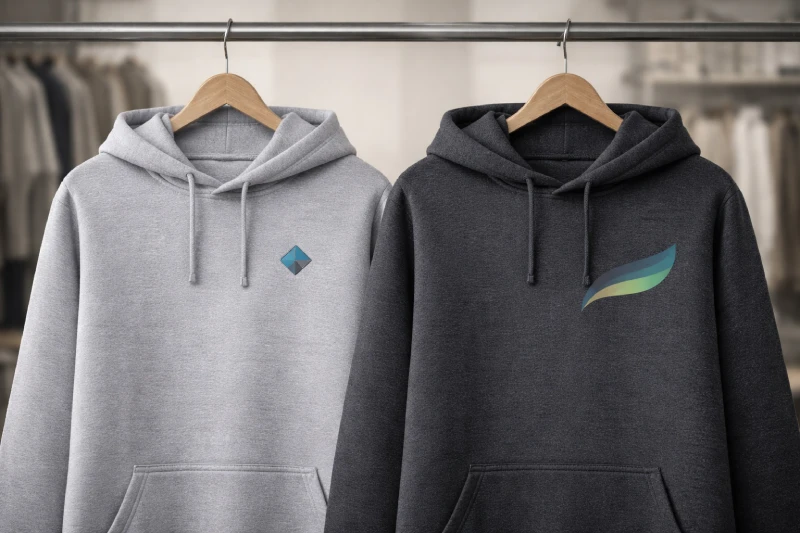
Fabric Weight (GSM) and Seasonal Planning
For overseas buyers, climate distribution and warehouse storage cycles matter.
Typical hoodie weights:
- 240–280 GSM: Lightweight transitional
- 300–320 GSM: Standard corporate hoodie
- 340+ GSM: Heavy winter hoodie
Cotton hoodies often feel heavier at equivalent GSM due to fiber density.
Fleece blends can provide similar warmth at slightly lower weight.
Procurement Tip:
For multi-country distribution programs, consider offering two GSM tiers rather than one universal specification.
Cost Structure & Bulk Order Economics
When comparing fleece vs cotton hoodies for corporate & promotional use, cost analysis must go beyond unit price.
Key Cost Variables
- Fiber market volatility (cotton price fluctuation)
- Dyeing and washing treatments
- Shrinkage allowances
- Rejection rates in quality control
- Branding method compatibility
- Packaging specifications
MOQ Differences
In multi-category manufacturing environments:
- Cotton colors may require higher MOQ per shade.
- Polyester fleece often allows more flexible dye lots.
- Custom yarn-dyed cotton increases minimum quantities.
Typical MOQ ranges:
- Standard bulk hoodie: 300–500 pcs per color
- Custom fabric development: 800–1,000+ pcs
Buyers consolidating across categories (e.g., hoodies + T-shirts + caps) can often negotiate blended production MOQs.
Lead Time Planning for International Buyers
Lead time varies by:
- Fabric sourcing
- Custom color dyeing
- Branding complexity
- Seasonal factory capacity
Typical Timeline (Standard Program)
- Sampling: 7–14 days
- Fabric production: 15–25 days
- Bulk sewing: 20–30 days
- Branding & finishing: 7–10 days
- Inspection & export packing: 5–7 days
Total: 45–70 days depending on complexity.
Cotton custom dyeing may extend lead time compared to stock fleece fabrics.
Cross-Category Considerations: How Hoodies Differ from Other Apparel Types
While this guide focuses on fleece vs cotton hoodies, similar logic applies to:
T-Shirts & Polos
- Cotton dominates for print clarity.
- Blends improve durability in uniform programs.
- Polos often prioritize structured cotton-pique.
Sportswear & Activewear
- Polyester performance fabrics preferred.
- Moisture management prioritized over softness.
- Branding via heat transfer common.
Headwear & Caps
- Material structure more critical than fiber type.
- Embroidery compatibility key.
- MOQ per panel color may differ from garments.
Workwear & Safety Apparel
- Fabric compliance (EN/ANSI standards) may override comfort choice.
- Cotton often blended with poly for strength.
- Flame-resistant requirements eliminate pure fleece options.
The key takeaway: fabric decision must align with usage environment, branding method, and compliance standards.
Quality Control Checklist for Bulk Hoodie Programs
Before confirming bulk production, procurement teams should validate:
Fabric & Construction
- Confirm fiber composition certificate.
- Verify pre-shrink treatment.
- Review stitching density and seam reinforcement.
- Test color fastness (wash & rub).
Branding
- Approve strike-off sample.
- Check embroidery tension and backing.
- Confirm logo placement tolerance.
Fit & Sizing
- Review size grading across markets.
- Conduct measurement tolerance check.
- Approve final pre-production sample.
Packaging
- Individual polybag or bulk pack?
- Barcode / SKU labeling?
- Export carton strength for sea freight?
A structured QC checklist reduces rejection risk and protects project timelines.
Risk Management: Cotton vs Fleece in Long-Term Programs
Cotton Risks
- Higher shrinkage
- Color fading over time
- Fabric distortion after repeated wash
Fleece Risks
- Pilling (if low-quality polyester)
- Heat sensitivity during decoration
- Static build-up in dry climates
Buyers should request:
- Pilling test results
- Wash test reports
- Fabric performance data sheet
For corporate contracts exceeding 10,000 units annually, conducting third-party inspection is recommended.
Sustainability & Brand Positioning Considerations
Increasingly, overseas buyers evaluate:
- Organic cotton certification
- Recycled polyester content
- OEKO-TEX compliance
- Carbon impact reporting
Cotton may support eco-brand positioning if certified.
Recycled fleece blends may provide stronger sustainability storytelling in performance-focused sectors.
Decision Summary: Choosing the Right Hoodie Strategy
| Priority | Recommended Direction |
|---|---|
| Premium brand image | Cotton-rich hoodie |
| Mass promotional volume | Fleece blend |
| Outdoor workforce | Polyester fleece |
| Office & creative industries | Cotton |
| Budget-sensitive project | Mid-weight fleece |
| Sustainability-focused | Organic cotton or recycled blend |
There is no universal “better” fabric. The optimal choice depends on project goals, target users, climate, branding method, and supply chain constraints.
Final Considerations Before Placing Bulk Orders
Overseas buyers should clarify:
- Target market climate?
- Expected wear frequency?
- Primary branding method?
- Budget ceiling per unit?
- Storage and shipping timeline?
- Compliance requirements (if workwear-related)?
Aligning these factors early reduces revision cycles and sample delays.
Conclusion: Structuring Your Hoodie Sourcing Strategy
Selecting between fleece vs cotton hoodies for corporate & promotional use requires balancing comfort, durability, branding compatibility, and cost control. Procurement teams that apply a structured evaluation framework can reduce risk and optimize long-term value across multi-category apparel programs.
If you are planning a corporate uniform rollout, distributor campaign, or promotional apparel project, our manufacturing team can review your requirements, recommend suitable fabric structures, and support sampling and bulk production planning across hoodies and related apparel categories.
We welcome discussions about your project specifications, estimated volumes, target markets, and customization needs to help you structure a practical and scalable sourcing solution.
Discuss Your Apparel Sourcing Requirements
Whether you're launching a startup clothing brand, expanding a streetwear label, or looking for a reliable OEM apparel manufacturer, speaking directly with an experienced production team can help you avoid costly sourcing mistakes.
Talk With Our Manufacturing Team