
Introduction
Direct-to-garment (DTG) printing has become a popular production method for clothing brands that want high-quality, full-color graphics without large minimum order quantities. For startups, ecommerce sellers, and merchandise brands, it offers the flexibility to launch designs quickly while maintaining professional print quality. However, the final results depend heavily on the printing partner you choose.
Supplier selection should not be evaluated in isolation. To understand how fabric, cost, printing methods, and production capacity all impact supplier performance, it is useful to review a complete DTG T-shirt printing guide.
Many brands focus only on how a sample print looks, but long-term success requires more than that. Factors such as garment quality, fabric compatibility, color consistency, and production reliability all influence how well DTG printing performs across real production runs.
Choosing the right DTG printing partner is therefore not simply about finding a company that can print shirts. It is about selecting a production partner that understands apparel manufacturing, fabric behavior, and quality control. In this guide, we will explain how to evaluate DTG printing suppliers and choose a partner capable of supporting your brand’s growth.
What a DTG Printing Partner Actually Does
Direct-to-garment printing is often viewed simply as a decoration method, but in professional apparel production it involves far more than applying ink to a shirt. A reliable DTG printing partner operates as part of the manufacturing workflow, ensuring that garments, printing processes, and quality control systems work together to produce consistent results across production runs. For clothing brands, this partnership is essential because print quality depends not only on the design file but also on fabric preparation, printing accuracy, and post-production handling.
Beyond Printing: The Role of a DTG Production Partner
A professional DTG production partner supports multiple stages of the apparel production process. In addition to printing graphics, the supplier typically manages garment sourcing or manufacturing coordination, fabric suitability evaluation, pre-treatment preparation, and color management. These steps ensure that the garments are properly prepared before printing begins. Experienced suppliers also coordinate production workflows, helping brands maintain consistent results when producing different styles, colors, or design variations.
DTG Printing in the Apparel Manufacturing Process
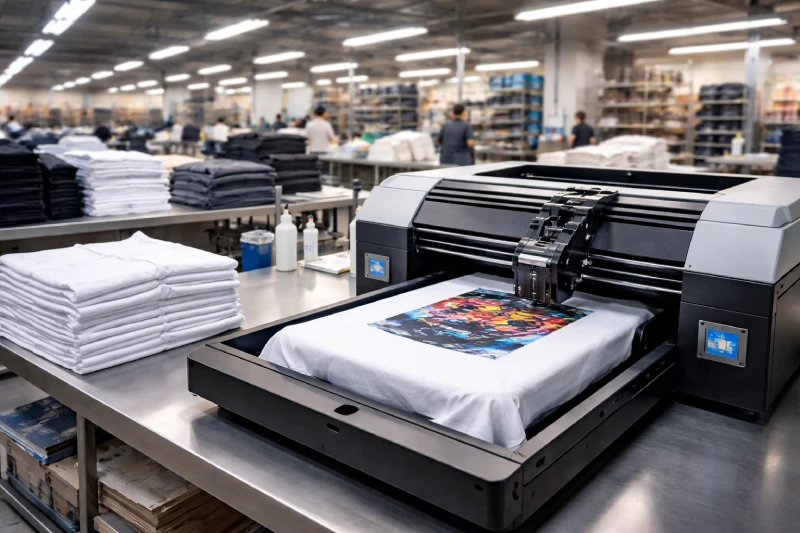
Within apparel manufacturing, DTG printing sits in the middle of a broader production sequence. After garment selection or production, fabrics must be pre-treated to help ink adhere properly. The printing stage then applies water-based inks directly onto the garment surface, followed by curing to ensure durability. Finally, finished products pass through inspection, folding, and packaging. When these steps are coordinated by an experienced production partner, brands are far more likely to achieve reliable print quality across multiple orders.
Key Criteria for Evaluating a DTG Printing Supplier
Choosing a reliable DTG printing supplier requires more than reviewing sample prints or comparing prices. For apparel brands, the most important factors are production consistency, supplier experience with brand manufacturing, and the ability to maintain stable lead times as order volumes increase. A strong DTG partner should be able to deliver repeatable results across multiple production runs while supporting the operational needs of growing clothing brands.
Printing Consistency Across Production Runs
Consistency is one of the most important indicators of a professional DTG printing supplier. Apparel brands rarely produce a design only once. Successful products often require restocks, repeat orders, or seasonal reprints. If a supplier cannot reproduce the same color accuracy, print placement, and ink coverage across batches, brands may face product inconsistency that affects customer satisfaction.
Reliable suppliers maintain consistency through standardized workflows, calibrated printing systems, controlled curing temperatures, and stable ink management. These production controls help ensure that garments printed months apart still maintain a similar appearance.
Experience With Apparel Brands and Private Label Production
Not all DTG providers operate at the same level of production experience. Some focus on retail or small on-demand printing, while others support structured apparel production for clothing brands. Suppliers familiar with private label manufacturing typically understand additional requirements such as branded labeling, packaging standards, SKU management, and consistent product presentation.
This experience becomes increasingly valuable as brands expand their product lines or manage multiple collections.
Production Capacity and Lead Time Reliability
Production capacity also plays an important role when evaluating a DTG printing partner. While many suppliers can handle small orders, fewer are able to maintain stable lead times as order volumes grow. Brands should evaluate whether a supplier has organized production workflows and sufficient capacity to support ongoing orders.
A partner with predictable turnaround times and scalable production systems can help brands maintain inventory stability while avoiding delays during product launches or restocks.
Why Garment Quality Matters for DTG Printing Results
Many clothing brands assume that DTG printing quality depends mainly on the printing equipment or the design itself. In reality, the garment plays a critical role in how well the final print appears. Fabric composition, yarn quality, and surface smoothness all influence how ink interacts with the material. Even the best printing process cannot fully compensate for poor garment construction.
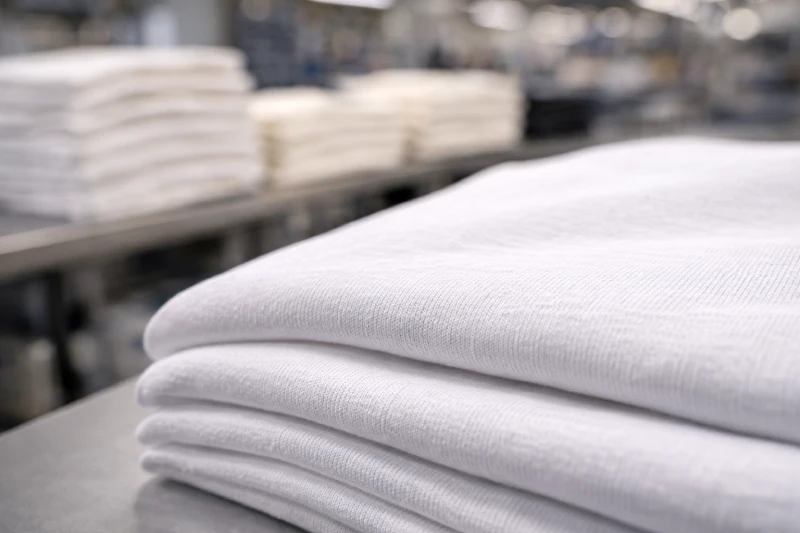
For brands that want consistent DTG results, selecting the right garment is just as important as choosing the right printing partner. Experienced apparel manufacturers typically evaluate fabric properties before production to ensure the material is compatible with DTG printing requirements.
Best Fabrics for DTG Printing
DTG printing works best on cotton-based fabrics because natural fibers absorb water-based inks more effectively. Many high-quality DTG prints are produced on 100% cotton garments, particularly combed or ringspun cotton, which provide a smoother surface and improved color vibrancy.
Cotton blends can also work well in certain cases, but the percentage of synthetic fibers can affect ink absorption and color intensity. Fabrics with higher polyester content may produce slightly less vibrant prints compared with pure cotton materials.
Fabric Surface and Print Clarity
The surface structure of a garment significantly affects print sharpness. Smooth fabrics with tightly knit yarns tend to produce clearer images and more detailed graphics. In contrast, rougher fabrics or lower-quality yarns can cause prints to appear less defined.
Factors such as knit density, yarn thickness, and fabric finishing processes all contribute to how clean and consistent a DTG print will look once applied to the garment.
Garment Preparation and Pre-Treatment
Before DTG printing begins, garments typically undergo a pre-treatment process that prepares the fabric to receive the ink. This step improves ink adhesion and helps achieve stronger color contrast, particularly on darker fabrics.
Proper pre-treatment application, controlled drying, and moisture management are important for achieving consistent results. When these steps are handled carefully within a structured production process, the printed design is more likely to maintain both visual quality and wash durability.
Quality Control in Professional DTG Production
Consistent DTG printing results depend on more than equipment and materials. Professional production environments rely on structured quality control systems to ensure that every printed garment meets the expected visual and durability standards. Without these controls, variations in color, alignment, or curing can quickly appear across production batches. For apparel brands, reliable quality control helps maintain consistent product presentation and reduces the risk of defects reaching customers.
Color Accuracy and File Preparation
Color accuracy in DTG printing begins before the printing process itself. Design files must be prepared correctly to match the capabilities of DTG inks and printing workflows. This often includes adjusting artwork resolution, managing color profiles, and testing designs on sample garments before full production begins.
Experienced suppliers typically conduct test prints to confirm that colors appear as expected on the chosen fabric. These early adjustments help reduce color variation once production begins.
Print Durability and Wash Testing
Durability is another important aspect of DTG quality control. After printing, garments must go through a curing process that bonds the ink to the fabric. If curing temperatures or times are inconsistent, prints may fade, crack, or lose vibrancy after washing.
Professional suppliers often conduct wash tests to confirm that printed designs maintain their appearance after repeated laundering. This step ensures that the final product performs well in real consumer use.
Batch Inspection and Defect Control
During production, garments typically undergo inspection to identify potential defects. Quality checks may include verifying print placement, checking color consistency, and ensuring garments are free from manufacturing flaws before printing.
These inspection steps help prevent defective items from entering the final packaging stage and ensure that the finished products meet the quality expectations of apparel brands.
Can the DTG Supplier Scale With Your Brand?
Many clothing brands start with relatively small production runs when launching new designs. However, if a product performs well, demand can increase quickly. A reliable DTG printing partner should therefore be able to support both early-stage production and larger order volumes as the brand grows. Evaluating scalability early helps avoid the need to switch suppliers later, which can lead to inconsistencies in print quality or product presentation.
Handling Repeat Orders and Restocks
Successful apparel designs often require restocks to meet ongoing demand. When this happens, brands need the ability to reproduce the same design with consistent colors, placement, and overall appearance. Suppliers with structured production systems are more likely to maintain print repeatability between different production batches.
Supporting Growing SKU Counts
As apparel brands expand, they typically introduce additional product variations such as different garment colors, size ranges, or design collections. A capable DTG partner should be able to manage multiple SKUs efficiently while maintaining clear production organization and quality standards.
Transitioning From Small Runs to Larger Production
Some DTG suppliers specialize only in very small batches, which can create challenges when order volumes increase. Experienced apparel manufacturers often design production workflows that support both small launches and larger repeat orders, allowing brands to scale without changing their printing partner.
Common Mistakes Brands Make When Choosing a DTG Printing Company
Many clothing brands encounter challenges with DTG production not because the technology is unreliable, but because the wrong supplier was selected during the sourcing stage. When evaluating printing partners, it is easy to focus on immediate factors such as price or sample appearance while overlooking the production processes that ensure long-term consistency. Understanding common sourcing mistakes can help brands avoid costly problems as they scale their apparel production.
Choosing Based Only on Price
One of the most common mistakes is selecting a DTG supplier purely based on the lowest printing cost. While lower prices may appear attractive in the short term, they often reflect compromises in garment quality, ink usage, or quality control procedures. Inconsistent printing results or higher defect rates can quickly offset any initial cost savings.
Ignoring Fabric Compatibility
Another common issue occurs when brands focus primarily on design aesthetics without considering the garments used for printing. Certain fabrics may not perform well with DTG inks, especially if the material surface is rough or contains a high percentage of synthetic fibers. Without proper garment selection, prints may appear dull, less detailed, or inconsistent across different batches.
Working With Retail Print Shops Instead of Production Partners
Retail DTG print shops often focus on small custom orders or one-off prints for individual customers. While they can produce acceptable results for limited quantities, they may lack the production workflows required for apparel brands that need consistent quality across larger batches.
Apparel manufacturers with integrated production systems are generally better equipped to manage garment sourcing, printing preparation, and quality control throughout the production process.
Questions to Ask Before Choosing a DTG Printing Partner
Before committing to a DTG printing supplier, apparel brands should ask a series of practical questions to better understand the supplier’s production capabilities. These discussions help reveal whether the supplier operates with structured manufacturing processes or simply provides basic printing services. Clear answers can also indicate how experienced the supplier is in supporting clothing brands rather than one-time custom orders.
When evaluating a potential partner, brands may consider asking questions such as:
- What types of garments do you typically recommend for DTG printing?
- How do you ensure color consistency across different production batches?
- What quality control procedures are used during printing and curing?
- Can you support private label requirements such as custom labels or packaging?
- What are the typical production lead times for DTG orders?
- How do you handle repeat orders or growing production volumes?
Suppliers who can clearly explain their production workflows, garment selection guidance, and quality control methods are generally better prepared to support long-term apparel manufacturing partnerships.
Quick Checklist for Choosing the Right DTG Printing Supplier
When evaluating different DTG printing suppliers, apparel brands can use a simple checklist to quickly compare potential partners. While every brand may have unique production requirements, reliable DTG partners typically demonstrate strong capabilities in garment compatibility, printing consistency, and structured production workflows.
A qualified DTG printing supplier should be able to provide:
- Experience working with apparel brands and private label production
- Clear guidance on garment selection for optimal DTG printing results
- Consistent color management and repeatable printing quality
- Structured quality control procedures during production
- Predictable production timelines and reliable order fulfillment
- The ability to support growing order volumes as the brand scales
Using this checklist during supplier evaluation can help brands focus on long-term production reliability rather than short-term printing convenience.
Why Apparel Manufacturing Experience Improves DTG Printing Results
DTG printing quality is closely connected to garment manufacturing knowledge. While printing technology plays an important role, the final results often depend on how well the supplier understands fabric behavior, garment construction, and production workflow management. Apparel manufacturers typically have deeper experience with fabric sourcing, garment preparation, and quality inspection, all of which directly influence printing outcomes.
When DTG printing is integrated within an apparel manufacturing environment, garment selection, pre-treatment preparation, printing, and curing can be coordinated more effectively. This integrated approach helps reduce inconsistencies that may occur when garments are sourced separately from the printing process.
For clothing brands planning long-term product development, working with an experienced apparel manufacturer can provide greater production stability. In addition to printing capability, manufacturers can support garment development, material selection, and scalable production processes, helping brands maintain consistent product quality as their collections grow.
Discuss Your Apparel Sourcing Requirements
Whether you're launching a startup clothing brand, expanding a streetwear label, or looking for a reliable OEM apparel manufacturer, speaking directly with an experienced production team can help you avoid costly sourcing mistakes.
Talk With Our Manufacturing Team