
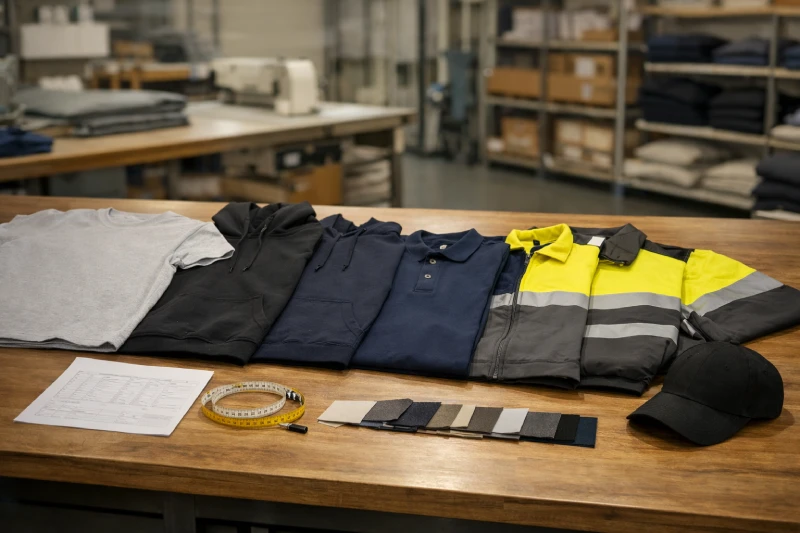
Selecting the right fit and size range for bulk apparel orders is a strategic decision for procurement teams, brand owners, and uniform program managers. Unlike retail purchasing, B2B bulk sourcing requires balancing wearer comfort, brand consistency, inventory control, and production efficiency across multiple categories—such as headwear, T-shirts, hoodies, sportswear, and workwear.
This guide outlines a practical decision framework to help overseas buyers define size structures, reduce return risks, and optimize production planning across different apparel types.
Why Fit and Size Strategy Matters in B2B Orders
Incorrect sizing decisions can lead to:
- Overstock of slow-moving sizes
- Insufficient coverage for workforce demographics
- Costly reorders and split shipments
- Brand image inconsistency
- Wearability complaints in corporate or industrial settings
In bulk manufacturing, size planning affects:
- Pattern grading development
- Fabric consumption and cost calculation
- MOQ per color/size breakdown
- Production scheduling
- Carton assortment and logistics efficiency
A well-structured size strategy improves both wearer satisfaction and operational efficiency.
Step 1: Define the Intended End-Use Scenario
Before selecting measurements or size labels, clarify how the garment will be used.
1.1 Uniform Programs vs Retail Merchandise
| Factor | Corporate Uniforms | Promotional / Retail Apparel |
|---|---|---|
| Fit Priority | Function & comfort | Style & silhouette |
| Size Coverage | Inclusive workforce | Target demographic |
| Replacement Cycle | Ongoing | Seasonal or campaign-based |
| Risk of Returns | Low tolerance | Moderate tolerance |
Uniform programs (e.g., workwear, safety apparel, hospitality polos) require broader size inclusivity and consistent fit across production batches.
Retail or branded merchandise may prioritize trend-driven fits (oversized, slim-fit, cropped), which influences grading rules and size distribution.
1.2 Functional Demands by Category
Different product categories require different fit considerations:
- Headwear & Caps: Head circumference adjustment systems (snapback, buckle, elastic fit) matter more than numeric sizing.
- T-Shirts & Polos: Chest width, body length, and shoulder slope affect cross-market compatibility.
- Hoodies & Sweatshirts: Layering allowance influences fit decision.
- Sportswear & Activewear: Stretch recovery and compression levels must be considered.
- Workwear & Safety Apparel: Mobility, layering over PPE, and durability are critical.
The intended environment—corporate office, warehouse, outdoor construction, or athletic use—should guide sizing tolerance decisions.
Step 2: Understand Regional Sizing Standards
Overseas B2B buyers must account for regional body measurement differences.
2.1 US vs EU vs Asia Sizing Differences
- US sizing typically runs larger in chest and body width.
- European sizing may have longer body length proportions.
- Asian sizing often runs narrower with shorter sleeve length.
Recommendation:
Request base measurement charts in centimeters and confirm tolerance ranges (+/-). Avoid relying only on S/M/L labels.
2.2 Measurement-Based vs Label-Based Planning
Instead of asking:
“Do you offer XXL?”
A better B2B question is:
- What is the chest width of size XL?
- What is the grading increment between sizes?
- What is the tolerance per measurement point?
This approach ensures clarity in cross-border manufacturing.
Step 3: Determine Size Range Structure for Bulk Apparel Orders
Selecting the correct size range for bulk apparel orders involves balancing inclusivity and production efficiency.

3.1 Standard Core Size Ranges
Most B2B programs follow:
- XS–XXL (5-size range)
- S–3XL (6-size range)
- Custom extended sizing (XXS–5XL)
However, extending size range impacts:
- Pattern development cost
- Fabric consumption variation
- MOQ allocation per size
- Production complexity
3.2 Recommended Size Breakdown Planning
For large-scale orders, use historical data or workforce demographic distribution.
Example distribution for corporate programs:
| Size | Typical Allocation (%) |
|---|---|
| XS | 5% |
| S | 20% |
| M | 30% |
| L | 25% |
| XL | 12% |
| XXL | 6% |
| 3XL | 2% |
This prevents excessive inventory imbalance.
Step 4: Consider Fit Type and Silhouette
Choosing the right fit is equally important as choosing the size range.
4.1 Common Fit Types Across Categories
| Fit Type | Typical Use Cases |
|---|---|
| Regular Fit | Corporate uniforms, general merchandise |
| Slim Fit | Fashion-forward brands |
| Relaxed Fit | Streetwear, hoodies |
| Athletic Fit | Sportswear |
| Oversized | Trend-driven retail |
4.2 Category-Specific Fit Considerations
- Caps: Structured vs unstructured crown affects perceived size.
- T-Shirts: Tubular vs side-seamed construction influences shape stability.
- Hoodies: Drop shoulder designs alter grading logic.
- Activewear: Stretch fabric reduces size sensitivity.
- Workwear: Extra ease required for safety movement.
Fit decisions must be locked before bulk production sampling begins.
Step 5: Customization Impact on Sizing
Customization affects measurement accuracy and wearer perception.
5.1 Decoration Methods
- Embroidery can stiffen certain areas.
- Large screen prints may affect drape.
- Heat transfer on stretch fabric can restrict elasticity.
For performance wear, decoration placement must not compromise movement.
5.2 Private Label & Custom Patterns
Brand owners may require:
- Custom size labels
- Branded neck prints
- Unique grading specifications
- Adjusted sleeve length or body length
Custom grading requires additional development time and sampling cycles.
Step 6: MOQ and Size Allocation Strategy
MOQ (Minimum Order Quantity) affects size flexibility.
6.1 Standard Production Constraints
In bulk manufacturing:
- MOQ often applies per color
- Some factories require MOQ per size ratio
- Small-size runs may increase unit cost
6.2 Managing Size Assortment Under MOQ Limits
If MOQ per color is 1000 units:
Instead of ordering equal quantities per size, use proportional distribution based on demand forecasting.
Discuss with the manufacturer:
- Can sizes be mixed within color MOQ?
- Are extended sizes subject to surcharge?
- What is the minimum per size within a production run?
Step 7: Lead Time and Sampling Considerations
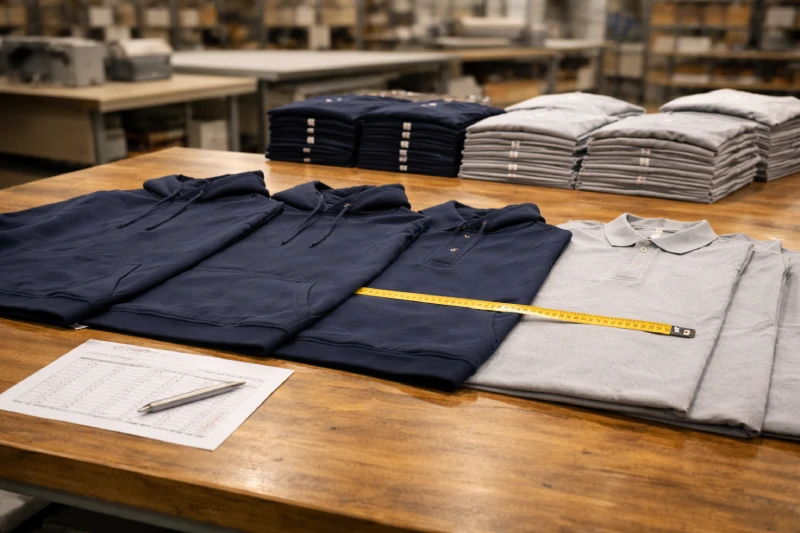
Size accuracy should be verified before bulk production.
7.1 Sampling Process
Recommended stages:
- Fit sample (base size)
- Size set sample (all sizes)
- Pre-production sample (PPS)
- Bulk production
Skipping size set sampling increases risk in international orders.
7.2 Lead Time Impact
Custom size development may extend lead time by:
- 7–14 days for new pattern grading
- Additional days for approval cycles
- Extra time for extended size production
For seasonal launches or corporate rollout deadlines, size confirmation should be finalized early.
Step 8: Special Considerations by Apparel Category
Headwear & Caps
- One-size adjustable vs fitted sizes
- Head circumference range coverage
- Strap material durability
Caps require less complex size grading but must ensure adjustability range is clearly defined.
T-Shirts & Polos
- Fabric shrinkage allowance
- Body length tolerance
- Collar structure stability (for polos)
Pre-wash shrinkage control is critical for maintaining size consistency.
Hoodies & Sweatshirts
- Layering allowance
- Rib cuff recovery
- Fabric weight impact on drape
Heavier fleece may require more structured grading logic.
Sportswear & Activewear
- Stretch ratio
- Compression vs relaxed fit
- Gender-specific pattern differences
Activewear sizing should consider fabric elasticity recovery rates.
Workwear & Safety Apparel
- PPE layering
- Mobility range
- Reinforced seams affecting ease
Safety compliance garments may require more generous ease allowances.
Practical Checklist for Bulk Buyers
Before confirming your bulk apparel order, verify:
- ✔ Target demographic measurements collected
- ✔ Regional size alignment confirmed
- ✔ Measurement chart reviewed in detail
- ✔ Tolerance standards agreed
- ✔ Fit sample approved
- ✔ Size distribution forecasted
- ✔ MOQ and size flexibility clarified
- ✔ Lead time adjusted for custom grading
Final Decision Framework Summary
When determining fit and size range for bulk apparel orders, consider:
- End-use environment
- Regional sizing differences
- Fit silhouette strategy
- Customization impact
- MOQ and production structure
- Sampling verification process
- Lead time implications
Taking a structured approach reduces risk and improves long-term program stability.
Conclusion: Align Size Strategy With Your Operational Goals
Choosing the correct fit and size structure is not simply about offering more sizes—it is about aligning product functionality, brand positioning, manufacturing efficiency, and inventory control.
Whether you are sourcing headwear, promotional T-shirts, performance sportswear, corporate hoodies, or industrial workwear, a clear size planning framework ensures smoother production and higher wearer satisfaction.
If you are planning a bulk apparel program and would like to discuss fit development, size grading, or production structure for your specific project, our technical team is available to review your requirements and provide tailored recommendations.
Discuss Your Apparel Sourcing Requirements
Whether you're launching a startup clothing brand, expanding a streetwear label, or looking for a reliable OEM apparel manufacturer, speaking directly with an experienced production team can help you avoid costly sourcing mistakes.
Talk With Our Manufacturing Team