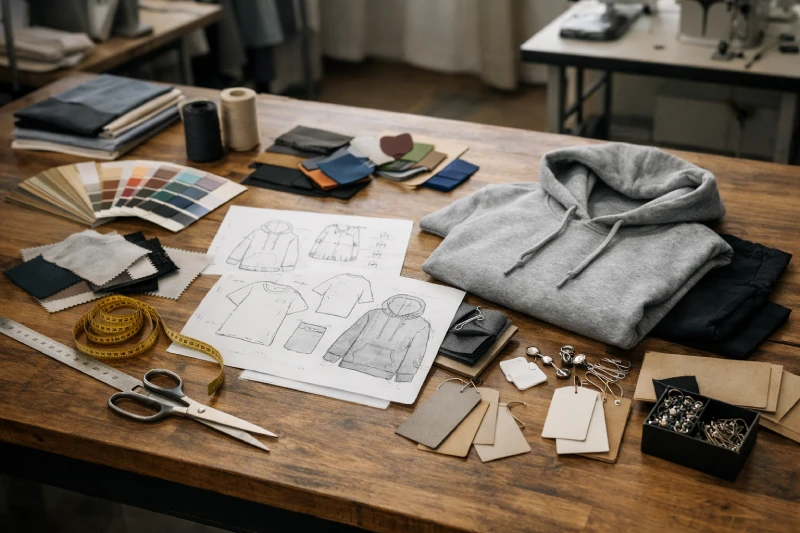
Launching a clothing brand used to require large investments in factories, equipment, and production teams. Today, private label manufacturing has made it possible for entrepreneurs to start fashion brands with far fewer barriers. Instead of building their own production facilities, brand owners can work with specialized apparel manufacturers who produce garments while the brand focuses on design, branding, and marketing.
This model is widely used by ecommerce clothing startups, boutique fashion labels, fitness apparel brands, and influencers launching their own merchandise lines. By partnering with a private label clothing manufacturer, new brands can develop custom garments, add their own labels and logos, and bring products to market more efficiently.
In this guide, we will explain how to start a private label clothing line step by step—from defining your brand concept and selecting products to finding a reliable manufacturer and launching your first collection.
What Is a Private Label Clothing Line?
A private label clothing line is a fashion brand in which garments are produced by a third-party manufacturer but sold under the brand’s own name, logo, and identity. The brand owns the design direction, branding, and marketing, while the manufacturer handles the technical aspects of garment production.
In this model, the clothing brand focuses on building its market presence. This includes defining the brand style, designing product concepts, managing sales channels, and developing relationships with customers. The manufacturer, on the other hand, is responsible for sourcing fabrics, producing the garments, applying custom labels or logos, and ensuring consistent product quality.
Private label manufacturing allows entrepreneurs to launch clothing brands without owning factories or managing complex production systems. Instead, they work with experienced apparel manufacturers who already have the equipment, production teams, and supply chain networks required to produce garments at scale.
Because of this efficiency, private label production is widely used by ecommerce fashion startups, boutique clothing brands, fitness apparel companies, and lifestyle brands entering the apparel market.
Step 1 — Define Your Clothing Brand Concept
Before developing products or contacting manufacturers, the first step in starting a private label clothing line is defining a clear brand concept. Strong brand positioning helps guide product design, pricing, marketing, and long-term growth.
Start by identifying your target audience. Different customer groups have different expectations for style, quality, and pricing. For example, a streetwear brand may target younger consumers interested in bold graphics, while a fitness apparel brand focuses on performance fabrics and functional designs.
Next, determine the product category your brand will focus on. Many new clothing brands succeed by concentrating on a specific category rather than trying to compete across the entire fashion market. Common private label categories include streetwear, activewear, casual basics, boutique fashion, and lifestyle apparel.
It is also important to define your brand identity. This includes your design style, brand values, and overall aesthetic. Some brands emphasize minimalism, while others build identity through bold graphics or sustainability messaging.
Finally, consider niche positioning. Successful startups often focus on a defined niche such as gym apparel, minimalist streetwear, or eco-friendly clothing. A clear niche helps differentiate your brand and makes it easier to attract loyal customers.
Step 2 — Choose the Right Private Label Clothing Products
After defining your brand concept, the next step is selecting the right products for your first collection. Many successful startups begin with a small, focused product lineup rather than launching a large number of items at once. This approach helps reduce development complexity and allows brands to test market demand more effectively.
Common starting products for private label clothing brands include t-shirts, hoodies, sweatshirts, sportswear, leggings, and caps. These items are popular because they are versatile, widely worn, and relatively straightforward to manufacture. They also offer strong opportunities for branding through logo printing, embroidery, and custom labels.
New brands are usually advised to start with two to four core products. For example, a streetwear brand might launch with graphic t-shirts, oversized hoodies, and caps. A fitness-focused brand might begin with performance t-shirts, leggings, and sports bras.
Starting with a limited range allows founders to focus on product quality, fit, and brand presentation. It also helps control inventory costs and reduces the financial risk of unsold stock while the brand is still building market recognition.
Step 2 — Choose the Right Private Label Clothing Products (Rewritten)
After defining your brand concept, the next step is selecting the right products for your first collection. Many successful startups begin with a small, focused product lineup rather than launching a large number of items at once. This approach reduces development complexity and allows brands to test market demand before expanding their product range.
Some of the most common starting products for private label clothing brands include t-shirts, hoodies, sweatshirts, sportswear, leggings, and caps. These garments are popular because they are versatile, widely worn, and relatively straightforward to manufacture. They also provide strong opportunities for branding through logo printing, embroidery, and custom labeling.
New brands are often advised to start with two to four core products instead of building a full fashion collection. For example, a streetwear startup might launch with graphic t-shirts, oversized hoodies, and caps, while a fitness apparel brand could begin with performance t-shirts, leggings, and sports bras.
Starting with a focused product lineup allows founders to refine product quality, control inventory costs, and gather real customer feedback before expanding the clothing line.
Step 3 — Find a Reliable Private Label Clothing Manufacturer
Choosing the right manufacturer is one of the most important decisions when starting a private label clothing line. A reliable production partner not only manufactures garments but also supports product development, quality control, and customization.
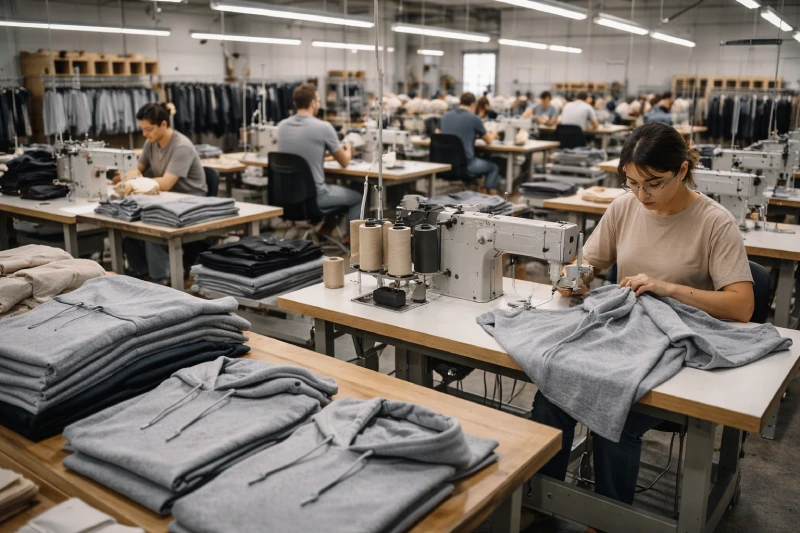
First, evaluate the manufacturer’s production capabilities. Different factories specialize in different garment categories, such as knitwear, sportswear, or fashion apparel. Make sure the manufacturer has experience producing the type of clothing you plan to launch.
Next, review the customization options they offer. A strong private label manufacturer should be able to provide services such as custom fabrics, embroidery, screen printing, woven labels, and branded packaging. These options allow brands to create distinctive products that reflect their identity.
It is also important to understand the manufacturer’s quality control process. Ask how garments are inspected during production and whether samples are approved before bulk manufacturing begins. Consistent quality is critical for building customer trust.
Finally, discuss minimum order quantities (MOQ) and the sampling process. Startups often benefit from manufacturers that offer reasonable MOQs and structured sampling stages, including development samples and pre-production samples.
Working with an experienced private label clothing manufacturer helps ensure smoother production and more reliable product quality.
Step 3 — Find a Reliable Private Label Clothing Manufacturer (Rewritten)
Choosing the right manufacturer is one of the most important decisions when starting a private label clothing line. A reliable production partner not only manufactures garments but also supports product development, customization, and quality control throughout the process.
Start by evaluating the manufacturer’s production capabilities. Different factories specialize in different types of garments, such as knitwear, sportswear, or fashion apparel. Make sure the manufacturer has experience producing the specific product category you plan to launch. This helps ensure they understand the materials, construction methods, and quality standards required for your designs.
Next, review the customization services they provide. A strong private label manufacturer should offer options such as custom fabrics, embroidery, screen printing, woven labels, printed neck labels, and branded packaging. These services allow your brand to transform standard garments into unique, recognizable products.
It is also important to understand the manufacturer’s quality control system. Ask how garments are inspected during production and whether samples must be approved before bulk manufacturing begins. Reliable factories typically follow structured quality inspection procedures.
Finally, discuss minimum order quantities (MOQ) and the sampling process. Many startups look for manufacturers with reasonable MOQs and a clear sampling workflow that includes development samples and pre-production samples.
Selecting the right private label clothing manufacturer can significantly impact product quality, production efficiency, and long-term brand growth.
Step 4 — Customize Your Clothing With Branding
Once you have selected a manufacturer, the next step is customizing your garments with brand elements. Branding is what transforms basic apparel into recognizable products that reflect the identity of your clothing line.
One of the most common branding methods is logo application. Depending on the design and product category, logos can be applied through embroidery, screen printing, or heat transfer techniques. Embroidery is often used for premium or durable branding, while screen printing works well for graphic designs on t-shirts and hoodies.
Another important element is custom labels. Private label clothing typically includes woven labels, printed neck labels, size labels, and care labels. These details help establish brand identity and provide customers with important garment information.
In addition to logos and labels, many brands invest in custom packaging. Branded hang tags, packaging bags, or boxes can improve the overall product presentation and enhance the customer experience, especially for ecommerce brands.
When developing branding elements, it is important to consider logo placement, label durability, and printing techniques. A well-planned branding strategy ensures that garments not only look professional but also maintain consistent quality across production batches.
Step 4 — Customize Your Clothing With Branding (Rewritten)
Once you have selected a manufacturer, the next step is customizing your garments with brand elements. Branding is what transforms standard apparel into unique products that represent the identity of your clothing line.
One of the most common branding methods is logo application. Depending on the design and garment type, logos can be added through embroidery, screen printing, or heat transfer techniques. Embroidery is often used for premium branding on items like caps and hoodies, while screen printing works well for graphic designs on t-shirts and sweatshirts.
Another key element is custom labeling. Private label clothing usually includes woven labels, printed neck labels, size labels, and care labels. These labels not only reinforce brand identity but also provide important product information for customers.
Many brands also invest in custom packaging to improve product presentation. Branded hang tags, polybags, or custom boxes can enhance the unboxing experience, which is particularly important for ecommerce clothing brands.
When designing branding elements, factors such as logo placement, print durability, and label quality should be carefully considered. Well-executed branding ensures garments look professional and helps create a consistent brand image across all products.
Step 5 — Develop Samples and Test Product Quality
Before moving into full production, clothing brands must go through the sampling stage. Sampling allows brands to evaluate the design, materials, and construction of a garment before committing to large production orders.
Most private label clothing manufacturers follow several sample stages. The first is often a development sample, which helps visualize the initial design and confirm basic construction details. After adjustments are made, a fit sample may be produced to test sizing, garment proportions, and overall comfort. Finally, a pre-production sample is created to represent the exact version that will be manufactured in bulk.
During the sampling process, brands should carefully evaluate multiple factors. These include garment fit, fabric quality, stitching construction, logo placement, color accuracy, and overall finishing. Any design corrections or adjustments should be completed before approving the final sample.
Sampling helps reduce production risks and ensures that the finished garments meet the brand’s expectations. By testing and refining products at this stage, brands can avoid costly mistakes during mass production and deliver more consistent quality to customers.
Step 6 — Plan Production, MOQ, and Pricing
Once product samples are approved, the next step is preparing for full production. At this stage, clothing brands need to plan manufacturing quantities, understand cost structures, and set realistic pricing strategies.
One of the first factors to consider is the minimum order quantity (MOQ) required by the manufacturer. MOQ determines how many units must be produced per style, color, or size. For startup brands, working with manufacturers that offer manageable MOQs can help reduce financial risk and avoid excessive inventory.
It is also important to understand the main cost factors in garment production. These typically include fabric selection, garment complexity, printing or embroidery techniques, and custom packaging. Higher-quality materials or more complex designs generally increase production costs.
Another key consideration is production lead time. Manufacturing timelines usually include material sourcing, garment production, quality inspection, and shipping. Planning these timelines carefully helps brands coordinate product launches and marketing campaigns.
Finally, startup brands should think about inventory planning and pricing strategy. Producing smaller initial batches allows brands to test market demand, control costs, and refine their pricing before scaling production.
Step 7 — Launch and Market Your Clothing Brand
After production is complete, the next step is launching your clothing brand and introducing your products to the market. A successful launch requires both a clear sales channel and a focused marketing strategy.
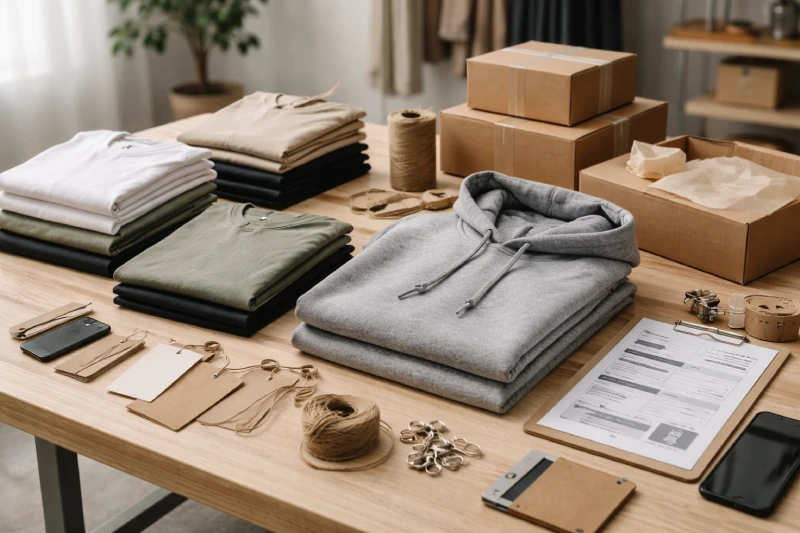
Many new clothing brands begin by selling through their own ecommerce websites. Platforms such as Shopify allow brands to build online stores, control their brand presentation, and manage customer relationships directly. Ecommerce also provides flexibility for testing new products and adjusting pricing strategies.
Social media marketing plays an important role in building early brand awareness. Platforms like Instagram, TikTok, and Pinterest are widely used by fashion brands to showcase products, share styling ideas, and engage with potential customers. Consistent visual branding and storytelling help create stronger connections with audiences.
Some brands also collaborate with influencers or content creators to promote their clothing. Influencer partnerships can generate visibility and help new brands reach targeted communities more quickly.
In addition to online sales, certain brands explore boutique retail partnerships, pop-up stores, or local fashion markets. Combining multiple sales channels can help new clothing brands expand their reach and build long-term customer loyalty.
Common Mistakes When Starting a Private Label Clothing Brand
Starting a private label clothing brand can be an exciting opportunity, but many new founders encounter similar challenges during the early stages. Understanding common mistakes can help reduce risk and improve the chances of building a successful clothing business.
One frequent mistake is launching too many products at once. New brands sometimes try to release a full clothing collection immediately, which increases development costs and inventory risk. Starting with a small, focused product lineup makes it easier to control quality and test market demand.
Another common issue is overlooking product quality. In the apparel industry, fabric selection, garment construction, and finishing details all influence customer satisfaction. Poor-quality products can quickly damage a new brand’s reputation.
Some startups also struggle with unrealistic pricing strategies. Setting prices too low may reduce profit margins and make it difficult to cover production and marketing costs. Pricing should reflect both product quality and brand positioning.
Finally, choosing the wrong manufacturing partner can lead to production delays, inconsistent quality, and communication problems. Working with an experienced private label clothing manufacturer helps reduce these risks and ensures more reliable production.
Conclusion
Starting a private label clothing line has become one of the most accessible ways for entrepreneurs to launch a fashion brand. By partnering with experienced apparel manufacturers, brand owners can focus on product design, branding, and marketing without needing to manage their own production facilities.
However, building a successful clothing brand still requires careful planning. Defining a clear brand concept, selecting the right products, developing quality samples, and working with reliable manufacturers are all essential steps in the process. Attention to product quality and brand identity also plays a major role in creating long-term customer trust.
For many startups, private label manufacturing provides a practical pathway to enter the fashion market. With the right strategy and production partner, new brands can develop distinctive products, test market demand, and gradually expand their clothing collections as their business grows.
Discuss Your Apparel Sourcing Requirements
Whether you're launching a startup clothing brand, expanding a streetwear label, or looking for a reliable OEM apparel manufacturer, speaking directly with an experienced production team can help you avoid costly sourcing mistakes.
Talk With Our Manufacturing Team