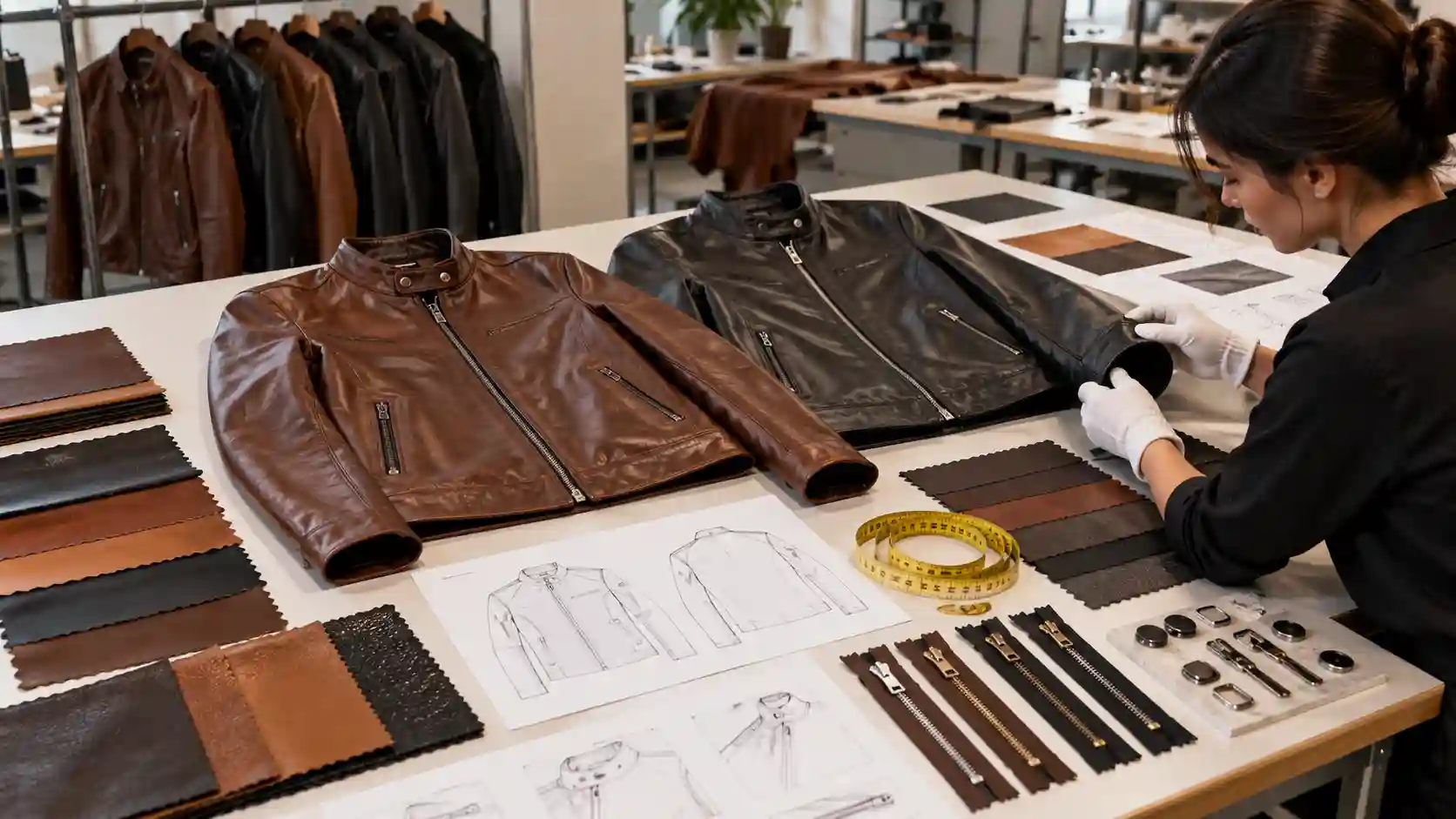
A leather jacket can look impressive in a product photo and still create problems after production. The leather may feel different from the approved sample, the sleeves may be too short, the lining may pull when the wearer moves, or the hardware may not perform as expected.
For private-label brands, quality control starts before bulk production. The most reliable approach is to confirm the material, measurements, construction, branding, sample approval and packing requirements in writing.
This leather jacket quality control checklist explains what buyers should review before approving a custom or OEM leather jacket.
Quick answer: Before bulk production, confirm the leather type and finish, garment measurements, lining, hardware, pockets, branding, pre-production sample, final inspection and packing requirements. The approved sample should become the reference standard for the production run.
Why Leather Jacket Quality Problems Usually Start Before Production
Many jacket problems are not caused by one major manufacturing failure. They start with a vague brief, an incomplete size chart or an unclear material description.
- The leather description does not explain the hide, thickness or finish.
- The sample fits the chest but has short sleeves or tight shoulders.
- The lining restricts movement or pulls inside the armholes.
- The zipper, snaps or pocket construction are not tested with the actual leather.
- The logo, labels or packaging details are added too late.
- The bulk order is approved without a clear reference sample.
A private-label manufacturer should help turn these points into a clear product specification before production begins.
1. Confirm the Leather Material
Leather type and intended use
Different leather types create different results in a finished jacket. A soft leather may suit a lightweight fashion jacket, while a more structured hide may be better for a motorcycle or workwear-inspired style.
When preparing a leather jacket specification, do not describe the material only as “genuine leather” or “premium leather.” These terms do not explain enough about the product.
A buyer should confirm:
- Leather type or hide direction
- Approximate thickness or weight
- Surface finish
- Color and shade direction
- Expected hand feel
- Degree of natural grain variation
- Intended use and target market
The right leather depends on the design, climate, fit, retail positioning and wearing purpose.
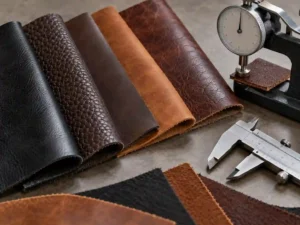
Leather jacket material thickness
Thickness affects structure, weight, comfort and sewing behavior. A thicker hide may create a more substantial jacket, but it can also make sleeves, collars and seams more difficult to construct.
A thinner hide may provide a softer drape, but it may require additional reinforcement in areas such as pockets, zipper panels and shoulder seams.
The material should be evaluated together with the pattern and construction. A leather swatch by itself cannot always predict how the finished jacket will feel when worn.
Finish and color consistency
The finish should be reviewed under normal lighting. Buyers should check whether the surface is matte, glossy, waxed, distressed, smooth or textured.
For custom colors, approve the color direction before cutting. If several leather panels are used, the production team should also confirm that the shade and surface appearance are consistent across the garment.
2. Confirm the Fit and Measurement Specification
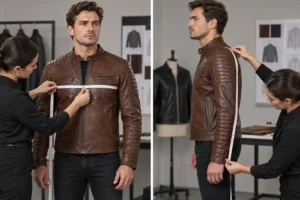
Fit is one of the most common reasons for dissatisfaction with leather jackets. A jacket may fit correctly across the chest but still have short sleeves, tight shoulders or insufficient room for layering.
Key measurements
A custom leather jacket size chart should define at least:
- Chest width
- Shoulder width
- Sleeve length
- Back length
- Hem width
- Armhole depth
- Cuff opening
- Collar height
- Pocket position
The measurement method should also be clear. For example, specify whether the chest is measured one inch below the armhole and whether the jacket is laid flat or measured on the body.
Check fit on a person
Measurements are necessary, but they are not enough. The sample should be worn by someone with a similar body shape and wearing preference as the target customer.
Review the jacket from the front, back and side. Then move the arms, sit down, zip the jacket fully and try it over the intended base layer.
Pay attention to:
- Shoulder tension
- Sleeve balance
- Arm movement
- Chest ease
- Collar position
- Hem balance
- Pocket accessibility
- Space for layering
A leather jacket should be judged by both its measurements and its movement.
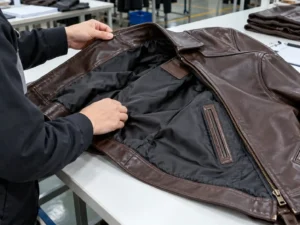
3. Inspect the Lining and Internal Construction
The lining affects comfort, durability and the perceived value of the jacket.
Buyers should confirm:
- Lining fabric and color
- Smoothness against clothing
- Seam finishing
- Ease of movement
- Internal pocket construction
- Reinforcement around stress points
- Compatibility between lining and outer leather
If the lining is too tight, it may pull at the armholes or restrict movement. If it is too loose, it may bunch inside the sleeves or create an uneven appearance.
The inside of the jacket should be reviewed as carefully as the outside. A high-quality outer leather cannot compensate for poor internal construction.
4. Test Zippers, Buttons, Snaps and Pockets
Hardware is both a functional element and a visible quality signal.
Zippers
Check whether the zipper opens and closes smoothly, sits flat, matches the jacket weight, is correctly aligned and has a suitable finish and color. It should also remain stable after repeated use.
Buttons and snaps
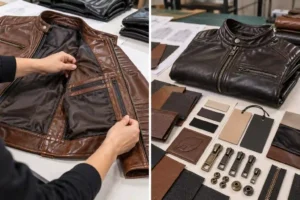
Buttons and snaps should be tested with the actual leather and reinforcement materials. A trim may look suitable on a sample card but behave differently after installation.
Pockets
Pocket design should be confirmed before bulk production. Review the pocket depth, opening, position, stitching strength, reinforcement and ease of access. Also confirm whether the pocket is decorative or functional.
For private-label brands, small details such as pocket depth, zipper placement and hardware color can strongly affect customer perception.
5. Confirm Branding and Private-Label Details
A private-label leather jacket is not complete when the outer garment is finished. Branding details must also be included in the production specification.
The brief may include:
- Main woven label
- Size label
- Care label
- Embossed logo
- Embroidered logo
- Patch
- Hangtag
- Hardware logo
- Packaging artwork
- Carton marks
Logo artwork should include the file format, placement, size, color and application method.
For repeat production, the approved sample should show exactly where the branding is placed. This reduces the risk of inconsistent logo positions between sizes or production batches.
Read more about our Custom OEM process for product development and branding coordination.
6. Approve a Leather Jacket Pre-Production Sample
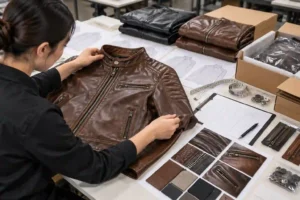
A pre-production sample is the physical reference for the bulk order.
The sample should be checked for:
- Leather appearance
- Thickness and hand feel
- Color
- Fit
- Sleeve length
- Lining
- Zippers and hardware
- Pocket construction
- Stitching
- Logo placement
- Labels
- Packing method
If changes are needed, record them in one consolidated comment sheet. Separate critical corrections from optional improvements.
Critical corrections may include incorrect measurements, tight shoulders, short sleeves, a misaligned zipper, weak pocket reinforcement, an incorrect leather finish or wrong logo placement.
The final approved sample should be clearly identified and used as the production reference.
7. Control Odor, Finish and Packing Quality
A strong chemical or musty odor can create a poor first impression and may prevent the buyer from wearing the jacket immediately.
Odor can be influenced by tanning and finishing processes, coatings, adhesives, lining materials, storage conditions and plastic packaging. Any unusual odor should be identified and reviewed before dispatch.
Before shipment, the jacket should also be checked for surface marks, moisture, loose threads and packaging damage.
Packing should be confirmed in advance:
- Folding method
- Protective material
- Individual polybag requirements
- Carton size
- Carton marks
- Label protection
- Shipping documentation
Do not assume that the packing method used for another garment will be suitable for leather jackets.
8. Use Clear Quality Inspection Checkpoints
Quality control should not happen only after the entire order is finished.
Material inspection
Check leather appearance, shade, thickness and visible defects before cutting.
In-line inspection
Review stitching, seam construction, zipper installation, pocket reinforcement and lining attachment during production.
Final inspection
Check the finished jacket against the approved sample. Review appearance, measurements, branding, hardware, loose threads and packing.
A written inspection checklist helps both the buyer and the manufacturer work from the same standard.
What Should Be Included in a Leather Jacket Inquiry?
A clear inquiry helps a manufacturer understand the project quickly. Include as much as possible:
- Jacket type
- Target customer
- Reference images or sample
- Front, back and detail views
- Leather direction
- Color and finish
- Size range
- Measurement chart
- Lining preference
- Hardware requirements
- Logo artwork
- Labels and hangtags
- Packaging requirements
- Estimated quantity
- Delivery destination
You do not need a perfect tech pack to start a discussion. A clear reference image, basic measurements and material direction can be enough for an initial project review. Missing information can then be clarified before sampling.
Leather Jacket Buyer Approval Checklist
| Area | What to Confirm |
|---|---|
| Leather | Type, thickness, finish, color and hand feel |
| Fit | Chest, shoulder, sleeve, length and layering space |
| Lining | Comfort, strength, color and internal finishing |
| Hardware | Zippers, snaps, buttons and finish |
| Pockets | Position, depth, opening and reinforcement |
| Branding | Labels, logo placement and hangtags |
| Sample | Fit, appearance, construction and corrections |
| Quality Control | Leather, seams, stitching, hardware and loose threads |
| Packing | Folding, protection, polybags and cartons |
| Approval | Written confirmation before bulk production |
Frequently Asked Questions
Is “genuine leather” enough to confirm jacket quality?
No. The material description should also clarify the leather type, approximate thickness, finish, color direction and expected hand feel.
What measurements should be included in a leather jacket tech pack?
At minimum, include chest, shoulder, sleeve, body length, hem, armhole and cuff measurements. The measurement method and tolerances should also be explained.
Should I approve a pre-production sample before bulk production?
Yes. The sample gives the buyer and manufacturer a shared reference for fit, construction, material, branding and appearance.
How can I check leather jacket lining and zipper quality?
Wear the sample, move the arms, zip and unzip the jacket several times, inspect the inside seams and test whether the pockets are strong and practical.
Can labels, hardware and packaging be customized?
Yes. Private-label projects can include customized labels, logo applications, hangtags, hardware and packaging, depending on the confirmed project specification.
Final Thoughts
A successful private-label leather jacket project depends on clear decisions before bulk production begins.
The most important steps are not only choosing a good-looking leather or copying a reference image. Buyers should also confirm the measurements, lining, hardware, pocket construction, branding, sample approval and inspection standards.
If you are developing a custom leather jacket collection, view our custom leather motorcycle jackets, explore the Outerwear & Jackets category, or review our factory production workflow.
To discuss a private-label project, send your design brief, material direction, size requirements and branding details through our Get a Quote page.
Discuss Your Apparel Sourcing Requirements
Whether you're launching a startup clothing brand, expanding a streetwear label, or looking for a reliable OEM apparel manufacturer, speaking directly with an experienced production team can help you avoid costly sourcing mistakes.
Talk With Our Manufacturing Team