

Introduction
In today’s fashion industry, many successful clothing brands operate without owning manufacturing facilities. Instead of building factories or managing complex production systems, brands often work with specialized manufacturers to produce garments under their own labels. This approach is known as private label clothing manufacturing.
The private label model allows fashion businesses to focus on what matters most for brand growth, including product design direction, marketing strategy, and customer experience. Meanwhile, experienced manufacturers handle key production tasks such as fabric sourcing, garment construction, and quality control.
As ecommerce continues to expand, private label clothing has become increasingly popular among startup fashion brands, online apparel companies, boutique retailers, and influencers launching their own clothing lines. Understanding the benefits of this model helps explain why so many modern brands choose private label manufacturing when building their apparel businesses.
What Is Private Label Clothing?
Private label clothing refers to apparel that is manufactured by a third-party factory but sold under a brand’s own label. The brand owns the product identity and customer relationship, while the manufacturer is responsible for producing the garments according to the brand’s specifications.
In a typical private label model, the clothing brand focuses on activities such as brand positioning, marketing strategy, and customer experience. The manufacturer, on the other hand, manages production-related processes including fabric sourcing, pattern development, sampling, garment construction, and quality control.
This division of responsibilities allows fashion businesses to concentrate on building their brand and reaching customers without needing to operate their own production facilities. For many startup clothing brands and ecommerce retailers, private label manufacturing provides a practical way to launch branded apparel while relying on experienced manufacturers to handle the technical side of garment production.
Why Private Label Clothing Has Become Popular
Private label clothing has become increasingly popular as the structure of the fashion industry has changed over the past decade. New technology, ecommerce platforms, and global supply chains have made it easier for smaller brands to enter the apparel market without owning production facilities.
One major factor is the rapid growth of ecommerce fashion brands. Online platforms allow entrepreneurs to sell clothing directly to customers worldwide, reducing the need for traditional retail infrastructure. As a result, many new brands prioritize marketing, product selection, and brand identity rather than managing manufacturing operations.
Consumer demand for niche and specialized fashion products has also contributed to the rise of private label clothing. Instead of purchasing from large global brands, many shoppers now prefer smaller labels that offer unique styles, targeted communities, or specific lifestyle positioning.
At the same time, global manufacturing networks have become more accessible. Brands can collaborate with experienced garment manufacturers who already have the equipment, technical knowledge, and supply chains needed for efficient production.
Because of these industry changes, private label manufacturing has become a practical and widely adopted model for modern clothing brands.
Benefit 1 — Faster Brand Launch
One of the most important advantages of private label clothing manufacturing is the ability to launch a brand much faster compared with building an in-house production operation. Establishing a garment factory requires significant time to secure equipment, hire skilled workers, and build reliable supply chains. For most new fashion brands, this process can take years.
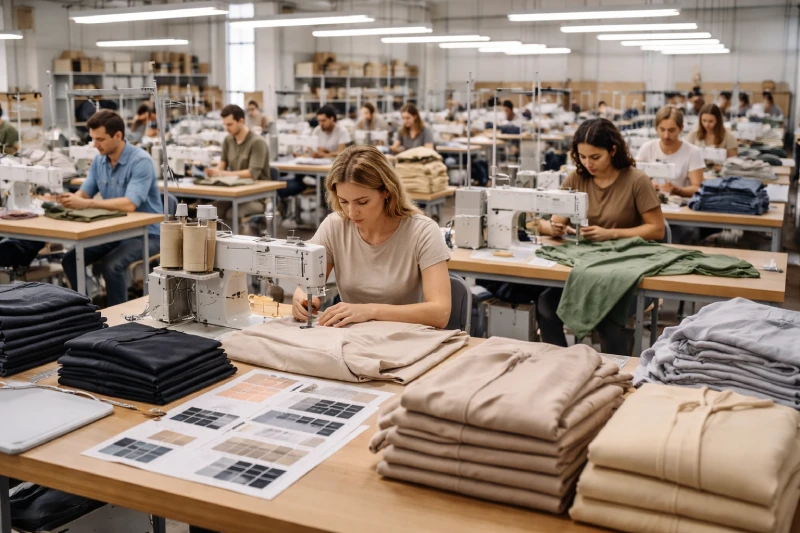
Private label manufacturers already have the infrastructure needed for apparel production. Their facilities typically include cutting equipment, sewing lines, fabric sourcing networks, and experienced production teams. Because these resources are already in place, brands can move directly into product development rather than building manufacturing capacity from scratch.
Product development is also simplified. Many manufacturers provide sample development services and proven garment patterns that help brands create products more efficiently. Instead of starting from a blank slate, brands can refine existing designs and focus on branding and styling.
This faster development cycle allows clothing brands to launch collections sooner, respond to fashion trends more quickly, and enter the market with less delay.
Benefit 2 — Lower Startup Costs
Another major advantage of private label clothing is the significantly lower startup cost compared with operating a clothing factory. Manufacturing garments requires substantial investment in equipment, facilities, and workforce training. Sewing machines, cutting tables, pressing equipment, and production space can represent a large financial commitment for a new brand.
Private label manufacturing removes the need for these investments. Instead of purchasing equipment and managing factory operations, brands can work directly with established garment manufacturers that already have production systems in place. This allows businesses to start selling branded apparel without committing large amounts of capital to manufacturing infrastructure.
Operational costs are also reduced. Running a factory involves managing labor, sourcing raw materials, maintaining machinery, and ensuring production efficiency. With private label production, these responsibilities are handled by the manufacturer.
As a result, entrepreneurs can allocate more resources to areas that directly influence brand growth, such as product development, marketing, ecommerce platforms, and customer acquisition strategies.
Benefit 3 — Strong Brand Identity
Private label clothing allows businesses to build and control their own brand identity rather than selling generic products. Instead of offering unbranded garments sourced from wholesalers, companies can present apparel under their own brand name, creating a stronger connection with customers.
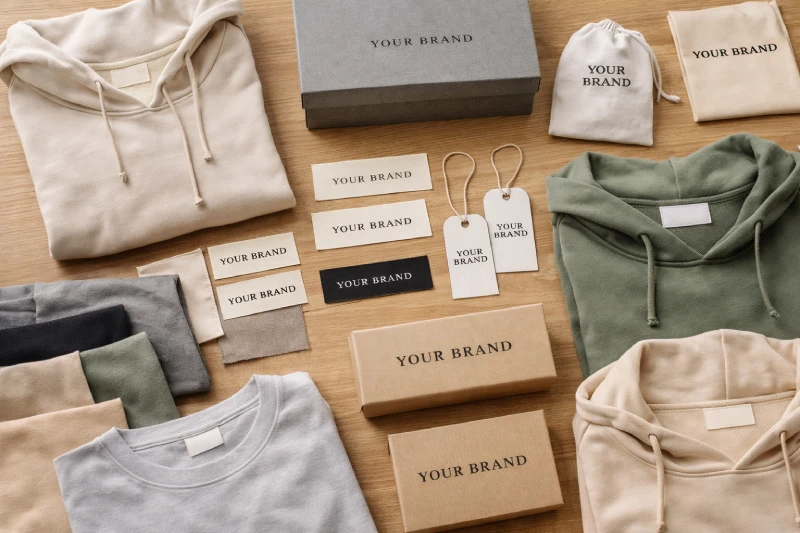
Brand identity is shaped through multiple elements of a product. Private label clothing typically allows customization options such as woven labels, printed neck labels, branded hang tags, and custom packaging. These details help create a consistent brand presentation across all products and improve the perceived value of the apparel.
In competitive fashion markets, strong branding often plays a larger role in customer loyalty than the manufacturing process itself. Consumers tend to remember brands that have clear visual identity, recognizable logos, and consistent product style.
By using private label manufacturing, clothing businesses can focus on developing a distinctive brand image while relying on experienced manufacturers to handle production. This combination allows brands to differentiate themselves while maintaining professional product quality.
Benefit 4 — Flexible Product Development
Private label clothing manufacturing gives brands the flexibility to experiment with different products and respond quickly to changing market demand. Instead of committing to large, fixed production structures, brands can adjust their product strategies based on customer preferences and fashion trends.
Many clothing brands use private label manufacturing to launch seasonal collections. As styles and consumer demand shift throughout the year, brands can introduce new designs, colors, or materials that reflect current fashion trends. This approach allows brands to keep their product lines fresh and relevant.
Private label production also supports limited product releases. Some brands create small batch collections or limited drops to test market response before committing to larger production runs. This strategy helps reduce inventory risk and provides valuable feedback about customer preferences.
In addition, brands can expand into new apparel categories more easily. For example, a brand that initially sells T-shirts may later introduce hoodies, sportswear, or accessories through the same manufacturing partner.
This flexibility helps brands refine their product strategy and adapt quickly as their business grows.
Benefit 5 — Scalable Production
As a clothing brand grows, production requirements often increase. One of the key advantages of private label clothing manufacturing is the ability to scale production more easily as demand expands. Instead of building additional manufacturing capacity, brands can rely on experienced manufacturers to handle larger production volumes.
Most established garment manufacturers already operate with structured production lines, trained workers, and stable supply chains. When a brand’s sales increase, production quantities can often be expanded without major operational changes on the brand’s side. This allows businesses to focus on market growth while the manufacturer manages the technical aspects of scaling production.
Private label partnerships also make it easier for brands to expand their product lines over time. A company that starts with a small collection of products can gradually introduce new styles, fabrics, or apparel categories as the business develops.
This scalability is particularly valuable for startups that expect growth but want to avoid the financial risks of building their own manufacturing infrastructure too early.
Benefit 6 — Access to Professional Manufacturing Expertise
Working with a private label clothing manufacturer also gives brands access to professional manufacturing knowledge that may be difficult to develop independently. Apparel production involves many technical factors, including fabric selection, garment construction, sizing consistency, and quality control standards.
Experienced manufacturers often have established relationships with fabric suppliers and understand which materials are suitable for different garment types. They can provide guidance on fabric performance, durability, and cost efficiency, helping brands choose materials that match both product goals and target price points.
Manufacturers also bring expertise in garment construction. Proper stitching techniques, pattern adjustments, and finishing processes are essential for producing clothing that fits well and maintains quality during regular use. Without this experience, new brands may encounter production errors or inconsistent product quality.
In addition, many factories implement structured quality control procedures throughout the production process. These systems help ensure that garments meet agreed specifications and maintain consistent standards across larger production runs.
When Private Label Clothing May Not Be the Best Choice
Although private label clothing offers many advantages, it may not be the ideal solution for every type of apparel business. In some cases, brands require a level of product development that goes beyond the typical private label model.
For example, highly specialized technical apparel may involve proprietary fabrics, patented technologies, or advanced performance features. Products such as high-performance sportswear or specialized outdoor gear often require extensive research and development, as well as unique engineering that cannot always be achieved through standard private label production.
Similarly, some brands aim to create completely original garment constructions that differ significantly from existing production patterns. Developing these types of products may require custom pattern engineering, specialized machinery, or close collaboration with product development teams.
However, many brands combine private label manufacturing with customized product development when needed. This hybrid approach allows businesses to maintain production efficiency while still creating distinctive products for their market.
FAQ
What are the benefits of private label clothing?
Private label clothing allows brands to sell apparel under their own brand name while outsourcing production to experienced manufacturers. This model helps businesses launch products faster, reduce startup costs, build stronger brand identity, and scale production more easily. It also allows brands to focus on marketing and customer experience rather than managing factories.
Is private label clothing profitable?
Private label clothing can be profitable because brands control their pricing, branding, and customer relationships. Since production is handled by manufacturers, businesses can focus resources on marketing, brand development, and sales channels, which often have a greater impact on profitability.
Why do clothing brands use private label manufacturers?
Many clothing brands use private label manufacturers because it simplifies the production process. Manufacturers handle tasks such as fabric sourcing, garment construction, and quality control, allowing brands to concentrate on product design, branding, and market growth.
What is the difference between private label and white label clothing?
Private label clothing is produced for a specific brand and typically includes customized branding elements such as labels, packaging, and design adjustments. White label clothing usually refers to generic products produced in bulk and sold to multiple retailers who apply their own branding with minimal customization.
Is private label clothing good for startups?
Private label clothing is often a practical choice for startups because it lowers the barriers to entering the fashion industry. Entrepreneurs can launch branded apparel without investing in manufacturing facilities, making it easier to test products, build a brand, and scale the business as demand grows.
Conclusion
Private label clothing manufacturing has become an important production model for many modern fashion brands. By partnering with experienced manufacturers, businesses can launch apparel products without investing in their own factories or managing complex production operations.
The benefits of private label clothing include faster brand launch timelines, lower startup costs, stronger brand identity, flexible product development, and scalable production capacity. In addition, working with professional garment manufacturers gives brands access to technical knowledge that helps ensure consistent product quality.
For many startups, ecommerce brands, and boutique retailers, this model provides a practical way to enter the fashion industry while focusing on branding, marketing, and customer relationships. By combining strong brand strategy with reliable manufacturing partners, businesses can build competitive clothing brands while maintaining efficient and manageable operations.
Discuss Your Apparel Sourcing Requirements
Whether you're launching a startup clothing brand, expanding a streetwear label, or looking for a reliable OEM apparel manufacturer, speaking directly with an experienced production team can help you avoid costly sourcing mistakes.
Talk With Our Manufacturing Team