
Introduction
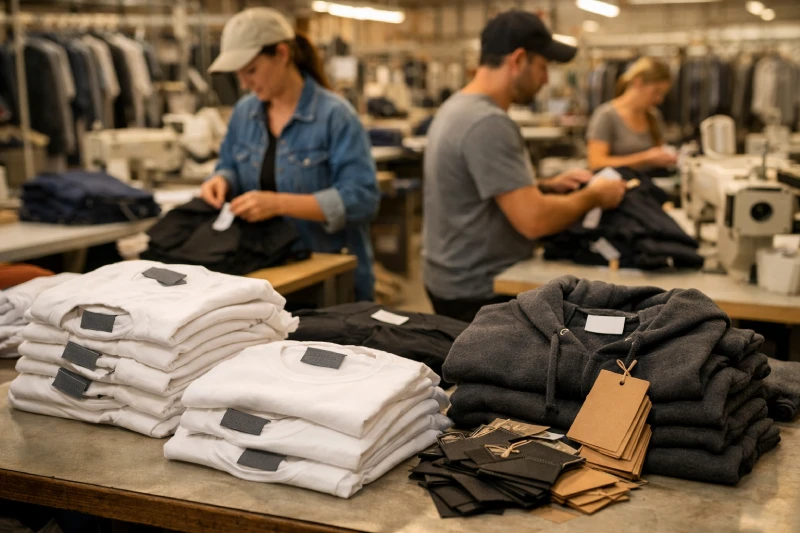
Private label clothing wholesale is one of the most common sourcing models used by modern apparel brands. Instead of building their own factories, brands partner with manufacturers that produce garments in bulk and allow buyers to apply their own branding. This approach enables companies to launch clothing collections faster while maintaining control over labels, logos, and packaging.
For startups, retailers, and e-commerce brands, wholesale private label production provides a practical way to scale apparel supply without the complexity of full product development. Manufacturers typically offer established garment styles, stable fabric sourcing, and efficient bulk production, making it easier for brands to focus on marketing and brand growth.
Understanding how private label clothing wholesale works—from supplier selection to minimum order quantities—helps brands make smarter sourcing decisions and build reliable apparel supply chains.
What Is Private Label Clothing Wholesale
Private label clothing wholesale refers to a sourcing model where apparel manufacturers produce garments in bulk and sell them to brands that apply their own branding. Instead of developing garments from scratch, buyers select existing styles or base products and customize them with their own labels, logos, and packaging. This allows brands to sell clothing under their own brand name while relying on a manufacturer’s production capabilities.
In wholesale private label production, garments are typically manufactured in larger batches to achieve better efficiency and stable pricing. Manufacturers handle fabric sourcing, cutting, sewing, and finishing, while brands focus on branding and sales. Common customization options include woven labels, printed neck labels, embroidery, screen printing, and custom packaging.
Private label clothing wholesale sits between fully custom apparel manufacturing and generic white label products. Compared with OEM garment development, it requires less time and investment, while still allowing brands to build a recognizable identity in the market.
How Private Label Wholesale Works
Private label wholesale follows a structured sourcing process that allows clothing brands to produce apparel at scale while maintaining their own branding. Most manufacturers already offer a range of base garments that brands can customize and order in bulk.
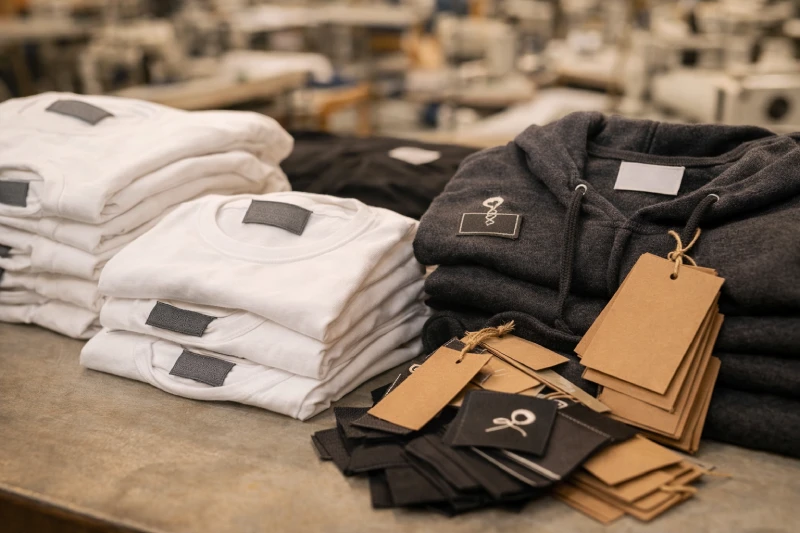
The process usually begins with product selection. Brands choose garment styles such as T-shirts, hoodies, polo shirts, or sportswear that already have established patterns and fabric options. Using existing designs reduces development time and allows manufacturers to start production quickly.
Next comes brand customization. Buyers provide their logo, label artwork, or decoration requirements. Manufacturers then apply branding through techniques such as woven labels, printed neck labels, embroidery, screen printing, or heat transfer graphics. Packaging customization, including branded poly bags or hang tags, may also be included.
After customization details are confirmed, the order moves into wholesale production. Factories produce garments in bulk quantities to maximize efficiency and maintain consistent quality. Typical wholesale orders may range from around 100 pieces for basic styles to several hundred units for larger production runs.
Finally, manufacturers conduct quality control, packing, and shipment. Completed products are inspected, packed according to brand requirements, and shipped to warehouses, distribution centers, or e-commerce fulfillment locations.
Benefits of Wholesale Private Label Clothing
Wholesale private label clothing offers several advantages for apparel brands that want to build their own product lines without managing complex manufacturing operations. By working with experienced garment manufacturers, brands can focus on branding, marketing, and distribution while production is handled by specialized factories.
One major advantage is faster market entry. Because manufacturers already have established garment patterns, fabrics, and production workflows, brands can launch new collections much more quickly than developing products entirely from scratch. This allows businesses to respond faster to fashion trends and seasonal demand.
Another key benefit is lower development costs. Private label wholesale eliminates many of the expenses associated with full product development, such as pattern making, extensive sampling, and technical design work. For startups and small brands, this significantly reduces the financial risk of entering the apparel market.
Wholesale private label production also supports scalable manufacturing. As brands grow, they can increase order volumes while maintaining consistent product specifications. Larger orders typically result in more competitive unit pricing and improved production efficiency.
Finally, this model still allows brands to maintain strong brand identity. Through customized labels, logo decoration, and packaging, companies can build a recognizable clothing brand while relying on established manufacturing systems.
Types of Wholesale Private Label Clothing Products
Wholesale private label clothing covers a wide range of apparel categories that brands can customize and sell under their own labels. Manufacturers typically provide established garment styles that can be adapted through branding, decoration, and packaging. The most common wholesale private label products include everyday apparel, sportswear, headwear, and specialized work garments.
One of the largest categories is casual apparel. Items such as T-shirts, hoodies, sweatshirts, and polo shirts are widely used in private label wholesale programs. These garments have stable demand and simple production processes, making them ideal for brands launching new clothing lines.
Another fast-growing category is sportswear and activewear. Fitness brands often source products like gym T-shirts, compression garments, leggings, and training shorts through private label suppliers. These products require performance fabrics but can still be produced efficiently at wholesale scale.
Headwear is also popular in private label wholesale. Products such as baseball caps, snapbacks, bucket hats, and beanies are frequently customized with embroidery or woven labels. Many brands use caps as entry-level products when starting a clothing brand.
Finally, workwear and uniforms represent an important wholesale segment. Companies often order branded work shirts, uniforms, or staff apparel in bulk, combining functional garments with custom logos to strengthen corporate identity.
How to Choose a Wholesale Private Label Clothing Supplier
Choosing the right wholesale private label clothing supplier is a critical step for brands that want stable product quality and reliable production. Since wholesale orders usually involve larger quantities, working with an experienced manufacturer helps reduce sourcing risks and ensures consistent results.
One of the first factors to evaluate is manufacturing capability. A reliable supplier should have the capacity to handle bulk production while maintaining consistent sizing, fabric quality, and stitching standards. Reviewing factory experience with similar garment categories can help brands determine whether the supplier is suitable for their product line.
Another important consideration is customization capability. Private label clothing suppliers should offer branding options such as woven labels, printed neck labels, embroidery, screen printing, and custom packaging. These services allow brands to create distinctive products without managing complex production steps themselves.
Brands should also review the supplier’s minimum order quantity (MOQ) and production flexibility. Different factories have different MOQ requirements depending on garment complexity and fabric sourcing. Understanding these limits helps buyers plan inventory and production budgets.
Finally, evaluating quality control and communication is essential. Reliable manufacturers typically provide sampling, clear production timelines, and quality inspection processes, helping ensure that wholesale orders meet brand standards and delivery schedules.
MOQ and Pricing in Wholesale Private Label Clothing
Minimum order quantity (MOQ) and pricing are two key factors that influence how wholesale private label clothing production is structured. Because garment manufacturing relies on efficient production runs, factories usually set MOQs to ensure that orders are economically viable for both the manufacturer and the buyer.
MOQ requirements often depend on several factors, including fabric sourcing, garment complexity, and decoration methods. For basic products such as T-shirts or hoodies, many manufacturers set minimum orders around 100 pieces per style. More complex garments or specialized fabrics may require higher quantities, sometimes 200 to 300 pieces per color or design.
Pricing in wholesale private label clothing is typically determined by a combination of production costs and order volume. Fabric quality, printing or embroidery techniques, and packaging customization all affect the final unit price. Larger production runs generally reduce the cost per piece because materials can be purchased in bulk and production lines operate more efficiently.
For clothing brands, understanding MOQ and pricing structures helps with planning inventory and budgeting. By aligning order quantities with sales forecasts, brands can maintain stable supply while benefiting from the cost advantages of wholesale apparel manufacturing.
Common Mistakes When Buying Wholesale Private Label Clothing
Many apparel brands enter wholesale private label sourcing without fully understanding how manufacturing and supplier relationships work. Avoiding common mistakes can help brands maintain product quality, control costs, and build more reliable supply chains.
One common mistake is choosing suppliers based only on price. While low quotes may appear attractive, extremely low pricing can sometimes indicate lower fabric quality, weaker stitching standards, or unreliable production management. Evaluating overall manufacturing capability is often more important than selecting the cheapest option.
Another mistake is overlooking production capacity. Some suppliers can handle small orders but struggle when brands increase volume. If a manufacturer lacks the ability to scale production, brands may experience delays or inconsistent product quality as demand grows.
Brands also make the mistake of skipping the sampling process. Requesting product samples allows buyers to evaluate fabric feel, fit, stitching quality, and logo execution before placing large wholesale orders. Sampling helps prevent costly mistakes in bulk production.
Finally, many buyers underestimate the importance of branding details. Elements such as label placement, packaging quality, and logo finishing significantly influence how customers perceive a clothing brand.
Conclusion
Private label clothing wholesale has become a practical sourcing strategy for apparel brands that want to scale production while maintaining full control over their brand identity. By working with experienced manufacturers, companies can access efficient bulk production, stable supply chains, and professional garment expertise without investing in their own factories.
Through wholesale private label manufacturing, brands can customize labels, logos, and packaging while relying on established garment styles and production systems. This approach reduces development costs, shortens production timelines, and allows businesses to respond more quickly to market demand.
For clothing brands looking to grow, choosing the right private label clothing supplier is essential. Reliable manufacturers provide consistent quality, clear production processes, and flexible wholesale capabilities that support long-term brand development.
Understanding how private label clothing wholesale works—from supplier selection to MOQ and pricing—helps brands build stronger sourcing strategies and launch apparel products with greater confidence.
Discuss Your Apparel Sourcing Requirements
Whether you're launching a startup clothing brand, expanding a streetwear label, or looking for a reliable OEM apparel manufacturer, speaking directly with an experienced production team can help you avoid costly sourcing mistakes.
Talk With Our Manufacturing Team