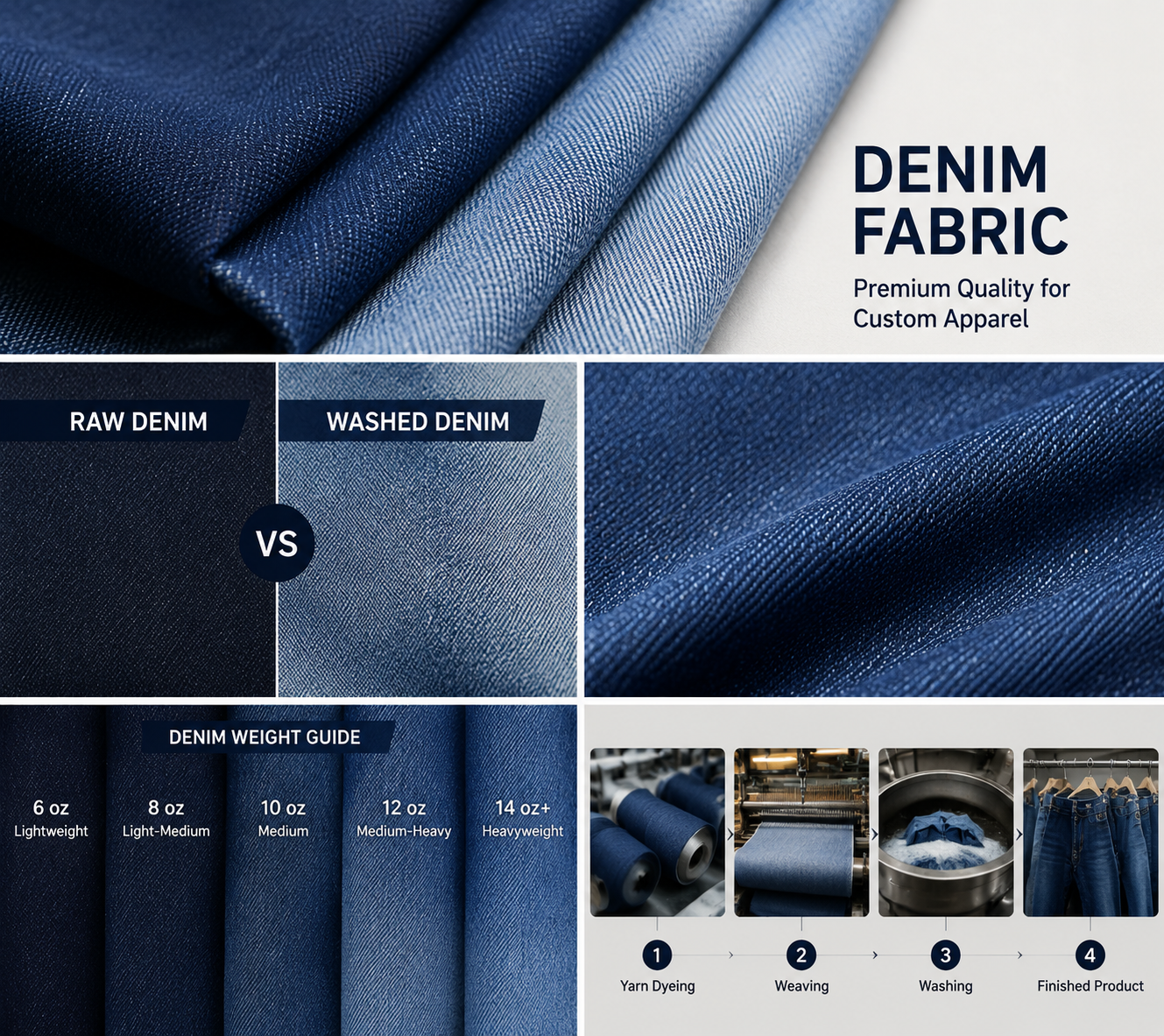
Raw Denim vs Washed Denim: Which Is Better?
If you are developing jeans, jackets, or other denim products, one of the first decisions is whether to use raw denim or washed denim.
The simple answer is:
- Choose raw denim if you want a rigid, authentic denim feel that develops unique fading over time.
- Choose washed denim if you want a softer hand feel, ready-to-wear comfort, and a specific vintage or fashion appearance.
Neither option is universally better. The right choice depends on your product positioning, target customer, garment style, and manufacturing requirements.
| Factor | Raw Denim | Washed Denim |
|---|---|---|
| Appearance | Dark, clean, original | Faded, vintage, customized |
| Hand Feel | Firm | Softer |
| Break-in | Requires time | Usually ready to wear |
| Fading | Develops naturally | Created during finishing |
| Custom Effects | Limited before wear | Wide range |
| Typical Use | Premium, heritage denim | Fashion, casual, streetwear |
| Production | Fewer finishing processes | Requires additional washing |
For brands developing a new denim collection, understanding this difference before bulk production can help avoid costly changes later.
For custom material development, SeeTime Luxury provides denim fabric sourcing and apparel manufacturing solutions.
Internal Link:
https://seetimeluxury.com/denim-fabric
Anchor: custom denim fabric
What Is Raw Denim?
Raw denim is denim fabric that has not gone through a conventional garment-washing process after dyeing and construction.
It is often recognized by its:
- Deep indigo color
- Firm hand feel
- Structured appearance
- Natural fading characteristics
Because the fabric has not been heavily washed to create a finished appearance, the wearer gradually creates fading through normal use.
This makes raw denim particularly attractive to brands that want to emphasize:
- Craftsmanship
- Heritage
- Authenticity
- Long-term wear
- Individual character
Raw denim is commonly associated with premium and heritage denim products.
What Is Washed Denim?
Washed denim is denim that has undergone one or more finishing processes to modify its color, softness, texture, or appearance.
Washing can create effects such as:
- Light fading
- Vintage appearance
- Soft hand feel
- High-contrast patterns
- Worn-in effects
Common denim washing processes include:
Stone Wash
Stone washing creates a softer feel and a visibly worn appearance.
It is commonly used for casual jeans and vintage-inspired collections.
Enzyme Wash
Enzyme washing can create a smoother, softer surface while producing controlled fading.
It is often used when brands want comfortable denim without an excessively distressed appearance.
Acid Wash
Acid washing produces stronger contrast between lighter and darker areas.
It is often used for fashion-focused and streetwear products.
Bleach Wash
Bleaching can create significantly lighter denim colors and stronger visual effects.
The exact result depends on the fabric, dye, washing formula, and production process.
Raw Denim vs Washed Denim: The Main Differences
1. Appearance
The most obvious difference is appearance.
Raw denim generally has a darker and more uniform appearance.
Washed denim can range from slightly faded blue to heavily distressed finishes.
For example:
Raw denim
Best suited to:
- Dark denim
- Premium jeans
- Heritage collections
- Minimalist designs
Washed denim
Best suited to:
- Vintage jeans
- Streetwear
- Casual fashion
- Distressed collections
If the visual appearance of the garment is a major part of your brand identity, the washing process should be considered during product development rather than after the fabric has already been selected.
2. Comfort
Raw denim is generally firmer when new.
This is because the fabric has not received the same level of washing and softening treatment as many finished denim products.
Washed denim is usually softer when purchased and can require less break-in time.
For brands selling everyday casualwear, washed denim may therefore provide a more immediately comfortable customer experience.
For heritage or premium denim brands, the initial firmness of raw denim may actually be part of the product experience.
3. Fading
Fading is one of the biggest reasons consumers choose raw denim.
With raw denim, friction from:
- Walking
- Sitting
- Bending
- Daily wear
can gradually create individual fading patterns.
This means two people wearing the same raw denim jeans may eventually develop different patterns.
Washed denim takes a different approach.
The manufacturer creates the desired appearance before the garment reaches the customer.
This provides much greater control over the final visual result.
4. Production Process
Raw denim generally requires fewer garment-washing processes.
Washed denim requires additional finishing steps, depending on the desired result.
A simplified production sequence is:
Denim fabric → Cutting → Sewing → Washing → Drying → Finishing → Quality Control
The additional washing stage can affect:
- Production time
- Water consumption
- Energy use
- Labor
- Final product cost
For brands producing large quantities, washing requirements should therefore be included in the initial manufacturing quotation.
Is Raw Denim More Expensive Than Washed Denim?
Not necessarily.
The final price depends on more than whether denim is raw or washed.
Important factors include:
- Fabric composition
- Fabric weight
- Yarn quality
- Dyeing method
- Order quantity
- Garment construction
- Washing process
- Hardware
- Packaging
A basic washed denim product may be less expensive than a highly engineered raw denim garment using premium heavyweight fabric.
Therefore, brands should compare the complete product specification, rather than assuming one denim type is always cheaper.
For a broader explanation of apparel production costs:
Internal Link:
https://seetimeluxury.com/custom-clothing-manufacturing-cost
Anchor: custom clothing manufacturing cost
Which Denim Is Better for Jeans?
There is no single answer.
The better option depends on the type of jeans you are developing.
Raw Denim Jeans
Consider raw denim when the product is positioned around:
- Premium craftsmanship
- Heritage
- Long-term wear
- Natural fading
- Authentic denim culture
Washed Denim Jeans
Consider washed denim when the product focuses on:
- Immediate comfort
- Vintage appearance
- Fashion trends
- Streetwear
- Specific color effects
For a new fashion brand, washed denim can make it easier to achieve a specific visual identity because the final appearance can be developed and approved before bulk production.
Which Is Better for Denim Jackets?
Both options can work well.
Raw denim is suitable when the jacket needs:
- A structured appearance
- Dark indigo color
- Traditional denim character
- Long-term fading
Washed denim is suitable when the jacket needs:
- A softer feel
- Vintage styling
- A worn-in appearance
- Fashion-oriented finishes
Fabric weight also matters.
A lightweight denim may work well for shirts and transitional apparel, while heavier denim is generally more suitable when a structured jacket is required.
Which Denim Is Better for Streetwear?
Washed denim is often a strong choice for streetwear collections because washing allows brands to create distinctive visual effects.
Popular directions include:
- Vintage wash
- Acid wash
- Heavy fade
- Distressed denim
- Contrasting wash
- Oversized denim
However, raw heavyweight denim can also work extremely well for premium streetwear collections where structure and fabric quality are central to the design.
The decision should therefore be based on the intended silhouette and brand identity rather than trend alone.
What Should Brands Check Before Ordering Denim?
Whether you choose raw or washed denim, request technical information before confirming bulk production.
Fabric Composition
Check:
- Cotton percentage
- Elastane percentage
- Recycled fiber content
- Other blended fibers
Fabric Weight
Confirm the actual denim weight.
Common commercial ranges include:
- Lightweight: approximately 6–8 oz
- Medium weight: approximately 8–12 oz
- Heavyweight: 12 oz+
Color
Confirm:
- Base color
- Indigo shade
- Color consistency
- Expected wash result
Shrinkage
This is particularly important for denim garments.
Washing can affect:
- Length
- Waist measurement
- Leg opening
- Overall garment dimensions
The factory should account for expected shrinkage when developing patterns and production specifications.
Why Denim Samples Matter
A fabric specification alone cannot completely communicate the final appearance of a denim garment.
Before bulk production, brands should evaluate physical samples.
Check:
Fabric
- Weight
- Texture
- Hand feel
- Stretch
Color
- Indigo depth
- Wash consistency
- Contrast
Garment
- Fit
- Measurements
- Stitching
- Hardware
- Final appearance
For washed denim, the sample is especially important because the same washing category can produce very different visual results depending on the fabric and washing parameters.
How to Choose Between Raw and Washed Denim
Use this simple decision framework.
Choose Raw Denim If:
- You want an authentic denim experience
- Natural fading is part of the product concept
- Your brand targets premium or heritage customers
- You prefer a darker, cleaner appearance
- Fabric character is an important selling point
Choose Washed Denim If:
- You want a softer garment
- The product needs to look worn-in immediately
- You need a specific color or vintage effect
- Your collection targets casual or streetwear customers
- You want more control over the final appearance
How SeeTime Luxury Supports Denim Development
Developing denim products requires more than selecting a fabric.
Brands may need support with:
- Material selection
- Fabric development
- Pattern development
- Sampling
- Washing
- Garment production
- Quality control
- Bulk manufacturing
SeeTime Luxury supports custom denim and apparel manufacturing for brands developing jeans, jackets, shirts, and other denim products.
Internal Link:
https://seetimeluxury.com/denim-apparel-manufacturer
Anchor: custom denim manufacturer
For brands looking specifically for jeans production:
Internal Link:
https://seetimeluxury.com/custom-jeans-manufacturer
Anchor: custom jeans manufacturer
Raw Denim vs Washed Denim: Quick Decision
| If You Want… | Better Starting Point |
|---|---|
| Dark, authentic appearance | Raw denim |
| Natural fading | Raw denim |
| Soft hand feel | Washed denim |
| Vintage appearance | Washed denim |
| Distressed effect | Washed denim |
| Premium heritage positioning | Raw denim |
| Streetwear wash effects | Washed denim |
| Ready-to-wear comfort | Washed denim |
The important point is that neither raw nor washed denim is automatically better.
The correct choice depends on the product, customer, price positioning, and desired appearance.
Frequently Asked Questions
What is the difference between raw denim and washed denim?
Raw denim is generally sold without a conventional garment-washing treatment, while washed denim has been processed to change its color, softness, or appearance.
Is raw denim better quality?
Not necessarily. Raw denim describes a finishing state, not a guaranteed quality level. Fabric composition, yarn quality, construction, weight, and manufacturing standards also determine quality.
Is washed denim softer?
Generally, yes. Washing and finishing processes can make denim softer and more comfortable when first worn.
Does raw denim fade better?
Raw denim is particularly valued for developing personalized fading patterns through wear. The final result depends on the fabric, dye, construction, and how the garment is worn.
Which denim is better for streetwear?
Both can work. Washed denim offers more visual effects, while heavyweight raw denim can provide a more structured and premium appearance.
Does washing increase denim production costs?
It can. Additional washing and finishing processes add production steps and can affect manufacturing cost, lead time, and quality-control requirements.
Can a manufacturer develop custom washed denim?
Yes. Depending on factory capability, brands can develop different colors and washing effects through sampling and process adjustments.
Final Takeaway
If your goal is authenticity, structure, and natural fading, raw denim is a strong choice.
If your goal is comfort, vintage appearance, and controlled visual effects, washed denim is usually the better starting point.
For brands developing a new denim collection, the safest approach is to test fabric samples and finished garment samples before committing to bulk production.
SeeTime Luxury can support brands from denim material selection and development through custom apparel manufacturing and bulk production.
Next Step:
Explore the custom denim fabric options or learn more about custom denim manufacturing.
Discuss Your Apparel Sourcing Requirements
Whether you're launching a startup clothing brand, expanding a streetwear label, or looking for a reliable OEM apparel manufacturer, speaking directly with an experienced production team can help you avoid costly sourcing mistakes.
Talk With Our Manufacturing Team