

Introduction
Sustainable fashion is no longer a niche trend—it has become a core strategy for modern apparel brands. As consumers grow more aware of environmental and ethical issues, demand for eco-friendly clothing continues to rise. At the same time, governments and global markets are pushing for more responsible production standards across the fashion supply chain.
Sustainable private label clothing allows brands to launch eco-conscious collections without building their own manufacturing infrastructure. By partnering with experienced manufacturers, businesses can develop products using environmentally friendly materials and ethical production practices.
This guide explains what sustainable private label clothing is, why it matters, what materials and processes are involved, and how brands can successfully build sustainable product lines in today’s competitive market.
What Is Sustainable Private Label Clothing
Sustainable private label clothing refers to apparel produced by a manufacturer and sold under a brand’s label using environmentally responsible materials and ethical production methods. Unlike conventional private label clothing, which often focuses primarily on cost and scalability, sustainable private label emphasizes minimizing environmental impact throughout the production process.
This includes the use of eco-friendly fabrics, reduced water and energy consumption, and adherence to fair labor standards. Manufacturers play a key role by offering certified materials, transparent sourcing, and sustainable production capabilities.
In practice, brands work with sustainable private label clothing manufacturers to design, develop, and produce garments that align with their environmental values. The result is a product line that not only meets quality and design expectations but also supports responsible fashion practices.
This model allows brands to combine flexibility, scalability, and sustainability without investing heavily in their own production facilities.
Why Sustainable Fashion Is Growing
The rapid growth of sustainable fashion is driven by a combination of consumer demand, environmental concerns, and regulatory pressure. Today’s consumers—especially younger generations—are increasingly prioritizing brands that align with their values. Many are willing to pay more for products that are ethically produced and environmentally friendly.
At the same time, the environmental impact of traditional fashion production has become widely recognized. The industry is associated with high water consumption, chemical pollution, and significant textile waste. These concerns have pushed both consumers and businesses to seek more sustainable alternatives.
Governments and international organizations are also introducing stricter regulations related to sustainability, carbon emissions, and supply chain transparency. Brands that fail to adapt may face compliance risks and reputational challenges.
In this context, sustainable private label clothing offers a practical solution. It enables brands to quickly respond to market expectations while leveraging manufacturers that already have sustainable systems in place. This approach reduces risk and accelerates the transition toward more responsible fashion production.
Sustainable Materials Used in Private Label Clothing
Material selection is one of the most critical factors in sustainable apparel production. The choice of fabric directly impacts environmental footprint, product quality, and consumer perception.
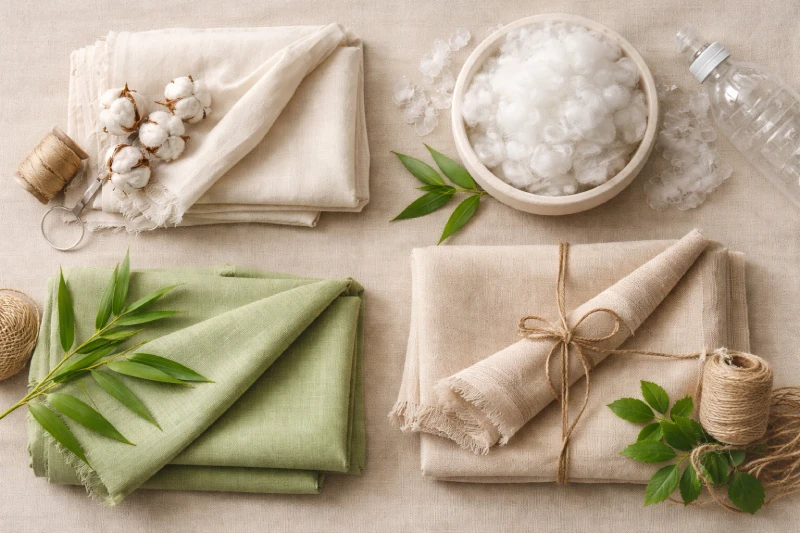
Organic cotton is widely used in sustainable clothing because it is grown without synthetic pesticides or fertilizers, reducing soil and water contamination. It also tends to be safer for farmers and workers involved in production.
Recycled polyester, often made from post-consumer plastic bottles, helps reduce landfill waste and lowers the demand for virgin petroleum-based materials. It is commonly used in activewear and performance garments due to its durability.
Bamboo fabric is valued for its fast growth and renewability. It requires less water than traditional crops and can be processed into soft, breathable textiles suitable for various apparel categories.
Hemp textiles are another strong option, known for their durability and minimal environmental impact. Hemp grows quickly, requires little water, and improves soil health.
Many manufacturers also offer advanced sustainable materials such as lyocell and recycled nylon. Certifications like GOTS and OEKO-TEX further ensure that materials meet strict environmental and safety standards.
Sustainable Clothing Manufacturing Practices
Beyond materials, sustainable clothing manufacturing depends heavily on production processes. Manufacturers adopt various techniques to reduce environmental impact while maintaining product quality.
Low-impact dyeing methods are commonly used to reduce water consumption and chemical discharge. These processes often involve non-toxic dyes and closed-loop systems that recycle water during production.
Energy efficiency is another key focus. Factories may use renewable energy sources, optimize machinery, and implement energy-saving technologies to lower carbon emissions.
Waste reduction is achieved through improved pattern design and fabric utilization. By minimizing offcuts and recycling leftover materials, manufacturers can significantly reduce textile waste.
Ethical labor practices are equally important. Sustainable manufacturers ensure safe working conditions, fair wages, and compliance with international labor standards. This contributes to a more responsible and transparent supply chain.
Additionally, smaller production runs and on-demand manufacturing help reduce overproduction, which is a major issue in traditional fashion. Together, these practices create a more efficient and environmentally responsible manufacturing system.
Benefits of Sustainable Private Label Clothing
Sustainable private label clothing offers several advantages for modern apparel brands. One of the most significant benefits is brand differentiation. In a competitive market, sustainability can help brands stand out and attract conscious consumers.
It also enhances perceived value. Products made from eco-friendly materials and ethical processes are often viewed as higher quality, allowing brands to position themselves in premium market segments.
Customer loyalty is another key advantage. Consumers who prioritize sustainability are more likely to support brands that align with their values, leading to stronger long-term relationships.
From a regulatory perspective, sustainable production helps brands comply with evolving environmental and social standards. This reduces the risk of legal issues and improves global market access.
Over time, sustainable practices can also lead to cost efficiencies. Improved resource management, reduced waste, and optimized production processes contribute to better operational performance.
Overall, sustainable private label clothing supports both brand growth and responsible business practices.
How Brands Can Launch Sustainable Clothing Lines
Launching a sustainable clothing line begins with defining clear sustainability goals. Brands must decide which aspects to prioritize, such as material sourcing, certifications, or carbon reduction targets.
The next step is selecting the right manufacturing partner. Working with experienced sustainable private label clothing manufacturers ensures access to certified materials, transparent processes, and technical expertise.
Material selection is a critical stage. Brands should balance sustainability, cost, and product performance when choosing fabrics. Sampling and testing are essential to ensure the final product meets quality expectations.
Product development involves creating prototypes, refining designs, and validating production feasibility. This stage helps identify potential issues before full-scale manufacturing begins.
Once production starts, quality control becomes essential. Brands must ensure consistency in materials, construction, and sustainability standards across all batches.
Finally, brands should communicate their sustainability efforts clearly to consumers. Transparency builds trust and strengthens brand positioning in the market.
By following a structured approach, businesses can successfully launch sustainable clothing lines with reduced risk and improved efficiency.
Challenges of Sustainable Apparel Manufacturing
Despite its advantages, sustainable apparel manufacturing presents several challenges. One of the main issues is higher material costs. Eco-friendly fabrics and certified materials are often more expensive than conventional alternatives.
Limited supplier availability can also be a constraint, especially for specialized sustainable materials. This may lead to longer lead times and reduced flexibility in production planning.
Certification processes can be complex and time-consuming. Brands must ensure compliance with various standards, which requires careful documentation and verification.
There is also the risk of greenwashing, where products are marketed as sustainable without genuine environmental benefits. This can damage brand credibility if not handled properly.
Balancing sustainability with scalability is another challenge. As demand grows, maintaining consistent standards across larger production volumes can be difficult.
Addressing these challenges requires careful planning, reliable partners, and a commitment to transparency.
Conclusion
Sustainable private label clothing is becoming an essential strategy for apparel brands aiming to stay competitive in a rapidly evolving market. By combining eco-friendly materials, responsible manufacturing practices, and transparent supply chains, brands can reduce their environmental impact while meeting consumer expectations.
Although challenges such as cost and complexity exist, the long-term benefits of sustainability far outweigh the obstacles. Brands that invest in sustainable production today are better positioned for future growth and regulatory compliance.
Working with experienced manufacturers plays a crucial role in this process, providing the expertise and infrastructure needed to scale sustainably.
Ultimately, adopting sustainable private label clothing is not just a trend—it is a strategic move toward a more responsible and resilient fashion industry.
Discuss Your Apparel Sourcing Requirements
Whether you're launching a startup clothing brand, expanding a streetwear label, or looking for a reliable OEM apparel manufacturer, speaking directly with an experienced production team can help you avoid costly sourcing mistakes.
Talk With Our Manufacturing Team