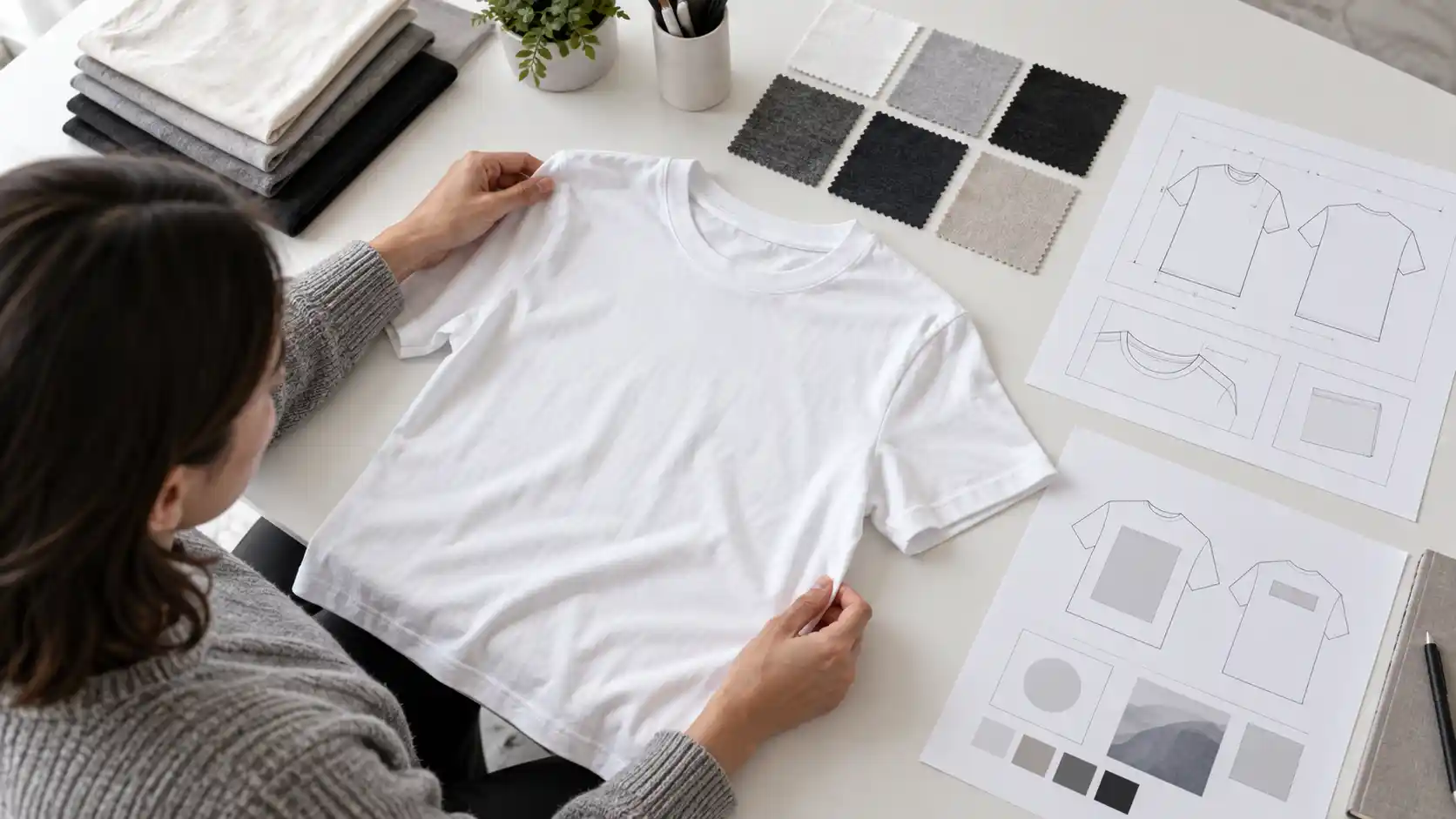
Short answer: T-shirt printing and manufacturing is easier to manage when the garment specification, artwork placement, branding details and sample checks are handled in one project brief. Before requesting a quote, define the intended use, fabric direction, fit, artwork, labels or hang tags, estimated quantity and destination market. That gives every supplier the same basis for a useful response.
For a branded project, the goal is not simply to put a logo on a blank shirt. The goal is to make the garment, decoration and presentation work together. A clear brief helps a buyer compare responses, identify open decisions early and review a sample against agreed details.
If you already know you need a production partner, see our custom T-shirt manufacturer guide for an overview of private-label and logo options.
Reviewed by: Seetime Luxury Apparel Sourcing Team
Best for: buyers planning custom T-shirts with printing, embroidery, private-label details or branded packaging.
Key Takeaways Before You Request a Quote
- Printing is only one part of a custom T-shirt project; fabric, fit, branding and sample approval affect the finished result.
- Describe the artwork placement, scale and desired finish instead of sending a logo file without context.
- Ask the supplier to confirm the decoration approach for the chosen garment and fabric.
- Keep MOQ, sample timing, bulk timing and packaging tied to the defined project scope.
What T-Shirt Printing and Manufacturing Means for a Buyer
For a buyer, printing is the approved artwork applied to a selected garment. Manufacturing is the wider project scope: deciding what the shirt should be, how it should fit, which fabric direction is appropriate, where artwork sits, how it is branded and what must be checked before production.
Those needs are often discussed separately, but they affect one another. An artwork placement that looks right on a reference image may need to be checked against the actual shirt size and fit. A label or hang tag choice may affect the way the finished product is presented. The practical value of a coordinated brief is that those choices can be reviewed together before production decisions are finalized.
Some buyers begin by searching for a private label shirt manufacturer. Start by describing the finished product and the brand requirements, rather than beginning with a generic technique name. The supplier can then confirm which production approach is suitable for the selected garment and artwork.
How to Compare T-Shirt Printing Methods
The right decoration method depends on the fabric, artwork, quantity, color, hand feel and intended use. Use this table to frame the conversation, then ask the supplier to confirm suitability for the actual garment.
| Method | Often considered for | What to confirm |
|---|---|---|
| Screen printing | Repeat artwork and medium-to-large production runs | Color count, setup, placement and the required finish. |
| DTG | Detailed or full-color artwork on suitable garments and smaller runs | Fabric composition, garment color, pretreatment and wash-test expectations. |
| DTF | Flexible artwork across selected garment types and small-to-medium runs | Transfer feel, edge quality, durability and compatibility with the fabric. |
| Sublimation | All-over or highly colored artwork on suitable polyester-based garments | Fabric content, base color and whether the product is intended for sublimation. |
| Embroidery | Raised brand marks on polos, caps, jackets or heavier garments | Stitch density, artwork size, backing and detail limits. |
For a method-specific explanation, see our DTG T-shirt printing guide. The final method should be selected after the garment, artwork and required finish are understood.
1. Start With the Garment Specification
A production conversation is stronger when the garment is defined before decoration details are discussed. You do not need to have every measurement finalized at the first message, but the following information makes the scope understandable:
| Brief item | What to state |
|---|---|
| Intended use | Retail merchandise, staff apparel, an event, a campaign, a uniform program or another purpose |
| Fabric direction | The feel, weight, stretch, composition preference or reference garment you want to discuss |
| Fit | The intended silhouette, target wearer and any fit reference |
| Size range | Sizes required and whether a size chart or reference garment is available |
| Base color | Target color, color reference or a clear visual reference |
| Quantity estimate | A realistic quantity range so the project can be assessed on the right basis |
Fabric and construction should support how the T-shirt will be used. If you have a material preference, share it early; if you do not, state the use case and ask for suitable options. You can also review our fabric and material options before preparing your brief.
2. Turn the Artwork Into Production-Ready Instructions
Artwork is more than a logo file. The person reviewing the project needs to understand where it goes, how large it should appear and which reference best communicates the intended result.
Include these items with your artwork:
- An editable or high-resolution artwork file when available.
- The intended position, such as chest, back, sleeve or another location.
- Approximate dimensions or a visual placement reference.
- The garment color or color options being considered.
- Any expectation for the visual finish, texture or level of detail.
- A note if different sizes need different placement treatment.
Do not select a decoration approach from a generic list alone. Ask the supplier to confirm what is compatible with the fabric, artwork, scale and desired finish. This avoids treating a visual concept as though it were already a finalized production specification.
For examples of the information a logo brief can contain, visit custom logo printing.
3. Include Private-Label Details From the Beginning
Branding details are easiest to evaluate when they are included in the same project brief as the garment and artwork. A private-label program may include a brand label, care or size information, a hang tag, folding direction or packaging request.
Seetime Luxury can discuss private-label labels, hang tags, printing and embroidery as part of a custom apparel project. State what you already have, such as label artwork, tag copy, packaging references or a branding guide. If those elements are still undecided, identify them as open items rather than leaving them out.
This makes a visible distinction between a simple decorated garment request and a more complete branded product request. It also helps the buyer ask the right questions before a sample is reviewed.
4. Use a Sample Review to Confirm the Right Things
A sample is most useful when it is checked against a written brief. Before approving it, review the physical result and the communication record together.
| Area to review | Questions to confirm |
|---|---|
| Garment | Does the fabric direction, color, fit and construction match the agreed project direction? |
| Artwork | Is the placement, scale, orientation and visual result consistent with the approved reference? |
| Branding | Are labels, hang tags and any requested branding details present and accurate? |
| Presentation | Does folding, packaging or other presentation detail match the project brief where applicable? |
| Record | Are final corrections written down before the next production decision is made? |
Do not assume that a sample resolves every question automatically. If a detail changes, record it clearly. A documented approval is more useful than relying on memory or on a message thread with mixed versions of artwork and specifications.
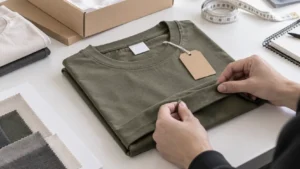
5. Confirm Seetime Project Terms Before Production
For a Seetime custom T-shirt project, the MOQ is 50 pieces and sample development typically takes around 7 days. Bulk production can usually be completed within 30 days after the approved sample, materials, artwork and specifications are confirmed. Packaging is confirmed according to the selected product type and order requirements.
The garment specification, artwork, branding requirements, quantity and destination still need to be clear before production begins. When comparing suppliers, give each one the same brief so that their responses remain comparable.
From Artwork Approval to Bulk Production
- Project brief: define the garment, fabric direction, fit, artwork, branding, quantity and destination.
- Material and decoration review: confirm whether the requested method suits the selected fabric, color and artwork.
- Sample development: review the garment, placement, scale, finish and private-label details against the brief.
- Approval record: write down corrections and keep one current version of the artwork and specification.
- Bulk production and quality checks: confirm the approved sample, materials, artwork and specifications before production starts, then agree what will be checked and how packaging will be handled.
For a broader production overview, see our factory production process and custom apparel product range.
6. Send a Brief That Makes a Quote Comparable
Copy this list into your first enquiry and complete the parts you know:
Project: Custom T-shirt program
Intended use: [retail / event / team / other]
Garment direction: [fabric feel, composition preference, fit and color]
Size range: [sizes or reference]
Artwork: [attach file; state placement and approximate dimensions]
Branding: [labels, hang tags, printing, embroidery or packaging requirements]
Estimated quantity: [range]
Destination market: [country or region]
Open questions: [shipping, fabric availability, decoration suitability or other product-specific items]
This does not lock you into a final specification. It gives the supplier enough context to identify missing details and respond to the same project, rather than responding to a vague request for “custom T-shirts.”
7. Keep One Decision Record From Brief to Approval
Use one current version of the project brief. Keep the latest artwork, garment notes, branding instructions and requested revisions in that record. When a change is approved, update the brief so that the next conversation is based on the current version.
This habit is especially useful when several people are reviewing a project. It makes it easier to distinguish an early design reference from an instruction that has been confirmed for production.
If you are developing a broader apparel program, our custom apparel OEM process and factory production process explain the wider stages you may want to discuss.
Cost and Lead-Time Factors Buyers Should Confirm
A useful quote explains what is included and what can change. Ask the supplier to separate or clearly describe the effect of:
- garment construction, fabric direction and size range;
- artwork size, number of colors and decoration method;
- labels, hang tags, embroidery and packaging;
- sample revisions, material availability and quantity;
- destination market, delivery method and required date.
For a Seetime custom T-shirt project, the MOQ is 50 pieces. Sample development typically takes around 7 days. Bulk production can usually be completed within 30 days after the approved sample, materials, artwork and specifications are confirmed. Packaging is confirmed according to the selected product type and order requirements.
These terms are project-specific. Share the complete brief before treating a timing or MOQ answer as final.
Frequently Asked Questions
What should I send for a T-shirt printing and manufacturing quote?
Send the intended use, garment direction, fit, sizes, base color, artwork, placement reference, branding requirements, estimated quantity and destination market. State any unanswered questions separately so the supplier can confirm them for the actual project.
Can I discuss printing, embroidery, labels and hang tags in one project?
Yes. Include each requirement in the same project brief so the garment, artwork and branding details can be reviewed together. Seetime Luxury can discuss printing, embroidery, private-label labels and hang tags for custom apparel projects.
How do I decide what decoration approach to request?
Describe the fabric, artwork, placement, scale and desired finish first. Ask the supplier which approach is suitable for that combination. A generic method name alone does not describe the full production requirement.
What are Seetime’s MOQ, sample and production terms for a custom T-shirt project?
The MOQ is 50 pieces. Sample development typically takes around 7 days. Bulk production can usually be completed within 30 days after the approved sample, materials, artwork and specifications are confirmed. Packaging is confirmed according to the selected product type and order requirements.
What should I check before approving a sample?
Check the garment direction, fit, color, artwork placement, scale, visual result and branding details against the latest written brief. Record corrections and final approvals clearly before the next production decision.
Plan Your T-Shirt Project With a Clear Brief
A well-prepared brief makes a T-shirt project easier to discuss, compare and review. Start with the garment, artwork and branding details you know, then identify project-specific items that require confirmation.
When you are ready, send your project brief to Seetime Luxury. We can discuss your custom apparel requirements, including printing, embroidery, private-label labels and hang tags.
Discuss Your Apparel Sourcing Requirements
Whether you're launching a startup clothing brand, expanding a streetwear label, or looking for a reliable OEM apparel manufacturer, speaking directly with an experienced production team can help you avoid costly sourcing mistakes.
Talk With Our Manufacturing Team