
Corporate uniform programs require more than selecting a garment style. Procurement managers and brand owners must evaluate brand positioning, functional needs, customization methods, budget structure, and long-term supply stability.
When comparing T-shirts vs polo shirts for corporate uniform programs, the decision should be based on operational context, brand presentation standards, and scalability — not preference.
This buying guide outlines a structured decision framework to help overseas B2B buyers determine which option best aligns with their uniform strategy.
Understanding the Role of Corporate Uniform Programs
Uniforms serve multiple business functions:
- Brand identity reinforcement
- Visual consistency across locations
- Employee role differentiation
- Workplace compliance (where applicable)
- Comfort for extended wear
The choice between T-shirts and polo shirts should support these objectives rather than simply meet cost targets.
T-Shirts vs Polo Shirts: Structural & Presentation Differences
Before applying a decision framework, it is important to understand the structural differences between the two categories.
| Factor | T-Shirts | Polo Shirts |
|---|---|---|
| Collar | Collarless | Ribbed collar with placket |
| Visual Formality | Casual | Semi-formal |
| Fit Options | Regular, slim, oversized | Regular, tailored |
| Fabric Types | Cotton, blends, performance knits | Piqué cotton, blends, performance fabrics |
| Decoration Methods | Screen print, DTG, heat transfer, embroidery | Embroidery, patch, print (limited large prints) |
| Typical Use | Events, retail staff, promotions | Corporate office, hospitality, service teams |
Key insight:
T-shirts communicate approachability and flexibility. Polo shirts communicate structure and brand authority.
Decision Framework: When to Choose T-Shirts
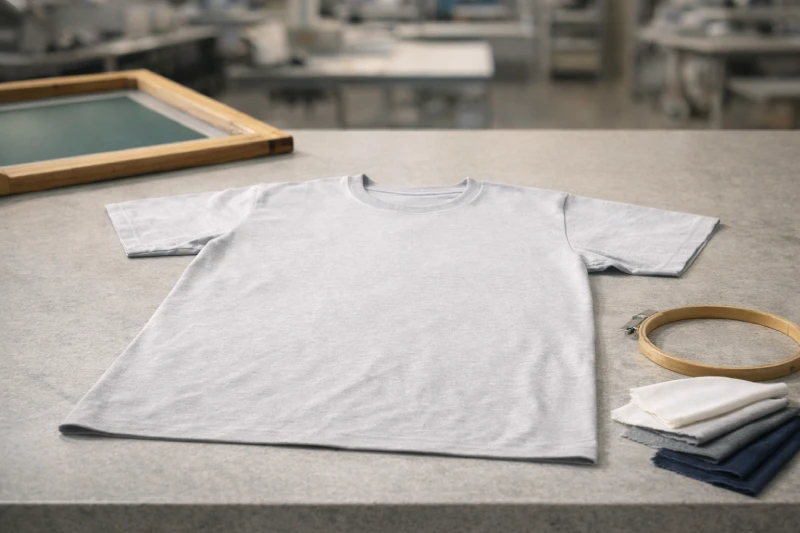
1. Brand Positioning Strategy
T-shirts are typically suitable when:
- The brand image is youthful, casual, or creative
- The workforce operates in retail, logistics, warehousing, or event environments
- Uniforms are frequently refreshed or campaign-based
For startups, promotional programs, and event-driven projects, T-shirts offer design flexibility at scale.
2. Decoration & Branding Flexibility
T-shirts allow:
- Large front or back graphic prints
- Multi-color screen printing
- DTG (Direct-to-Garment) printing for detailed artwork
- High-volume cost efficiency
If your uniform program includes promotional messages, campaign visuals, or seasonal designs, T-shirts provide broader branding space.
3. Budget & Volume Considerations
T-shirts are generally more cost-efficient for:
- High-volume programs
- Large distributor networks
- Short-term campaigns
- Entry-level employee uniforms
Lower fabric and construction complexity typically result in:
- Reduced per-unit cost
- Shorter production cycle
- Simpler sampling approval
For overseas buyers managing container-level quantities, this often improves cash flow planning.
4. Climate & Wear Conditions
In hot climates or high-mobility environments, lightweight cotton or moisture-wicking T-shirts improve:
- Breathability
- Comfort during long shifts
- Wash cycle durability
For outdoor activation teams or warehouse staff, this may outweigh presentation concerns.
Decision Framework: When to Choose Polo Shirts
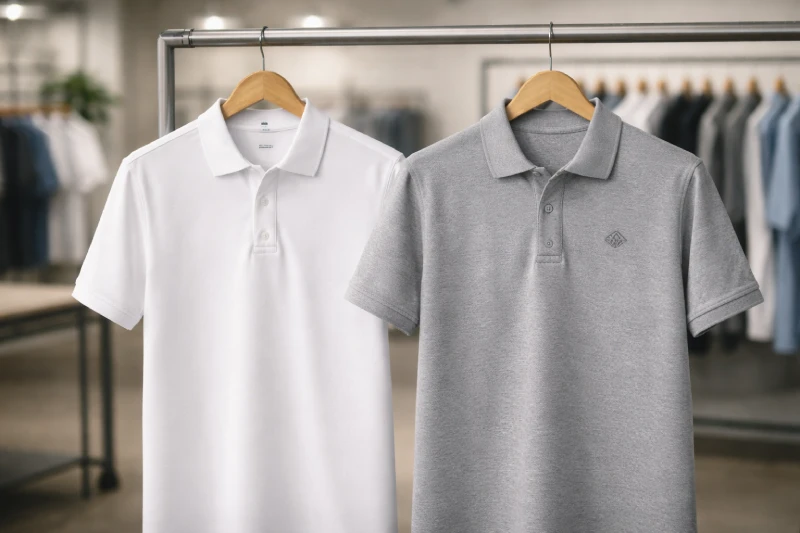
1. Corporate Image & Professional Standards
Polo shirts are often preferred when:
- Employees interact directly with customers
- The brand requires a semi-formal appearance
- Uniforms are used in hospitality, retail flagship stores, healthcare reception, or corporate offices
The collar structure creates a more refined silhouette without the rigidity of formal shirts.
2. Long-Term Program Stability
Polo shirts are commonly selected for:
- Multi-year corporate uniform contracts
- Franchised retail chains
- Corporate office rollouts
Because they project stability and authority, they are widely used in structured enterprise environments.
3. Embroidery-Driven Branding
Polo shirts are ideal for:
- Chest embroidery logos
- Badge or patch applications
- Minimalist brand identity
Large-area graphic printing is less common due to fabric texture (especially on piqué knit). Buyers should align decoration methods with garment construction.
4. Fabric & Durability Expectations
Compared with standard T-shirts, polo shirts often feature:
- Heavier GSM
- Structured rib collars
- Reinforced plackets
- Better shape retention
For programs requiring frequent washing and professional appearance retention, these features may justify higher unit pricing.
Key Procurement Considerations Across Categories
Regardless of selecting T-shirts or polos, corporate buyers should evaluate the following:
1. Fabric Selection Strategy
- Cotton vs cotton-blend vs performance fabrics
- Shrinkage tolerance
- Colorfastness standards
- Pilling resistance
- Moisture management
Performance requirements differ by industry. For example:
- Logistics teams → Breathable & durable
- Hospitality → Structured & wrinkle-resistant
- Outdoor staff → UV or moisture-wicking properties
2. Customization & Decoration Method Compatibility
Different garment types influence decoration options:
| Decoration Method | T-Shirts | Polo Shirts | Caps | Workwear |
|---|---|---|---|---|
| Screen Printing | Excellent | Moderate | Limited | Moderate |
| DTG | Excellent | Limited | Not suitable | Limited |
| Embroidery | Good | Excellent | Excellent | Excellent |
| Heat Transfer | Excellent | Good | Good | Good |
For multi-category uniform programs (e.g., caps + T-shirts + jackets), ensure branding consistency across different substrates.
3. MOQ & Production Planning
Minimum Order Quantity (MOQ) depends on:
- Fabric dyeing requirements
- Custom color matching
- Decoration complexity
- Size ratio distribution
Typical considerations:
- Basic blank stock colors → Lower MOQ
- Custom Pantone colors → Higher MOQ
- Multi-location delivery → Consolidation planning required
For overseas buyers, aligning order forecasts with container optimization improves cost efficiency.
4. Lead Time Structure
Lead time typically includes:
- Sampling & prototype approval
- Fabric production
- Bulk manufacturing
- Quality inspection
- International shipping
Programs with multiple apparel categories (e.g., polos + hoodies + caps) require synchronized production timelines.
Buyers should clarify:
- Standard bulk lead time
- Peak season capacity
- Reorder cycle timeline
- Safety stock planning
Comparing T-Shirts and Polo Shirts in Uniform Strategy
Below is a simplified decision matrix for procurement teams:
| Decision Factor | T-Shirts | Polo Shirts |
|---|---|---|
| Casual brand identity | ✔ | |
| Formal customer-facing roles | ✔ | |
| High-volume event campaigns | ✔ | |
| Corporate franchise programs | ✔ | |
| Budget-sensitive rollouts | ✔ | |
| Executive team uniforms | ✔ | |
| Heavy embroidery branding | ✔ | |
| Graphic campaign focus | ✔ |
In many large corporate programs, the solution is not either/or — but tiered usage:
- T-shirts for warehouse and event staff
- Polo shirts for retail or client-facing teams
This layered strategy improves brand hierarchy clarity.
Differences Compared with Other Apparel Categories
While this guide focuses on T-shirts vs polo shirts, procurement logic extends across broader categories:
- Headwear & Caps: Lower fabric consumption but embroidery-focused; sizing less complex.
- Hoodies & Sweatshirts: Higher material cost; seasonal planning required.
- Sportswear & Activewear: Performance fabrics demand technical testing.
- Workwear & Safety Apparel: May require compliance standards and certifications.
Uniform programs spanning multiple categories should maintain:
- Consistent color codes
- Unified logo sizing guidelines
- Cross-category quality benchmarks
Risk Management & Quality Control Checklist
Before confirming a bulk order, consider:
- ☐ Fabric shrinkage test report
- ☐ Colorfastness testing
- ☐ Embroidery density approval sample
- ☐ Size grading confirmation
- ☐ Production timeline buffer
- ☐ Random inspection plan (AQL standard)
- ☐ Shipping method confirmation
This structured review reduces post-delivery risk.
Strategic Considerations for Overseas Buyers
International buyers should also evaluate:
- Export documentation compliance
- HS code classification
- Import duty estimation
- Packaging standards for distribution
- Sustainability reporting (if required by brand policy)
For distributor or contractor projects, logistics planning is as important as garment selection.
Final Recommendation: Align Garment Choice with Program Objectives
The decision between T-shirts vs polo shirts for corporate uniform programs should be driven by:
- Brand positioning
- Employee role segmentation
- Decoration strategy
- Budget framework
- Long-term scalability
There is no universal “better” option — only better alignment with your operational goals.
Discuss Your Corporate Uniform Requirements
If you are planning a multi-category uniform rollout — including T-shirts, polo shirts, headwear, or performance apparel — our manufacturing team can review your specifications, forecast volumes, and project timelines to help you structure a scalable solution.
We welcome discussions with procurement managers, brand owners, and distributors seeking structured, production-ready uniform programs tailored to their market requirements.
Discuss Your Apparel Sourcing Requirements
Whether you're launching a startup clothing brand, expanding a streetwear label, or looking for a reliable OEM apparel manufacturer, speaking directly with an experienced production team can help you avoid costly sourcing mistakes.
Talk With Our Manufacturing Team