

Industrial workwear has evolved from purely functional garments into highly engineered products that balance protection, durability, compliance, and brand consistency. For procurement professionals, brand owners, and distributors, understanding current workwear design trends is less about aesthetics and more about how design decisions impact large-scale production, supply chain efficiency, and long-term wear performance.
As global manufacturing environments become more regulated and operationally complex, industrial workwear design is increasingly shaped by safety standards, production scalability, and customization requirements across multiple apparel categories—including garments, headwear, and specialized workwear systems.
This article outlines the key trends influencing industrial workwear design today and explains how these trends connect directly to custom manufacturing and bulk apparel production.
1. Design Driven by Function and Compliance
One of the strongest trends in industrial workwear design is the shift toward function-led construction. Garments are no longer adapted from casual or general-purpose templates. Instead, they are designed from the outset to meet specific industrial use cases.
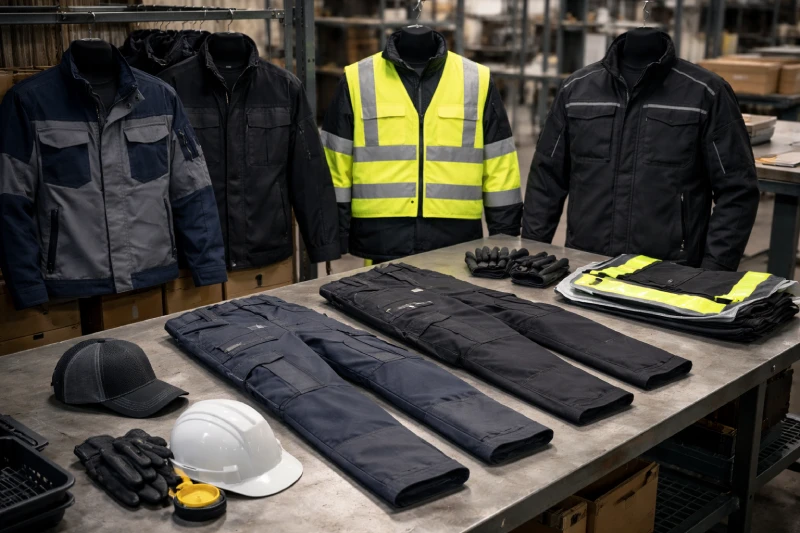
This includes:
- Reinforced stress areas at knees, elbows, and shoulders
- Multi-pocket layouts optimized for tools or devices
- High-visibility panels and reflective placement aligned with safety requirements
- Compatibility with personal protective equipment (PPE)
From a bulk production perspective, this trend requires standardized pattern engineering. Once validated, these designs can be consistently reproduced across large volumes, reducing variation and improving quality control. The same functional logic now extends beyond jackets and trousers to items such as industrial caps, helmets with textile components, and cold-weather headwear.
2. Modular Design Across Apparel Categories
Another growing trend is modularity. Instead of designing standalone garments, manufacturers increasingly develop coordinated systems that work across different apparel categories.
Examples include:
- Matching work jackets, trousers, and vests with consistent material specifications
- Headwear designed using the same color standards and trims as garments
- Layering systems that allow seasonal adjustment without changing the core design
For procurement teams, modular design simplifies sourcing and inventory planning. For custom manufacturers, it enables shared materials, trims, and production processes across multiple SKUs. This approach supports bulk orders that include a mix of garments, headwear, and workwear accessories while maintaining consistency.
3. Material Selection Focused on Durability and Lifecycle Cost
Industrial buyers increasingly evaluate workwear based on lifecycle performance rather than unit price. As a result, design trends now emphasize materials that deliver durability under repeated washing, abrasion, and exposure to industrial environments.
Common material considerations include:
- Blended fabrics balancing strength and comfort
- Abrasion-resistant panels in high-wear zones
- Colorfast dyes that maintain visibility and brand consistency
- Breathable yet protective textiles for extended wear periods
From a manufacturing standpoint, these material choices must be scalable. Fabrics need stable supply availability and consistent performance across production batches. This trend reinforces the importance of early material validation and sampling before committing to bulk orders.
4. Simplified Branding Integration for Industrial Use
Brand visibility remains important in industrial environments, but design trends show a move toward controlled and standardized branding rather than prominent decoration.
Key characteristics include:
- Logo placement aligned with garment construction seams
- Limited color palettes to reduce production complexity
- Branding techniques selected for durability rather than visual effect
This trend is relevant across workwear garments, caps, and accessories. For bulk production, simplified branding improves yield rates and reduces rejection caused by alignment or durability issues. It also allows distributors to apply consistent branding across multiple product categories without increasing operational complexity.
5. Standardization with Customization Options
Industrial workwear design increasingly balances standardization and customization. Core garment designs are standardized to support efficient mass production, while specific elements remain customizable.
Common customizable aspects include:
- Color combinations based on corporate identity
- Reflective tape configurations
- Size grading and regional fit adjustments
- Optional add-ons such as detachable hoods or liners
This trend supports bulk orders by keeping the base product consistent while allowing buyers to adapt workwear to different sites or roles. It also enables manufacturers to plan production more efficiently by controlling variables within defined limits.
6. Cross-Category Consistency for Multi-Site Operations
Large organizations often operate across multiple sites, regions, or climate zones. A growing design trend addresses this by ensuring visual and functional consistency across different workwear categories.
This includes:
- Unified sizing systems across garments and headwear
- Shared trims, fasteners, and materials
- Design language that remains consistent even when garments differ in weight or construction
For distributors and brand owners, this consistency simplifies supplier coordination and strengthens brand recognition in industrial settings. For manufacturers, it allows for more predictable bulk production planning and easier quality management.
7. Design for Scalable Manufacturing Processes
Finally, industrial workwear design increasingly reflects manufacturing realities. Designs are evaluated not only for performance but also for how efficiently they can be produced at scale.
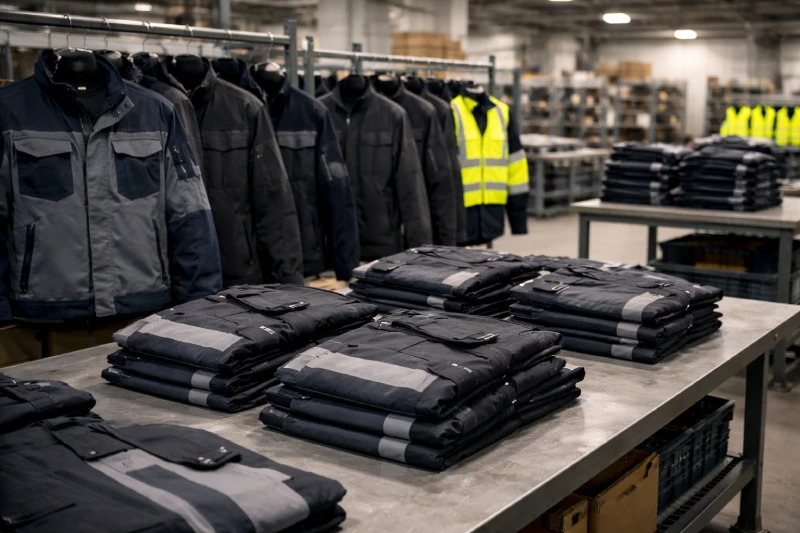
Design decisions now consider:
- Stitch complexity and production time
- Automation compatibility
- Yield efficiency during cutting and assembly
- Packaging and logistics optimization
This trend highlights the close relationship between design and manufacturing. Workwear designed with scalable production in mind reduces lead times and supports reliable bulk delivery schedules.
Conclusion
Industrial workwear design trends are shaped by functionality, compliance, and production efficiency rather than consumer fashion cycles. For procurement professionals, brand owners, and distributors, understanding these trends helps ensure that workwear investments deliver long-term value across multiple apparel categories—from garments and headwear to complete workwear systems.
Modern industrial workwear design aligns closely with custom manufacturing capabilities and bulk order requirements. By focusing on standardized yet adaptable designs, durable materials, and scalable production processes, manufacturers can support consistent quality and reliable supply at scale.
If you are planning bulk workwear programs or exploring custom industrial apparel solutions, working with a manufacturer experienced in multi-category production can help align design, compliance, and manufacturing efficiency.
To learn more or discuss your specific requirements, feel free to contact us for detailed guidance.
Discuss Your Apparel Sourcing Requirements
Whether you're launching a startup clothing brand, expanding a streetwear label, or looking for a reliable OEM apparel manufacturer, speaking directly with an experienced production team can help you avoid costly sourcing mistakes.
Talk With Our Manufacturing Team