
What Is Cotton Jersey Knit Fabric?
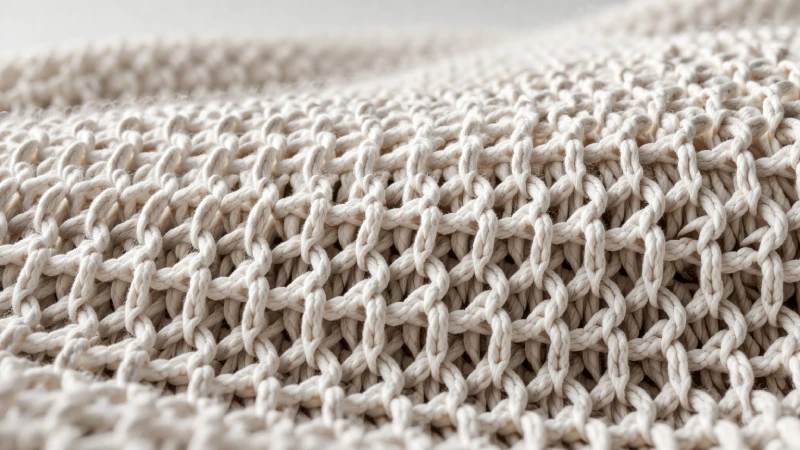
Cotton jersey knit fabric is defined not just by its material, but by how it is constructed. Unlike rigid woven textiles, this fabric is formed through a continuous interlocking of loops, creating a flexible and dynamic structure. This loop-based formation directly influences how the fabric stretches, recovers, and drapes.
Understanding cotton jersey knit fabric from a structural perspective allows you to see why it behaves differently under tension, how it adapts to movement, and why it feels inherently soft.
In this guide, we focus specifically on the knit mechanics that define its performance and distinguish it from other fabric constructions.
Definition of Cotton Jersey Knit Fabric
Cotton jersey knit fabric is a type of textile formed through a knitting process in which a single yarn is looped continuously to create a flexible fabric structure. Unlike interlaced woven constructions, this loop-based formation defines how the material behaves under tension and movement. For a broader material-level explanation, see cotton jersey fabric definition overview.
At its core, jersey knit cotton fabric is built from a series of interconnected loops, each one pulled through the previous loop in a continuous sequence. This creates a structure that is inherently mobile, allowing the loops to expand and contract when force is applied.
Because the yarn follows a continuous path rather than crossing perpendicularly, the fabric forms a distinct technical face and back. The front typically appears smoother with visible loop columns, while the back shows a more textured, interlocking pattern.
This looped construction is the foundation of how knit cotton jersey fabric behaves. It directly influences how the fabric stretches, recovers, and adapts to movement—topics we will explore in the next section.
How Knit Structure Works in Jersey Fabric
The structure of knit cotton jersey fabric operates through a continuous loop formation that allows the material to move dynamically under tension. Instead of fixed intersections, the fabric is made from a single yarn forming interlinked loops, which creates a flexible and responsive structure.
Each loop is drawn through a previous loop, forming a chain-like system that holds together while remaining mobile. These loops are organized in two directions: courses run horizontally across the fabric, while wales run vertically along its length. This orientation helps define how the fabric reacts when stretched in different directions.
The stretch behavior comes primarily from the loops themselves. When force is applied, the loops can open, elongate, and shift position without breaking the yarn. This is why jersey knit cotton fabric can stretch even without elastic fibers—the movement comes from structural deformation rather than material elasticity.
When the tension is released, the loops naturally return toward their original shape. However, because the structure is flexible, slight deformation can remain, especially after repeated stress. This loop-based movement explains both the stretch and recovery behavior typical of cotton jersey knit fabric.
This structural flexibility is what fundamentally separates knit fabrics from more rigid constructions, which we will examine in the next section.
Knit vs Woven: What Makes Jersey Different?
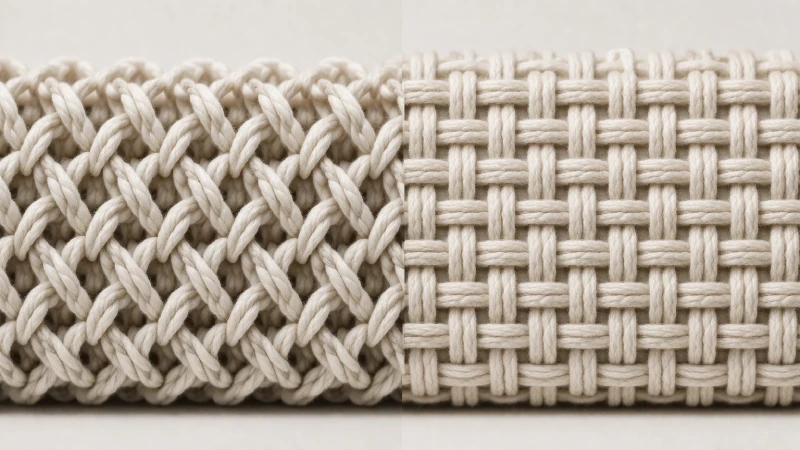
The key difference between jersey knit cotton fabric and woven fabric lies in how the yarns are structured. Knit fabrics are formed through interconnected loops, while woven fabrics are created by interlacing yarns at right angles. This fundamental structural difference determines how each fabric behaves under movement and tension.
In a knit structure, the yarn follows a continuous looping path, allowing each loop to shift and adjust when force is applied. This creates a flexible system where the fabric can expand and contract without disrupting its integrity. The entire structure remains dynamic because the loops are not locked in place.
In contrast, woven fabrics are constructed by crossing warp and weft yarns over and under each other. These intersections are fixed, forming a stable grid that resists deformation. Because the yarns are tightly interlocked, the fabric tends to maintain its shape and offers limited stretch unless additional mechanisms are introduced.
As a result, knit structures like cotton jersey respond more fluidly to movement, while woven structures prioritize stability. This distinction highlights how loop mobility, rather than fiber type, defines the unique behavior of jersey fabrics.
Why Cotton Jersey Knit Fabric Feels Soft and Stretchy
Cotton jersey knit fabric feels soft and stretchy because of how its structure responds to movement, not simply because of the fiber itself. The looped construction allows the fabric to adapt under pressure, creating a sensation of flexibility and ease when handled or worn.
At a structural level, softness comes from the mobility of the loops. Each loop can shift slightly against adjacent loops, reducing resistance within the fabric. This movement minimizes stiffness, allowing the surface to feel smooth and compliant rather than rigid.
Stretch behavior is driven by loop expansion rather than yarn elongation. When tension is applied, the loops open and extend, increasing the distance between them without placing excessive strain on the yarn. This is why knit cotton jersey fabric can stretch even without elastic fibers. For a broader breakdown of these behaviors, see cotton jersey fabric properties.
In addition, the looped structure enables the fabric to conform easily to shapes. Instead of resisting form, the loops adjust and settle, creating a natural drape that follows movement without creating sharp folds or tension points.
Ultimately, the softness and stretch associated with cotton jersey knit fabric are direct results of its loop-based construction, where structural flexibility defines how the fabric feels and performs.
Common Variations of Jersey Knit (Brief Overview)
Jersey knit is not a single uniform structure but a category of fabrics built from loop-based constructions with different arrangements. Variations arise from how loops are formed, layered, or alternated, which slightly changes how the fabric behaves.
Single jersey is the most basic form, constructed with one set of needles creating a single layer of loops. This results in a clear distinction between the front and back surfaces, reflecting its simple loop formation.
Interlock knit uses two sets of needles to create a double-layered structure where loops from each side interlock. This produces a more balanced construction with a smoother appearance on both sides.
Rib knit is formed by alternating knit and purl stitches, creating vertical columns of loops that can expand and contract more noticeably. This variation changes how the fabric responds to stretch along specific directions.
Across all these variations, the defining principle remains the same: differences in loop arrangement lead to differences in fabric behavior.
Summary: Understanding Cotton Jersey as a Knit Fabric
Cotton jersey knit fabric is fundamentally defined by its loop-based construction rather than the fiber alone. The continuous formation of interlinked loops creates a structure that is flexible, adaptive, and distinct from more rigid fabric systems.
At the structural level, this fabric is built through a sequence of loops arranged in courses and wales, forming a continuous and interconnected network. This construction allows the fabric to remain stable while still permitting controlled movement within the structure.
In terms of behavior, the ability of loops to expand and return gives the fabric its characteristic stretch and recovery. Instead of relying on fiber elasticity, the fabric responds through structural deformation, which enables flexibility without compromising integrity.
Compared to woven fabrics, the defining difference lies in mobility. Knit structures allow movement within the fabric, while woven structures are fixed and resist change. This contrast highlights how structure directly determines performance.
Ultimately, the defining characteristic of cotton jersey knit fabric is not just the use of cotton, but the knit structure itself, where loop formation governs how the fabric behaves, feels, and performs.
Discuss Your Apparel Sourcing Requirements
Whether you're launching a startup clothing brand, expanding a streetwear label, or looking for a reliable OEM apparel manufacturer, speaking directly with an experienced production team can help you avoid costly sourcing mistakes.
Talk With Our Manufacturing Team