
Introduction
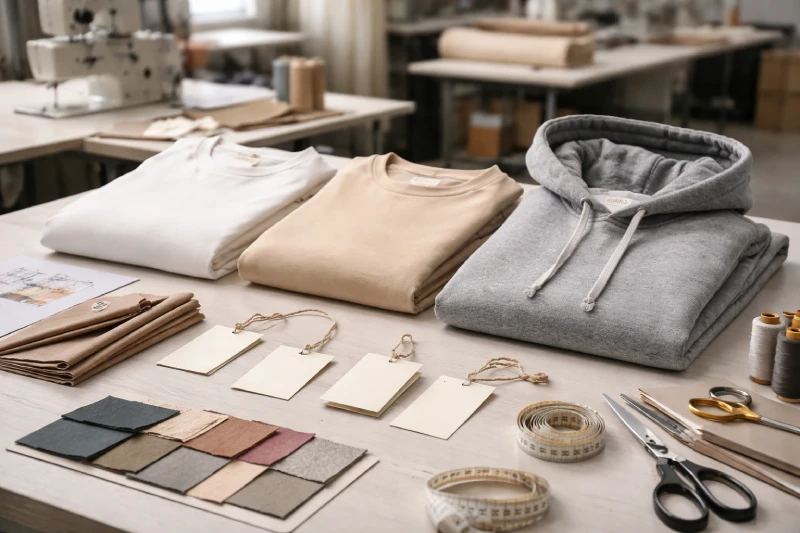
Launching a clothing brand no longer requires owning a factory or building a complex manufacturing operation. Today, many fashion startups and ecommerce businesses rely on private label clothing manufacturing to bring their products to market. In this model, a specialized apparel manufacturer produces garments while the brand sells them under its own name, labels, and identity.
Private label clothing has become a popular approach for startup fashion brands, online clothing stores, boutique retailers, and niche lifestyle labels. It allows businesses to focus on branding, marketing, and product positioning while experienced manufacturers handle fabric sourcing, garment production, and quality control.
By combining professional manufacturing capabilities with brand ownership, private label production enables entrepreneurs to launch and scale apparel businesses more efficiently.
What Is Private Label Clothing? (Definition)
Private label clothing refers to apparel products that are manufactured by a third-party clothing factory but sold under a brand’s own label and branding. Instead of producing garments in their own facilities, fashion brands collaborate with specialized manufacturers that handle the technical aspects of garment production.
In a private label model, the brand typically decides the product concept, branding elements, and target market, while the manufacturer is responsible for sourcing materials, producing the garments, and assembling the finished products. The clothing is then labeled, packaged, and sold under the brand’s identity rather than the manufacturer’s name.
This manufacturing approach allows companies to launch clothing collections without investing in factories, machinery, or production staff. As a result, private label clothing has become a widely used strategy among fashion startups, ecommerce brands, and boutique retailers seeking to develop their own apparel lines.
Summary Definition
Private label clothing is apparel produced by a manufacturer but sold under another company’s brand name. The brand controls the product identity and marketing, while the manufacturer manages the production process.
How Private Label Clothing Works (Manufacturing Process)
Private label clothing manufacturing follows a structured workflow between the brand and the apparel manufacturer. While the brand focuses on market positioning and product ideas, the manufacturer manages the technical production process.
1. Product Concept or Design Idea
The process usually begins with the brand defining a product concept. This may include deciding the type of garment—such as t-shirts, hoodies, or sportswear—as well as the target market, style direction, and expected price range.
2. Fabric and Garment Selection
Next, the manufacturer helps the brand select appropriate fabrics, garment constructions, and color options. Factors such as fabric weight, durability, comfort, and production feasibility are considered during this stage.
3. Branding and Customization
Brand identity elements are added to the garments. These may include woven labels, printed neck labels, embroidery logos, or graphic prints. Custom packaging and hang tags may also be prepared.
4. Sampling and Approval
Before full production begins, the manufacturer creates prototype samples. The brand evaluates fit, fabric quality, and branding details. Adjustments are often made during this stage.
5. Bulk Production
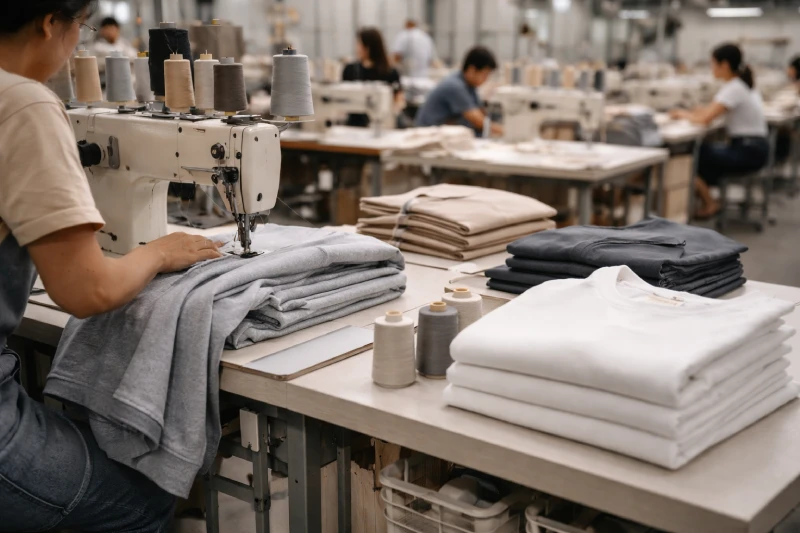
Once the sample is approved, the factory proceeds with bulk production, including cutting, sewing, printing, labeling, and packaging.
Types of Private Label Clothing Products
Private label clothing manufacturing supports a wide variety of apparel categories. Different brands focus on different product types depending on their target market, brand identity, and sales channels. Experienced clothing manufacturers typically offer production capabilities across multiple garment categories.
Private Label T-Shirts
T-shirts are one of the most common starting products for clothing brands. They are relatively simple to produce and offer many customization options, including different fabric weights, fits, printing techniques, and branding labels. Many startup brands launch their first collections with private label t-shirts.
Private Label Hoodies and Sweatshirts
Hoodies and sweatshirts are widely used by streetwear brands, lifestyle labels, and casual fashion companies. Manufacturers can support features such as heavyweight fabrics, embroidered logos, garment washing, and custom dyeing processes.
Private Label Sportswear
Sportswear and activewear have become a fast-growing segment in the apparel industry. Private label manufacturers can produce items such as gym shirts, leggings, training shorts, and performance hoodies using moisture-wicking fabrics and stretch materials.
Private Label Women’s Clothing
Many boutique fashion brands focus on women’s apparel, including dresses, tops, skirts, and seasonal fashion items. These products often require more complex pattern development and detailed garment construction.
Private Label Baby Clothing
Baby clothing brands frequently use private label manufacturing to produce items such as bodysuits, pajamas, and soft cotton garments, often with a focus on safety standards and comfortable fabrics.
Private Label Clothing vs White Label Clothing
Private label clothing and white label clothing are often mentioned together, but they represent different approaches to apparel production and branding. Understanding the difference helps fashion brands choose the model that best fits their product strategy.
In private label clothing manufacturing, brands typically work closely with manufacturers to customize garments. This can involve selecting fabrics, adjusting garment designs, and adding brand-specific details such as labels, embroidery, or printing. The result is a product line that reflects the brand’s unique identity.
White label clothing, by contrast, usually refers to pre-designed garments produced in standard styles. Manufacturers sell these ready-made products to multiple businesses, and each company can simply add its logo or branding. The product itself remains largely unchanged.
Because white label products are standardized, different brands may end up selling very similar items. Private label clothing provides more flexibility and control, allowing brands to differentiate their products and build stronger brand recognition.
Key Differences
| Feature | Private Label Clothing | White Label Clothing |
|---|---|---|
| Product Design | Customizable garments | Pre-designed products |
| Branding | Fully brand-specific | Basic logo addition |
| Product Control | High flexibility | Limited customization |
| Manufacturer Role | Collaborative development | Standard supply |
| Brand Differentiation | Strong | Limited |
Benefits of Private Label Clothing for Fashion Brands
Private label clothing manufacturing offers several practical advantages for businesses that want to build their own apparel brand. By outsourcing production to experienced manufacturers, brands can focus on product development, marketing, and customer growth while maintaining control over their brand identity.
Brand Ownership
Private label manufacturing allows businesses to sell clothing under their own brand name. Companies control elements such as logos, labels, packaging, and product positioning. This ownership helps brands build recognition and long-term customer loyalty.
Product Differentiation
Unlike generic wholesale apparel, private label clothing can be customized with specific fabrics, designs, and branding details. This flexibility enables brands to create products that reflect their identity and appeal to a defined target market.
Faster Market Entry
Working with an established manufacturer reduces the time needed to launch new products. Factories already have production equipment, skilled workers, and supply chains in place, allowing brands to move from concept to production more efficiently.
Scalable Production
Private label manufacturers can usually support both small and large production volumes. This scalability helps brands start with smaller orders and gradually increase production as demand grows.
Higher Profit Potential
Because the brand owns the product identity and retail positioning, businesses can set their own pricing strategies and potentially achieve stronger margins compared with reselling generic products.
Common Customization Options in Private Label Clothing
Customization is a key part of private label clothing production. Through branding elements and design adjustments, manufacturers help transform standard garments into products that represent a brand’s identity. These customization options allow clothing brands to create recognizable products while maintaining consistent brand presentation.
Label Customization
Labels are one of the most important branding elements in apparel.
Woven labels are commonly sewn inside garments and provide a durable, professional brand identity. They are often used for hoodies, jackets, and premium apparel.
Printed neck labels are frequently used for t-shirts and lightweight garments. Instead of a physical label, the brand information is printed directly on the fabric, improving comfort for the wearer.
Logo Decoration
Logos and graphics are another major customization element.
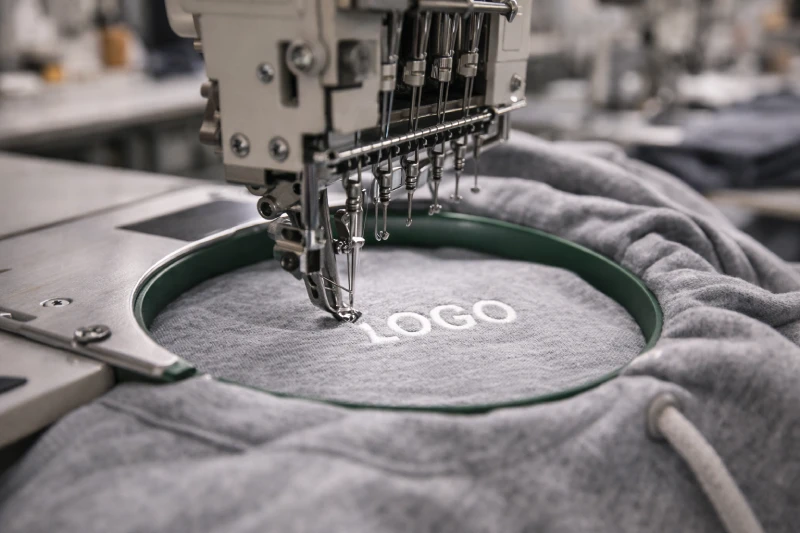
Embroidery creates a textured, durable logo that is widely used on hoodies, polos, and caps.
Screen printing is commonly used for graphic t-shirts and sweatshirts, allowing bold designs and brand visuals.
Heat transfer printing is suitable for detailed artwork or smaller production runs.
Packaging and Brand Presentation
Beyond the garments themselves, brands often customize additional elements such as hang tags, polybags, and branded packaging. These details help create a consistent brand experience when customers receive the product.
Who Uses Private Label Clothing Manufacturing?
Private label clothing manufacturing is widely used by different types of businesses that want to sell branded apparel without operating their own production facilities. This model allows companies to focus on branding, product positioning, and sales while relying on professional manufacturers for garment production.
Fashion Startups
Many new clothing brands begin with private label production because it reduces the need for large investments in factories and equipment. Startups can launch their first collections with relatively small production runs while testing market demand.
Ecommerce Clothing Brands
Online clothing stores often use private label manufacturing to create exclusive products instead of selling generic wholesale apparel. This approach helps ecommerce brands build a stronger brand identity and customer loyalty.
Boutique Retailers
Independent boutiques sometimes develop their own private label collections to offer products that cannot be found in other stores. Exclusive items can help retailers differentiate their stores and increase brand recognition.
Influencers and Lifestyle Brands
Content creators, fitness personalities, and lifestyle influencers frequently launch clothing lines using private label manufacturers to produce branded merchandise and apparel collections.
How to Choose a Private Label Clothing Manufacturer
Selecting the right private label clothing manufacturer is an important step for any apparel brand. The manufacturer you work with will directly influence product quality, production efficiency, and the long-term scalability of your clothing line.
Production Capability
Brands should first evaluate whether a manufacturer has experience producing the type of garments they plan to sell. Different factories may specialize in products such as t-shirts, sportswear, hoodies, or fashion apparel. Production equipment and technical expertise should match the brand’s product category.
Quality Control Systems
Reliable clothing manufacturers implement quality inspections throughout the production process. These checks may include fabric inspection, sewing quality evaluation, printing verification, and final garment inspection before packaging. Strong quality control helps reduce defects and maintain consistent product standards.
Minimum Order Quantity (MOQ)
Minimum order quantity requirements vary between manufacturers. Some factories focus on large-scale production, while others offer smaller MOQs that are more suitable for startup brands testing new products.
Customization Capabilities
Private label production often requires branding elements such as woven labels, embroidery logos, screen printing, and custom packaging. Brands should confirm that the manufacturer supports the customization options they need.
Communication and Sampling Process
Clear communication and an efficient sampling process are essential. Before approving bulk production, brands should carefully review sample garments to confirm that fit, materials, and branding details meet expectations.
Conclusion
Private label clothing refers to apparel produced by a manufacturer but sold under a brand’s own name and identity. This model allows businesses to launch clothing products without investing in factories or managing complex production systems.
By working with experienced apparel manufacturers, brands can focus on product development, branding, and marketing while relying on professional factories for fabric sourcing, garment production, and quality control. As a result, private label clothing has become a widely used approach among fashion startups, ecommerce brands, and boutique retailers.
The flexibility of private label production makes it possible to create unique apparel collections while scaling production as a business grows. However, choosing the right private label clothing manufacturer remains critical to ensuring consistent quality, reliable production, and long-term brand success.
Discuss Your Apparel Sourcing Requirements
Whether you're launching a startup clothing brand, expanding a streetwear label, or looking for a reliable OEM apparel manufacturer, speaking directly with an experienced production team can help you avoid costly sourcing mistakes.
Talk With Our Manufacturing Team