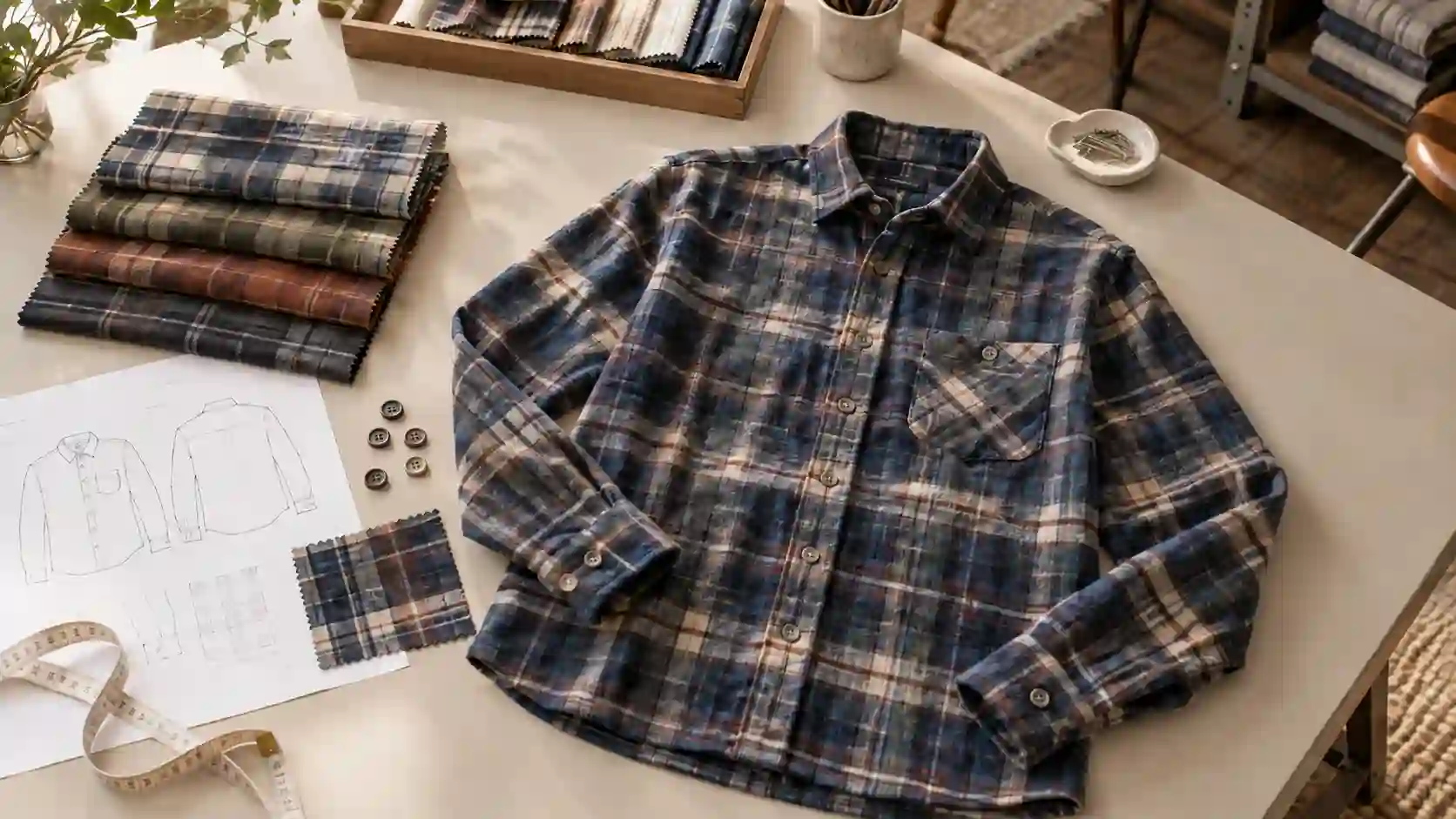
@{raw=Looking for a custom flannel or plaid shirt manufacturer is not the same as buying a stock shirt with a label added. A plaid shirt asks the supplier to make several decisions work together: fabric hand feel, the scale of the check, the garment shape, pocket placement, trim, branding and the way the pattern meets at key seams.
That is why a useful first conversation is about the product brief, not a supplier’s marketing list. This guide helps apparel brands turn an idea into a clearer request for quotation and a more meaningful sample review.
Short answer: Compare a custom flannel or plaid shirt manufacturer on fabric specification, plaid matching, fit, sample revisions and how clearly the supplier documents assumptions. Send a complete brief and approve the sample before bulk production.
Start with the product brief, not the supplier list
Before comparing quotes, decide what role the shirt has in the collection. If you need a structured custom OEM development process, define that workflow before you ask for prices. A lightweight shirt for transitional weather, a heavier overshirt, a workwear-inspired style and a relaxed streetwear layer may all be called “flannel,” yet they need different fabric, fit and finishing choices.
| Decision to make | What to define in the brief | Why it matters |
|---|---|---|
| Customer and use | Everyday casual, workwear-inspired, outdoor layer, fashion shirt or team merchandise | It guides weight, durability expectations, silhouette and price target. |
| Base garment | Shirt, overshirt, shirt jacket or shacket; regular, relaxed or oversized fit | It keeps “flannel shirt” from becoming an ambiguous request. |
| Pattern direction | Plaid/check artwork, repeat size, preferred placement and reference images | Yarn-dyed and printed checks behave differently during development and cutting. |
| Branding | Woven label, printed neck label, embroidery, patch, hangtag and packaging needs | Brand elements need locations, dimensions and artwork files—not just a logo. |
| Commercial assumptions | Target market, size range, target price, planned quantity and launch window | These give a supplier the context to assess feasibility and quote accurately. |
A mood board is useful, but it is not a specification. Mark what is non-negotiable on each reference image: the shoulder line, pocket shape, collar roll, button choice, plaid scale or washed appearance. If a point is only inspiration, say so. It prevents a factory from treating a detail as a requirement when it is merely a direction.
Choose the fabric by product role
“Flannel” can describe a soft, brushed surface, but the term alone does not settle fibre content, weave, weight, yarn dyeing or finishing. Ask for the proposed composition, construction, weight and finish in writing. Then judge it against the intended garment rather than a generic “premium” description.
For a shirt intended to sit close to the body, softness, drape and collar behaviour may matter most. An overshirt or shirt jacket may need a more substantial body so that it holds its shape over a tee or knit. If the design relies on a checked pattern, request a fabric swatch or clear close-up early. The visual character of a plaid depends on colour, yarn or print method, repeat scale and the amount of brushing—not on the word “plaid” alone.
Be specific about care expectations and the selling climate. A sample that feels right in a showroom may behave differently after laundering or when layered. Those questions belong in development, not in the final approval email.
Plaid makes placement a construction decision
A solid-colour shirt can hide a small shift in cutting. A plaid often cannot. The center front, pocket, yoke, side seams and sleeve placket are the places buyers usually notice first. Pattern matching does not need to be identical everywhere, but the desired approach should be agreed before the sample is approved.
- Center front: State whether the checks should visually continue across the button stand when the shirt is closed.
- Chest pockets: Decide whether they should blend into the body, deliberately contrast, or follow a particular placement reference.
- Yoke and sleeves: Tell the supplier if you want the check to run on the same grain, on the bias, or in another deliberate direction.
- Repeat scale: A large repeat may look balanced on a size large and crowded on a small size. Review the scale across the full size range.
- Cutting tolerance: Ask how the agreed placement will be judged at sample review and document that standard with photos.
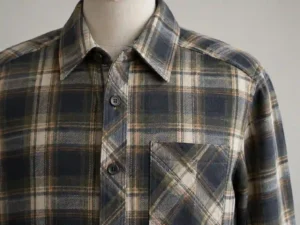
This is a good example of why a single flat sketch is rarely enough. A front and back drawing, a close-up of the pocket area and one or two approved references give the development team a clearer target.
Lock the garment architecture before adding decoration
Fit and construction are the foundation. Start with the body length, chest ease, shoulder position, sleeve shape and cuff opening. Then define the parts that change the character of the shirt: collar type, placket, pocket count and shape, back yoke, hem curve, side gussets, button material and any lining.
Decoration should sit on top of that architecture. An embroidered chest mark, a woven label, a patch or a printed neck label each need a position, size, colour reference and artwork format. A note that says “add logo” leaves too much to interpretation. Put the logo on the artwork or specification sheet where it is meant to appear.
What to inspect in a custom flannel shirt sample
Use the sample to answer practical questions. Does the collar lie as intended? Does the shirt feel balanced when buttoned? Does the pocket sit level? Are the check lines placed in the way you approved? Is the sleeve length and cuff opening right for the target wearer?
Build a short approval record instead of relying on memory. It can include measured points, photos of the front and back, close-ups of the collar, pocket, placket and labels, plus a list of changes for the next sample. If a point is approved, label it approved. If it remains open, describe the action needed. This becomes much more useful than a vague “looks good” message.
Look at the garment from more than one distance. Close-up images reveal stitch, button and label details. A full-length front view reveals balance: whether the check feels centred, the pocket interrupts the pattern in the intended way, and the hem and sleeves sit at the right proportions. Ask for sample photos in the approved plaid direction before production decisions are made, particularly if the artwork has a large repeat.
Keep the first sample focused. If fabric, fit, wash, pocket shape and branding all change at once, it becomes difficult to learn which adjustment caused the result. Record each revision in a repeatable production quality-control workflow so the next version has a clear brief. Record each revision by component so the next version has a clear brief.
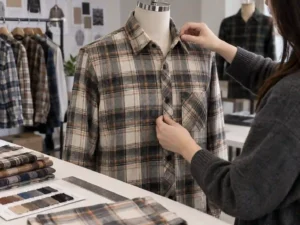
A request-for-quotation checklist
Send the following items together where possible:
- Front, back and detail drawings or annotated reference photos
- Target customer, intended use and selling season
- Fabric direction: composition, feel, weight range, colour and plaid/check reference
- Measurements, fit notes, size range and grade rules if available
- Collar, pocket, placket, cuff, hem, button and stitching details
- Artwork for labels, embroidery, patches, hangtags and packaging
- Requested sample quantity, planned production quantity, target price and required delivery window
- Questions that need an explicit answer, such as pattern placement or care requirements
A supplier can then respond with assumptions you can confirm or correct. That is healthier than accepting a quote built on invisible assumptions.
How to compare manufacturers without reducing the decision to price
Ask each candidate to react to the same brief. Compare the clarity of their questions, not only the price at the bottom of the sheet. A useful response distinguishes what is confirmed, what needs a sample or material test, and what depends on quantity or final artwork.
For a broader starting list, see our guide to flannel shirt manufacturers for private-label brands. Use it to build a shortlist, then bring each supplier back to the same product brief and sample criteria.
Frequently asked questions
What should I send to a custom flannel shirt manufacturer?
At minimum, send reference images or drawings, intended fit, fabric direction, plaid/check reference, size range, branding artwork, planned quantity and the questions you need answered. A tech pack is ideal, but an annotated brief is a strong starting point.
Can a plaid pattern be matched at the pocket and center front?
It can be requested, but the desired matching approach should be shown on the brief and evaluated on the sample. Agree where matching matters most rather than assuming every seam will be treated the same way.
What is the difference between a flannel shirt and a plaid shirt?
Flannel usually refers to fabric character, while plaid describes a check pattern. A shirt can be flannel without plaid, and plaid without a brushed flannel finish. Define both fabric and pattern in the request.
When should I ask about MOQ, price and delivery?
Ask early, but expect the answer to depend on the final construction, fabric, decoration, quantity and destination. A serious quote should make those assumptions visible rather than treating them as universal numbers.
Next step
If you are developing a custom flannel or plaid shirt, send Seetime Luxury your brief with the details above. We can discuss the custom requirements for your project; final feasibility and commercial terms should be confirmed against the approved specification.
If you are comparing a simpler jersey-based program, see our custom T-shirt manufacturer guide for the brief and specification points to prepare.
Discuss Your Apparel Sourcing Requirements
Whether you're launching a startup clothing brand, expanding a streetwear label, or looking for a reliable OEM apparel manufacturer, speaking directly with an experienced production team can help you avoid costly sourcing mistakes.
Talk With Our Manufacturing Team