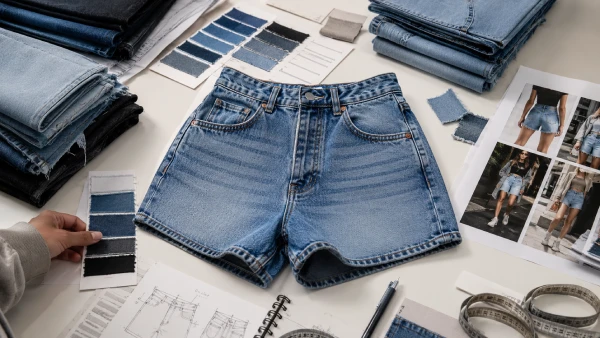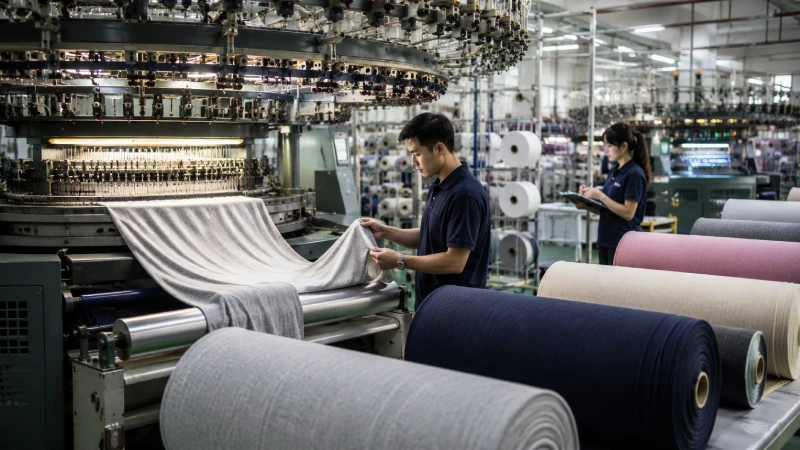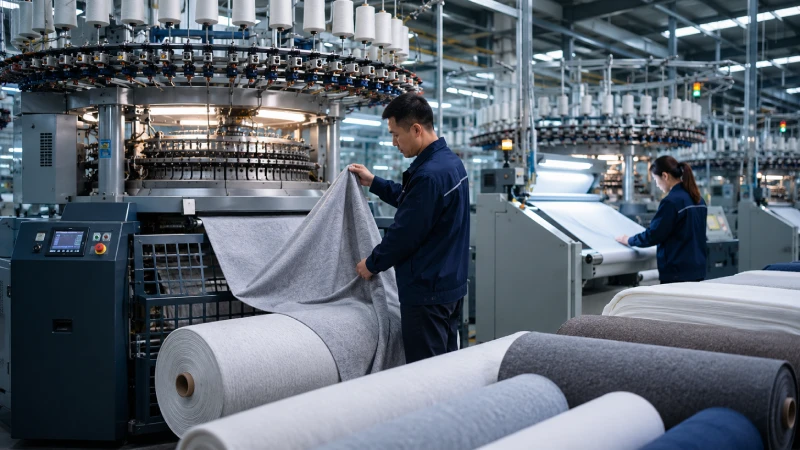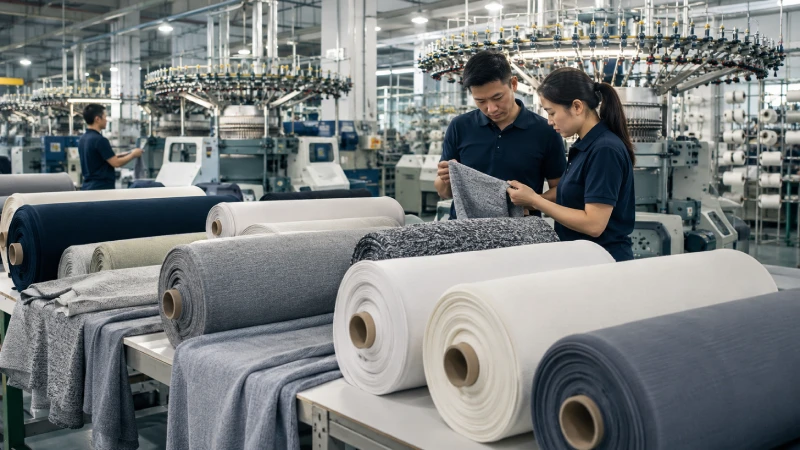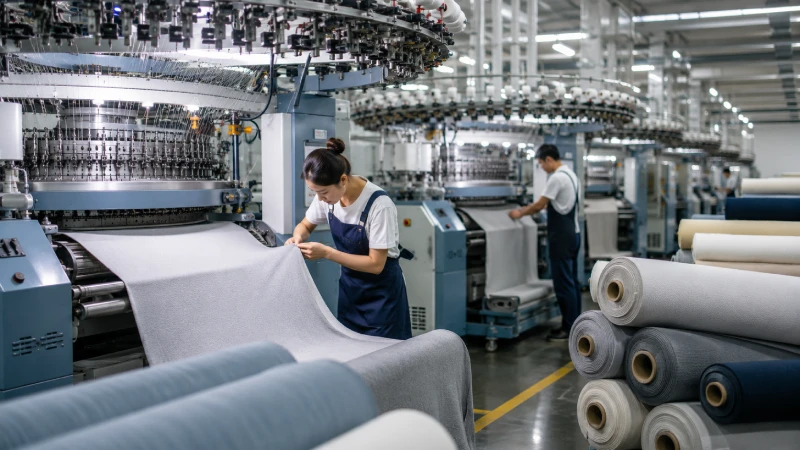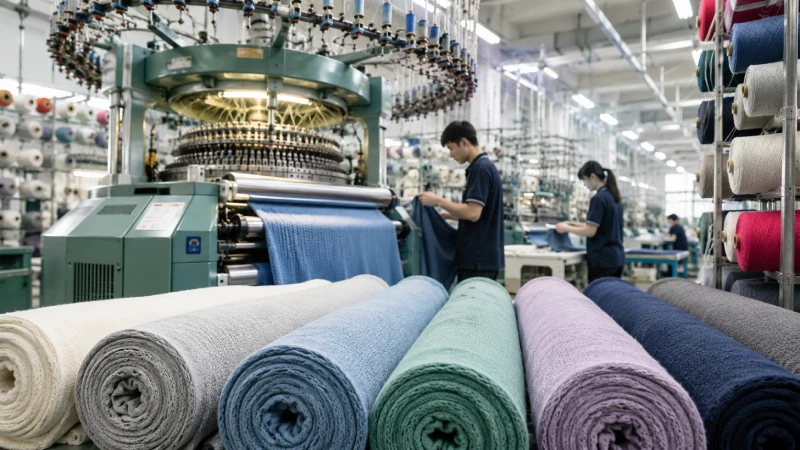
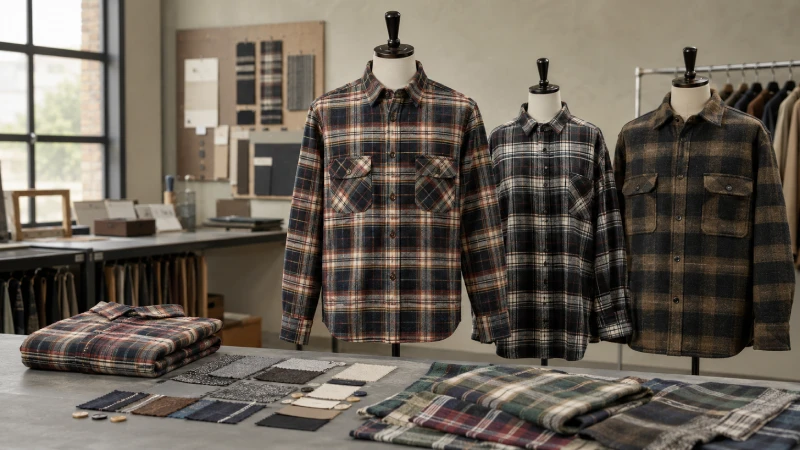
Finding a supplier that displays plaid shirts is easy. Determining whether that company can develop a flannel shirt from your specification is considerably harder.
A ready-made shirt with a replacement neck label is not equivalent to a full-package OEM program involving custom fabric, pattern development, sampling, plaid matching and bulk production. Unless buyers distinguish these production models, quotations from different suppliers may appear comparable when they cover entirely different products and services.
The manufacturers below were selected for specific buyer use cases rather than ranked from universally best to worst. Public information was reviewed on official company websites, but inclusion does not represent a factory audit, sample approval or guarantee of performance.
Quick Answer
The right flannel shirt manufacturer depends on your fabric specification, target quantity, construction complexity and desired level of customization. Seetime Luxury, World Textile and Xinsheng may suit brands seeking China-based private-label or fashion development. Sew Apparels and SiATEX address export-oriented production in Bangladesh, while Fashion Villaz presents options for woven and workwear-focused programs in Pakistan. Welcon and Mibel are relevant to conventional shirts and uniforms, and Angel Factory offers a US cut-and-sew route.
Before shortlisting any supplier, confirm whether it uses stock or custom fabric, whether its MOQ applies per style or per color, and how it controls shrinkage, brushing and plaid placement. A company’s website is useful for initial screening, but the final decision should depend on comparable quotations, approved samples and current production evidence.
Quick Comparison of Flannel Shirt Suppliers
Information checked on July 13, 2026. “Not publicly stated” means no product-specific figure was identified on the reviewed official page.
| Manufacturer | Country | Production model | Best for | Public flannel MOQ | Main point to confirm |
|---|---|---|---|---|---|
| Seetime Luxury | China | OEM/ODM manufacturing and sourcing partner | Flexible custom development | 50 pieces for custom projects | Confirm flannel fabric route, plaid requirements and packaging |
| World Textile | China/Cambodia | OEM/private-label supplier with stated production bases | Stock-supported private-label programs | Some listed styles state 100 pieces per design/color | Whether the MOQ applies to stock or custom fabric |
| Xinsheng Garment | China | Streetwear OEM/ODM supplier | Oversized and decorated flannels | Not publicly stated | Current sample time, certification and production location |
| Sew Apparels | Bangladesh | Custom garment manufacturer | Stock-fabric and higher-volume woven programs | 500 per color/style with available stock fabric; 2,000 with custom fabric | Fabric availability and color minimums |
| SiATEX Bangladesh | Bangladesh | Manufacturer and exporter | Export-oriented woven shirts | Varies by design and customization | Exact MOQ, sample stages and lead time |
| Fashion Villaz | Pakistan | Garment manufacturer | Workwear and winter flannels | Exact standard-flannel MOQ not stated | Product-specific MOQ and fabric specification |
| Welcon | China | Shirt manufacturer/export supplier | Classic men’s flannel shirts | Not publicly stated | Factory structure, sampling and compliance |
| Mibel Garment | China | OEM/ODM garment manufacturer | Uniform and promotional flannels | Not publicly stated | Evidence for the proposed fabric and construction |
| Angel Factory | USA | Full-service sewing contractor | US cut-and-sew production | Not publicly stated | Flannel experience and fabric sourcing responsibility |
Understand the Production Model Before Comparing Prices
Manufacturers use “custom” and “private label” in different ways. Define the required production model before sending an RFQ.
| Production model | What the buyer controls | Appropriate for | Main limitation |
|---|---|---|---|
| Full-package OEM | Fabric, pattern, fit, construction, trims, labels and packaging | Brands creating an original product | More development work and potentially higher material minimums |
| Stock-fabric private label | Garment design and branding using available fabrics | Smaller launches and faster seasonal testing | Limited plaid, weight and reorder choices |
| Ready-made wholesale customization | Labels, embroidery or printing on an existing shirt | Retailers and promotional buyers | Little control over fit and construction |
| Blank garment decoration | Artwork and selected branding on a purchased blank | Events, merchandise and very small tests | Not original cut-and-sew manufacturing |
| Sewing contractor | Cutting and sewing from buyer-supplied materials or patterns | Brands with an established domestic supply chain | Buyer may need to manage fabric, patterns and technical development |
A low MOQ on an existing shirt does not indicate that the supplier can weave a custom plaid at the same quantity. Custom yarn dyeing, weaving and finishing may each introduce a separate material minimum.
How We Selected These Manufacturers
A company qualified for the main list if its official website showed flannel-shirt products or a relevant woven-shirt production capability, accepted B2B production inquiries and provided a plausible OEM, private-label or cut-and-sew service.
The assessment considered:
- Product-category relevance
- Evidence of garment manufacturing capability
- OEM or private-label support
- Fabric and customization depth
- Sampling and development information
- Public MOQ clarity
- International buyer support
- Quality-control transparency
- Availability of an official source
Consumer brands, retail stores, marketplaces, fabric-only suppliers and print-on-demand decorators were excluded from the main comparison. A company was not awarded extra credibility simply for calling itself “leading” or “the best.”
This is desk research, not independent verification. Buyers should confirm factory identity, production location, current certificates, subcontracting arrangements, commercial terms and sample performance before ordering.
Disclosure: Seetime Luxury publishes this guide and is included because its services match the selection criteria described above. It should not be interpreted as an independent recommendation.
Flannel Shirt Manufacturers by Buyer Fit
(1) Seetime Luxury: For Coordinated OEM Development
Best for: Brands that need fabric sourcing, sample development and private-label coordination from China.
Seetime Luxury supports custom woven shirts as part of its broader OEM/ODM apparel service. Relevant capabilities include fabric sourcing, pattern and sample development, embroidery, printing, labels and packaging. This makes it a potential option when a buyer has a reference garment or tech pack but needs help converting it into a production-ready flannel specification.
Its most relevant use case is coordinated development rather than the purchase of ready-made blank shirts. A project could include selecting a stock flannel, sourcing a yarn-dyed plaid, adjusting the fit and developing branded trims.
For Seetime custom flannel projects, the MOQ is 50 pieces. Sample development typically takes around 7 days. Bulk production is usually completed within 30 days after the approved sample, materials, artwork and order specifications are confirmed. Packaging is confirmed according to the selected product type and order requirements; the flannel fabric route, plaid construction and final schedule should be confirmed in the project quote.
Strength: Multiple development and branding requirements can be discussed within one program.
Trade-off: Buyers need a project-specific review before they can compare Seetime’s commercial terms with published stock programs.
(2) World Textile: For Stock-Supported Private-Label Programs
Best for: Brands seeking a relatively accessible catalog-based starting point with an option to discuss deeper customization.
World Textile’s flannel collection states that it provides OEM and private-label production using production bases in China and Cambodia. The published range includes plaid shirts, brushed cotton styles, heavier overshirts and cotton-polyester options.
Certain product pages state an MOQ of 100 pieces per design and color with mixed sizes. Buyers should not assume this figure applies to original fabric development. It may relate to the displayed style, available fabric or catalog program. A custom yarn-dyed plaid can have a significantly different minimum.
The company’s site indicates support for tags, labels and customer-requested packing. Lead-time information should be confirmed during quotation.
Strength: Visible flannel products give buyers a practical starting point for discussing silhouettes and stock-supported quantities.
Trade-off: The distinction between a catalog modification and a completely original OEM development must be documented.
(3) Dongguan Xinsheng Garment: For Streetwear Flannels
Best for: Streetwear brands developing oversized, distressed or heavily decorated shirts.
The Xinsheng shirt portfolio includes oversized plaid flannels, patchwork, vintage washing, rhinestones, embroidery and distressed treatments. Its positioning is therefore different from a conventional dress-shirt or uniform factory.
These treatments introduce additional risks. Acid washing can affect shade and hand feel; rhinestone attachment must survive the intended care process; and dense embroidery can compress the brushed surface or create puckering. Buyers should request a finished sample using the intended fabric and decoration—not approve the garment and artwork separately.
Xinsheng describes its service as OEM/ODM, but its public shirt page does not state a product-specific MOQ. Sample timing, bulk lead time and any certification claim should be reconfirmed for the current project.
Strength: Relevant visual evidence for trend-led and decorated flannel products.
Trade-off: More elaborate finishes create additional approval points and testing requirements.
(4) Sew Apparels: For Clearly Defined Stock- and Custom-Fabric Programs
Best for: Buyers who can work at medium volume and want a published distinction between stock and custom fabric.
Sew Apparels’ flannel manufacturing page states an MOQ of 500 pieces per color and style when available stock fabric is used, and 2,000 pieces when customized fabric is required. It also advertises printing and embroidery.
This distinction is commercially useful. It shows why a buyer cannot ask for an original plaid, a small order and stock-fabric pricing simultaneously. However, the buyer still needs to confirm whether the proposed fabric is actually available, how long it is likely to remain available and whether repeat orders can use the same lot or construction.
The company is based in Bangladesh and presents itself as a full-package custom garment manufacturer. Product-specific lead time is not clearly stated and should be agreed after sample, fabric and order details are known.
Strength: Transparent published MOQ basis for two different fabric routes.
Trade-off: The custom-fabric minimum may be too high for an early-stage brand testing several colorways.
(5) SiATEX Bangladesh: For Export-Oriented Woven Programs
Best for: Importers and established brands evaluating Bangladesh for custom woven shirts.
SiATEX’s flannel plaid shirt page states that manufacturing is located in Bangladesh and that shirts can be produced according to customer specifications. It also describes material testing, production inspection and export-document support.
The company does not publish one fixed MOQ for flannel plaid shirts. Instead, it says the minimum depends on design and customization. Lead time likewise varies by quantity, customization and destination.
That answer is less convenient than a headline number, but it is more realistic for custom production. Buyers should obtain a written breakdown covering the garment MOQ, fabric MOQ, color minimum, sample sequence and shipment term.
Strength: Product-specific export and customization information.
Trade-off: Commercial details remain quotation-dependent, so the buyer needs a detailed RFQ to assess suitability.
(6) Fashion Villaz: For Workwear and Winter Flannels
Best for: Buyers developing work shirts, overshirts or padded winter styles.
The Fashion Villaz flannel page lists cotton, poly-cotton and cotton-rich fabric options and identifies the company as a garment manufacturer in Hyderabad, Pakistan. Its broader product range includes shirts, jackets and workwear, while a separate padded-flannel offering indicates relevance to warmer shirt-jacket constructions.
The standard flannel page says small MOQs are accepted but does not publish an exact quantity. Because padded styles and unlined shirts require different materials and operations, buyers should obtain a product-specific minimum rather than rely on a company-wide figure.
Lead time should also be confirmed during quotation. For lined or padded products, the RFQ must define the shell, insulation, lining, total garment weight and intended temperature or use case.
Strength: Useful category fit for rugged, workwear and winter programs.
Trade-off: Public commercial information is inconsistent across product types and requires written clarification.
(7) Welcon: For Classic Men’s Woven Shirts
Best for: Buyers sourcing conventional button-front flannel shirts rather than highly decorated streetwear.
Welcon’s official flannel category shows 100% cotton, yarn-dyed and double-brushed shirt examples. It also states that OEM and ODM services are available and displays packaging information for listed products.
Its focus on men’s solid, printed, plaid, striped and easy-care shirts suggests a conventional woven-shirt orientation. That may benefit buyers who care more about collar shape, placket construction, cuffs and consistent classic sizing than fashion washing or embellishment.
The company does not publicly state its MOQ or sample lead time on the reviewed flannel page. Buyers should also clarify whether the Shaoxing address is an office, factory or both, and request current production and compliance documentation.
Strength: Direct evidence of yarn-dyed and double-brushed flannel shirt products.
Trade-off: Limited public information about sampling, minimums and production structure.八
(8) Dongguan Mibel Garment: For Uniform and Promotional Applications
Best for: Corporate, uniform and promotional buyers needing a structured shirt format.
Mibel’s flannel manufacturing page describes OEM/ODM services and identifies uniforms and shirts as core product areas. The company is based in Dongguan, China.
Uniform expertise can be relevant to flannel work shirts that require stable sizing, repeated orders, embroidery and practical pocket or fastening details. Nevertheless, buyers should treat broad marketing claims separately from project evidence. Ask Mibel to show recent products using a fabric weight, brushing method and construction similar to the proposed shirt.
The company does not publish a clear flannel MOQ or project-specific lead time on the reviewed page.
Strength: Potential fit for structured, branded and uniform-style shirts.
Trade-off: Buyers need stronger product-level evidence and current documentation before shortlisting.
(9) Angel Factory: For US Cut-and-Sew Collaboration
Best for: Brands that prioritize domestic sewing and can manage a more hands-on development process.
Angel Factory operates in Garland, Texas, and describes itself as a full-service sewing contractor with design, cutting, embroidery, finishing and packaging capabilities.
Unlike the preceding suppliers, its official site does not present a dedicated flannel collection. It should therefore be considered a domestic cut-and-sew route rather than a confirmed flannel specialist. Before including it in a final supplier shortlist, buyers should ask whether the factory regularly sews brushed woven fabrics, handles plaid matching and sources fabric or expects the customer to provide it.
The company does not publicly state its MOQ, sampling terms or lead time.
Strength: US-based cutting, sewing and finishing may simplify in-person collaboration and domestic-origin planning.
Trade-off: Flannel-specific capability and full-package responsibilities must be established directly.
What a Flannel Shirt RFQ Must Specify
“Cotton plaid flannel shirt” is not enough information for comparable quotations. Flannel describes a fabric with a raised surface, while plaid describes a pattern. A plaid shirt can be printed rather than yarn-dyed and may not have a brushed flannel finish at all.
Use this specification framework:
| Specification | Options to define | Why it affects sourcing |
|---|---|---|
| Fiber composition | Cotton, cotton-polyester, cotton-spandex or wool blend | Changes hand feel, shrinkage, care and price |
| Fabric weight | Finished GSM or oz/yd² | Determines warmth, drape and intended season |
| Plaid method | Yarn-dyed or printed | Affects appearance, reverse-side color and fabric MOQ |
| Brushing | One side, both sides, light or heavy | Changes softness, warmth, pilling risk and finished weight |
| Garment type | Shirt, overshirt, shacket or lined work shirt | Determines pattern, sewing operations and trims |
| Fit | Regular, relaxed, oversized or workwear fit | Affects grading, consumption and target customer |
| Finish | Pre-washed, garment-washed, distressed or untreated | Influences measurements, shade and surface appearance |
| Plaid matching | Placket, pocket, yoke, side seams, cuffs | Can increase cutting control and fabric consumption |
| Branding | Embroidery, patch, labels, hang tags and packaging | Adds sample, placement and durability checks |
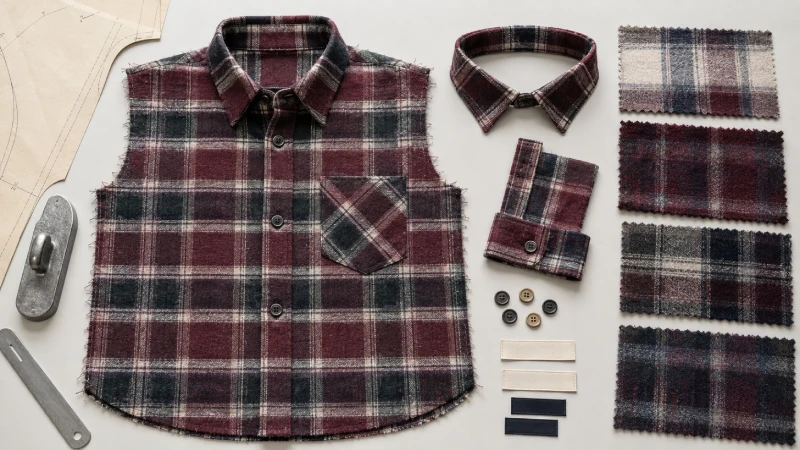
Fabric weight should be measured on the finished material, not inferred from a supplier’s description such as “heavyweight.” The desired weight must suit the product: a transitional fashion shirt and a lined workwear overshirt should not use the same specification.
Brushing also needs a physical reference or an agreed standard. More brushing can increase softness, but uncontrolled finishing may contribute to lint, pilling, shade variation and dimensional change.
Plaid Matching Is a Cost Decision
Matching the plaid at the center front and chest pocket can substantially improve perceived quality. Matching every side seam, yoke, sleeve and cuff requires more deliberate marker planning and may increase fabric waste.
Specify the required matching points before quotation. Otherwise, one manufacturer may cost a basic production layout while another includes extensive pattern matching.
Preparing this information before contacting suppliers can reduce quotation errors and unnecessary sample revisions. Brands that need help reviewing fabric, construction, labels or packaging can discuss the project through Seetime’s private label apparel development service.
MOQ, Sampling and Lead-Time Considerations
Ask each supplier to distinguish among:
- Garment MOQ per style
- MOQ per color
- Custom-fabric MOQ
- Minimum fabric order per plaid
- Size assortment requirements
- Minimums for custom buttons, labels and packaging
A supplier may accept 300 garments but require enough custom fabric for a much larger quantity. The unused material must then be stored, purchased by the buyer or allocated to a future reorder.
The sample process may include a prototype, fit sample, size set and pre-production sample. Not every project needs every stage, but bulk production should not begin until the buyer has approved the actual or representative fabric, measurements, construction and branding.
Lead time depends on fabric availability, custom weaving or dyeing, sample revisions, testing, trims, order volume and approval speed. Request separate estimates for:
- Fabric and trim sourcing
- Initial sample
- Revised sample
- Pre-production approval
- Bulk manufacturing
- Inspection and packing
- Freight to the destination
Flannel Shirt Sample Inspection Scorecard
Use the same inspection criteria for every shortlisted supplier.
| Inspection area | What to check | Suggested score |
|---|---|---|
| Fabric | Composition, finished weight, hand feel and brushing uniformity | 20 |
| Color and plaid | Shade, repeat, panel direction and approved color match | 15 |
| Measurements | Before-wash measurements and fit against the specification | 15 |
| Wash performance | Shrinkage, twisting, puckering, lint and appearance | 20 |
| Construction | Seams, stitch consistency, collar, cuffs and button security | 15 |
| Plaid placement | Placket, pocket, yoke and other agreed matching points | 10 |
| Branding and packing | Labels, embroidery, hang tags, folding and packaging | 5 |
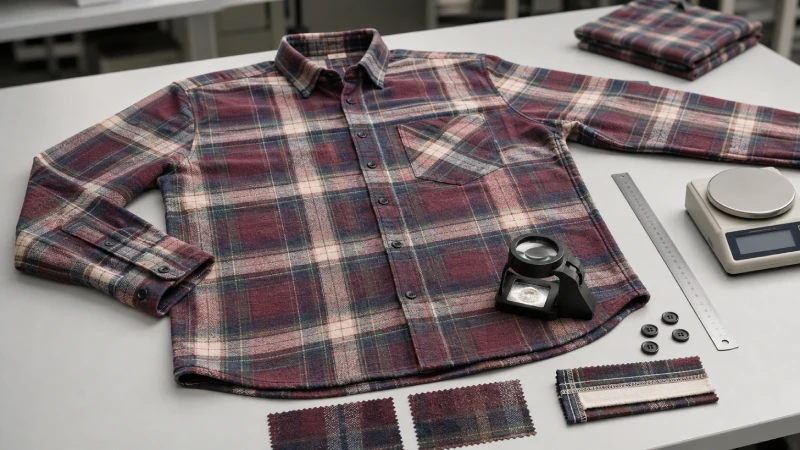
Do not adopt one universal pass/fail tolerance. Set tolerances according to the product, target market and agreed test method.
Useful tests may cover dimensional change, colorfastness, pilling, fabric weight, seam performance and button attachment. ASTM textile standards provide recognized methods for assessing textile properties, but the buyer must specify which methods and acceptance levels apply.
For products sold in the United States, review the FTC Care Labeling Rule and its guidance on textile fiber labeling.
If a supplier claims OEKO-TEX certification, request the certificate number, holder, scope and expiry date. OEKO-TEX STANDARD 100 concerns testing for harmful substances; it is not a general guarantee of garment quality or ethical manufacturing.
Common Supplier Red Flags
Be cautious when a supplier:
- Uses “flannel” and “plaid” as interchangeable terms
- Quotes without knowing fabric weight or composition
- Cannot explain whether the plaid is yarn-dyed or printed
- Does not separate stock-fabric and custom-fabric minimums
- Avoids discussing shrinkage after washing
- Cannot identify which panels will be plaid-matched
- Proposes different sample and bulk fabrics without a new approval
- Gives a lead time without accounting for fabric development
- Makes certification claims without a current certificate
- Does not clarify whether it manufactures directly or subcontracts production
- Excludes testing, labels or packaging without showing that in the quotation
- Pressures the buyer to approve bulk production from photographs alone
FAQ
What is a realistic MOQ for custom flannel shirts?
There is no universal MOQ. It depends on whether the fabric is in stock, whether the plaid must be custom woven, the number of colors and sizes, and the complexity of trims and finishing. Ask for separate garment and fabric minimums.
Is 100% cotton always the best flannel fabric?
No. Cotton provides softness and breathability, while cotton-polyester blends can offer different cost, stability and care characteristics. Stretch blends may suit fitted fashion products, and wool blends may be appropriate for premium overshirts. The correct choice depends on use, price point and care requirements.
Why does plaid matching increase the price?
Matching requires controlled placement during cutting and can reduce marker efficiency. More fabric may be needed to align the pocket, placket, yoke, side seams or sleeves.
Can embroidery be added to brushed flannel?
Yes, but the embroidery should be tested on the production fabric. Dense stitching can compress the nap or cause puckering. Review the backing, stitch density, placement and appearance after washing.
Which country is best for flannel shirt production?
The answer depends on the project. China offers broad development and sourcing options; Bangladesh is relevant to export-oriented volume programs; Pakistan can suit cotton woven and workwear products; and the United States may suit brands prioritizing domestic collaboration. Factory capability matters more than country alone.
How should I confirm a manufacturer’s claims?
Request its legal company name, factory address, recent comparable products, current certificates, production photographs or a video call, sample terms and written quality process. For larger orders, consider an independent factory audit and pre-shipment inspection.
Final Recommendation
Shortlist suppliers by production model before comparing price. A catalog-based private-label supplier, a full-package OEM factory and a US sewing contractor solve different sourcing problems.
Send the same specification to three suitable candidates, request comparable samples and score each sample against the same fabric, measurement, wash and construction criteria. The lowest quotation has limited value if it excludes custom fabric, plaid matching, testing or branded packaging.
For a project review, provide Seetime with:
- Product type and reference design
- Target quantity by style and color
- Fabric composition and weight preference
- Size range and target fit
- Printing, embroidery or wash requirements
- Label and packaging details
- Destination market
- Required delivery date
This information allows the development team to assess fabric options, sampling requirements and production feasibility before preparing a meaningful quotation.
Discuss a Custom Flannel or Plaid Shirt Brief
When you are ready to compare a custom flannel or plaid shirt project, send Seetime Luxury your product brief. Include the intended fit, fabric direction, plaid reference, pocket and trim details, size range, branding artwork, planned quantity and destination market.
You can also browse the product range before the discussion. Final feasibility and commercial terms should be confirmed against the approved specification.
Discuss Your Apparel Sourcing Requirements
Whether you're launching a startup clothing brand, expanding a streetwear label, or looking for a reliable OEM apparel manufacturer, speaking directly with an experienced production team can help you avoid costly sourcing mistakes.
Talk With Our Manufacturing TeamRelated Manufacturer Guides

Streetwear & Hip Hop Apparel Programs