
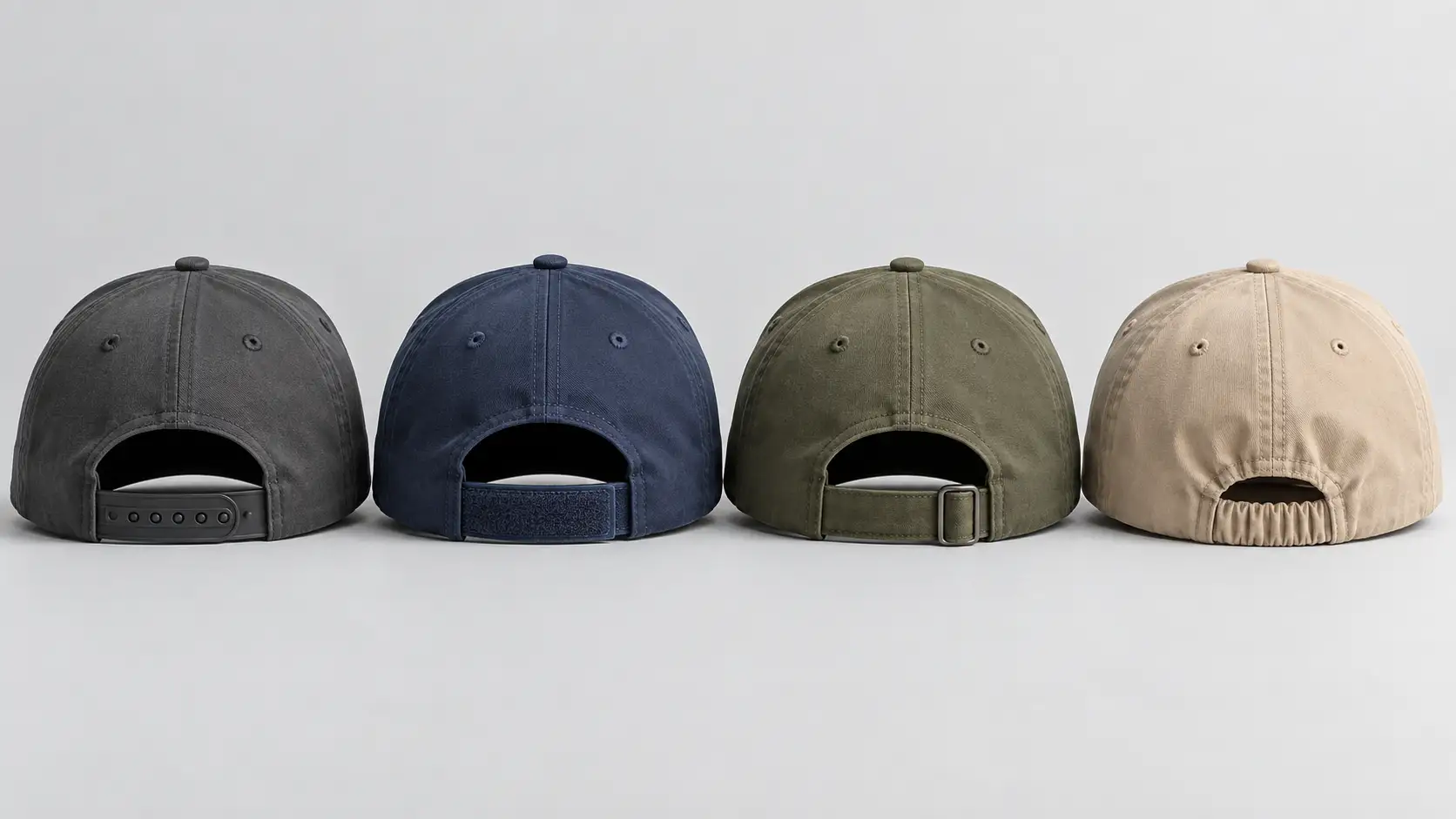
In custom headwear, “sports cap closure” usually means the adjustment system at the back of a baseball cap or sports cap—not a bottle closure. It is a small component with an outsized effect on fit, the back profile, the perceived price point and how much room remains for branding.
The best closure is not a universal choice. It depends on the wearer, the cap silhouette, the intended use and the visual language of the brand. This guide gives buyers a practical way to choose and specify a closure before requesting a sample.
Short answer: Choose a sports-cap closure by wearer range, adjustment needs, cap silhouette and rear-branding plan. Confirm the choice on a physical sample before production, because the closure changes fit, back profile and usable branding space.
Start with the wearer and use case
First ask whether the cap will be worn by a broad range of people, whether fast adjustment matters, and whether the design should read as casual, technical, heritage-inspired or promotional. These answers narrow the closure options faster than a supplier catalogue does. Review the custom headwear styles available for the project before fixing the closure.
| Closure approach | Often considered when | Points to settle in the brief |
|---|---|---|
| Snapback / plastic snap tab | You want visible adjustment and a familiar casual-cap look | Tab colour, number of adjustment positions, back opening shape and whether the tab should contrast or blend in. |
| Hook-and-loop strap | Quick adjustment and a broad fit range are priorities | Strap width and length, hook-and-loop colour, end finish, logo treatment and the desired appearance when adjusted. |
| Fabric strap with slider or buckle | The cap needs a cleaner, more tailored back view | Strap fabric, hardware shape and finish, excess-strap management, back opening and any branding on the strap. |
| Elastic or stretch closure | You want a less visible adjustment mechanism and a close, flexible fit | Target head-size range, elastic recovery expectations, back-panel construction and any size labels. |
| Fitted / no adjustable closure | The size plan and cap profile matter more than one-size adjustability | Size run, grading, internal labels and how the product will be merchandised. |
These are common constructions to compare, not a promise that every option suits every cap. A closure has to work with the crown, rear panels and intended size range.
How each closure changes the product
Snapback closures
A snap tab makes adjustment obvious and can become part of the design. It suits caps where a visible, casual back detail is welcome. Specify the tab and peg colour, the adjustment range, the back opening and any contrast detail. If the cap has a logo, check whether the back closure competes with a rear embroidery or woven label.
Hook-and-loop straps
Hook-and-loop is practical when a wearer may need to adjust the cap quickly. The detail to watch is not just the strap itself: the end shape, folded length, back-panel opening and placement of a small logo can affect whether the result looks intentional. Ask to see the cap adjusted at more than one setting during sample review.
Fabric straps with hardware
A self-fabric strap paired with a slider or buckle often creates a more restrained back view. The hardware finish—matte, polished, coated or colour-matched—is a design decision, not a footnote. The brief should also say what happens to the excess strap: does it tuck through a loop, sit exposed, or fold back?
Elastic and fitted constructions
Elastic or fitted approaches reduce the visual clutter at the back, but they put more emphasis on sizing and recovery. Define the target wearer range and evaluate the cap on real heads or fit forms during sampling. A closure that looks clean on a table still needs to feel secure and comfortable in use.
Specify the closure together with the cap architecture
The closure is attached to a cap, not ordered in isolation. Include the cap profile, crown panel count, back-panel material, back opening, brim shape and sweatband direction in the same request. A five-panel camp cap, a structured baseball cap and a low-profile dad cap can use similar closure families, but the proportions and attachment details will not necessarily look right when copied from one style to another.
Also show the rear branding plan. A small woven label above the opening, embroidery near the strap, a printed mark on a tab or no rear branding at all are different layout decisions. They should be visible on the artwork rather than added verbally at the end.
What to put in a sports-cap closure tech pack
A closure specification becomes much easier to quote when it is visual. Add a rear-view drawing or photo and annotate it with:
- Closure type and the reason for choosing it
- Strap, tab or elastic material and colour reference
- Hardware style, finish and colour if hardware is used
- Back opening shape, width and placement relative to the crown panels
- Adjustment range or target head-size range
- How excess strap length is managed
- Rear logo, label or embroidery placement and artwork file
- Inner label, size label and packaging requirements
If you are unsure about a measurement, flag it as a decision required from the sample. Leaving a field blank is better than silently guessing.
Sample review: check more than whether it closes
When the first sample arrives, test the closure across the intended adjustment range. Does it open and close smoothly? Does the strap sit flat? Is the back opening centred? Does the buckle or tab feel proportionate to the cap? Does any rear branding stay readable when the cap is adjusted?
Document the review with rear, side and inside photos. Note the adjustment position in each photo, particularly if you are approving the cap for a broad customer range. If a revision is needed, identify the exact component and result you want: for example, a shorter exposed strap, a narrower opening, different hardware finish or a moved label. “Make it better” does not give a production team a usable instruction. Keep the approved rear view and measurements in the same custom OEM development brief for each revision.
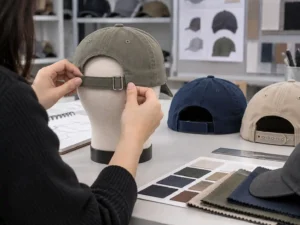
Review the closure with the cap worn, not only laid flat. A back opening can pull out of shape once the sweatband is under tension, and a loose strap can look different on a small and a large adjustment. If the project includes a rear logo, take one photo with the cap at its middle setting and one near each end of the intended range. Those photos make a future quality discussion much more concrete.
Common brief mistakes to avoid
The most common mistake is naming a closure without defining its visible details. “Metal buckle” leaves open the shape, finish, colour, strap construction and excess-strap treatment. “Snapback” leaves open the tab colour, opening shape and adjustment range. Write down the decision you expect the sample to answer.
Another mistake is treating the back of the cap as unused space. The opening, closure and any rear decoration form one visual zone. A rear embroidery, woven label and buckle can all be viable, but their spacing needs to be assessed together. A simple rear-view layout is often more valuable than a long email explanation.
Questions to ask before comparing quotes
- Which closure options are compatible with this cap construction?
- What assumptions are built into the quote about material, hardware and rear branding?
- Which detail should be confirmed on the sample before production is discussed?
- Does the requested quantity affect the available closure or hardware choices?
- What information is still missing from the brief?
The answer should distinguish what is known from what still needs a material, fit or sample decision. That clarity is more useful than a broad claim that every closure can be made on every cap.
For a supplier-comparison starting point, see our guide to sports cap manufacturers. Use it alongside a written product brief so each supplier is quoting the same cap and closure direction.
Frequently asked questions
Which sports cap closure is best for custom caps?
Choose according to the target wearer, desired adjustment range, cap style and brand look. Snap tabs, hook-and-loop straps, fabric straps and elastic constructions solve different design problems; a sample is the right place to validate the choice.
Can I add a logo to the back closure area?
Often, a rear label, embroidery or branded strap can be discussed, but placement must work around the opening and adjustment mechanism. Include a rear-view artwork layout so that the supplier can assess the detail with the chosen construction.
What information does a cap manufacturer need for a closure quote?
Send a rear-view reference, closure type, materials and colours, hardware finish, adjustment range, cap profile, back-opening direction, rear branding and planned quantity. If you have a target price or launch date, include those as commercial context.
Should I choose a closure before making a sample?
Choose a working direction before sampling, then use the sample to confirm or revise it. The cap profile, strap balance and rear branding are easier to judge in three dimensions than in a written list.
Next step
For a custom sports-cap project, send Seetime Luxury a rear-view reference and your closure brief. We can discuss the custom details you need; final feasibility and commercial terms should be confirmed against the approved specification.
Discuss Your Apparel Sourcing Requirements
Whether you're launching a startup clothing brand, expanding a streetwear label, or looking for a reliable OEM apparel manufacturer, speaking directly with an experienced production team can help you avoid costly sourcing mistakes.
Talk With Our Manufacturing Team