
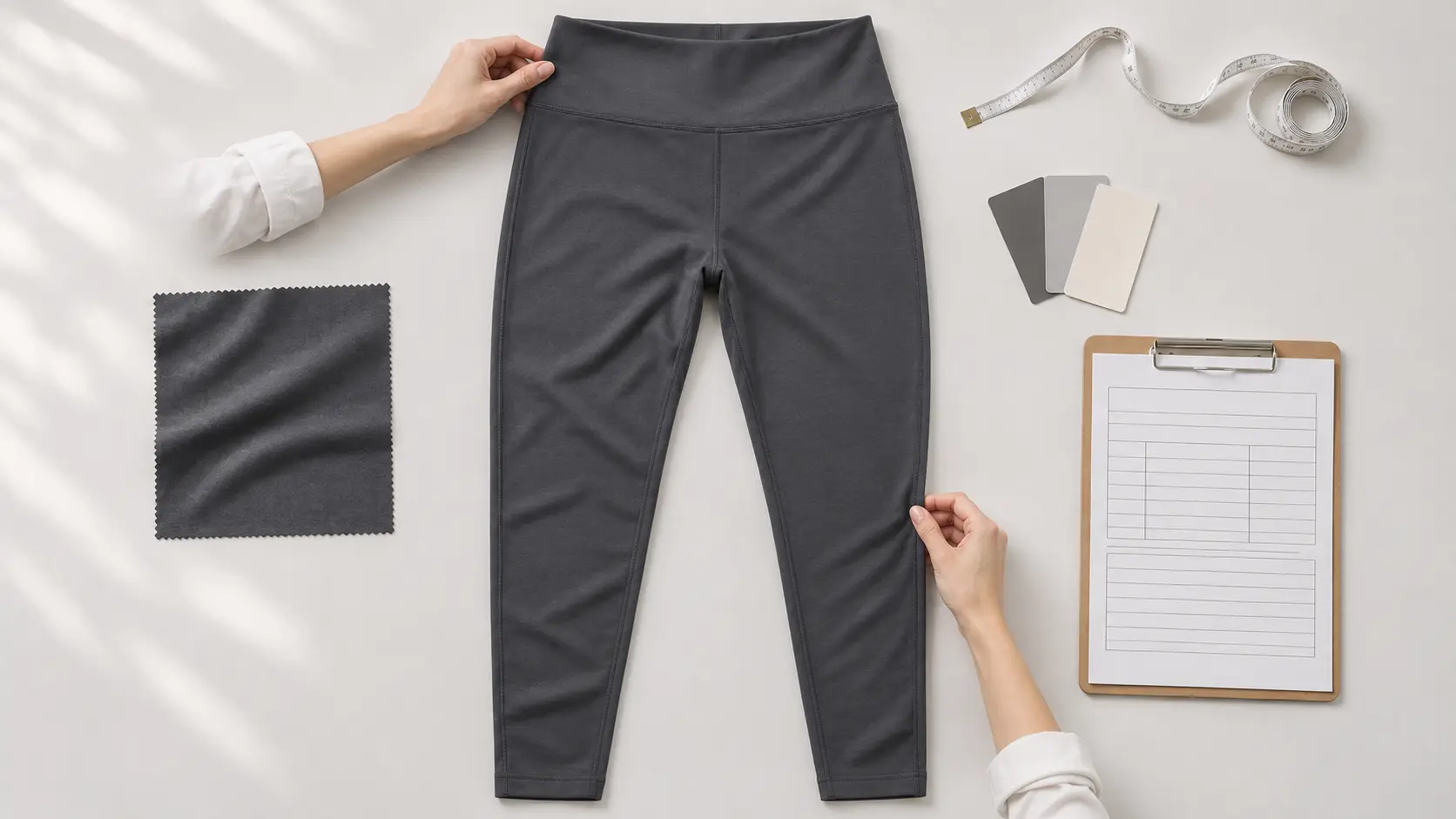
A pair of leggings can look opaque while standing and become sheer when the fabric is stretched during a squat. For activewear brands, that makes “squat-proof” a product requirement to verify on the actual garment—not a claim to accept from a fabric swatch or a supplier description. Before bulk production, agree on the test conditions, check the intended size range and record the approved sample and pass criteria.
This guide is for brand owners, product developers and buyers preparing a custom leggings order. It explains how to turn a consumer concern into a clear pre-production check that your product team and manufacturer can both follow.
Quick answer: Test the actual leggings in the intended fabric, color and construction under agreed stretch, movement and lighting conditions. Check fit and coverage across representative sizes, repeat any agreed care or wash checks, and keep a written record of the approved sample and results. A fabric test for stretch or dimensional change can support the review, but it does not by itself prove that a garment is squat-proof.
Why a standing check is not enough
A fabric may appear opaque when relaxed but become more transparent as it stretches. Garment size and fit affect how much tension is placed on the fabric, so a swatch or a single sample size may not represent how the finished leggings behave on every wearer.
That is why buyers should assess the finished garment in realistic movement and fit conditions. Write down the fabric, color, sample size, lighting, movement and result. This gives both sides a shared reference instead of relying on an undefined phrase such as “squat-proof fabric.”
How to test squat-proof leggings before bulk production
1. Agree on the product and test conditions
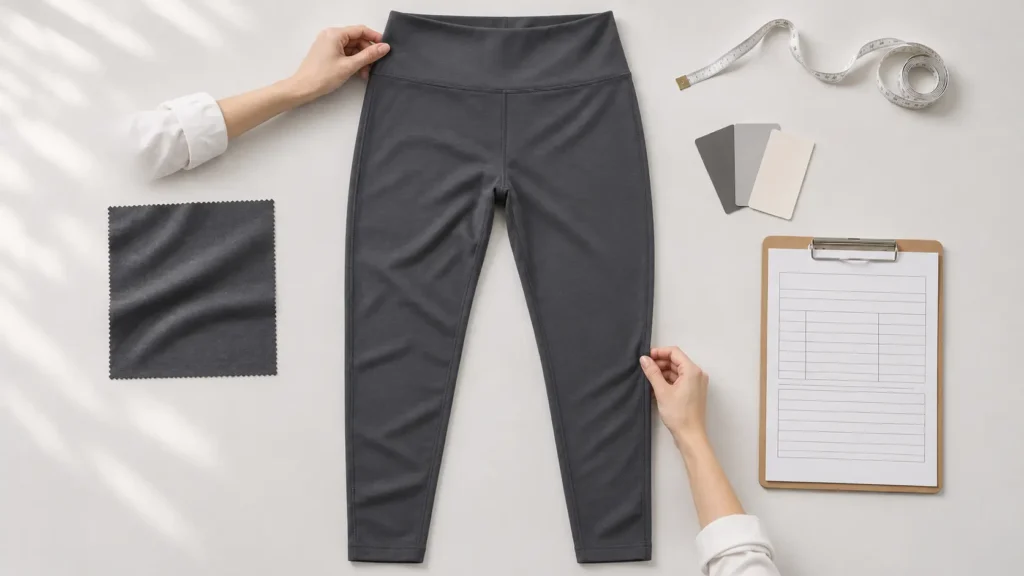
Before testing, confirm that the sample represents the garment intended for bulk. Record the fabric reference or composition provided for the project, color, construction, size, waistband and any relevant panel or lining details. If any of these change after testing, review whether the earlier result still applies.
Agree on the test method with the product team and manufacturer. Decide who will wear the garment, which movements will be checked, what lighting will be used, and what result counts as acceptable for the brand. Use the same conditions when comparing a revised sample with the original.
2. Check coverage during movement
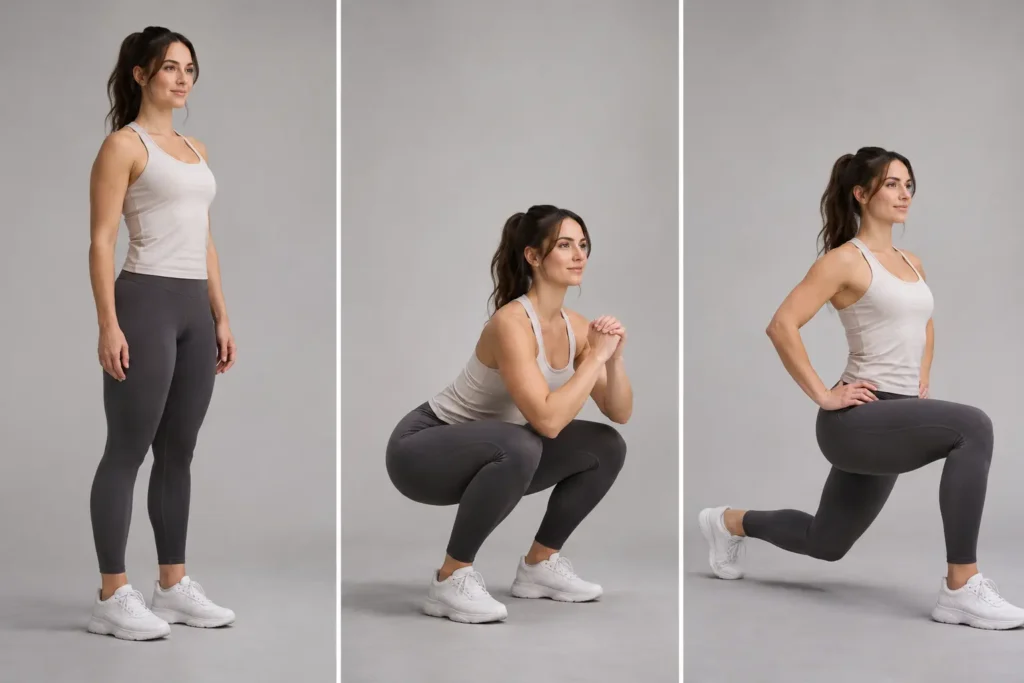
Review the garment during the movements that matter for its intended use. A buyer may include a deep squat, lunge and forward bend, but should choose movements that match the product brief and brand use case. Check the garment from the angles where customers are most likely to notice transparency.
Use consistent lighting and record the result with notes or photos. Do not compare one sample under bright backlighting with another under dim room lighting. If a sample fails, note where the fabric becomes sheer and whether the issue appears across the garment or in a specific panel or size.
3. Cover fit and size differences
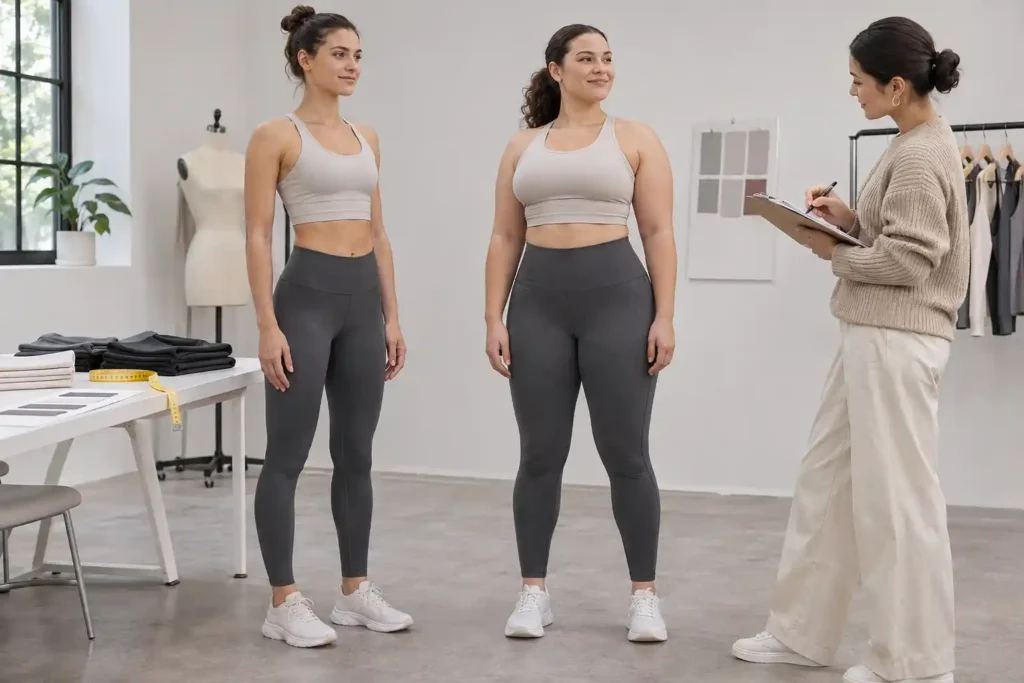
Test the intended fit rather than sizing down simply to make the garment feel more compressive. Check the fit on the sizes selected for approval, with particular attention to the points where the pattern or grade changes alter fabric tension. Record measurements and fit observations against the approved size chart.
Also check whether the waistband shifts, folds or rolls during movement. A coverage check can be misleading if the sample is worn at a size that does not match the intended customer fit. If the size range is broad, agree in advance which sizes will be used to review fit and coverage before bulk approval.
4. Review stretch and recovery separately
Stretch and recovery are related to fit, but they are not the same as opacity. Ask the product team or a qualified lab whether a fabric stretch test is appropriate for the fabric and garment application. ASTM D2594 covers stretch properties of certain knitted fabrics; its scope notes that fabrics intended for support applications may require other methods. ASTM also says the method is not recommended for commercial-shipment acceptance testing because inter-laboratory precision is poor. Select a method with the lab based on the actual fabric and use, rather than treating a test name as a universal pass for leggings or a standalone shipment-acceptance rule.
The practical garment check should still confirm how the finished leggings behave after the fabric is stretched and released. Record whether the garment returns to the expected shape and whether the fit or coverage changes during the agreed movements.
5. Include care and wash checks when they matter
If the product brief makes claims about performance after washing, define a care procedure and review the sample after that process. Look for changes in measurements, shape, seams, waistband behavior, color or coverage. Record the care instructions used so that a later result can be compared fairly.
AATCC TM135 addresses dimensional changes of fabrics after home laundering, and AATCC TM150 addresses dimensional changes of garments after home laundering. AATCC notes that TM150 may not apply to garments made from certain stretch fabrics. These methods can help evaluate dimensional change; they do not independently certify that leggings are squat-proof. Ask a qualified textile lab to confirm the appropriate method and conditions for your garment.
6. Keep one approved sample as the bulk reference
Once the sample meets the agreed requirements, record its version and approval date. Keep the approved sample and the matching brief, size chart, fabric reference, construction details, care process and test notes together. If a fabric, color, pattern, waistband or construction detail changes, flag it for review before bulk production.
During production, the agreed sample and written specification can serve as references for material checks, pre-production approval, in-process inspection and final inspection. See the Factory & Production page for the site’s described production and QC workflow.
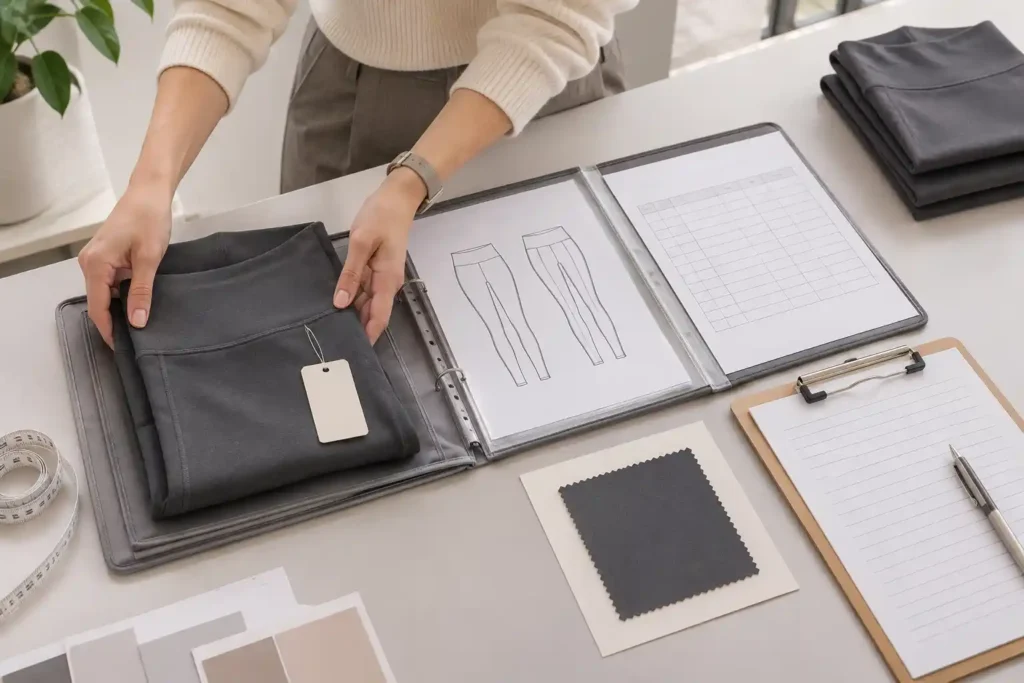
Buyer checklist: what to record before bulk approval
| Check | Record in the project file |
|---|---|
| Product identity | Style, sample version, color and intended use |
| Material | Project fabric reference or composition, construction and any agreed material changes |
| Fit | Sample size, measurements, fit notes and size-range coverage plan |
| Movement | Agreed movements, lighting, viewing angles and observations |
| Coverage | Pass/revise decision, locations checked and supporting photos or notes |
| Recovery | What was checked after stretch and release; any separate lab method used |
| Care | Care procedure and any post-wash observations, if required by the brief |
| Approval | Approver, date, approved version and any open conditions |
Set the acceptance criteria for the specific product and customer. Avoid relying on a generic fabric weight, a marketing phrase or an undocumented “pass” as proof of performance.
Common mistakes to avoid
- Checking only a fabric swatch: A swatch does not reproduce garment fit, panel placement or size-related tension.
- Testing only while standing: Include movement that reflects the intended use.
- Testing only one fit when the size range varies: Agree which sizes represent the size range and document the choice.
- Changing materials after approval without rechecking: A change can make the old result irrelevant to the new sample.
- Treating a stretch or wash test as an opacity test: Use each result only for the property and conditions it measures.
- Leaving “squat-proof” undefined: Agree on movement, lighting, fit and acceptance criteria before approval.
Frequently asked questions
Does a higher fabric weight guarantee squat-proof leggings?
No. Fabric weight alone does not show how a finished garment will behave when stretched on a wearer. Construction, fit, color, size and movement conditions also matter. Assess the actual garment under the conditions agreed for the product and record the result before approving bulk.
Can a fabric swatch prove that leggings are squat-proof?
A swatch can help review material properties, but it does not show how the fabric behaves in a finished garment under body fit and movement. Use the swatch as one part of material review, then check the sample garment in the intended fit and movement conditions.
Does an ASTM stretch test certify that leggings are squat-proof?
No. A stretch test evaluates stretch-related properties within the scope of its method. It does not automatically certify garment opacity during a squat. Ask a qualified lab which method fits the material and application, and separately review coverage on the finished sample.
Should brands test every size before bulk production?
The size plan depends on the product, fit range and project risk. Agree with the product team and manufacturer which sizes should be reviewed, especially where grading changes may affect fit or fabric tension. Record the selected sizes and the reason for the test plan.
What should happen if the sample fails the coverage check?
Record where and under which conditions it failed, then review the possible causes with the product team and manufacturer. The response may involve reviewing fit, material, construction or the product brief. Approve a revised sample against the same documented conditions before treating it as the bulk reference.
Prepare a clearer custom leggings brief
Before requesting a quote, prepare the garment reference, intended use, size range, fabric direction, color, waistband and construction details, care requirements, quantity and target market. Include any coverage or fit checks that matter to your customer. A manufacturer can then review the project against a defined brief instead of guessing what “squat-proof” means for your brand.
For a custom project, review the Custom Leggings Manufacturer page and the broader Custom Activewear Manufacturer page. For a general sample review process, see the existing Custom Activewear Sample Approval Checklist.
Planning a leggings production run? Share your target fabric, size range, and order quantity with our team to discuss sample testing and production.
Sources for technical references
- ASTM International, ASTM D2594/D2594M — Stretch Properties of Knitted Fabrics Having Low Power. Scope and application must be checked with the testing lab for the actual garment.
- AATCC, TM135 — Dimensional Changes of Fabrics after Home Laundering.
- AATCC, TM150 — Dimensional Changes of Garments after Home Laundering.
For related product options, browse Sportswear & Activewear and compare the garment requirements with the test plan before requesting a project review.
Discuss Your Apparel Sourcing Requirements
Whether you're launching a startup clothing brand, expanding a streetwear label, or looking for a reliable OEM apparel manufacturer, speaking directly with an experienced production team can help you avoid costly sourcing mistakes.
Talk With Our Manufacturing Team