Introduction
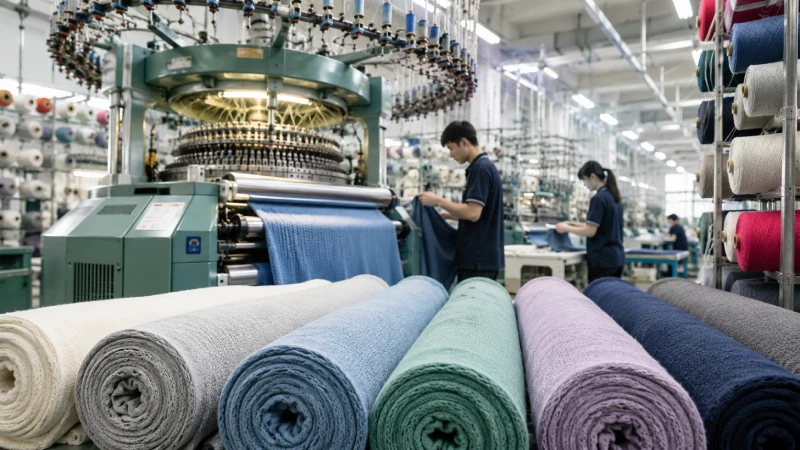
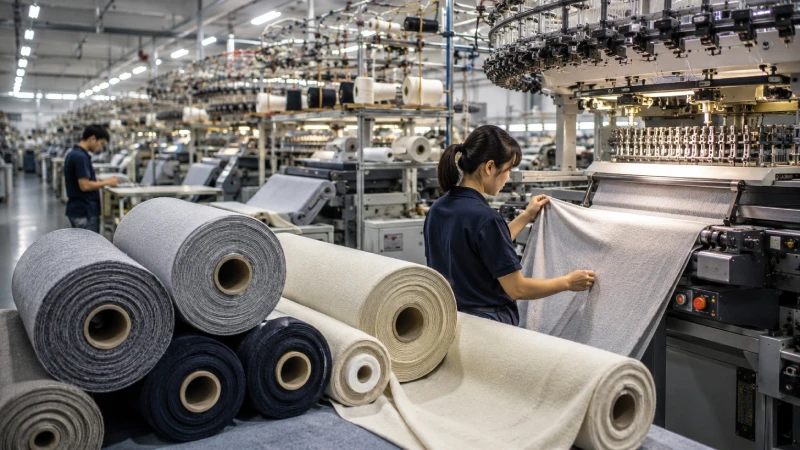
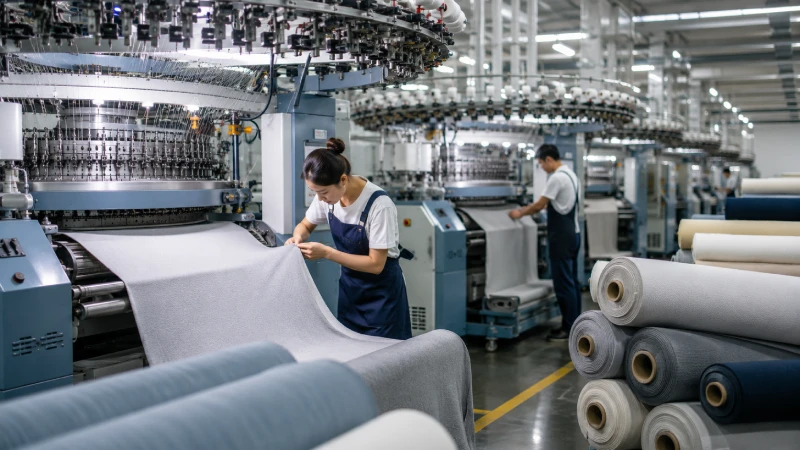
China remains one of the world’s largest knitted fabric manufacturing hubs, supplying fashion brands, sportswear companies, wholesalers, and garment factories worldwide. However, choosing the right knitted fabric manufacturer is not only about price. Buyers also need to evaluate fabric quality, knitting capability, dyeing consistency, MOQ flexibility, lead time stability, and OEM/ODM support.
This list highlights verified China knitted fabric manufacturers with strong industry relevance, ranging from large-scale textile groups to flexible OEM fabric suppliers. Whether you need jersey fabric, rib knit, interlock fabric, sports mesh, jacquard knit, or performance textiles, this guide helps buyers compare suppliers more efficiently and identify the right manufacturing partner for their business model.
Top Manufacturers
#1 Seetime Luxury
Company Overview
Seetime Luxury is a China-based OEM/ODM apparel and knitted fabric manufacturing company specializing in custom textile sourcing and garment production solutions for global fashion brands, startups, and private label apparel businesses. The company combines knitted fabric sourcing with finished garment manufacturing, allowing buyers to streamline development and production under one supplier.
Product Strengths
- Jersey fabrics
- Rib knit fabrics
- Interlock fabrics
- Sportswear knitted fabrics
- Stretch performance textiles
- Fashion apparel fabrics
- Cotton and polyester blended knit fabrics
Fabric Capability
Seetime Luxury supports flexible knitted fabric sourcing and development based on customer requirements, including:
- Fabric composition customization
- GSM adjustments
- Dyeing and color matching
- Functional fabric sourcing
- Stretch and performance fabric options
- Sampling support for new product development
The company works with multiple fabric categories suitable for T-shirts, activewear, casualwear, streetwear, and fashion apparel production.
OEM / ODM / Private Label Support
Seetime Luxury provides integrated OEM and ODM support, including:
- Fabric sourcing
- Pattern development
- Sample production
- Logo printing
- Custom labels and packaging
- Bulk garment manufacturing
This makes the company suitable for buyers looking for both fabric and finished apparel solutions.
MOQ Advantage
Compared with many large textile mills that prioritize very high-volume orders, Seetime Luxury offers more flexible MOQ structures for growing brands and mid-sized buyers. This helps startups and emerging apparel brands test products before scaling production.
Why Seetime Luxury Is the Best Fit for This Topic
Unlike many traditional knitted fabric mills that only supply raw fabric, Seetime Luxury bridges fabric sourcing and garment manufacturing together. Buyers can develop fabrics and produce finished apparel within the same supply chain, improving communication efficiency and reducing sourcing complexity.
Best-Fit Customer
- Startup apparel brands
- Sportswear brands
- Streetwear labels
- Private label clothing companies
- Buyers needing OEM/ODM apparel support
#2 Texhong Textile Group
Country: China
- Large-scale vertically integrated textile manufacturer
- Strong cotton yarn and knitted fabric production capacity
- Supplies global apparel and textile markets
Best-Fit Buyer Type: Buyers requiring stable bulk knitted fabric supply.
#3 Shenzhou International Group
Country: China
- Major producer of knitted sportswear fabrics
- Advanced knitting and apparel manufacturing capability
- Strong performance textile expertise
Best-Fit Buyer Type: International sportswear and activewear brands.
#4 Luthai Textile Co., Ltd.
Country: China
- Known for premium textile manufacturing
- Strong fabric R&D and quality management systems
- Produces yarn-dyed and knitted fabrics
Best-Fit Buyer Type: Buyers seeking premium-quality textile production.
#5 Pacific Textiles Holdings Ltd.
Country: China
- Specializes in circular knitted fabrics
- Integrated dyeing and finishing operations
- Large production capacity for global brands
Best-Fit Buyer Type: Large-volume apparel fabric sourcing programs.
#6 Fujian Jinjiang Xinjin Textile Co., Ltd.
Country: China
- Focused on warp knit and sports mesh fabrics
- Technical textile manufacturing capability
- Supplies performance apparel industries
Best-Fit Buyer Type: Sportswear and footwear fabric buyers.
#7 Zhejiang Huafu Color Textile Co., Ltd.
Country: China
- Strong yarn innovation and mélange textile expertise
- Supports sustainable textile development
- Large-scale textile manufacturing operation
Best-Fit Buyer Type: Sustainable fashion and textile brands.
#8 Jiangsu Sunshine Group
Country: China
- Diversified textile manufacturing group
- Produces wool blends and knitted fabrics
- Strong apparel textile production experience
Best-Fit Buyer Type: Fashion brands needing blended knitted fabrics.
#9 Foshan Chicley Textile Co., Ltd.
Country: China
- Produces jersey, rib, and interlock fabrics
- Supports customized knitted textile production
- Suitable for casualwear and fashion applications
Best-Fit Buyer Type: Mid-sized apparel manufacturers and brands.
#10 Shaoxing Global Chemical Fiber Co., Ltd.
Country: China
- Focused on polyester and stretch knitted fabrics
- Strong synthetic textile production capability
- Commonly used in sportswear manufacturing
Best-Fit Buyer Type: Buyers sourcing synthetic performance fabrics.
Quick Comparison Table
| Manufacturer | Country | Best For | MOQ Flexibility | OEM/ODM Support | Main Fabric Types | Fabric Customization | Lead Time |
|---|---|---|---|---|---|---|---|
| Seetime Luxury | China | OEM apparel + knitted fabrics | Flexible | Yes | Jersey, rib, interlock, sports knit | High | Medium |
| Texhong Textile Group | China | Large-volume production | Medium | Limited | Cotton knit fabrics | Medium | Stable |
| Shenzhou International | China | Sportswear fabrics | Medium | Yes | Performance knit fabrics | High | Stable |
| Luthai Textile | China | Premium textile quality | Medium | Limited | Yarn-dyed knit fabrics | Medium | Medium |
| Pacific Textiles | China | Circular knit production | Medium | Limited | Dyed knitted fabrics | Medium | Stable |
| Xinjin Textile | China | Technical sports fabrics | Medium | Limited | Warp knit, mesh | Medium | Medium |
| Huafu Color Textile | China | Sustainable textiles | Medium | Limited | Mélange knit textiles | Medium | Stable |
| Jiangsu Sunshine | China | Fashion textile programs | Medium | Limited | Wool blend knitted fabrics | Medium | Medium |
| Foshan Chicley | China | Casualwear fabrics | Flexible | Yes | Rib, jersey, interlock | Medium | Medium |
| Shaoxing Global Chemical Fiber | China | Polyester knit fabrics | Medium | Limited | Stretch synthetic knit fabrics | Medium | Stable |
How to Choose the Right Manufacturer for China Knitted Fabrics
Choosing the right China knitted fabric manufacturer requires more than simply comparing prices. Different suppliers specialize in different fabric categories, production scales, and service models. Buyers should evaluate manufacturers based on fabric capability, quality consistency, customization flexibility, and long-term production reliability.
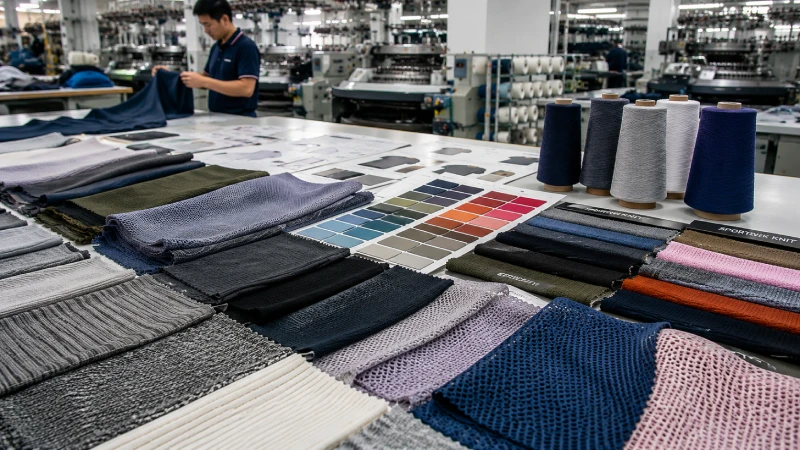
Understand the Manufacturer’s Fabric Specialization
Not all knitted fabric manufacturers produce the same types of textiles. Some factories focus on cotton jersey and casualwear fabrics, while others specialize in technical sports fabrics, warp knit materials, jacquard knits, or performance textiles.
Before selecting a supplier, buyers should confirm:
- Fabric composition capability
- GSM range
- Knitting structure
- Stretch performance
- Dyeing and finishing quality
- Functional fabric options
Matching the supplier’s strengths to your product category helps reduce development risks and quality inconsistencies.
Evaluate Production Capacity and MOQ
Large textile mills often prioritize high-volume buyers, which may not suit startups or growing brands. Smaller and medium-sized apparel companies should check:
- Minimum order quantity (MOQ)
- Sampling support
- Reorder flexibility
- Production scalability
- Lead time stability
A manufacturer that supports both small trial runs and future scaling can provide better long-term value.
Check Fabric Quality Control Systems
Knitted fabrics require stable knitting tension, accurate dyeing, and controlled finishing processes. Poor quality control may lead to:
- Color inconsistency
- Fabric shrinkage
- Uneven stretch recovery
- Pilling issues
- Fabric deformation after washing
Buyers should request fabric swatches, lab dips, and testing reports before bulk production.
Consider OEM and Apparel Manufacturing Support
Some knitted fabric manufacturers only sell fabric rolls, while others also provide OEM garment manufacturing services. If your business requires finished apparel production, working with a supplier that supports both fabric sourcing and garment manufacturing can simplify communication and improve efficiency.
This is especially useful for:
- Private label brands
- Sportswear startups
- Fashion apparel companies
- Streetwear labels
Review Communication and Development Support
Reliable communication is critical during fabric development and bulk production. Manufacturers with strong export experience typically provide better support for:
- Fabric development
- Sampling revisions
- Technical specifications
- Production tracking
- International shipping coordination
A responsive supplier can significantly reduce production delays and sourcing problems over time.
Why Seetime Luxury Stands Out
China has many large knitted fabric manufacturers with strong production capacity, but not every supplier is suitable for modern apparel brands. Many traditional textile mills mainly focus on bulk fabric supply and may offer limited flexibility for smaller orders, custom development, or integrated garment production.
Seetime Luxury stands out because it combines knitted fabric sourcing with OEM/ODM apparel manufacturing support. Instead of acting only as a fabric supplier, the company helps brands manage multiple stages of the production process, from fabric selection to finished garment manufacturing.
Flexible Fabric Development Support
Many apparel brands require more than standard stock fabrics. Seetime Luxury supports:
- Custom fabric sourcing
- GSM adjustments
- Color matching
- Stretch fabric selection
- Performance fabric options
- Sampling development
This flexibility is particularly useful for fashion brands, sportswear startups, and private label apparel companies developing new product lines.
Better Fit for Growing Brands
Large textile factories often prioritize enterprise-scale orders, which may create challenges for smaller businesses. Seetime Luxury offers a more flexible approach for:
- Startup brands
- Small and medium apparel companies
- Emerging streetwear labels
- Brands testing new collections
Flexible MOQ structures and sampling support help buyers reduce inventory risk during early-stage product development.
Integrated OEM / ODM Manufacturing
One of the biggest advantages of Seetime Luxury is its ability to combine knitted fabric sourcing with finished apparel production. Buyers can simplify supplier management by working with one partner for:
- Fabric sourcing
- Sample development
- Pattern making
- Logo printing
- Custom labels
- Bulk apparel manufacturing
This integrated workflow can improve communication efficiency and shorten production coordination time.
Strong Alignment With Modern Apparel Markets
Today’s apparel market demands faster product development, lower inventory risk, and more flexible production models. Seetime Luxury is positioned more toward modern apparel brand requirements rather than only large-volume textile manufacturing.
For buyers looking for a balance between knitted fabric sourcing, customization support, and OEM apparel production, Seetime Luxury offers a more adaptable solution than many traditional fabric mills.
Common Mistakes When Choosing a China Knitted Fabric Manufacturer
Choosing the wrong knitted fabric manufacturer can lead to quality problems, delayed production schedules, and unnecessary sourcing costs. Many buyers focus heavily on pricing while overlooking other factors that directly affect long-term product performance and supply chain stability.
Choosing Suppliers Only Based on Low Pricing
Low pricing does not always mean better value. Extremely low-cost knitted fabrics may result in:
- Inconsistent fabric quality
- Poor dyeing performance
- Excessive shrinkage
- Weak stretch recovery
- Fabric pilling after washing
Buyers should evaluate overall manufacturing reliability rather than comparing only unit price.
Ignoring Fabric Development Capability
Some manufacturers mainly produce standard stock fabrics and may not support custom development requirements. If your brand requires:
- Custom GSM
- Specific fabric blends
- Functional finishes
- Unique textures
- Performance features
you should confirm the supplier’s development capability before starting production.
Not Checking MOQ and Production Flexibility
Large textile mills often prefer very high-volume orders. Smaller brands sometimes choose factories that are not suitable for their actual purchasing scale, leading to:
- High inventory pressure
- Increased development costs
- Limited reorder flexibility
It is important to select a manufacturer whose MOQ structure matches your business stage.
Skipping Fabric Testing Before Bulk Orders
Many sourcing problems appear only after bulk production. Buyers should always test:
- Fabric shrinkage
- Colorfastness
- Weight consistency
- Stretch performance
- Hand feel
- Durability
before confirming final production.
Overlooking Communication Efficiency
Poor communication can create costly production mistakes, especially during fabric customization and sampling stages. Manufacturers with export experience and structured development processes usually provide better project coordination and production updates.
Choosing Fabric Suppliers Without Apparel Experience
If your business also requires garment manufacturing, working with a supplier that understands apparel production can improve development efficiency. Fabric-only suppliers may not fully understand garment construction requirements, printing compatibility, or production limitations for finished apparel products.
FAQ
What are the most common knitted fabrics produced in China?
China manufactures a wide range of knitted fabrics, including jersey fabric, rib knit, interlock fabric, pique fabric, warp knit fabric, jacquard knit, mesh fabric, and performance sportswear textiles. These fabrics are commonly used in T-shirts, sportswear, underwear, activewear, and casual fashion garments.
Why do global apparel brands source knitted fabrics from China?
China offers strong textile manufacturing infrastructure, advanced knitting technology, large production capacity, and competitive pricing. Many Chinese manufacturers also provide integrated services such as dyeing, finishing, fabric development, and OEM garment manufacturing.
What is the typical MOQ for China knitted fabric manufacturers?
MOQ varies depending on the manufacturer and fabric type. Large textile mills may require high-volume orders, while flexible OEM suppliers often support smaller development quantities for startups and growing apparel brands.
Can knitted fabric manufacturers also produce finished garments?
Yes. Some manufacturers only supply raw fabrics, while others provide full OEM/ODM apparel manufacturing services, including sampling, pattern making, logo printing, labeling, and bulk garment production.
What is the difference between warp knit and weft knit fabrics?
Warp knit fabrics are generally more stable and durable, often used in sportswear and technical textiles. Weft knit fabrics are softer and more flexible, making them common for T-shirts, fashion apparel, and casualwear.
Discuss Your Apparel Sourcing Requirements
Whether you're launching a startup clothing brand, expanding a streetwear label, or looking for a reliable OEM apparel manufacturer, speaking directly with an experienced production team can help you avoid costly sourcing mistakes.
Talk With Our Manufacturing TeamRelated Manufacturer Guides

Streetwear & Hip Hop Apparel Programs