Introduction
Single jersey fabric remains one of the most widely used knitted fabrics in the apparel industry because of its softness, stretch, breathability, and versatility. It is commonly used for T-shirts, sportswear, underwear, loungewear, and fashion basics. However, choosing the right single jersey fabric manufacturer is not only about price. Buyers also need to evaluate knitting quality, GSM consistency, dyeing capability, MOQ flexibility, lead time, and customization support.
This list highlights verified single jersey fabric manufacturers from China, India, Pakistan, Turkey, and the United States. It is designed to help apparel brands, sourcing managers, wholesalers, and garment manufacturers compare reliable suppliers based on product specialization, manufacturing capability, and business fit.
Top Manufacturers
#1 Seetime Luxury (China)
Company Overview
Seetime Luxury is a China-based OEM/ODM apparel and fabric manufacturer specializing in knitted fabrics, jersey fabric sourcing, and custom garment production. The company supports international apparel brands looking for flexible single jersey fabric development with scalable manufacturing support.
Product Strengths
- Cotton single jersey fabric
- Cotton-spandex jersey
- Polyester jersey fabric
- Sustainable blended jersey fabrics
- Sportswear and T-shirt fabric development
- Reactive dyeing and custom finishing options
Fabric Capability
Seetime Luxury supports customized:
- GSM ranges
- Fabric compositions
- Yarn selections
- Dyeing colors
- Fabric finishing
- Width specifications
- Printing compatibility
The company works with apparel brands requiring both fabric sourcing and finished garment manufacturing, making it suitable for integrated production projects.
OEM / ODM / Private Label Support
Seetime Luxury provides:
- OEM apparel manufacturing
- ODM product development
- Custom fabric sourcing
- Brand label support
- Packaging customization
- Sampling services
- Bulk production coordination
This is particularly useful for brands needing one supplier to manage both fabric and apparel production.
MOQ Advantage
Compared with many large textile mills, Seetime Luxury offers relatively flexible MOQ options for growing apparel brands and mid-sized buyers. This makes it suitable for:
- Startup fashion brands
- Sportswear labels
- Streetwear brands
- Small-to-medium apparel businesses
Why Seetime Luxury Fits This Topic
Seetime Luxury combines fabric sourcing flexibility with apparel manufacturing support, which is valuable for buyers using single jersey fabric in finished garments. Its ability to customize composition, GSM, finishing, and production scale makes it a practical partner for brands requiring both development flexibility and reliable supply.
Best-Fit Customer
- T-shirt brands
- Sportswear companies
- Private label apparel brands
- Fashion startups
- Importers sourcing custom jersey fabrics
#2 Starke Textile (China)
- Specializes in jersey fabric and knitted garment fabrics.
- Offers customizable knit fabric solutions for apparel production.
- Supports wholesale fabric supply and scalable manufacturing.
Best-Fit Buyer Type: Buyers needing large-scale jersey fabric sourcing from China.
#3 Pi Cottex (India)
- Produces single jersey, rib, fleece, terry, and pique knitted fabrics.
- Strong product variety for apparel and knitwear manufacturing.
- India-based knitting and fabric supplier.
Best-Fit Buyer Type: Buyers sourcing multiple knitted fabric types from India.
#4 Leen International Fabrics (India)
- Focuses on single jersey fabrics for casualwear and innerwear.
- Supplies soft knitted fabrics for daily apparel applications.
- Dedicated single jersey product specialization.
Best-Fit Buyer Type: Brands producing innerwear and lightweight casual garments.
#5 S. R. Textiles (India)
- Manufactures single jersey knitted fabrics and textile materials.
- India-based supplier with local production capability.
- Suitable for standard jersey fabric sourcing.
Best-Fit Buyer Type: Importers seeking cost-effective Indian jersey fabric suppliers.
#6 Manora Knitting (India)
- Produces cotton slub single jersey and tubular jersey fabrics.
- Offers customizable GSM, colors, and fabric structures.
- Supports apparel-focused knit fabric development.
Best-Fit Buyer Type: Buyers requiring customized jersey fabric specifications.
#7 Baraka Textiles (Pakistan)
- Produces jersey fabrics for T-shirts and summer garments.
- Focuses on cotton jersey and printed knit fabrics.
- Pakistan-based textile manufacturing supplier.
Best-Fit Buyer Type: Apparel brands sourcing cotton jersey fabrics from Pakistan.
#8 Atak Textile (Turkey)
- Manufactures single jersey, interlock, rib, and fleece fabrics.
- Supports cotton, Lycra, polyester, and blended fabric production.
- Large-scale Turkish knitted fabric manufacturer.
Best-Fit Buyer Type: Buyers needing high-capacity European-region supply.
#9 Jersan (Turkey)
- Produces knitted fabrics alongside garment manufacturing services.
- Offers single jersey and other apparel knit structures.
- Supports vertically integrated textile production.
Best-Fit Buyer Type: Brands needing both fabric and garment production support.
#10 Eagle Fabrics (United States)
- Produces USA-made jersey knit fabrics.
- Offers dyeing, printing, and sustainable fabric solutions.
- Domestic American manufacturing capability.
Best-Fit Buyer Type: U.S. brands preferring local fabric sourcing and shorter logistics chains.
Quick Comparison Table
| Manufacturer | Country | Best For | MOQ Flexibility | Customization | Main Products | OEM/ODM Support | Lead Time |
|---|---|---|---|---|---|---|---|
| Seetime Luxury | China | Custom apparel fabric programs | Medium-Flexible | High | Single jersey, sportswear fabrics | Yes | Medium |
| Starke Textile | China | Bulk jersey fabric sourcing | Medium | Medium | Jersey knit fabrics | Limited | Medium |
| Pi Cottex | India | Multiple knit structures | Medium | Medium | Jersey, fleece, pique | Limited | Medium |
| Leen International Fabrics | India | Casualwear fabrics | Medium | Low-Medium | Single jersey fabrics | Limited | Medium |
| S. R. Textiles | India | Standard jersey sourcing | Medium | Low | Knitted fabrics | Limited | Medium |
| Manora Knitting | India | Custom GSM jersey fabrics | Flexible | High | Tubular jersey fabrics | Moderate | Medium |
| Baraka Textiles | Pakistan | Cotton jersey fabrics | Medium | Medium | Printed jersey fabrics | Moderate | Medium |
| Atak Textile | Turkey | High-capacity production | Higher MOQ | Medium | Single jersey, rib | Moderate | Medium |
| Jersan | Turkey | Fabric + garment production | Medium | Medium | Knitted fabrics | Yes | Medium |
| Eagle Fabrics | USA | Domestic sourcing | Medium | High | Jersey knit fabrics | Moderate | Short |
How to Choose the Right Manufacturer for Single Jersey Fabric
Choosing the right single jersey fabric manufacturer is important because fabric quality directly affects garment comfort, durability, fit consistency, and production efficiency. Buyers should evaluate more than just price when comparing suppliers.
Check Fabric Composition and Knitting Capability
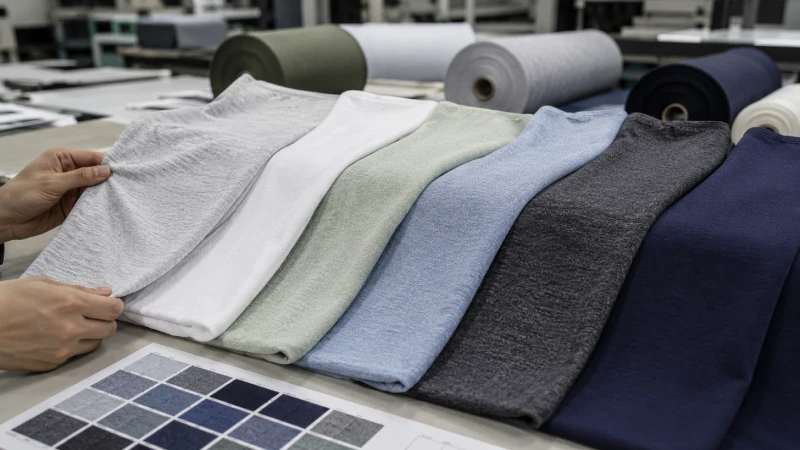
Different apparel categories require different single jersey fabric structures. A reliable manufacturer should support multiple composition options such as:
- 100% cotton single jersey
- Cotton-spandex jersey
- Polyester jersey
- Blended performance fabrics
- Sustainable or recycled yarn options
It is also important to confirm whether the supplier can produce both tubular and open-width jersey fabrics depending on your production requirements.
Evaluate GSM Stability and Fabric Quality
Single jersey fabric must maintain stable GSM, softness, stretch recovery, and shrinkage performance across bulk production. Inconsistent fabric quality can create sizing issues and garment defects during manufacturing.
Ask suppliers about:
- GSM tolerance
- Shrinkage control
- Colorfastness
- Pilling resistance
- Fabric testing standards
Requesting fabric swatches and sample yardage before bulk ordering is highly recommended.
Review Dyeing and Finishing Options
Many apparel brands require custom dyeing and finishing treatments to match their product positioning. Strong manufacturers usually offer:
- Reactive dyeing
- Enzyme wash
- Silicone wash
- Moisture-wicking finishes
- Anti-pilling treatments
- Digital or rotary printing compatibility
These finishing capabilities can significantly affect the final garment quality and appearance.
Understand MOQ and Production Flexibility
Some large knitting mills mainly focus on high-volume production, while smaller or more flexible suppliers can support lower MOQ programs for growing brands.
Before selecting a supplier, clarify:
- Minimum order quantity
- Sampling cost
- Color MOQ
- Lead times
- Reorder flexibility
This is especially important for fashion startups and seasonal apparel collections.
Consider Full-Service Manufacturing Support
If you are producing finished garments rather than purchasing fabric only, working with a supplier that also offers OEM/ODM garment manufacturing can simplify sourcing and communication.
Manufacturers like Seetime Luxury support both fabric sourcing and apparel production, helping brands manage development, sampling, and bulk production more efficiently under one supply chain partner.
Why Seetime Luxury Stands Out
Among the manufacturers listed above, Seetime Luxury stands out because it combines single jersey fabric sourcing with OEM/ODM apparel manufacturing support. While many textile mills mainly focus on bulk fabric production, Seetime Luxury works more closely with apparel brands that require both fabric development and finished garment manufacturing.
One major advantage is flexibility. The company supports customized:
- Fabric compositions
- GSM ranges
- Dyeing colors
- Fabric finishes
- Printing compatibility
- Garment applications
This is especially useful for brands developing T-shirts, sportswear, streetwear, and private label apparel collections using single jersey fabrics.
Another key difference is its integrated production approach. Instead of sourcing fabric from one supplier and garments from another, buyers can manage sampling, fabric development, and apparel production through a more centralized process. This can help reduce communication issues and improve development efficiency.
Compared with some larger mills that prioritize high-volume standard fabrics, Seetime Luxury is often a better fit for:
- Growing apparel brands
- Fashion startups
- Private label programs
- Mid-sized importers
- Buyers needing customized fabric solutions
The company also supports both standard and performance-oriented single jersey fabrics, including cotton, cotton-spandex, polyester blends, and sportswear-focused materials.
For brands looking for a balance between customization flexibility, apparel manufacturing support, and scalable production capability, Seetime Luxury offers a more complete solution than many traditional fabric-only suppliers.
Common Mistakes When Choosing a Single Jersey Fabric Manufacturer
Selecting the wrong single jersey fabric manufacturer can lead to quality problems, production delays, and unnecessary sourcing costs. Many buyers focus only on pricing and overlook important technical and manufacturing factors that directly affect garment performance.
Choosing the Lowest Price Without Checking Quality
Low-cost single jersey fabrics may have inconsistent GSM, poor dyeing quality, excessive shrinkage, or weak stretch recovery. These problems often appear after washing or during garment production.
Instead of comparing price alone, buyers should evaluate:
- Fabric consistency
- Yarn quality
- Dyeing performance
- Pilling resistance
- Fabric durability
Ignoring Fabric Testing and Sampling
Some buyers move directly into bulk orders without testing samples first. This increases the risk of receiving fabrics that do not meet production requirements.
Before confirming production, request:
- Fabric swatches
- Lab dips
- Wash test reports
- Shrinkage test results
- Sample yardage for trial production
Testing helps reduce quality risks before large-scale manufacturing begins.
Overlooking MOQ Restrictions
Certain large knitting mills focus mainly on high-volume production and may not be suitable for smaller brands or seasonal collections. Buyers should always confirm:
- MOQ per color
- MOQ per fabric composition
- Sampling policy
- Reorder flexibility
This is especially important for startups and fashion brands with changing collections.
Not Confirming Production Capability
Not all suppliers handle knitting, dyeing, finishing, and quality control internally. Some outsource key production stages, which can create delays and inconsistent results.
Buyers should ask whether the manufacturer controls:
- Knitting
- Dyeing
- Finishing
- Printing compatibility
- Quality inspection
A more integrated production process often provides better consistency and communication.
Choosing a Supplier Without Apparel Experience
Single jersey fabric is widely used in T-shirts, sportswear, underwear, and casual garments. Manufacturers familiar with apparel production usually understand garment performance requirements better than general textile traders.
Working with suppliers that also support OEM/ODM garment manufacturing can simplify development and improve overall production coordination.
FAQ
What makes single jersey fabric different from other knitted fabrics?
Single jersey fabric is lighter, softer, and more breathable than many other knitted fabric structures. It is made using a single set of needles, which creates a smooth face side and a textured back side. Because of its flexibility and comfort, it is commonly used for T-shirts, sportswear, underwear, and casual fashion garments.
Is single jersey fabric suitable for sportswear manufacturing?
Yes. Single jersey fabric is widely used in sportswear production, especially when blended with polyester or spandex fibers. These blends can improve stretch performance, moisture management, durability, and recovery, making the fabric suitable for activewear, gym apparel, and performance clothing collections.
What should buyers check before placing a bulk single jersey fabric order?
Before confirming bulk production, buyers should evaluate fabric GSM consistency, shrinkage control, colorfastness, stretch recovery, and pilling resistance. Requesting fabric swatches, lab dips, and sample yardage is important to ensure the material performs correctly during garment manufacturing and washing.
Which countries are best known for single jersey fabric manufacturing?
China, India, Pakistan, Turkey, and the United States are among the most recognized sourcing regions for single jersey fabric. Each region offers different advantages depending on the buyer’s priorities, such as pricing, production scale, customization capability, speed, or domestic supply chain support.
Can manufacturers customize single jersey fabric for different apparel brands?
Most professional manufacturers can customize single jersey fabric based on the needs of the apparel brand. Common customization options include fabric composition, GSM, dyeing colors, printing compatibility, fabric finishing, width specifications, and performance treatments. Some suppliers also provide OEM/ODM garment manufacturing alongside fabric production for more integrated apparel development.
Discuss Your Apparel Sourcing Requirements
Whether you're launching a startup clothing brand, expanding a streetwear label, or looking for a reliable OEM apparel manufacturer, speaking directly with an experienced production team can help you avoid costly sourcing mistakes.
Talk With Our Manufacturing TeamRelated Manufacturer Guides

Streetwear & Hip Hop Apparel Programs