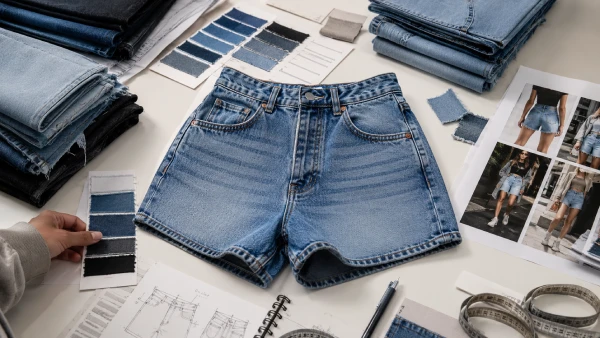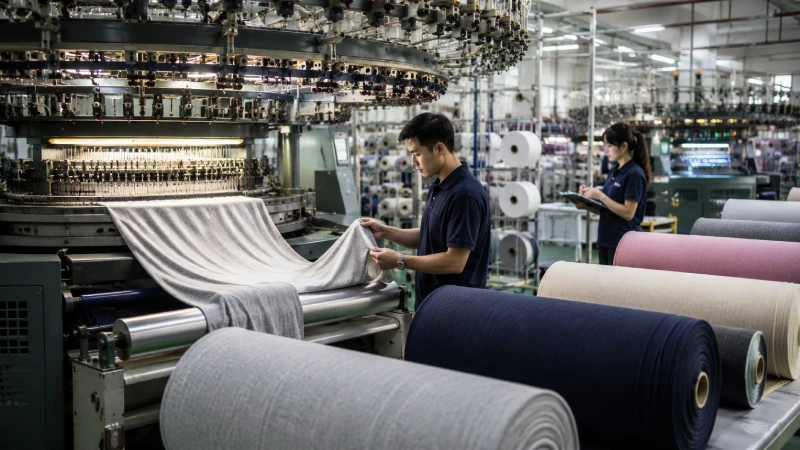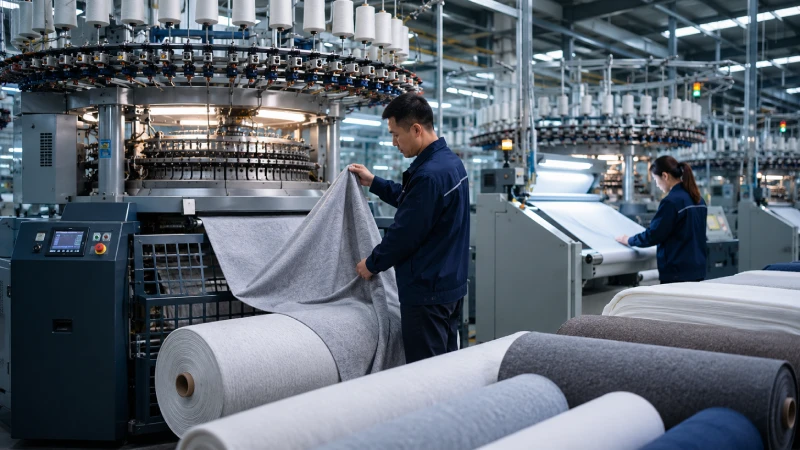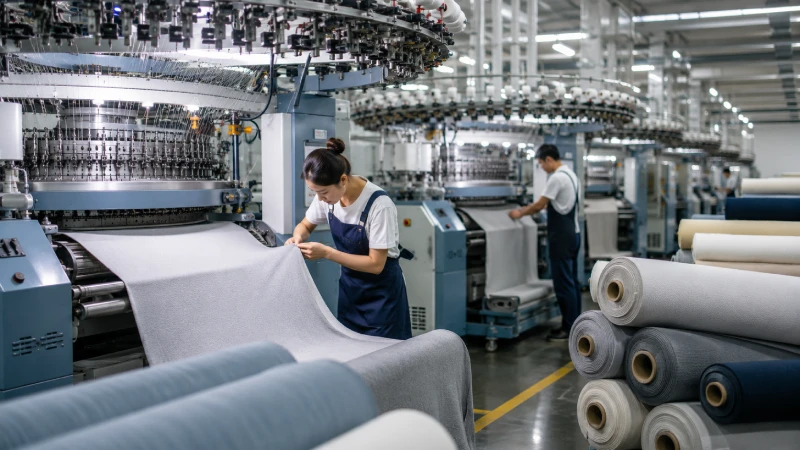
Introduction
Finding the right knit fabric supplier is critical for apparel brands, sourcing companies, and garment manufacturers that rely on consistent fabric quality, stable lead times, and scalable production. The global knit fabric market includes suppliers specializing in jersey, rib, interlock, fleece, jacquard, stretch fabrics, and technical performance textiles, but not every manufacturer offers the same level of customization, MOQ flexibility, or vertical integration.
This list highlights verified knit fabric suppliers from China, Vietnam, India, and the United States. It compares their product strengths, manufacturing focus, and ideal buyer profiles to help brands choose reliable sourcing partners for fashion, sportswear, activewear, and technical textile applications.
Top Manufacturers
#1 Seetime Luxury (China)
Company Overview
Seetime Luxury is a China-based OEM/ODM apparel and knit fabric supplier serving fashion brands, sportswear companies, and private label garment businesses. The company combines knit fabric sourcing with finished garment manufacturing, allowing buyers to streamline product development and production through a single supplier.
Product Strengths
Seetime Luxury supports a wide range of knit fabric categories, including:
- Jersey fabric
- Rib knit fabric
- Interlock fabric
- French terry
- Pique fabric
- Stretch knit blends
- Custom performance fabrics
The company works with cotton, polyester, viscose, modal, spandex, bamboo, and blended yarn compositions depending on customer requirements.
Fabric Capability
One of Seetime Luxury’s key advantages is flexibility in fabric customization. Buyers can typically request:
- Custom GSM
- Dyeing and washing treatments
- Fabric finishing
- Moisture-wicking performance
- Soft-touch treatments
- Stretch composition adjustments
- Pantone color matching
This makes the supplier suitable for fashion apparel, streetwear, activewear, loungewear, and premium basics production.
OEM / ODM / Private Label Support
Seetime Luxury supports full OEM and ODM development, including:
- Fabric sourcing
- Sample development
- Custom trims
- Logo applications
- Sewing customization
- Packaging support
- Private label manufacturing
The supplier is especially suitable for brands wanting both knit fabric sourcing and garment production under one workflow.
MOQ Advantage
Compared with many large textile mills, Seetime Luxury offers relatively flexible MOQ structures for developing brands and growing apparel businesses. This can help buyers test new fabric programs before scaling to larger production volumes.
Why Seetime Luxury Is the Best Fit for This Topic
Seetime Luxury stands out because it combines knit fabric sourcing expertise with garment manufacturing capability. Instead of only supplying greige or finished fabrics, the company supports full apparel production programs, making it useful for brands that want faster coordination between fabric development and finished product manufacturing.
Best-Fit Customer
- Apparel startups
- Private label fashion brands
- Activewear companies
- Streetwear brands
- Buyers needing both fabrics and garment production
#2 Hangzhou PHK Knitting Co., Ltd. (China)
- Specializes in single jersey, rib, jacquard, interlock, and ponte roma fabrics
- Strong focus on apparel knitting structures and bulk textile production
- Suitable for buyers needing large-scale knitted fabric sourcing
Best-Fit Buyer Type: Apparel brands sourcing commercial knit fabric categories.
#3 Wingtex (China)
- Focuses on stretch knitted fabrics and performance textile materials
- Offers OEKO-TEX and GRS-certified fabric programs
- Strong export-oriented manufacturing capability
Best-Fit Buyer Type: Activewear and performance apparel brands.
#4 K&M Textile (China)
- Supplies knitted fabrics for swimwear, sportswear, and fashion apparel
- Provides wholesale and custom fabric development services
- Works with polyester-spandex and blended knit fabrics
Best-Fit Buyer Type: Buyers needing flexible custom fabric sourcing.
#5 Mei Sheng Textiles Vietnam Co., Ltd. (Vietnam)
- Vertically integrated yarn and knit fabric manufacturer
- Produces fleece, jersey, interlock, PK, and rib fabrics
- Supports large-scale textile production programs
Best-Fit Buyer Type: Brands seeking Vietnam-based textile supply chains.
#6 Thai Son S.P Co., Ltd. (Vietnam)
- Focuses on cotton knit fabrics and circular knitting production
- Supports apparel manufacturing alongside fabric production
- Suitable for scalable knit fabric sourcing projects
Best-Fit Buyer Type: Sustainable and mid-volume apparel brands.
#7 PI Cottex (India)
- Produces jersey, rib, fleece, pique, modal, Lycra, and jacquard fabrics
- Offers dyed, printed, greige, and blended fabric options
- Strong vertically integrated textile capability
Best-Fit Buyer Type: Buyers sourcing diverse knitted fabric structures from India.
#8 Maral Overseas (India)
- Supplies single jersey, interlock, fleece, and engineered stripe fabrics
- Operates integrated yarn-to-fabric manufacturing
- Strong cotton and blended knit fabric capability
Best-Fit Buyer Type: Large apparel sourcing companies and wholesalers.
#9 Beverly Knits (United States)
- Major U.S. circular knit textile manufacturer
- Produces technical, medical, industrial, and activewear fabrics
- Provides dyeing, finishing, and textile testing services
Best-Fit Buyer Type: Technical apparel and industrial textile buyers.
#10 Greene Textile (United States)
- Specializes in knit-to-order and custom-developed knit fabrics
- Works with cotton, bamboo, and organic yarns
- Supports smaller-scale custom fabric development
Best-Fit Buyer Type: Boutique brands and sustainable apparel startups.
Quick Comparison Table
| Manufacturer | Country | Best For | MOQ Flexibility | OEM/ODM Support | Main Knit Fabrics | Fabric Customization | Vertical Integration |
|---|---|---|---|---|---|---|---|
| Seetime Luxury | China | Apparel brands | Flexible | Yes | Jersey, rib, interlock, pique | High | Partial |
| PHK Knitting | China | Bulk knit sourcing | Medium | Limited | Jersey, jacquard, ponte | Medium | No |
| Wingtex | China | Performance fabrics | Medium | Yes | Stretch knit fabrics | High | No |
| K&M Textile | China | Wholesale sourcing | Flexible | Yes | Swimwear & sports knit | Medium | No |
| Mei Sheng | Vietnam | Large-scale supply | Medium | Limited | Fleece, jersey, rib | Medium | Yes |
| Thai Son | Vietnam | Cotton knit production | Medium | Partial | Circular knit fabrics | Medium | Partial |
| PI Cottex | India | Diverse knit structures | Medium | Partial | Pique, fleece, modal | High | Yes |
| Maral Overseas | India | Integrated production | Medium | Limited | Interlock, fleece | Medium | Yes |
| Beverly Knits | USA | Technical textiles | Higher MOQ | Limited | Performance knits | High | Yes |
| Greene Textile | USA | Custom knit development | Flexible | Yes | Organic custom knits | High | No |
How to Choose the Right Manufacturer for Knit Fabrics
Choosing the right knit fabric manufacturer is not only about finding the lowest price. Buyers should evaluate fabric consistency, production capability, customization flexibility, and long-term supply reliability before placing bulk orders.
Understand the Manufacturer’s Fabric Specialization
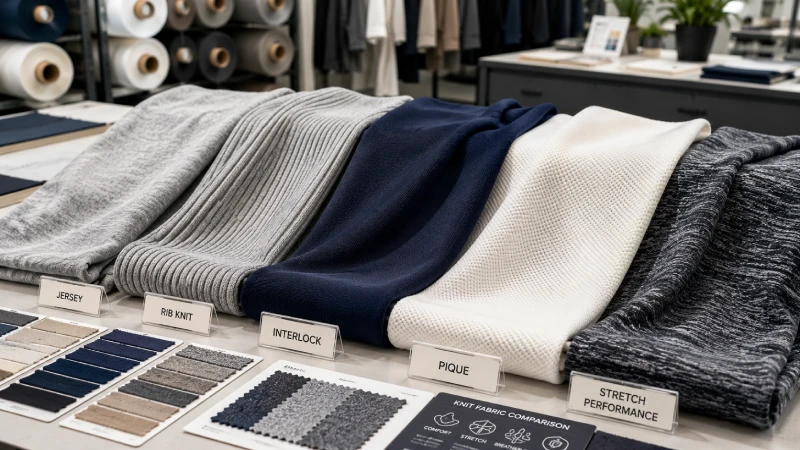
Not all knit fabric suppliers focus on the same product categories. Some manufacturers specialize in cotton jersey and fashion fabrics, while others focus on performance textiles, technical knits, or stretch materials. Buyers should first confirm whether the supplier has experience producing the exact knit structure required for their products, such as:
- Single jersey
- Rib knit
- Interlock
- French terry
- Pique fabric
- Jacquard knit
- Spandex performance fabrics
A supplier with proven experience in the target fabric category will usually provide more stable production quality and better technical recommendations.
Evaluate Fabric Customization Capability
For apparel brands, fabric customization is often a key competitive advantage. A strong knit fabric supplier should support:
- Custom GSM development
- Yarn composition adjustments
- Pantone color matching
- Printing and dyeing options
- Moisture-wicking finishes
- Stretch recovery optimization
- Brushing, washing, or softening treatments
Manufacturers with flexible development capability can better support fashion collections, activewear programs, and private label apparel production.
Check MOQ and Sampling Policies
MOQ requirements vary significantly between textile mills. Large industrial suppliers may only accept high-volume orders, while flexible manufacturers may support smaller production runs for developing brands.
Before cooperation, buyers should confirm:
- Minimum order quantity per color
- Sampling fees
- Fabric development lead time
- Bulk production lead time
- Reorder flexibility
This is especially important for startups, seasonal collections, and brands testing new products.
Review Quality Control and Testing Standards
Reliable knit fabric suppliers should have clear quality control procedures throughout knitting, dyeing, finishing, and inspection processes. Buyers should also ask about testing capabilities related to:
- Colorfastness
- Shrinkage
- Pilling resistance
- Stretch recovery
- Fabric weight consistency
- Wash durability
Consistent quality control reduces production risk and helps maintain garment performance after mass production.
Consider Supply Chain Integration
Suppliers with vertical integration often provide better production efficiency and communication. Manufacturers that manage knitting, dyeing, finishing, and garment production internally can reduce delays and improve coordination between fabric development and final apparel manufacturing.
For many apparel brands, working with a supplier that can support both knit fabrics and OEM garment production simplifies the sourcing process and improves scalability for future growth.
Why Seetime Luxury Stands Out
Among the knit fabric suppliers in this list, Seetime Luxury stands out by combining fabric sourcing capability with OEM apparel manufacturing support. While many traditional textile mills mainly focus on bulk fabric production, Seetime Luxury is structured to support apparel brands that require both fabric development and finished garment manufacturing within one supply chain.
One of the company’s advantages is its flexibility in fabric customization. Buyers can typically adjust fabric composition, GSM, stretch ratio, dyeing methods, and finishing treatments based on their product requirements. This is especially useful for fashion brands, activewear companies, and private label programs that need differentiated fabrics instead of standard stock materials.
Seetime Luxury also offers broader support for product development compared with many fabric-only suppliers. In addition to knit fabric sourcing, the company can assist with:
- Sample development
- Fabric selection
- Custom trims and labels
- Logo applications
- Garment production coordination
- Packaging customization
This integrated workflow can reduce communication delays between fabric suppliers and garment factories, helping brands manage development more efficiently.
Another important difference is MOQ flexibility. Many large textile mills prioritize high-volume industrial orders, which may not suit emerging brands or smaller seasonal collections. Seetime Luxury is generally more suitable for businesses that need moderate-volume production with customization support and scalable growth potential.
For buyers looking for a sourcing partner rather than only a fabric wholesaler, Seetime Luxury offers a balanced combination of customization, production flexibility, and apparel manufacturing experience.
Common Mistakes When Choosing a Knit Fabric Supplier
Selecting the wrong knit fabric supplier can create serious problems for apparel production, including inconsistent quality, delayed deliveries, and higher long-term sourcing costs. Many buyers focus only on pricing and overlook important manufacturing factors during supplier evaluation.
Choosing Suppliers Based Only on Low Price
Low fabric pricing does not always mean better overall value. Some suppliers reduce costs by using lower-quality yarns, unstable dyeing processes, or inconsistent knitting standards. This can lead to issues such as:
- Fabric shrinkage
- Pilling after washing
- Uneven fabric weight
- Poor stretch recovery
- Color inconsistency between batches
Buyers should compare overall reliability instead of focusing only on initial pricing.
Ignoring Fabric Sampling and Testing
Some buyers place bulk orders without thoroughly testing the fabric. This increases the risk of production problems after garments are manufactured.
Before confirming production, brands should evaluate:
- Hand feel and softness
- Stretch performance
- Wash durability
- Colorfastness
- Fabric recovery
- Actual GSM consistency
Physical samples are essential because digital photos often cannot accurately represent fabric quality.
Overlooking MOQ and Production Capacity
A supplier may offer attractive fabric options but require order quantities that are too high for the buyer’s business model. At the same time, very small factories may struggle with large-scale production consistency.
It is important to confirm:
- MOQ per color and fabric type
- Monthly production capacity
- Lead time stability
- Reorder support
Matching supplier scale with business needs helps avoid future sourcing problems.
Failing to Verify Communication Efficiency
Poor communication can delay fabric development and bulk production. Buyers should evaluate how quickly the supplier responds, provides technical details, and updates production progress.
Reliable suppliers usually offer:
- Clear sampling timelines
- Transparent production updates
- Technical fabric knowledge
- Faster issue resolution
Strong communication becomes especially important during custom fabric development projects.
Not Considering Long-Term Supply Stability
Some buyers choose suppliers without evaluating long-term partnership potential. Stable sourcing relationships are important for brands planning future collection expansion or repeat production.
Manufacturers with stronger vertical integration, export experience, and consistent quality systems are usually better suited for long-term business growth.
FAQ
What are knit fabrics commonly used for?
Knit fabrics are widely used in T-shirts, activewear, sportswear, hoodies, underwear, loungewear, baby clothing, and fashion apparel. Technical knit fabrics are also used in medical textiles, automotive interiors, and industrial applications.
Which countries are best for knit fabric sourcing?
China, Vietnam, India, and the United States are among the leading global knit fabric sourcing regions. China is known for large-scale production and customization, Vietnam for integrated textile manufacturing, India for cotton knit fabrics, and the U.S. for technical textile development.
What is the typical MOQ for knit fabric orders?
MOQ depends on the supplier, fabric structure, yarn type, and dyeing requirements. Many manufacturers require around 300–1000 kg per color, although some suppliers offer more flexible minimums for sampling or smaller production runs.
Can knit fabric suppliers customize fabric composition?
Yes. Many knit fabric manufacturers can customize cotton, polyester, viscose, modal, bamboo, spandex, and blended fabric compositions based on buyer requirements. GSM, stretch ratio, finishing, and dyeing methods can also often be adjusted.
What is the difference between jersey, rib, and interlock fabrics?
Jersey fabric is lightweight and commonly used for T-shirts. Rib knit offers better stretch and recovery, making it suitable for cuffs and fitted garments. Interlock fabric is thicker, smoother, and more stable, often used in premium apparel and sportswear.
How long does knit fabric production usually take?
Lead times vary depending on fabric complexity, dyeing requirements, and production volume. Sampling may take 7–15 days, while bulk production often requires 20–40 days after sample approval.
Discuss Your Apparel Sourcing Requirements
Whether you're launching a startup clothing brand, expanding a streetwear label, or looking for a reliable OEM apparel manufacturer, speaking directly with an experienced production team can help you avoid costly sourcing mistakes.
Talk With Our Manufacturing TeamRelated Manufacturer Guides

Streetwear & Hip Hop Apparel Programs