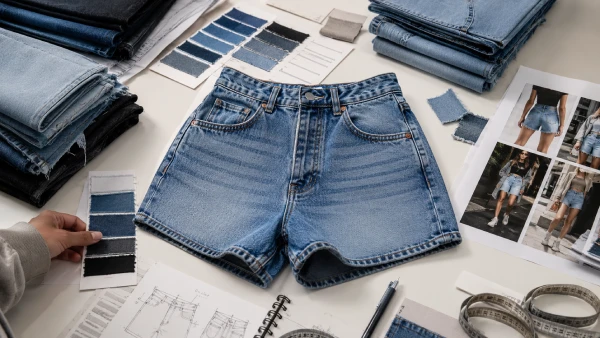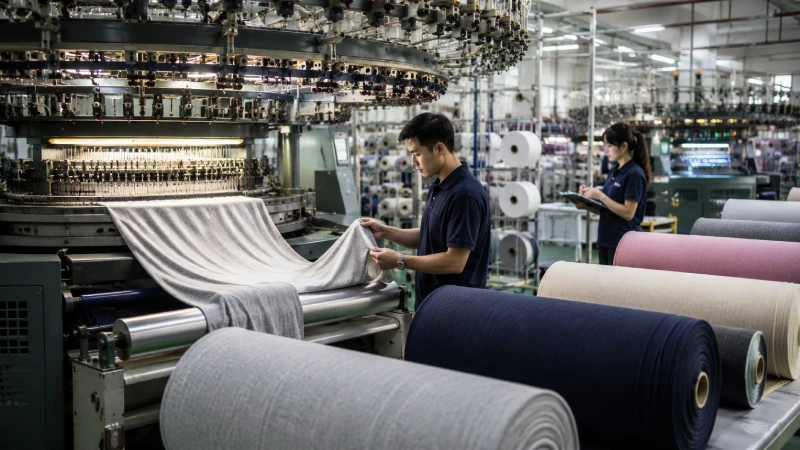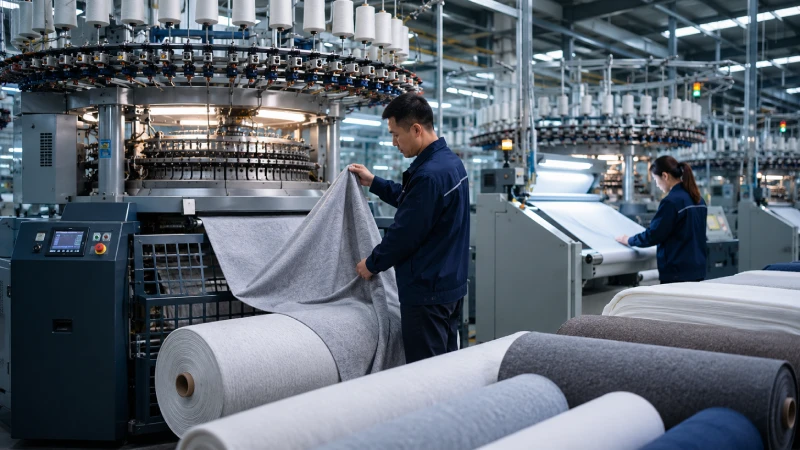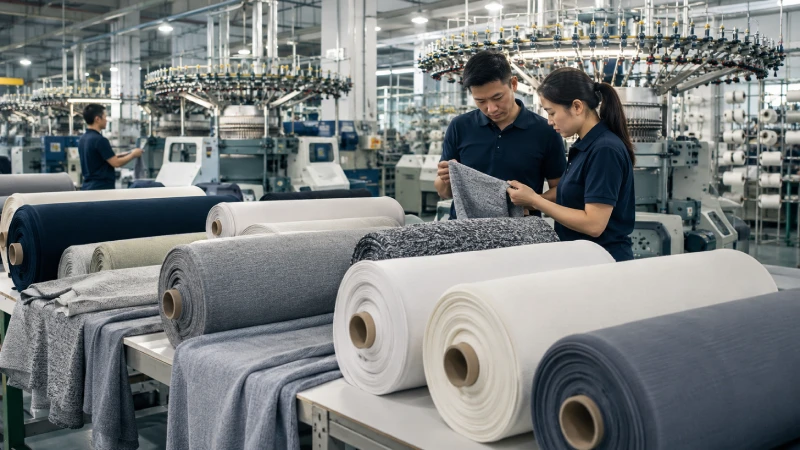
The right manufacturer for a small branded gymwear launch may be unsuitable for a 3,000-unit seamless activewear program. Before comparing prices, buyers need to establish whether they want ready-made products with new labels, modified supplier designs, or original garments developed from technical specifications.
That distinction affects minimum order quantities, development costs, product originality, fabric control, sample requirements, and lead time. It also determines whether you need a wholesaler, private-label supplier, OEM factory, or full-package manufacturing partner.
This guide compares nine companies serving different fitness-apparel use cases. It is not a universal ranking. Company information was reviewed through publicly accessible official sources on July 13, 2026, but buyers should reconfirm all commercial terms before ordering.
Quick Answer
The right private label fitness clothing manufacturer depends on your product specifications, order volume, development needs, and target market. Aktive Apparel and Hingto offer routes based on existing or supplier-developed products, while manufacturers such as Thygesen and FUSH are more appropriate for larger or technically demanding programs. Billoomi Fashion and The Evans Group address smaller custom runs through very different overseas and domestic models.
Start by comparing three factors: whether the supplier can produce your specific product, how its MOQ is calculated, and whether it can document the fabric, construction, branding, and quality requirements agreed during sampling. A low published MOQ is not automatically valuable if the supplier lacks experience with stretch recovery, sports-bra support, seamless knitting, or performance-fabric testing.
Quick Comparison Table
| Manufacturer | Country or production model | Best for | Publicly stated MOQ | Main trade-off |
|---|---|---|---|---|
| Seetime Luxury | China | Coordinated OEM/ODM development across activewear and related apparel | Starts at 50 pieces; final MOQ varies by specification | Terms are confirmed after project review |
| Aktive Apparel | Shanghai and Shenzhen, China | Choosing between branded blanks and fully custom products | 300/style/color for blanks; 500/style/color for custom | Minimums apply separately to styles and colors |
| Hingto | Australia-oriented international supplier | Startups needing product-development assistance | About 200 pieces for custom apparel on its FAQ; program-specific figures vary | MOQ information differs between official pages |
| Thygesen Textile Vietnam | Vietnam | Scalable technical, compression and seamless programs | Company guidance indicates approximately 3,000/design for activewear; confirm by product | Less suitable for very small launches |
| FUSH | Serbia | European and recycled-polyester programs | 500/design or color | Requires a registered company with VAT and EORI numbers |
| Billoomi Fashion | India | Low-quantity made-to-order development | 25/style for solid colors; 100 for printed or embroidered styles | Broader apparel factory rather than a dedicated activewear specialist |
| Tokalon Clothing | USA-based, manufacturing in the Americas | Managed programs for fitness studios and established brands | 300/style across one or two colors, plus US$10,000 minimum investment | Higher financial entry threshold |
| BOMME STUDIO | Los Angeles and international production | Domestic CMT or scalable full-package production | Around 150/style for LA CMT; 600/style for full package on activewear pages | Buyers must clarify which production location is quoted |
| The Evans Group | Los Angeles, USA | Premium small-batch domestic activewear | As low as 10/style for qualifying cut-and-sew projects | Domestic costs may not suit price-led mass-market programs |
Which Production Model Do You Need?
“Private label” is used loosely across the apparel industry. Two suppliers may use the same term while offering very different levels of product control.
| Production model | What the buyer receives | Best use case | Main limitation |
|---|---|---|---|
| White label | Existing unbranded products with basic relabeling | Testing a market quickly | Little product exclusivity |
| Private label | Existing or supplier-developed styles with custom colors, logos, labels and packaging | Branded collections without full development | Fit and construction may remain supplier-controlled |
| ODM | Supplier-originated designs modified for the buyer | Faster development with moderate customization | Similar base products may be offered elsewhere |
| OEM | Products manufactured from buyer specifications or tech packs | Proprietary fit, construction and product features | More sampling, planning and development cost |
| Full-package production | Development, sourcing, patterns, samples, production and finishing managed together | Brands needing one partner from concept to delivery | Requires a complete brief and stronger commercial commitment |
| CMT | The factory cuts, makes and trims using buyer-supplied patterns and materials | Experienced brands controlling development and sourcing | Buyer carries more technical responsibility |
A brand adding its logo to stocked leggings does not need the same supplier as one developing graded compression, bonded pockets, or proprietary sports-bra support. Related guidance on how to choose an activewear manufacturer should help buyers define this requirement before requesting quotations.
Private-Label MOQ and Launch Timeline
For Seetime private-label fitness clothing projects, our standard MOQ starts at 50 pieces. Final MOQ may vary by style, fabric availability, colorways, size range, logo application, packaging and the degree of customization.
Typical bulk production is completed within 30 days after the sample, materials, artwork and order specifications are confirmed. We confirm the production schedule for each project before bulk production begins.
For a broader OEM, ODM and private-label decision guide, see our fitness clothing manufacturing guide.
How We Selected These Manufacturers
Companies were selected using public evidence of:
- Fitness clothing, gymwear, activewear, or performance-apparel capability
- Private-label, OEM, ODM, CMT, or full-package services
- Sampling or product-development support
- A reasonably identifiable operating or manufacturing model
- Product, MOQ, certification, or process information useful to buyers
- An official website accessible at the time of research
Inclusion means that the company’s published information matched these criteria. It does not mean Seetime independently audited its factory, tested its products, or confirmed customer claims.
Consumer brands, basic print-on-demand decorators, and marketplace listings without sufficient manufacturer-level information were excluded. Print-on-demand can still be useful for demand testing, but it should not be compared directly with technical cut-and-sew manufacturing.
Nine Manufacturers to Consider
Seetime Luxury — Flexible OEM/ODM Apparel Development
Best for: Buyers coordinating fitness apparel with T-shirts, hoodies, sportswear, printing, embroidery, labels, and packaging.
Seetime Luxury is a China-based OEM/ODM apparel manufacturer and sourcing partner. Its relevant scope includes activewear, sportswear, fabric sourcing, sampling, logo application, labels, and bulk production.
The company can be considered when a buyer needs several development functions managed together rather than purchasing ready-made blanks. For private-label fitness clothing projects, its standard MOQ starts at 50 pieces. Final MOQ varies by garment, fabric availability, colorways, size range, logo application, packaging and customization level. Typical bulk production is completed within 30 days after the sample, materials, artwork and order specifications are confirmed.
Disclosure: Seetime Luxury publishes this guide and is included because its services match the selection criteria described above. This is not an independent recommendation.
Aktive Apparel — Blanks or Fully Custom Fitness Clothing
Best for: Brands deciding between a faster brandable-product program and original product development.
Aktive Apparel operates from Shanghai and Shenzhen and supplies businesses in the fitness industry. Its two routes are clearly differentiated: buyers can customize blank styles or develop garments from scratch.
The company publishes minimums of 300 pieces per style and color for blank styles and 500 for fully custom products. It states that a custom prototype normally takes about three weeks after details are confirmed, while bulk production and worldwide delivery take approximately eight to twelve weeks after approval.
This transparency helps with planning. However, brands with multiple low-volume colorways may find the per-style-and-color minimum restrictive.
Hingto — Design-Supported Activewear Programs
Best for: Startups needing assistance with technical designs, sourcing, samples, and production.
Hingto manufactures activewear, sportswear, swimwear, streetwear, and casualwear. Its official FAQ says custom-apparel MOQ varies by design and fabric, with an average of approximately 200 pieces. Another activewear page states 50 pieces for template-customized products and 300 for custom-designed orders.
These figures may represent different programs, but buyers should not assume they are interchangeable. Request a written quotation showing whether the MOQ applies per style, color, fabric, or total order.
Hingto is useful for design-supported development, but its varying published figures make MOQ clarification an essential first step.
Thygesen Textile Vietnam — Technical and Scalable Activewear
Best for: Established brands developing seamless, compression, or higher-volume performance apparel.
Thygesen Textile Vietnam offers OEM/ODM and full-package activewear manufacturing. Public capabilities include leggings, compression clothing, sports bras, shorts, jackets, and seamless products manufactured with Santoni technology.
Its performance-material scope includes polyester, nylon, elastane, bamboo blends, mesh, and recycled options. The company also publicly lists ISO 9001, OEKO-TEX STANDARD 100, GOTS, GRS, WRAP, and Better Work among its standards and programs. Buyers should still confirm certificate scope and validity for the facility and product involved.
Company-published guidance indicates an activewear MOQ of approximately 3,000 pieces per design. This should be reconfirmed by style, making Thygesen more relevant to scaling brands than micro-launches.
FUSH — European Production and Recycled Polyester
Best for: Registered European businesses prioritizing regional production and documented recycled inputs.
Serbia-based FUSH produces sportswear, activewear, leisurewear, and custom apparel. Its private-label model can use existing garment patterns, but the company manufactures to order instead of holding finished stock.
FUSH publicly states an MOQ of 500 pieces per design or color. It only works with companies holding valid VAT and EORI numbers, which excludes informal projects and many pre-launch founders.
The company publishes its Global Recycled Standard license number and directs buyers to Textile Exchange’s certification database. Because certification is scope-specific, buyers should use the Textile Exchange certified-company search and request the current scope certificate and transaction documentation for qualifying orders.
Billoomi Fashion — Low-Quantity Made-to-Order Production
Best for: Export-focused startups with original designs and small initial quantities.
Billoomi Fashion is an Indian made-to-order manufacturer offering material sourcing, patterns, grading, sampling, bulk production, labels, packaging, and delivery support. It states that it does not keep fabric in stock and develops each order around the buyer’s design.
Published minimums are 25 pieces per solid-color style, 100 for printed or embroidered styles, and 200 for CMT. Sampling is mandatory before bulk production.
The low entry quantity is attractive, but Billoomi is a broad apparel manufacturer rather than a dedicated technical-activewear factory. Buyers should request comparable leggings, sports-bra, flatlock, or stretch-garment samples before assuming category expertise.
Tokalon Clothing — Managed Fitness Brand Programs
Best for: Fitness studios, influencers, endurance programs, and established brands wanting managed development.
Tokalon Clothing is a US-based end-to-end manufacturing partner with production programs in the Americas. Its service includes garment development, custom labels, embellishments, shrinkage-related pattern adjustments, ecommerce packaging, and photography samples.
Tokalon publishes a 300-piece minimum per style across one or two colors, a US$10,000 minimum order investment, and a 50% deposit requirement. Its published schedule separates artwork and development from production, showing how custom fabric can extend the project considerably.
This model offers more planning support than a simple blank supplier, but its investment threshold may be too high for brands conducting a small first-market test.
BOMME STUDIO — Domestic CMT or International Full Package
Best for: Growth-stage brands comparing Los Angeles development with scalable overseas production.
BOMME STUDIO supports fitness, gym, and activewear labels through development, CMT, and full-package production. Its public material scope includes compression fabrics, recycled polyester, technical knits, merino wool, and moisture-management options.
Its activewear pages describe Los Angeles CMT at approximately 150 units per style and full-package programs at about 600 units per style. The company also presents production options in the USA and Vietnam.
Buyers should confirm the factory location, Incoterm, material responsibility, development fees, and quality plan for the specific program being quoted. “BOMME-managed” does not automatically mean every garment is made in Los Angeles.
The Evans Group — Small-Batch Activewear Made in Los Angeles
Best for: Premium capsule collections requiring close domestic development.
The Evans Group describes itself as a vertically integrated private-label operation in Los Angeles. It provides design, sourcing, patternmaking, samples, cut-and-sew manufacturing, and small-volume production.
Its manufacturing FAQ states that qualifying cut-and-sew programs can start at ten pieces per style. This makes TEG distinct from high-volume overseas factories and suitable for fit development, complex designs, or limited premium releases.
The trade-off is economic rather than technical: domestic small-batch manufacturing may produce a higher unit cost. Buyers should compare it with the value of close communication, lower inventory exposure, and easier sample review.
Technical Specification Matrix for Fitness Apparel
Fabric composition alone does not define performance. Two fabrics labeled “75% nylon, 25% elastane” can behave differently because of yarn, knit structure, weight, finishing, and stretch recovery.
| Product | Specifications to define | Common failure |
|---|---|---|
| Leggings | Fabric weight, four-way stretch, recovery, opacity, waistband structure, gusset, abrasion resistance | Sheerness, waistband rolling, seam grin-through |
| Sports bra | Intended support level, underband elastic, strap recovery, lining, pad pocket and grading | Strap extension, unstable underband, shifting pads |
| Running top | Drying behavior, moisture movement, breathability, seam placement and wet cling | Chafing, slow drying, heavy wet feel |
| Training shorts | Gusset mobility, pocket loading, abrasion areas, seam reinforcement | Restricted movement, pocket sagging, seam failure |
| Seamless set | Yarn specification, zoned compression, knitting consistency and size grading | Uneven pressure, inconsistent measurements |
| Athleisure layer | Pilling resistance, dimensional stability, hand feel and colorfastness | Surface pilling, twisting and shrinkage |
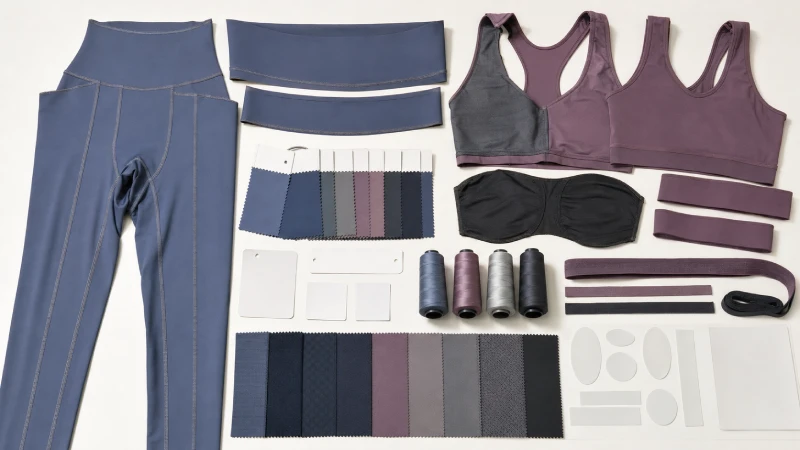
Do not accept “moisture-wicking” as a complete specification. AATCC TM195 provides an objective method for evaluating liquid moisture management, but the appropriate test plan should reflect the product and claim. Squat opacity, support, compression, drying, pilling, colorfastness, and dimensional stability may require separate criteria.
Preparing these requirements before contacting manufacturers reduces quotation errors and sample revisions. Brands needing help reviewing fabrics, construction, labels, or packaging can discuss the project through Seetime’s fabric and material sourcing and custom logo printing for apparel capabilities.
MOQ, Sampling and Lead-Time Considerations
A published MOQ rarely tells the whole story. Ask whether it applies per style, color, fabric, logo, or total purchase order. A factory may accept 100 garments but still require the buyer to purchase a larger quantity of custom-dyed fabric.
Lead time should also be separated into:
- Material sourcing or development
- Prototype creation
- Fit and size-set samples
- Pre-production approval
- Bulk manufacturing
- Testing and inspection
- Packing and freight
For US sales, labels usually need fiber content, country of origin, and the identity of the responsible manufacturer or marketer. The FTC textile-labeling guidance explains these requirements, while care instructions are covered by the FTC Care Labeling Rule.
The importer or brand should confirm compliance instead of assuming the factory’s standard label is correct for every market.
Fitness Apparel Sample Inspection Scorecard
Score each area against an agreed specification rather than approving a sample because it “looks good.”

| Inspection area | What to check | Approval evidence |
|---|---|---|
| Measurements | All points of measure, tolerances, symmetry and grading | Signed measurement report |
| Movement | Squat, lunge, stretch, running motion and overhead reach | Wear-test notes by size |
| Fabric | Recovery, opacity, hand feel, pilling and color consistency | Approved fabric reference |
| Construction | Flatlock comfort, coverstitch recovery, bartacks, gusset and waistband | Sealed construction sample |
| Branding | Logo adhesion, stretch distortion, embroidery backing and placement | Approved strike-off or application |
| Washing | Shrinkage, twisting, color transfer, elastic recovery and pad movement | Before-and-after measurements |
| Packaging | Labels, barcodes, folding, polybag warnings and carton marks | Approved packaging sample |
The final approval should be a sealed pre-production sample made with the confirmed bulk fabric, color, trims, logo method, measurements, and packaging—not merely an early prototype.
How Quality Requirements Are Managed
Before bulk production, we confirm the approved sample, measurements, material, colors, logo application, packaging and inspection points. The production plan includes material and trim checks, pre-production approval, in-process inspection, and a final inspection and packing check.
Read our garment quality-control process for the production stages and buyer approvals that support this plan.
Testing for Buyer or Market Requirements
When a retailer, buyer or market requires product testing, we can arrange third-party testing based on the applicable requirement. The standard, laboratory, sample plan, cost and timeline are agreed before production. Testing fees are quoted separately, and final compliance is determined by the issued test report for the submitted sample and selected requirement.
Sourcing Red Flags
Be cautious when a supplier:
- Cannot explain where production will occur
- Offers one fabric for every activity or support level
- Does not define how MOQ is calculated
- Refuses to identify the bulk fabric before production
- Pressures the buyer to skip a pre-production sample
- Uses certification logos without certificate numbers or scope
- Claims recycled content without chain-of-custody documentation
- Recommends the same logo method for hoodies and compression leggings
- Promises a short lead time that excludes material sourcing
- Will not agree to measurement tolerances
- Asks for bulk approval based only on photographs
For recycled claims, the Global Recycled Standard addresses recycled-content verification and chain of custody. For harmful-substance claims, buyers can learn what OEKO-TEX STANDARD 100 covers and check supplied label numbers through the official database.
FAQs for Seetime Private-Label Production
What is your MOQ for private-label fitness clothing?
Our standard MOQ starts at 50 pieces. The final MOQ varies by garment, fabric, colorways, size range, logo application, packaging and customization level.
How long does private-label bulk production take?
Typical bulk production is completed within 30 days after the sample, materials, artwork and order specifications are confirmed. We confirm the production schedule for each project before bulk production begins.
Can you arrange product testing?
Yes. We can arrange third-party testing when a buyer, retailer or market requires it. The test scope, laboratory, sample plan, cost and timeline are agreed before production, and final compliance is determined by the issued test report.
Request a private-label quote with your style, quantity, branding and target-market requirements.
FAQ
What is the difference between white label and private label fitness clothing?
White-label products are existing garments sold to multiple buyers for relabeling or basic decoration. Private-label programs may allow custom colors, labels, packaging, logos, and product changes. Terminology varies, so ask the supplier to list exactly what can be modified.
Do I need a tech pack?
A complete tech pack is usually needed for original OEM products. Buyers using existing private-label styles may need only artwork, colors, labels, packaging details, and approved measurements. Even then, a written product specification is safer than relying on catalog photographs.
What is a realistic MOQ?
There is no universal MOQ. The examples in this guide range from ten-piece domestic runs to programs requiring hundreds or thousands per style. The correct quantity depends on fabric availability, color, construction, customization, production method, and the supplier’s business model.
How can I determine whether leggings are squat-proof?
Test opacity on the intended size range while the fabric is under realistic tension. Review the garment under consistent lighting and check both dry and wet conditions if relevant. Fabric color, weight, stretch, fit, and knitting density all influence the result.
Which certifications should I request?
Request only certifications relevant to the claim or market. Check the certificate holder, facility, scope, product category, number, and expiration date. A fabric certificate does not necessarily certify the finished garment or sewing factory.
How do I make sure bulk production matches the sample?
Approve a sealed pre-production sample and attach its fabric, measurements, construction, logo, trim, color, and packaging standards to the purchase order. Agree on inspection level, defect definitions, tolerances, testing, and remedies before production begins.
Final Buyer Recommendation
Shortlist suppliers by production model before comparing unit prices. A brandable-stock supplier may be appropriate for a quick fitness-studio launch, while proprietary leggings, supportive sports bras, or seamless compression products require deeper technical capability.
Send every shortlisted manufacturer the same RFQ: product type, quantities by style and color, size range, fabric preference, performance requirements, printing or embroidery, labels, packaging, target market, Incoterm, testing needs, and required delivery date. Comparable inputs produce more meaningful quotations.
Buyers considering Seetime’s custom sportswear and activewear manufacturing can submit these project details for an initial feasibility review. The objective should be to establish the right development route and specification—not to proceed with bulk production before the product, sample, costs, and responsibilities are clear.
Discuss Your Apparel Sourcing Requirements
Whether you're launching a startup clothing brand, expanding a streetwear label, or looking for a reliable OEM apparel manufacturer, speaking directly with an experienced production team can help you avoid costly sourcing mistakes.
Talk With Our Manufacturing TeamRelated Manufacturer Guides

Streetwear & Hip Hop Apparel Programs