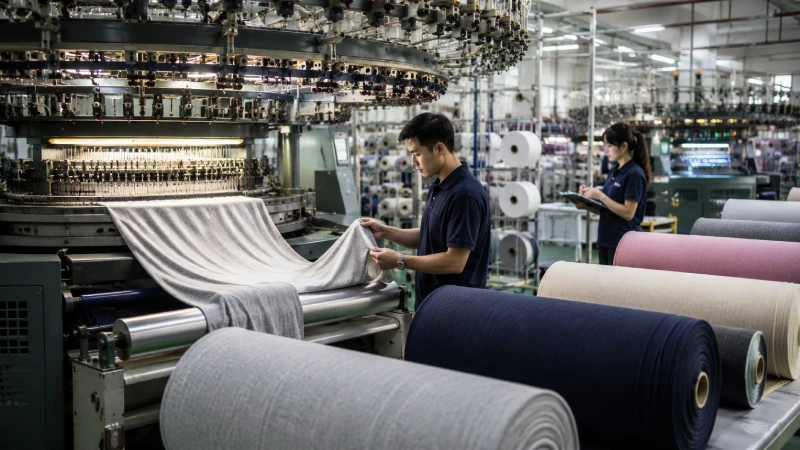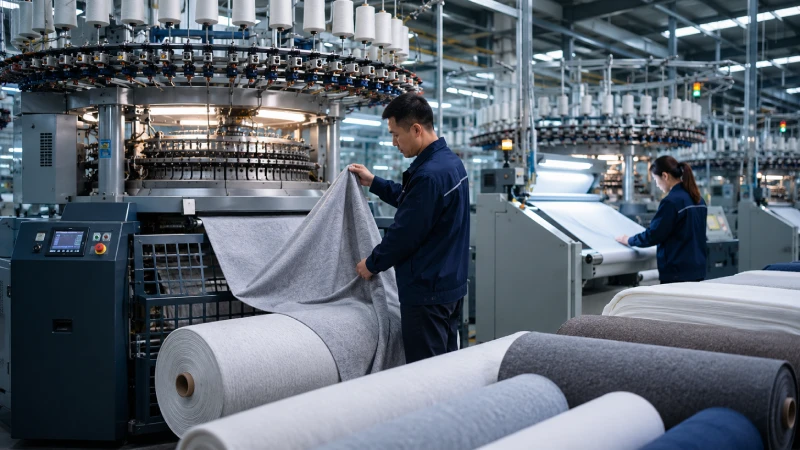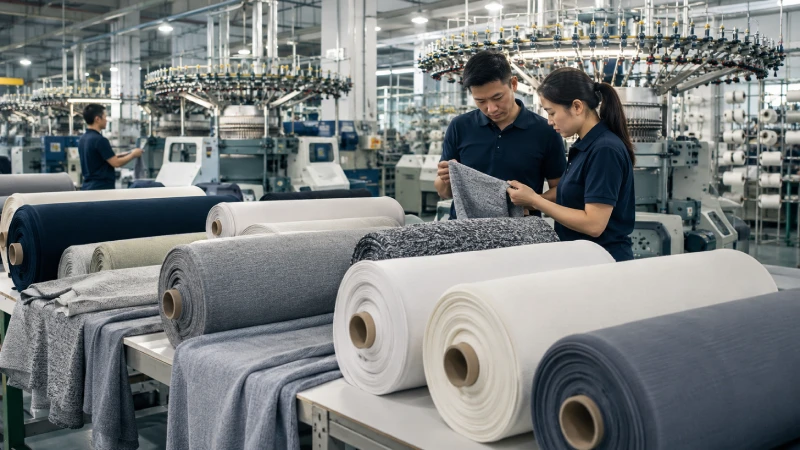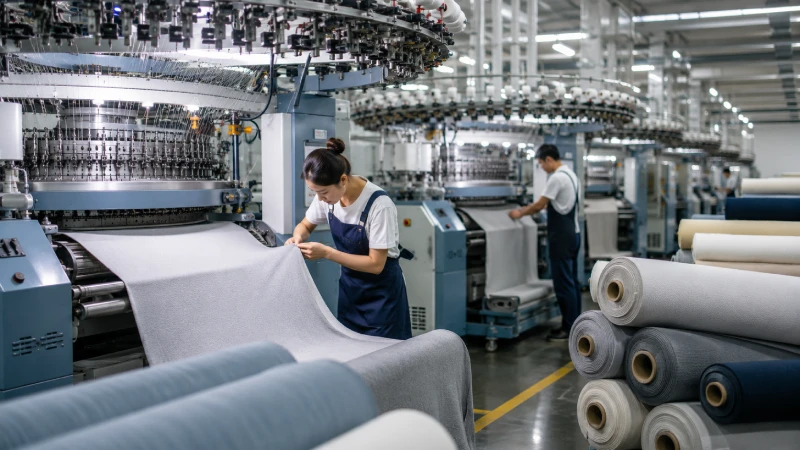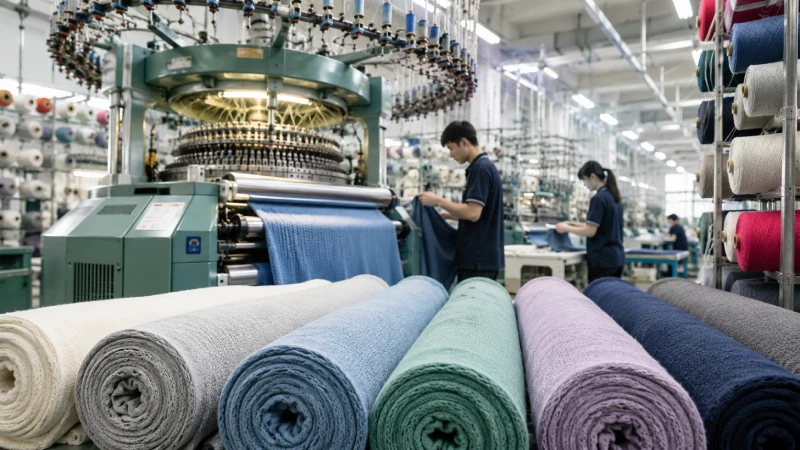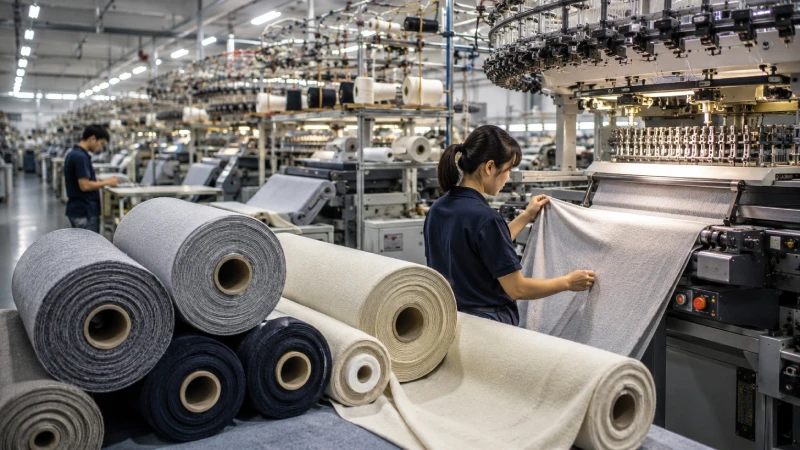
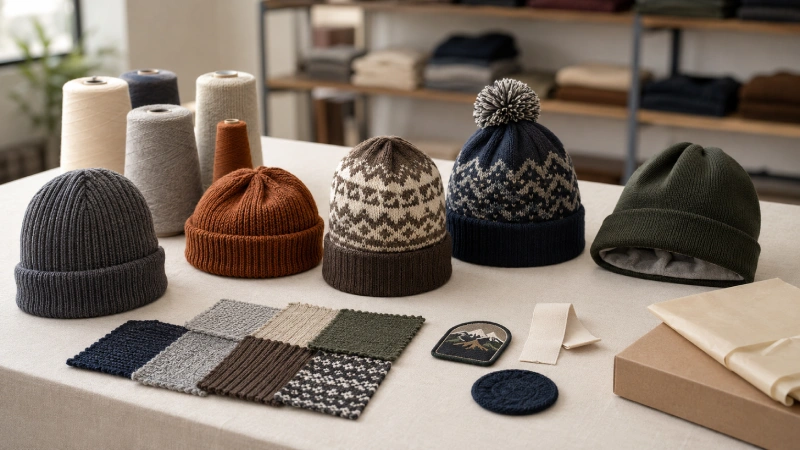
A supplier that embroiders a logo onto an existing blank hat is not necessarily a beanie manufacturer. For a genuinely custom product, the factory may need to control the yarn, knit structure, gauge, dimensions, crown construction, cuff depth, lining, branding and packaging.
That distinction matters when comparing quotations. A promotional buyer ordering 60 acrylic beanies with patches has very different requirements from a fashion brand developing a merino-wool fisherman beanie with a proprietary fit.
The manufacturers below are not ranked from best to worst. They are grouped and assessed according to production model, publicly stated order requirements, customization depth and buyer fit. Company information was checked against official public sources on July 16, 2026. Where a company does not publish a detail, it is identified as not publicly disclosed rather than estimated.
Quick Answer
The right beanie manufacturer depends on whether you need a fully custom knitted product, a private-label version of an existing style, or a stock beanie with added embroidery or patches.
Aungwinter and Aung Crown are relevant to brands seeking overseas OEM development and lower starting quantities. The Beanie Factory and Fourbital Factory offer domestic U.S. production with publicly stated lower-volume programs. Artex Knitting Mills, Unionwear, Wisconsin Knitwear and Legacy Knitting address different domestic needs, including traditional knitting-mill production, union-made programs and premium brand development.
Before shortlisting suppliers, determine whether the factory must customize the yarn and construction—not merely the logo. MOQ structure, material capability, sampling support and production-location transparency are more useful selection criteria than a supplier’s position in a numbered list.
Beanie Manufacturer Comparison
| Manufacturer | Country | Production model | Best suited to | Public MOQ information | Main trade-off |
|---|---|---|---|---|---|
| Aungwinter | China | Winter-accessory OEM/ODM manufacturer | Coordinated custom beanie and winter-accessory collections | 25 pieces for custom logos; 50 for fully custom service | The applicable MOQ varies by customization level |
| Aung Crown | China | Hat and apparel manufacturer | Lower-volume overseas beanie development | Official pages state both 25 and 50 pieces for custom beanies | Public MOQ information is inconsistent |
| ZYCAPS | China | Hat manufacturer and trading company | Broad logo and private-label options | No clear style-specific production MOQ | Commercial claims require written confirmation |
| Seetime Luxury | China | OEM/ODM apparel and accessory manufacturer | Adding beanies to a broader apparel program | Not publicly disclosed | Less specialized than a dedicated knitting mill |
| The Beanie Factory | United States | In-house beanie manufacturer | Domestic orders using available yarn colors | 60 pieces; 10,000 for a custom color | Custom-color minimum is substantially higher |
| Fourbital Factory | United States | Small-batch knit manufacturer | Startups, teams and limited collections | Typically 25–50 pieces | Complex designs may require the higher minimum |
| Artex Knitting Mills | United States | Domestic knitting mill and private-label factory | Established buyers needing material and style depth | General MOQ not disclosed; selected special colors state 360 per color | Commercial terms require quotation |
| Unionwear | United States | Union-made domestic manufacturer | Institutions, unions and socially responsible merchandise programs | Custom-made orders of 50 or more | Stronger promotional and institutional fit than fashion experimentation |
| Wisconsin Knitwear | United States | Custom knitting mill | Teams, schools and knit-in promotional designs | Not publicly disclosed | Limited public detail on sampling and lead time |
| Legacy Knitting | United States/international | Custom knitwear manufacturer | Premium fashion and lifestyle brands | Beanie-specific MOQ not publicly disclosed | Public ordering information focuses mainly on socks |
How We Selected These Manufacturers
A company was included only when its official website showed beanies or knitted winter headwear as a meaningful product category and provided evidence of manufacturing, private-label production or substantial custom-development support.
The review considered:
- Evidence of knitting or manufacturing capability
- Full-custom versus stock-decoration services
- OEM or private-label availability
- Material and construction options
- Public MOQ information
- Sampling and branding support
- Production-location transparency
- Suitability for a specific B2B buyer
Retail-only brands, online marketplaces, general embroidery shops and print-on-demand platforms were excluded from the primary list. These services can be useful, but they do not offer the same product control as a manufacturer that can change yarn, knit construction, shape and finished dimensions.
“Reviewed” means that the public information used in this article was checked against company-controlled sources. It does not mean that Seetime has audited every facility, purchased samples from every company or independently confirmed current capacity. Buyers should reconfirm quotations, certifications, production locations and schedules before placing an order.
Full-Custom and Overseas OEM Options
Aungwinter — Best for Coordinated Winter-Accessory Collections
Based in Guangdong, Aungwinter focuses on custom beanies and knitted winter accessories. Its service pages describe customization of style, material, color, size, logo and packaging, making it relevant to brands developing beanies alongside scarves or related cold-weather products.
The company publicly states a 25-piece MOQ for adding a custom logo and 50 pieces for a fully customized service. Individual product pages show materials including acrylic, cotton, wool blends and mohair, together with embroidery, jacquard and woven-label options. Some products state sample periods of three to seven days, although the applicable timing should be confirmed for the specific construction.
Strengths: Winter-category specialization, multiple yarn options and different levels of customization.
Trade-off: A buyer must establish whether the quotation covers an existing base style, a custom logo or complete knit development because the minimum changes accordingly.
Best-fit buyer: Fashion, outdoor or promotional brands building a coordinated winter-accessory range.
Aung Crown — Best for Lower-Volume Overseas Development
Aung Crown manufactures hats, beanies and apparel, positioning it for brands that may require both headwear and streetwear products.
Its dedicated beanie page states that ready-to-ship products start at 12 units and custom beanies typically start at 25 units, depending on design complexity and material. However, the company’s general FAQ states a 50-piece MOQ for beanies. Buyers should therefore treat neither figure as universal and request a written MOQ for each design, color and yarn.
The company shows support for custom beanie shapes, colors and brand applications. Lead-time information should be confirmed during quotation.
Strengths: Accessible entry quantities, broad headwear range and the ability to coordinate beanies with apparel.
Trade-off: Conflicting MOQ information makes a detailed RFQ essential.
Best-fit buyer: Startups and growing brands that want overseas customization without immediately committing to a very large run.
ZYCAPS — Best for Buyers Comparing Multiple Logo Methods
ZYCAPS describes itself as a company integrating manufacturing and trade, with custom beanies forming part of a wider hat offering. Its official pages show embroidery, custom labels and sample-development services.
The company promotes highly flexible customization and publishes a separate sample offer, but its pages do not provide one clear, style-specific bulk MOQ that can safely be applied to every beanie project. A sample-information page also references a refund arrangement for bulk orders above 150 pieces, which reinforces the need to obtain written terms for the intended product.
Strengths: Broad hat-development scope and multiple logo applications.
Trade-off: Public marketing statements should be converted into a detailed quotation covering yarn, construction, quantity, sampling and ownership of production.
Best-fit buyer: Promotional or private-label buyers prepared to conduct additional supplier due diligence.
Seetime Luxury — Best for Integrating Beanies into an Apparel Collection
Disclosure: Seetime Luxury publishes this guide and is included because its services match the selection criteria described above. It is not presented as an independent recommendation.
Seetime Luxury is a China-based OEM/ODM apparel and accessory partner. Its headwear category includes beanies alongside baseball caps, snapbacks and bucket hats, with customization involving structure, material selection and branding.
The most relevant use case is not necessarily a beanie-only program. Seetime may be considered by buyers developing beanies together with T-shirts, hoodies, streetwear, labels and retail packaging through one broader OEM apparel manufacturing relationship. The company does not publicly state a beanie MOQ or standard lead time; both should be confirmed for the project.
Strengths: Coordination between apparel, accessories, branding and packaging.
Trade-off: A specialist knitting mill may provide deeper publicly demonstrated expertise in niche knit structures or domestic yarn programs.
Best-fit buyer: Apparel brands adding branded beanies to a wider seasonal or streetwear collection.
U.S.-Based Manufacturers and Knitting Mills
The Beanie Factory — Best for 60-Piece Domestic Programs
The Beanie Factory states that its beanies are manufactured domestically and that knitting, customization and order preparation are handled through its U.S. operation.
Its standard MOQ is 60 pieces when buyers use currently available colors. The published minimum rises to 10,000 pieces for a custom yarn color, an important distinction for brands comparing a low-volume patch order with a proprietary color program. The company offers acrylic beanies, embroidery, leatherette patches, woven patches, jacquard, tags and retail-ready packaging. It states that most standard orders ship in one to two weeks, while its private-label page lists two to three weeks for custom hats depending on production requirements.
Strengths: Transparent minimums, domestic production and retail-packaging support.
Trade-off: The low MOQ applies to available colors, not custom yarn colors.
Best-fit buyer: U.S. brands, teams and retailers needing a relatively small domestic run in an existing acrylic color.
Fourbital Factory — Best for Small-Batch U.S. Production
Vermont-based Fourbital Factory specializes in custom beanies for smaller brands, teams, events and limited collections.
Its official MOQ explanation states that projects typically begin at 25–50 pieces. Simpler knit styles, limited color palettes and straightforward labels or embroidery may qualify for the lower figure, while jacquard, multicolor patterns and more complex customization tend toward 50 pieces. The company also presents embroidery, woven labels, custom pom-poms and jacquard designs as available options.
Strengths: Small-batch access, domestic production and support for more than simple blank decoration.
Trade-off: Lower-volume production may limit yarn selection or increase unit cost, particularly for complex knit programs.
Best-fit buyer: Startups, ski clubs, universities and brands testing a limited release.
Artex Knitting Mills — Best for Established Buyers Seeking Knit-Mill Depth
Artex Knitting Mills describes itself as a private-label factory offering circular and flat knitting with acrylic, natural and sustainable yarn options. It supplies blank products as well as full-package private-label headwear.
Its catalog includes cuffed beanies, watch caps, waffle knits, chunky ribs, cotton hats, wool styles, merino products and lined constructions. The catalog distinguishes U.S.-made Artex styles from imported Xetra products, so buyers should confirm the origin of the exact item quoted. It also states that special-order U.S. styles in colors outside the listed range may require 360 pieces per color.
Strengths: Broad knit structures, multiple fiber categories and private-label capability.
Trade-off: A general project MOQ and sampling timeline are not clearly stated on the main site.
Best-fit buyer: Established retailers, uniform suppliers and brands needing a traditional domestic knitting mill.
Unionwear — Best for Union-Made Institutional Programs
Newark-based Unionwear manufactures union-made accessories and presents beanies, cuff hats and scarves as part of its winter-knit offer. Its in-house sewing and embroidery enable decoration before final folding or assembly, which can produce a cleaner interior than embroidering a fully finished hat.
The company states that custom-made products are produced in quantities of 50 or more. Its strongest positioning is around U.S.-made and union-made goods for labor organizations, campaigns, government buyers and socially responsible merchandise programs.
Strengths: Clear domestic and union-labor positioning, in-house embroidery and institutional purchasing relevance.
Trade-off: It may be less suitable for highly experimental fashion knits than a mill focused on specialty yarn and structure development.
Best-fit buyer: Unions, public organizations, campaigns and companies with a union-made procurement requirement.
Wisconsin Knitwear — Best for Knit-In Team and Promotional Designs
Wisconsin Knitwear identifies itself as a Milwaukee knitting mill manufacturing custom hats and beanies in the United States. Its offer includes acrylic stocking caps, pom hats, beanies, scarves and headbands, with names or artwork knitted directly into the material.
The company specifically serves promotional programs, schools, hockey and ski teams, unions, clubs and retail merchandise projects. It also states that its products are made to order. The company does not publicly state its MOQ, sampling procedure or standard lead time.
Strengths: Knit-in lettering, traditional team styles and a clear made-to-order domestic model.
Trade-off: Less online information is available for comparing commercial terms before making contact.
Best-fit buyer: Teams, schools, unions, events and brands seeking nostalgic or promotional knit-in graphics.
Legacy Knitting — Best for Premium Lifestyle Collections
Legacy Knitting offers custom beanies and knitwear alongside its established custom-sock business. Its beanie range shows ribbed, waffle, cuffed, cuffless, wool and chunky styles, with brand finishing such as embroidery, patches, labels and packaging.
The company discusses both U.S. and international manufacturing options. However, much of its public MOQ and timing information relates specifically to socks. Those figures should not be applied to beanies without confirmation, and the company does not clearly publish a beanie-specific MOQ.
Strengths: Premium brand positioning, design collaboration and access to domestic and international sourcing routes.
Trade-off: Beanie-specific commercial details require direct consultation.
Best-fit buyer: Fashion, golf, lifestyle and premium merchandise brands seeking coordinated knitwear.
Preparing a complete specification sheet before contacting any of these manufacturers can reduce quotation differences and repeated sample revisions. Buyers that need help reviewing yarn, construction, custom logo embroidery, labels or packaging can discuss the specification with Seetime’s apparel-development team after completing the checklist below.
Fully Custom Knit, Decorated Blank or Print on Demand?
Choosing the wrong production model is one of the most common reasons buyers receive incomparable quotations.
| Requirement | Full-custom manufacturer | Blank supplier or decorator | Print-on-demand platform |
|---|---|---|---|
| Custom yarn composition | Usually possible | No | No |
| Proprietary color | Possible, often with higher MOQ | Limited to stock colors | Limited to catalog colors |
| Custom dimensions and fit | Possible | No | No |
| Jacquard artwork | Often available | Rare | Usually unavailable |
| Embroidery or patches | Available | Available | Often available |
| Very low order volume | Sometimes | Common | Common |
| Inventory-free fulfillment | Uncommon | Uncommon | Core service |
| Best use | Retail product development | Events, staff and simple merchandise | Demand testing and individual fulfillment |
Use a full-custom manufacturer when the beanie itself must be distinctive. Use a decorator when an existing acrylic blank is acceptable and only the branding changes. Print-on-demand is useful for testing demand, but it normally provides the least control over yarn, dimensions and construction.
Beanie Materials and Construction Specifications
Yarn Selection
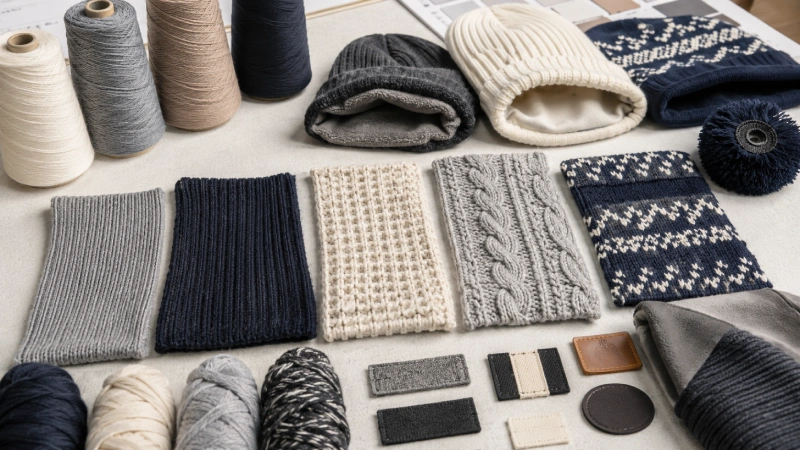
Acrylic is widely used because it is accessible, available in many colors and relatively easy to care for. Quality still varies. Buyers should assess softness, bulk, static, pilling and recovery instead of approving a product solely because the specification says “100% acrylic.”
Wool and merino wool support warmer and more premium positioning, but fiber fineness, skin comfort, shrinkage and care requirements need attention. A supplier claiming Responsible Wool Standard materials should be able to provide valid documentation for the relevant supply chain. Textile Exchange explains that the Responsible Wool Standard covers animal-welfare, land-management and chain-of-custody requirements.
Cotton and cotton blends can suit lightweight, transitional or fashion beanies. However, cotton usually behaves differently from resilient synthetic yarns, so stretch recovery and post-wash dimensions should be tested.
For recycled yarn claims, ask what is certified: the yarn supplier, the manufacturing site, the transaction or the finished product. The Global Recycled Standard and Recycled Claim Standard are designed to verify recycled materials and chain of custody; a generic recycled-content statement is not equivalent to documented certification.
Knit Structure and Shape
Specify more than “ribbed beanie.” A useful technical brief should define:
- 1×1, 2×2, waffle, jersey, cable or jacquard structure
- Yarn count and number of ends
- Knit gauge or target density
- Single- or double-layer construction
- Relaxed width and stretched width
- Total depth
- Cuff depth
- Crown shape and seam placement
- Cuffed, cuffless, fisherman, slouch or pom-pom silhouette
- Lining material and attachment method
Logo artwork must also be evaluated while the product is stretched on a head form. Dense embroidery may make the cuff rigid, while a wide patch can restrict stretch. Jacquard letters that look balanced on a flat technical drawing may widen or distort when worn.
MOQ, Sampling and Lead-Time Considerations
A published MOQ rarely tells the whole story. Ask whether it applies per design, color, yarn, size or delivery.
The same factory may have:
- A low minimum for an existing beanie with a logo
- A higher minimum for a custom knit structure
- A separate minimum for custom-dyed yarn
- A surcharge for quantities below the normal production batch
- A different minimum for each jacquard colorway
Sampling should also be divided into stages. A digital mockup confirms placement but cannot confirm softness, stretch or fit. A development sample tests the product concept. A pre-production sample should confirm the final yarn, dimensions, labels and packaging before bulk knitting begins.
Lead-time questions should establish when the clock starts. Some estimates begin after payment; others begin only after yarn arrival or sample approval. Confirm whether the quotation includes development, bulk production, packaging, inspection and international transport.
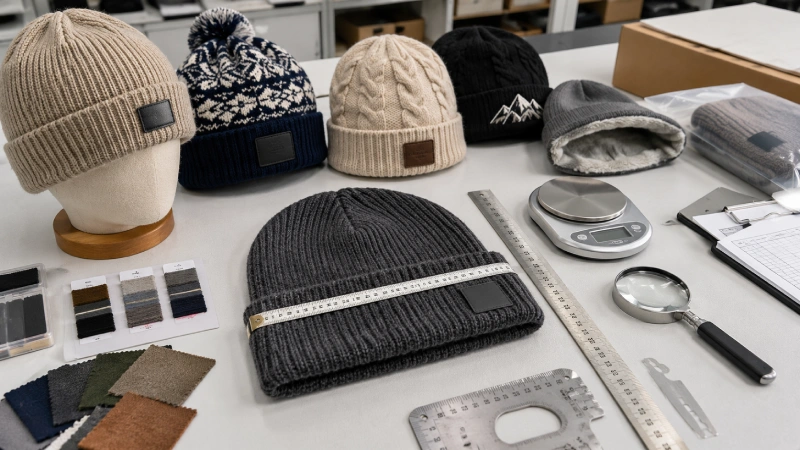
Beanie Sample Inspection Scorecard
Use an approved sample and written tolerances rather than subjective comments such as “make it slightly tighter.”
| Inspection area | What to check |
|---|---|
| Dimensions | Relaxed width, stretched width, total depth, cuff height and pom-pom diameter |
| Shape | Crown symmetry, seam alignment, cuff balance and left-right consistency |
| Knit quality | Dropped stitches, loose yarns, uneven density, holes and visible yarn joins |
| Stretch | Opening recovery after repeated stretching and comfort around the forehead |
| Branding | Embroidery puckering, patch security, jacquard distortion and label alignment |
| Lining | Twisting, seam bulk, attachment points and exposure above the cuff |
| Appearance after care | Shrinkage, color change, pilling, shape loss and seam movement |
| Packaging | Correct labels, barcodes, hang tags, color assortment and carton quantities |
Testing should match the material, market and product claim. AATCC publishes recognized textile methods covering areas such as fiber analysis, colorfastness, crocking and dimensional change. Buyers should agree on applicable methods and pass/fail criteria rather than requesting an undefined “quality test.”
For products sold in the United States, the Federal Trade Commission states that most textile labels must identify fiber content, country of origin and the responsible manufacturer or marketer. Care instructions may also be required. These details should be finalized before bulk labels are ordered.
Information to Include in a Beanie RFQ
Provide every shortlisted supplier with the same information:
- Product type and reference images
- Target market and intended use
- Yarn composition or performance objective
- Knit structure and layer construction
- Relaxed and stretched measurements
- Cuff and crown dimensions
- Color references
- Logo method and artwork
- Labels, hang tags and packaging
- Quantity per design and color
- Sample requirements
- Testing or certification requirements
- Delivery destination
- Target approval and delivery dates
Without this information, one factory may quote a stock acrylic beanie while another quotes a fully custom merino product. The prices will not be meaningfully comparable.
Supplier Red Flags
Investigate further when a supplier:
- Cannot explain whether it knits the beanie or purchases a blank
- Describes every yarn as “premium” without stating fiber content
- Does not specify whether MOQ applies per color
- Promises custom yarn colors at very low quantities without explaining surcharges
- Provides a material certificate unrelated to the quoted yarn
- Approves jacquard artwork only as a flat image
- Uses “one size” without supplying relaxed and stretched measurements
- Will not identify subcontracted knitting, embroidery or packaging operations
- Does not document the approved pre-production sample
- Omits labeling, packaging or inspection requirements from the purchase order
A low quotation is not an advantage when the supplier and buyer are pricing different constructions.
FAQ
What is the difference between a beanie manufacturer and a supplier?
A manufacturer performs or manages meaningful production processes such as knitting, cutting, sewing, linking or finishing. A supplier may sell existing blanks, source products from another factory or add decoration. Ask which operations are performed internally and which are subcontracted.
What is a realistic MOQ for custom beanies?
There is no universal MOQ. Existing-color beanies with a patch may start at a few dozen units, while custom-dyed yarn, complex jacquard or proprietary construction may require substantially more. Confirm the MOQ per design and color with the selected manufacturer.
Can a brand make a fully custom beanie at 25 pieces?
Some manufacturers advertise quantities near that level, but “custom” may mean selecting an existing style and adding branding. Complete yarn, structure, color and measurement development may have a higher minimum.
Is embroidery or jacquard better for a beanie logo?
Embroidery supports detailed logos and can be applied to many existing styles, but dense stitching may stiffen the cuff. Jacquard integrates the design into the knit and suits larger graphics or repeating patterns, although artwork must be simplified for the available knit resolution.
Which material is best for private-label beanies?
Acrylic is practical for accessible, color-driven collections. Merino or wool can support premium warmth and natural-fiber positioning. Cotton blends work for lighter fashion products. The correct choice depends on climate, target price, care expectations and desired hand feel.
Should buyers always order a sample?
Yes. A digital mockup cannot confirm fit, stretch, softness, pilling, lining comfort or logo behavior when worn. Approve a physical pre-production sample and retain it as the reference for bulk inspection.
Final Recommendation
Begin by choosing a production model, not a company name.
A startup testing 30 domestic units should investigate a different supplier from a retailer ordering a custom-colored merino program. Buyers that prioritize U.S.-made or union-made production should focus on domestic mills and confirm material origin. Brands requiring proprietary yarn, fit, jacquard, labels and coordinated apparel may benefit from an overseas full-package OEM partner.
Create a shortlist of three or four companies whose production model matches the project. Send each one the same RFQ, compare what is included, order samples and document every approved specification before bulk production.
For a custom beanie quotation, prepare the product style, target quantity, yarn preference, measurements, logo artwork, packaging requirements, destination market and required delivery date. Buyers developing beanies alongside apparel can use custom headwear manufacturer as the next internal resource when discussing the project with Seetime Luxury.
Discuss Your Apparel Sourcing Requirements
Whether you're launching a startup clothing brand, expanding a streetwear label, or looking for a reliable OEM apparel manufacturer, speaking directly with an experienced production team can help you avoid costly sourcing mistakes.
Talk With Our Manufacturing TeamRelated Manufacturer Guides