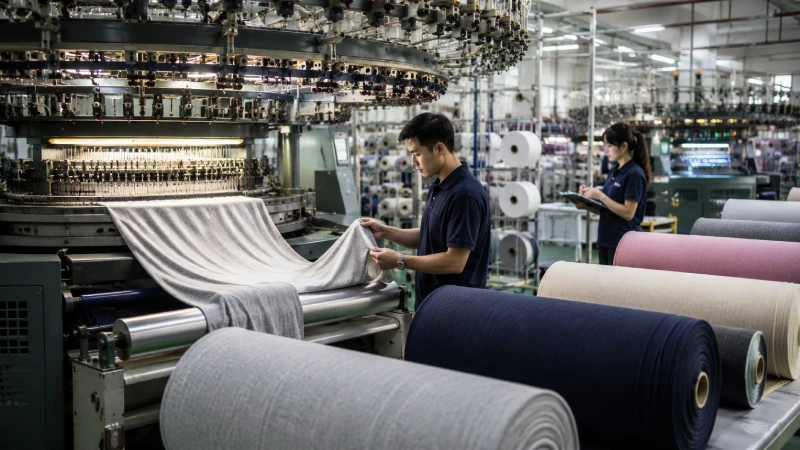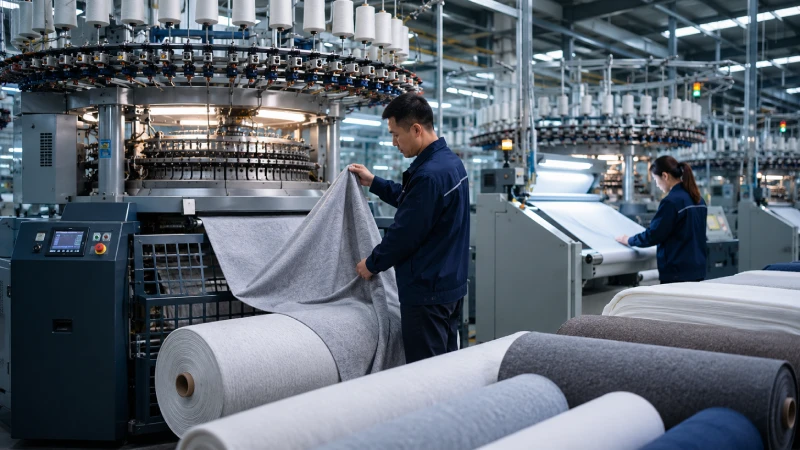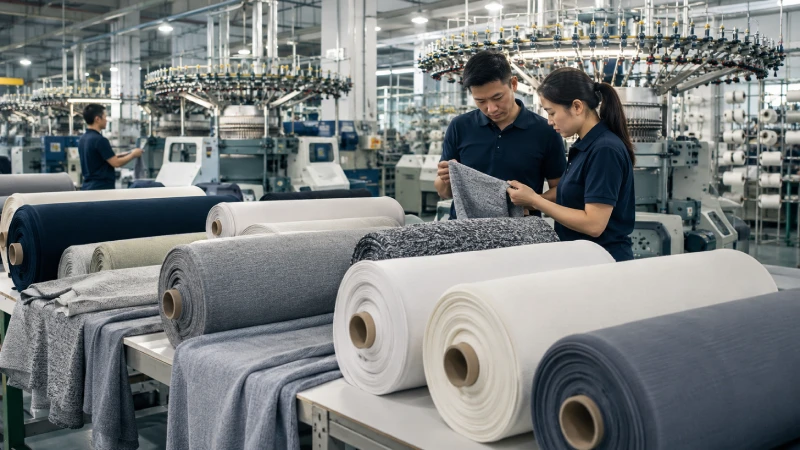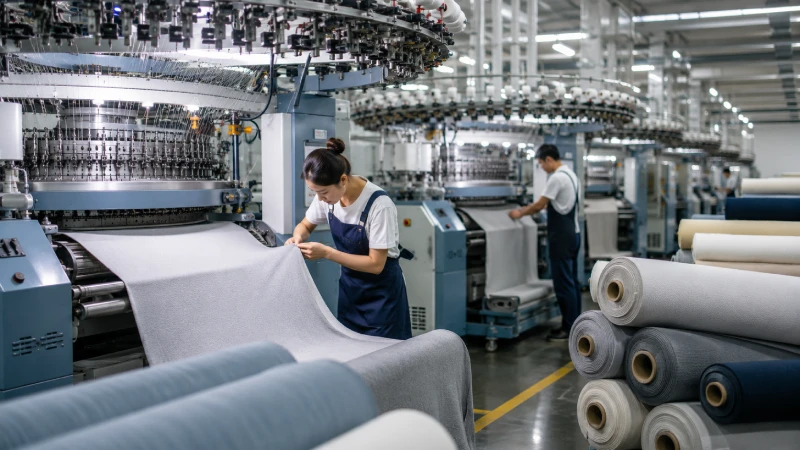
A golf polo can fail long before a buyer notices a sewing defect. The collar may curl after washing, a lightweight body fabric may pucker under dense embroidery, the placket may twist, or the armhole may restrict rotation during a swing. These problems are difficult to solve when a sourcing list treats full-package factories, decorators and consumer brands as equivalent suppliers.
The manufacturers below are organized by B2B use case rather than ranked. Public claims still need confirmation through quotations, samples, current certificates and appropriate due diligence.
Quick Answer
The right golf polo shirt manufacturer depends on four variables: your production model, quantity, technical specification and branding depth. Large brands developing proprietary fabrics and full size ranges may fit a scalable full-package factory such as Thygesen Textile Vietnam. Buyers seeking publicly stated lower MOQs can compare HUCAI, Newasia Garment, Conbello Textile, Fuway Golf and Fenix Custom. Lefty Production Co. offers a U.S.-based development option, while Seetime Luxury supports custom polo and private-label development from China.
Before shortlisting any supplier, confirm whether its MOQ applies per design, color or fabric; whether it develops original patterns or modifies existing styles; and whether moisture-wicking, UV or recycled-material claims can be supported by relevant documentation.
Quick Comparison
| Manufacturer | Country | Production model | Best fit | Public MOQ | Public timing | Main trade-off |
|---|---|---|---|---|---|---|
| Thygesen Textile Vietnam | Vietnam | Full-package manufacturer | Established brands and larger programs | 3,000 per golfwear design | Confirm by project | Too high for most pilot orders |
| HUCAI | China | Men’s activewear OEM/ODM | Moderate-volume men’s golf collections | 200 | 12-day sample; 25–30-day bulk | Public positioning is mainly men’s apparel |
| Newasia Garment | China | Full-package OEM/ODM | Startups needing broad customization | 100 | 5–10-day sample; 15–30-day bulk | Company claims require buyer validation |
| Conbello Textile | Turkey | Fully custom private label | Premium technical polo development | 100 | Confirm during quotation | Less public detail on bulk scheduling |
| Fenix Custom | Thailand | In-house custom and private label | Clubs, resorts and branded programs | 30 per design | Usually 4–6 weeks after approval | Model may differ from high-volume OEM sourcing |
| Lefty Production Co. | United States | Development and cut-and-sew production | Hands-on U.S. product development | Not publicly disclosed | Confirm during quotation | Limited public commercial detail |
| Fuway Golf | China | Golf-specialist OEM/ODM | Golf brands, teams and events | 50–100 depending on product | 7-day sample; 25–35-day bulk | Public terms vary by product type |
| Seetime Luxury | China | OEM/ODM apparel partner | Flexible polo, branding and packaging development | Not publicly disclosed | Confirm during quotation | Commercial and certification details need project confirmation |
Public terms above were checked on official company pages on July 16, 2026, and may change with fabric, construction, color count and decoration.
How We Selected These Manufacturers
This is a desktop research shortlist, not a factory-verification program. Inclusion required an official source showing relevant golf-apparel production plus OEM, ODM, private-label or custom-development support.
We excluded consumer brands, retailers and blank decorators from the core list. Evaluation covered product relevance, manufacturing evidence, customization, public MOQ and timing, fabric support, branding and buyer fit.
“Publicly stated” means the information appeared on the company’s website; it does not mean it was independently audited. Buyers should request current documentation, approve samples and confirm terms contractually.
Choose the Supplier Model Before the Company
A full-package OEM manufacturer suits original patterns, custom grading, fabric development and retail packaging. A private-label supplier may modify an existing polo body. Club and event suppliers handle smaller coordinated programs, while blank decorators add logos to ready-made garments with limited control over fit and construction.
A 30-piece club order and a 3,000-piece proprietary retail program are therefore not comparable services.
Preparing a clear specification before contacting factories reduces quotation gaps and unnecessary sample revisions. Buyers who need help reviewing fabric, construction, embroidery, labels or packaging can discuss the project with Seetime’s apparel development team.
1. Thygesen Textile Vietnam — For Larger Full-Package Programs
Thygesen Textile Vietnam’s official golf-apparel page describes full-package production from material sourcing through finished garments. Its golf range includes polos, shorts, skirts, jackets, dresses and base layers, with customization covering printing, embroidery, labels, hangtags and packaging. The company publicly states a standard MOQ of 3,000 pieces per golfwear design, which may increase for particular materials or styles.
That MOQ makes Thygesen more relevant to established brands, importers and distributors with validated demand than to a startup testing several colorways. Its public material direction includes polyester-spandex, nylon-spandex, bamboo blends and recycled polyester. Buyers relying on its listed certifications should request current documents and check the holder, facility, scope and product relevance rather than relying on a logo alone.
Strength: Full-package capability and broad golf collection development.
Trade-off: The published MOQ creates substantial inventory exposure for a first launch.
2. HUCAI — For Moderate-MOQ Men’s Golfwear
HUCAI’s golf-apparel manufacturing page focuses on men’s polos, trousers, shorts, jackets, vests and midlayers. The company states an MOQ of 200 pieces, a 12-day sample period and 25–30 days for bulk production. It lists OEM/ODM customization across collars, plackets, silhouettes, logo placement and fabrics such as pique, micro-stretch polyester and modal blends.
HUCAI is a practical shortlist candidate for a men’s golf or lifestyle-sportswear brand that wants more design control than a blank-polo program without moving directly to a several-thousand-piece order. Its public page also makes performance and certification claims; these should be confirmed with test reports and current certificates tied to the actual material and production facility.
Strength: Unusually clear public MOQ and timing information.
Trade-off: Buyers planning women’s or unisex ranges should confirm pattern and grading experience beyond the men’s focus shown publicly.
3. Newasia Garment — For Low-MOQ Full-Package Customization
Newasia Garment’s official golf-polo page states a 100-piece MOQ, 5–10 days for sampling and 15–30 days for bulk production. It presents itself as a factory rather than a trader and describes custom fabrics, colors, collars, sleeves, fits, embroidery, printing, silicone logos, neck labels, care labels and retail packaging.
The breadth of public information makes Newasia easy to assess initially and potentially suitable for startups needing a retail-ready package. However, broad machinery, customer, performance and compliance claims remain supplier statements. Request current factory information, certificates, test methods and a detailed quotation.
Strength: Broad development and branding scope at a publicly stated 100-piece MOQ.
Trade-off: Buyers must separate documented order terms from marketing claims that still need validation.
4. Conbello Textile — For Turkey-Based Technical Polo Development
Conbello Textile’s private-label golf and tennis shirt page describes fully customized production in Turkey rather than logo application to a standard promotional garment. Options include technical polyester, polyamide, cotton, smooth or pique structures, custom collars, zipper openings, embroidery and transfer methods. The page shows a minimum purchase quantity of 100.
Conbello may suit premium brands that value proximity to European markets and want hands-on development of fabric, fit and branding. Its technical presentation is more detailed than many supplier pages, but buyers still need a project-specific answer on sampling, bulk lead time, packaging, testing and repeat-order material continuity.
Strength: Strong public emphasis on custom technical fabrics and garment architecture.
Trade-off: Key scheduling and compliance details are less clearly standardized online.
5. Fenix Custom — For Clubs, Resorts and Smaller Branded Programs
Fenix Custom says it operates from Thailand with control over design, manufacturing and quality. Its public offering covers custom golf-club and tournament apparel, polos, outerwear, accessories, OEM and private-label collections. The company states a standard MOQ of 30 pieces per design, physical samples on request and typical production and delivery within four to six weeks after final design approval. Branding methods include embroidery, screen printing, heat transfer, sublimation, patches and labels.
This model is particularly relevant to golf clubs, resorts, corporate tournaments and brands that value coordinated apparel and accessories at smaller quantities. It should not automatically be compared with a large full-package exporter on unit price because the service scope and order profile differ.
Strength: Low published minimum and golf-program specialization.
Trade-off: Buyers developing proprietary high-volume retail polos should clarify pattern ownership, fabric exclusivity and scaling arrangements.
6. Lefty Production Co. — For U.S.-Based Development
Lefty Production Co.’s golf-apparel page identifies the business as a Los Angeles apparel manufacturer serving emerging and established brands. It discusses private-label golf products using custom colors, prints, logo placements, moisture-management fabrics, stretch constructions and UPF fabric options. Its broader services cover sourcing, design, development, pre-production and production.
Lefty is most relevant when a buyer wants close communication with a U.S.-based development team, domestic production positioning or more direct involvement in fittings and revisions. The company does not publicly state a golf-polo MOQ, sample timeline or bulk lead time on the reviewed page, so these must be confirmed during quotation.
Strength: Hands-on Los Angeles development and cut-and-sew support.
Trade-off: Limited public commercial data makes early cost and capacity comparison more difficult.
7. Fuway Golf — For Golf-Specialist OEM/ODM Programs
Fuway Golf’s custom golf-shirt page describes OEM/ODM production for brands, teams, clubs and corporate events. It publishes a seven-day sample target and 25–35 days for bulk production. Product-level MOQs include 100 pieces per design for classic, performance and women’s golf shirts, and 50 pieces for team and event shirts. The page also lists embroidery, printing, custom colors and performance-fabric options.
Fuway’s narrow golf focus may help buyers discuss collar structure, placket behavior, movement and decoration with a category specialist. Yet performance and compliance statements remain company claims until supported by relevant reports. MOQ also changes by program, so confirm whether it applies per design, color, fabric and logo setup.
Strength: Golf-specific product range and transparent product-level minimums.
Trade-off: Public terms are not one universal offer and must be matched to the exact sourcing model.
8. Seetime Luxury — For Flexible Polo and Private-Label Development
Disclosure: Seetime Luxury publishes this guide and is included because its services match the selection criteria described above. It is not an independent recommendation.
Seetime Luxury’s polo category describes OEM and ODM production for classic, performance and workwear-oriented polos, with fabric selection, logo application and sampling before bulk production. Seetime also supports apparel sourcing needs that may include embroidery, printing, private labels and packaging. Its website does not publicly state a golf-polo MOQ, lead time, production capacity or topic-specific certification package; buyers should request these details for the proposed design.
Seetime is most relevant to brands wanting one partner to coordinate garment, material, branding and packaging specifications rather than buying an undecorated blank.
Strength: Coordinated custom-development scope across garment and branding elements.
Trade-off: Public commercial and compliance information is limited and requires direct project confirmation.
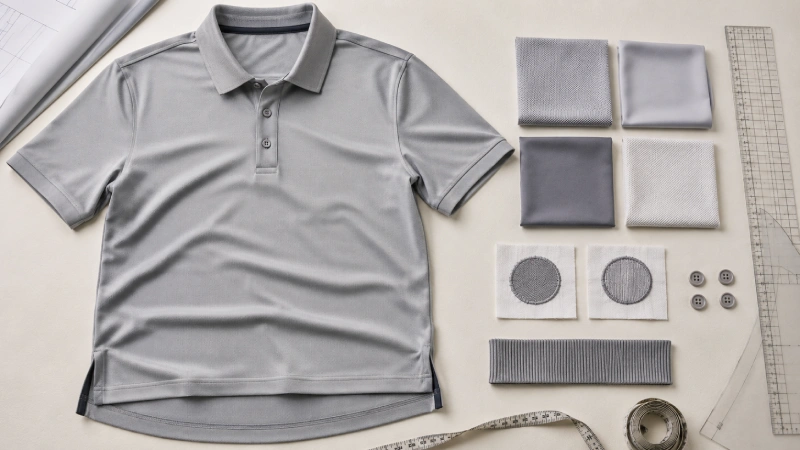
Golf Polo Fabric and Construction Decision Matrix
A supplier name cannot compensate for an incomplete product specification. Use the following matrix before requesting quotations.
| Product direction | Practical fabric route | Construction priorities | Main risks to inspect |
|---|---|---|---|
| Technical retail golf polo | Polyester- or nylon-elastane jersey/interlock | Swing mobility, recovery, lightweight placket | Snagging, opacity, heat buildup, logo distortion |
| Classic performance polo | Polyester pique | Collar-body balance, side vents, stable placket | Surface pulls, rough hand, collar curl |
| Premium soft-hand polo | Nylon-elastane | Recovery, clean seams, dye consistency | Shade variation, spirality, higher material minimums |
| Clubhouse/lifestyle polo | Cotton-polyester pique | Shrinkage control, collar stability, neat topstitching | Slow drying, twisting, shape loss |
| Sustainability-led program | Recycled polyester blend | Traceability and claim documentation | Certification scope, inconsistent shade or hand |
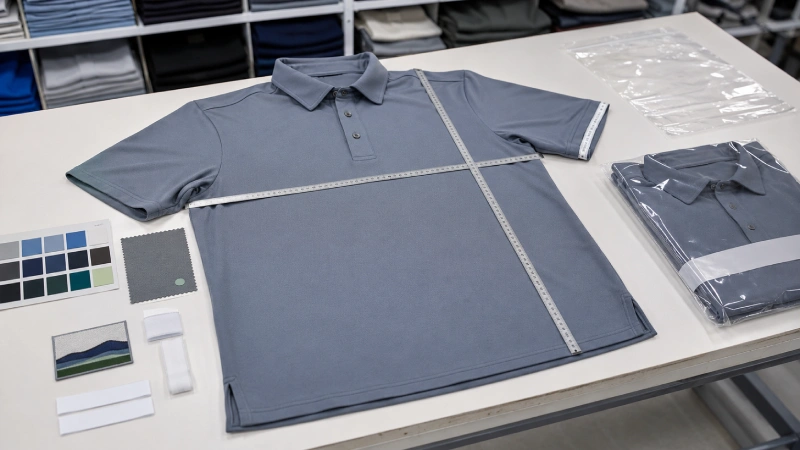
For a golf swing, inspect shoulder position, sleeve-cap shape, underarm ease and body length—not just chest width. The hem should remain controlled when the wearer rotates, while the armhole should permit movement without creating excessive fabric under the arm.
Collars and plackets deserve separate approval. A collar that is too light for the body can curl; one that is too heavy can pull the neckline out of shape. Check collar-point symmetry, recovery after laundering, placket reinforcement, button spacing, topstitching and rippling around the opening.
Embroidery must be tested on the actual production fabric. Dense stitching on lightweight stretch knit can cause puckering and reduce local stretch. Heat transfers require adhesion and wash testing, while sublimated panels need print-registration and color-migration review.
Performance language should be tied to a defined method. AATCC TM195 measures and classifies liquid-moisture-management properties in textile fabrics. For UV-protective claims, ASTM lists preparation and exposure practice D6544 and labeling specification D6603. An OEKO-TEX STANDARD 100 claim concerns testing for harmful substances; buyers can use the organization’s official label-check system to examine a supplied certificate number.
MOQ, Sampling and Lead Time: Read the Conditions
A headline MOQ rarely tells the whole story. Ask whether it applies per style, per color, per fabric quality or to the total order. Custom-dyed fabric, rib collars, buttons, woven labels, embroidery digitizing and printed packaging can each have separate minimums.
Stock fabric and an existing pattern usually support a smaller trial than a proprietary knit, exclusive color and new size block. Sampling should also be divided into stages: development or fit sample, revised sample, size set where needed, and a pre-production sample made with approved materials and branding.
Treat public timelines as starting points. Confirm when timing begins, whether it includes material procurement and revisions, and whether freight is excluded.
Golf Polo Sample Approval Scorecard
Score each area before bulk approval rather than approving from photographs alone.
| Area | Weight | What to check |
|---|---|---|
| Fit and movement | 20% | Shoulder, arm rotation, sleeve opening, torso length, hem ride-up |
| Fabric and performance | 20% | Composition, structure, weight, stretch, recovery, opacity, approved test results |
| Collar and placket | 15% | Shape, curl, symmetry, reinforcement, button alignment, rippling |
| Workmanship | 15% | Stitch balance, seam security, side-seam twist, hem waviness, vent reinforcement |
| Branding | 10% | Logo size, placement, puckering, adhesion, color and hand feel |
| Specification accuracy | 10% | Measurements, grading, trims, labels, care content and packing |
| Communication and control | 10% | Revision tracking, bill of materials, approval records and change management |
Set a pass threshold and identify non-negotiable failures. Reject a visually attractive sample if it uses the wrong fabric, misses measurements or lacks agreed test evidence.
For U.S.-bound products, the Federal Trade Commission’s textile labeling guidance explains that most textile products require fiber content, country of origin and the identity of the responsible manufacturer or marketer; the Care Labeling Rule also requires appropriate care instructions. Buyers selling elsewhere should check the rules of their destination market.
Common Sourcing Red Flags
- The supplier cannot clearly explain whether it is a factory, sourcing company or decorator.
- The quote says “performance polyester” but omits composition, knit structure and fabric weight.
- MOQ changes after artwork or colors are submitted without a technical explanation.
- UV, moisture, antibacterial or recycled claims are offered without an agreed test or traceability route.
- A certification logo is shown, but the supplier will not provide a current number, holder or scope.
- Bulk production starts before written approval of the pre-production sample.
- Sample and bulk fabric substitutions are allowed without buyer approval.
- The quotation omits labels, packaging, testing, inspection or freight assumptions.
FAQ
What is the difference between a golf polo manufacturer and a custom golf-shirt supplier?
A manufacturer may develop patterns, source or create fabric, cut and sew the garment, apply branding and pack the finished product. A custom supplier may instead decorate or relabel an existing polo. Both can be useful, but only the first model gives a brand deep control over fit, fabric and construction.
What is a normal MOQ for private-label golf polos?
There is no universal MOQ. The manufacturers reviewed here publicly range from 30 pieces per design at Fenix to 3,000 pieces per golfwear design at Thygesen. The relevant number also depends on colors, fabric, pattern development and decoration. Always obtain the MOQ breakdown in writing.
Which fabric is best for a golf polo?
Use case determines the answer. Polyester-elastane or nylon-elastane can support lightweight stretch performance; polyester pique provides a more traditional textured appearance; cotton-polyester pique may suit clubhouse or lifestyle collections. Compare hand feel, recovery, snagging, drying, shrinkage and test requirements.
How can a brand support moisture-wicking or UPF claims?
Define the intended claim, test method, performance threshold, sample identity and testing stage before production. A fabric supplier’s generic certificate may not prove that the finished garment in your order meets the claim after dyeing, finishing and repeated care.
What should be approved before bulk production?
Approve the tech pack, measurement chart, graded sizes where required, fabric, color, collar and placket construction, trims, logo execution, labels, packaging, test plan and pre-production sample. Keep a sealed approved reference and require written authorization for changes.
How should buyers compare China, Vietnam, Turkey and U.S. suppliers?
Compare the production model rather than the country label alone. Consider MOQ, development access, fabric ecosystem, order scale, logistics, duty exposure, domestic-origin positioning and the supplier’s experience with your exact construction. A small U.S. development order and a large Vietnamese full-package program solve different problems.
Final Buyer Recommendation
Begin with the project, not the ranking. Define whether you need proprietary OEM development, a modified private-label style or a small decorated program. Send the same specification to suitable suppliers and compare scope, samples, documentation and communication—not only unit price.
For a useful golf-polo quotation, provide product type, quantity by color, target fabric, size range, fit reference, logo method, label and packaging requirements, destination market, test expectations and required delivery date. Brands preparing a custom program can share these details with Seetime Luxury for an initial golf polo manufacturing and specification review.
Discuss Your Apparel Sourcing Requirements
Whether you're launching a startup clothing brand, expanding a streetwear label, or looking for a reliable OEM apparel manufacturer, speaking directly with an experienced production team can help you avoid costly sourcing mistakes.
Talk With Our Manufacturing TeamRelated Manufacturer Guides