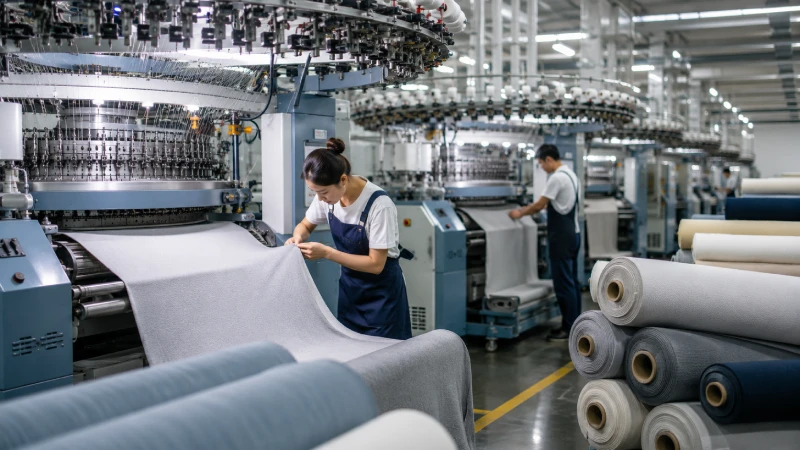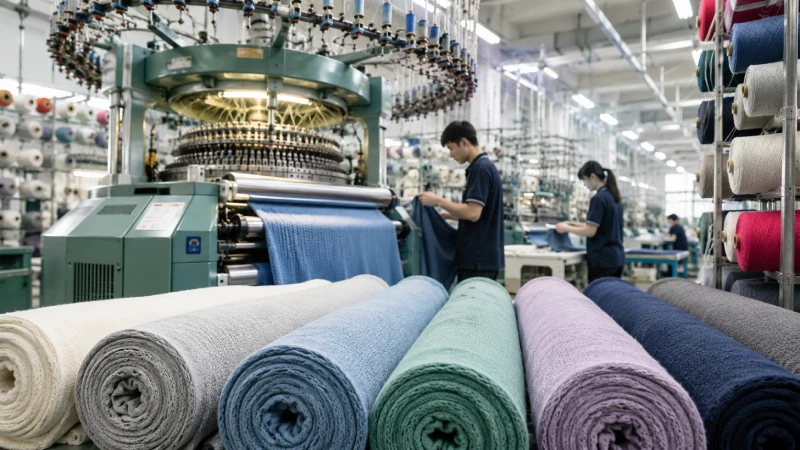
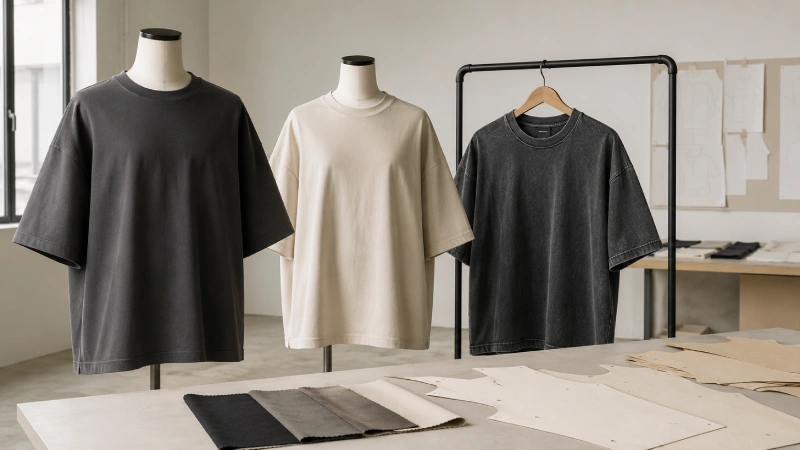
An oversized T-shirt is not simply a regular tee ordered two sizes larger. A commercially successful style depends on deliberate shoulder placement, chest-to-length proportion, sleeve volume, collar structure, fabric weight, and post-wash stability. A supplier suited to printing logos on existing blanks may therefore be unsuitable for developing a proprietary streetwear fit.
This guide separates full-package manufacturers from blank suppliers and compares them by the job they are equipped to perform. It is a shortlisting tool, not a factory audit or an absolute ranking.
Disclosure: Seetime Luxury publishes this guide and is included because its services match the selection criteria below. Its inclusion is not an independent recommendation.
Quick Answer
The right supplier depends on whether you need an original cut-and-sew pattern, a modified existing blank, or a ready-made garment for decoration. Brands developing a proprietary fit should prioritize pattern capability, fabric and wash control, sample-to-bulk consistency, and size grading. Buyers launching merchandise or testing demand may be better served by an established oversized blank.
Public MOQ figures matter only when their conditions are clear. Ask whether the minimum applies per design, color, fabric, or total order and whether it covers stock garments or full custom production. Shortlist two or three suppliers, issue the same specification to each, and compare washed samples rather than website claims alone.
Quick Comparison
| Supplier | Country | Production model | Best for | Public MOQ | Main trade-off |
|---|---|---|---|---|---|
| Seetime Luxury | China | OEM/ODM manufacturer and sourcing partner | Sample-first custom development | One-piece sampling stated; bulk MOQ undisclosed | Oversized fit must be proven through sampling |
| Create Fashion Brand | Portugal | Full custom manufacturer plus blank programs | Premium European streetwear | 150 per style/color bespoke; 100 customized blanks | Fabric-specific minimums may be higher |
| Make It LA | USA | Cut-and-sew and private label | Los Angeles boxy tees | Not publicly disclosed | Confirm origin of fabric and finishing |
| QYOURECLO | China | Cut-and-sew OEM/private label | Streetwear with a public starting MOQ | 100 pieces stated | Reconfirm certificates and project timing |
| Groovecolor | China | Streetwear manufacturer | Heavyweight, washed graphic tees | 50–100 per color on relevant products | Wash variation needs tight approval |
| Hongyu Apparel | China | Stock supplier plus custom manufacturer | Testing stock before full custom | 50 stock; 100 per color/design custom on cited page | MOQs vary by program |
| UNIT-100 | China | Stock-blank and full-custom manufacturer | Moving from blank to proprietary fit | 50 stock; 100 full custom | Confirm scope for the chosen route |
| Turkey Clothing Production | Turkey | OEM/private label | Turkey-based heavyweight programs | “Flexible”; exact MOQ undisclosed | Commercial details require quotation |
| Organic Blank | Spain | Blank wholesaler and decorator | Sustainable blanks with decoration | Page states 50–5,000 units | No proprietary garment block |
| Stanley/Stella | Belgium/global | B2B blank brand | Standardized organic oversized blank | Not a bespoke OEM program | Predetermined fit and construction |
| AS Colour | New Zealand/global | Wholesale blank brand | Heavy garment-dyed blanks | Bulk pricing shown from 10 items | No custom pattern development |
Information was checked against official supplier pages on July 16, 2026.
How We Selected These Suppliers
A company entered the principal manufacturer section only when its official site showed custom apparel production and direct relevance to oversized, boxy, or drop-shoulder T-shirts. We looked for pattern or measurement customization, fabric and finishing options, private-label support, sampling, and clear order conditions.
Blank wholesalers and blank brands are listed separately because they solve a different problem. They may be ideal for printers and market tests, but do not offer the control of an original pattern and graded size set.
“Checked” means we reviewed public official sources. It does not mean we visited the facility, placed an order, validated every certificate, or independently confirmed factory ownership. Request current documentation, certificate numbers, sample records, and a written production scope before ordering.
Eight Custom Manufacturers to Consider
1. Seetime Luxury — Best for Sample-First OEM Coordination
Location: China
Production model: OEM/ODM manufacturer and sourcing partner
Seetime Luxury publicly presents T-shirts and polos, jersey and rib fabrics, logo printing, material sourcing, and one-piece sampling. These services can support coordinated fabric, construction, decoration, label, and packaging development. Its site does not state a bulk MOQ or standard bulk lead time, and oversized-specific capability should be judged through a prototype rather than assumed.
Strengths: Sample-first coordination across relevant development functions.
Trade-off: A boxy or drop-shoulder block must be validated.
Best fit: Brands with a reference garment or measurement chart seeking custom apparel OEM and ODM services.
2. Create Fashion Brand — Best for Premium Portugal-Made Programs
Location: Portugal
Production model: Full custom manufacturer, customizable blanks, and stock blanks
Create Fashion Brand clearly separates ready blanks, branded blanks, and bespoke manufacturing. Its pages show heavyweight oversized tees, organic cotton, printing, embroidery, and labeling. It states 150 pieces per style and color for bespoke models and 100 for customized blanks. Some stock blanks have no MOQ, while fabric-specific minimums may be higher.
Strengths: Multiple development routes and Portugal production.
Trade-off: Blank terms should not be confused with bespoke terms.
Best fit: Premium labels deciding between a proven blank and an original European-made style.
3. Make It LA — Best for Los Angeles Boxy Development
Location: Los Angeles, USA
Production model: Cut-and-sew, private label, and full package
Make It LA offers cut-and-sew services and an oversized box tee using 7.5-ounce cotton, dropped shoulders, side seams, and an enzyme wash. Buyers can assess that base before discussing deeper customization. A general custom MOQ is not publicly stated, so development terms require quotation.
Strengths: Domestic communication and a defined heavyweight boxy product.
Trade-off: Confirm which materials and processes are US-origin.
Best fit: US brands prioritizing closer development and domestic sewing.
4. QYOURECLO — Best for a Public 100-Piece Starting Point
Location: Dongguan, China
Production model: Cut-and-sew OEM/private label
QYOURECLO directly presents boxy, drop-shoulder, heavyweight, washed, and graphic tees. It states a 100-piece MOQ, sample development, custom fabrics, printing, embroidery, labels, and packaging. Its published timing is indicative and should be reconfirmed against fabric availability, washes, artwork, and packing.
Strengths: Relevant streetwear options and public order information.
Trade-off: Request current certificate numbers and check their legal entity and scope.
Best fit: Growing streetwear labels prepared for a true custom-production minimum.
5. Groovecolor — Best for Heavyweight Wash and Graphics
Location: China
Production model: Custom streetwear manufacturer
Groovecolor shows oversized, boxy, and drop-shoulder products using heavyweight cotton, vintage-style washes, and graphic techniques. Relevant pages state 50–100 pieces per color and approximately 260–400 GSM for certain styles. Those numbers should not be treated as universal.
Strengths: Strong public evidence for heavy, washed streetwear.
Trade-off: Approve wash shade, hand feel, and post-wash measurements.
Best fit: Graphic-led labels developing vintage or structured tees.
6. Hongyu Apparel — Best for Comparing Stock and Custom
Location: China
Production model: Ready-made supplier plus custom manufacturer
Hongyu Apparel lists many oversized and boxy stock tees. One 230 GSM stock style has a 50-piece minimum with mixed colors and sizes; custom size, color, and material changes are stated at 100 pieces per color and design. Other pages present different terms, so quote the exact SKU and production route.
Strengths: A practical blank-testing pathway.
Trade-off: Stock decoration and cut-and-sew provide very different control.
Best fit: Early brands deciding whether a ready garment is sufficient.
7. UNIT-100 — Best for Moving From Blank to Full Custom
Location: China
Production model: Stock-blank and full-custom manufacturer
UNIT-100 presents boxy and drop-shoulder fits, heavyweight fabrics, pre-shrinking, washes, labels, and packaging. It states 50 pieces for stock blanks and 100 for full custom. Its oversized page also states 100 pieces per design for custom patterns and measurements.
Strengths: Clearly differentiated entry routes.
Trade-off: Confirm which operations and lead times apply to the selected route.
Best fit: Brands testing graphics first and planning proprietary grading later.
8. Turkey Clothing Production — Best for Turkey-Based Heavyweight Programs
Location: Istanbul, Turkey
Production model: OEM/private-label manufacturer
Turkey Clothing Production presents custom oversized and heavyweight T-shirts, with a stated 150–450 GSM range on a relevant page, plus private labeling and production monitoring. Its oversized pages call MOQ “flexible” without a dependable universal number. Confirm quantity and timing against fabric, colors, and finish.
Strengths: Turkey sourcing and broad weight options.
Trade-off: Public commercial details are limited.
Best fit: Regional buyers willing to conduct detailed sampling and quotation.
Three Blank Suppliers for Faster Launches
These options suit buyers who can accept an existing silhouette.
Organic Blank distributes oversized garments from several brands and supports screen printing, DTF, and embroidery. Its collection states organic cotton or recycled materials and orders from 50 to 5,000 units. The garment block remains the blank brand’s design.
Stanley/Stella offers the Blaster 2.0, a standardized 200 GSM organic ring-spun combed cotton blank with dropped shoulders, a high rib collar, boxy proportions, side seams, and tear-away labels. It is decoration-ready but not bespoke cut and sew.
AS Colour describes its Heavy Faded Tee as 7.1-ounce carded cotton with garment dye, dropped shoulders, and a boxy relaxed fit. It supports screen printing, embroidery, DTG, and heat pressing and uses a tear-out label. It is a controlled blank solution, not a private pattern-development service.
Decision Tool 1: Select the Production Model
| Requirement | Full-package cut and sew | Customized blank | Stock blank |
|---|---|---|---|
| Original proportions | High control | Low control | None |
| Proprietary grading | Available | Usually unavailable | Unavailable |
| Custom fabric | Possible | Rare | No |
| Custom wash or dye | Often possible | Limited | Predetermined |
| Launch speed | Slowest | Medium | Fastest |
| Best use | Branded core product | Small private-label launch | Merch and demand testing |
Choose full package when the silhouette itself is part of the product value. Choose a blank when graphics, speed, and lower development risk matter more than fit ownership.
Preparing a specification before contacting suppliers reduces quotation errors and sample revisions. Brands needing help with fabric, construction, labels, or packaging can discuss the project through Seetime’s apparel sampling process and fabric and material sourcing services.
What Makes an Oversized T-Shirt Technically Correct?
Fit Is a Proportion System
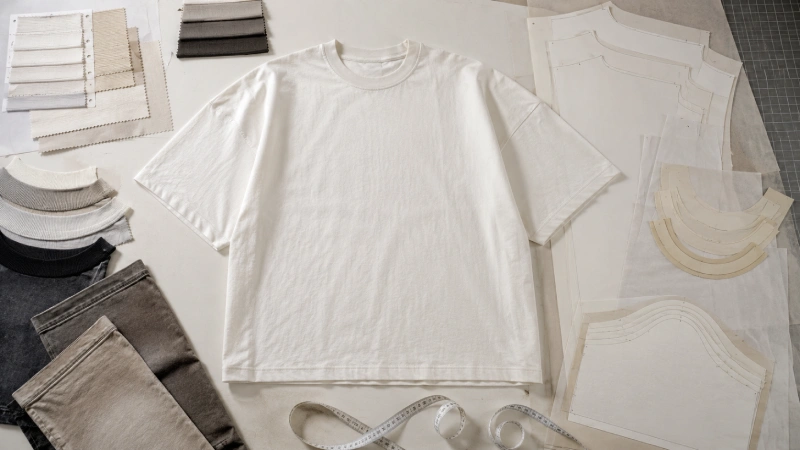
Uniformly enlarging a regular pattern usually adds too much length without creating an intentional silhouette. Control half chest, shoulder width, armhole depth, sleeve length and opening, body length, hem width, neck opening, and rib height.
A boxy tee combines width with controlled length. A drop-shoulder style moves the shoulder seam down the arm and normally needs more sleeve volume. Pump-cover and longline styles require intentionally specified length, not accidental grading.
Fabric Weight Must Match the Shape
GSM does not determine quality by itself. Lighter jersey offers movement but may expose transparency or neckline weakness. Medium-weight cotton is commercially versatile. Heavyweight jersey supports a structured boxy shape and large graphics, but excessive stiffness can make the garment uncomfortable.
Specify composition, yarn character, knit structure, surface finish, target hand feel, and shrinkage. Fabrics with the same nominal GSM can drape differently.
Collar, Sewing, and Decoration
A wide body makes a weak collar conspicuous. Review rib composition, neck opening, collar height, and recovery after washing. Shoulder tape can improve stability, while side seams give more shape control. Large prints can stiffen the front panel, and dense embroidery can cause puckering, so test decoration on production fabric.
Wash Approval Is Fit Approval
Garment dye, enzyme wash, pigment effects, and acid-style finishing can change dimensions, spirality, shade, and hand feel. AATCC TM150 covers garment dimensional change after home laundering, while ISO 6330 specifies standardized domestic washing and drying procedures for textile testing. Agree on a repeatable wash-and-measure method before bulk approval.
Decision Tool 2: Sample Approval Scorecard
Score each area from 1 to 5, but reject any critical measurement or compliance failure regardless of the total.
| Area | Weight | Check |
|---|---|---|
| Silhouette | 25% | Shoulder drop, chest-to-length ratio, sleeve volume |
| Measurements | 20% | Before and after wash against tolerance |
| Fabric | 15% | Weight, drape, hand feel, shade |
| Collar and sewing | 15% | Recovery, symmetry, seam twist, stitches |
| Wash performance | 10% | Shrinkage, spirality, color, and pilling |
| Decoration | 10% | Position, cracking, migration, puckering |
| Labels and packing | 5% | Content, placement, barcode, and packing |
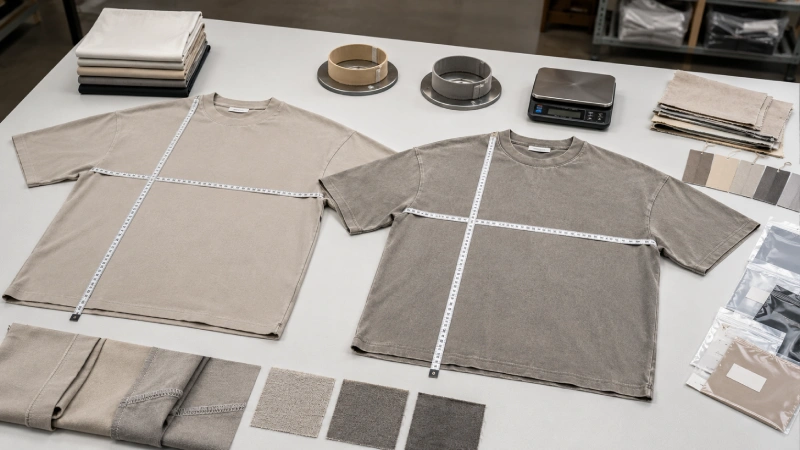
Photograph the garment on-body and flat. Record the sample version, washing method, and corrections in one approval sheet rather than scattered chat messages.
MOQ, Sampling, and Lead-Time Questions
A low MOQ may refer to a stock garment with a logo, while a custom fabric, wash, or pattern requires more. Ask:
- Is MOQ per style, color, artwork, or total order?
- Can sizes be mixed?
- Is the sample made in the intended bulk fabric?
- Are pattern, print setup, wash trial, and label costs separate?
- Which stages are subcontracted?
- When does the bulk schedule begin?
- Is a size set or pre-production sample included?
- What happens when a wash falls outside the approved shade range?
Separate first prototype, revision, size set, pre-production approval, bulk manufacturing, inspection, and transit when building the timeline.
Common Defects and Red Flags
| Problem | Likely cause | Prevention |
|---|---|---|
| Wide body, narrow sleeves | Basic sleeve retained | Approve sleeve width and opening |
| Unintended longline fit | Uniform grade-up | Control length independently |
| Wavy collar | Weak rib recovery | Test after laundering |
| Rotated side seams | Fabric skew | Measure spirality after wash |
| Excess wash variation | No shade band | Approve light, target, and dark limits |
| Rigid printed front | Excess ink deposit | Test full-size artwork |
| Embroidery puckering | Density or backing issue | Approve backing and stitch density |
| Poor larger-size silhouette | Generic grading | Review graded chart and size set |
Red flags include calling a standard unisex tee oversized without measurements, quoting before fabric and finish are confirmed, refusing post-wash dimensions, or displaying certification logos without a current number. OEKO-TEX Label Check allows buyers to enter a label number and review available certification information.
RFQ Checklist
Send every supplier the same core information:
- Silhouette references and measurement chart
- Size range and quantity by color and size
- Fabric composition, GSM, and hand-feel target
- Color and washing requirements
- Print or embroidery files and dimensions
- Main, size, and care labels plus hangtag
- Packaging, barcode, and shipping marks
- Target market, sample deadline, and delivery date
For US sales, FTC textile-labeling guidance states that textile labels must identify fiber content, country of origin, and the manufacturer, importer, or another responsible dealer; care-label obligations also apply. Check the current rules for every destination market rather than copying another brand’s label.
FAQ
Is an oversized T-shirt just a larger regular size?
No. An oversized style rebalances shoulder width, chest, sleeve volume, and body length. Standard grading usually adds length and circumference without creating the intended boxy or drop-shoulder shape.
What GSM is best for an oversized T-shirt?
There is no universal best weight. Select it according to drape, climate, price, decoration, and wash. Assess a physical sample rather than choosing by GSM alone.
What MOQ should a startup expect?
There is no universal figure. The public terms in this guide range from small blank orders to 100- or 150-piece custom programs, but definitions differ. Confirm minimums per style, color, fabric, and artwork.
How many samples are needed?
Approve at least a representative fit and construction sample. Complex products may also need a wash trial, revision, size set, and pre-production sample. The sequence should reflect project risk.
Can a factory copy an existing oversized T-shirt?
A reference garment can communicate proportion and construction, but avoid copying protected artwork or distinctive proprietary details. Use it to develop an intentionally modified specification.
Should I choose a manufacturer or a blank supplier?
Choose a manufacturer when original fit, fabric, grading, or finishing creates product value. Choose a blank supplier when the existing garment works and speed and decoration are the priorities.
Final Recommendation
Select two or three suppliers that match the required production model, issue the same RFQ, and compare physical samples under identical fitting and laundering conditions. The lowest quote can become the highest-cost project when it creates repeated revisions, unstable washes, or unusable grading.
For a quotation review, provide Seetime with the product type, quantity, reference fit or measurement chart, fabric preference, size range, decoration, labels, packaging, target market, and required delivery date. That allows the team to assess whether the project suits an existing block, a modified pattern, or complete private-label clothing development.
Discuss Your Apparel Sourcing Requirements
Whether you're launching a startup clothing brand, expanding a streetwear label, or looking for a reliable OEM apparel manufacturer, speaking directly with an experienced production team can help you avoid costly sourcing mistakes.
Talk With Our Manufacturing TeamRelated Manufacturer Guides

Streetwear & Hip Hop Apparel Programs