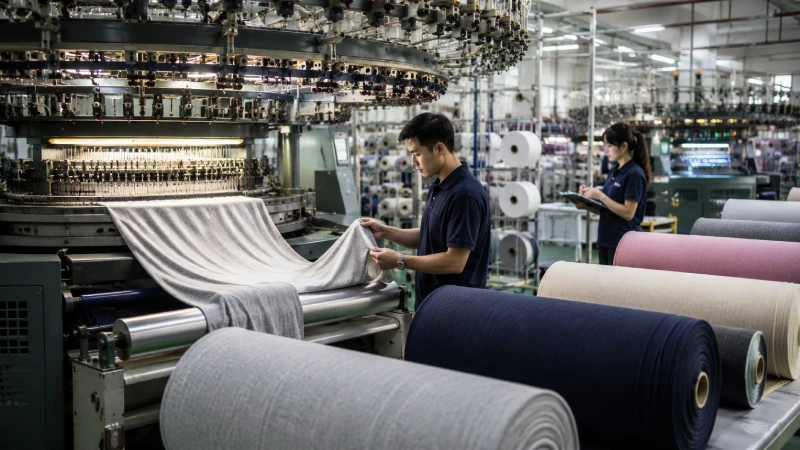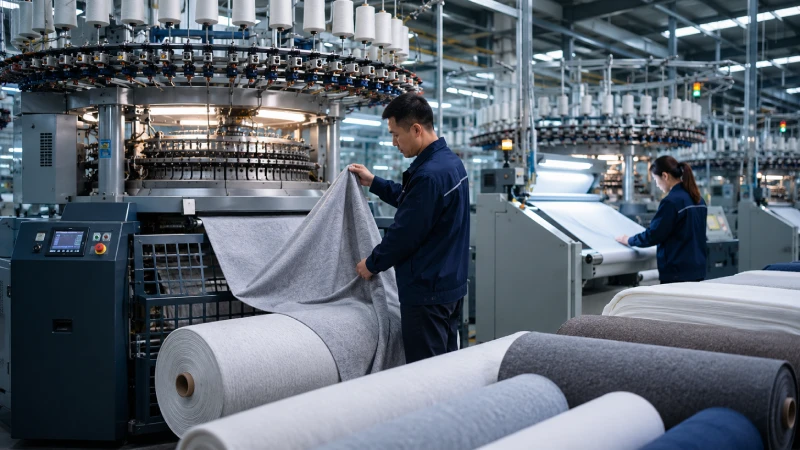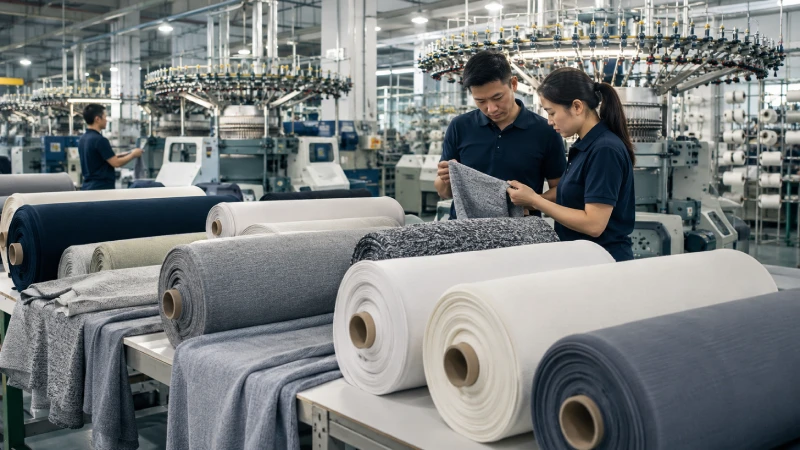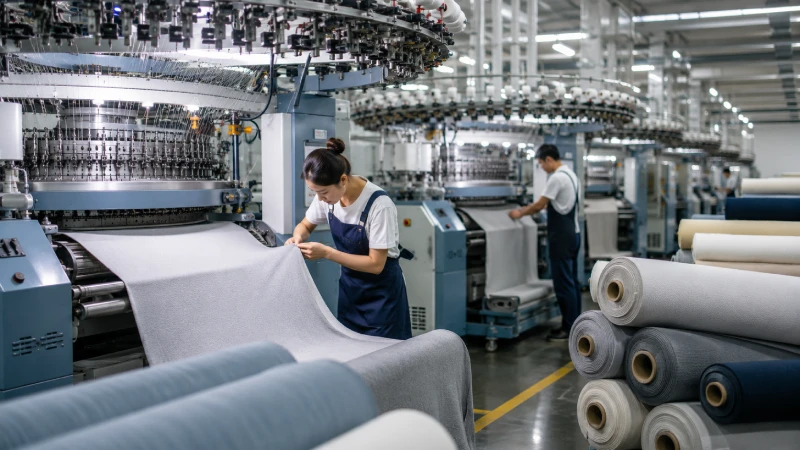
Finding a sustainable T-shirt supplier is more complicated than searching for a factory that offers organic cotton.
Some companies on this list manufacture custom garments from a brand’s tech pack. Others sell ready-made blanks for printing. Several provide garment decoration or private-label services but do not develop custom fabrics or patterns. These supply models solve different purchasing problems and should not be evaluated as though they are interchangeable.
Buyers must also determine what a supplier’s sustainability claims actually cover. An organic fabric certificate, a harmful-substance test, a factory audit, and a certified finished garment provide different forms of evidence.
This guide compares ten potential sourcing partners according to their production model, T-shirt specialization, customization services, publicly disclosed MOQ, material strengths, and likely buyer fit. It is intended as a shortlisting resource rather than a universal ranking.
Quick Answer
The right sustainable T-shirt manufacturer depends on whether you need stock blanks, decorated merchandise, or a completely custom product.
Stanley/Stella, EarthPositive, Neutral, and Allmade are primarily relevant to buyers seeking established blank T-shirts for printing or resale. Royal Apparel, Create Fashion Brand, ASBX, Billoomi Fashion, and Seetime Luxury are more relevant when the project requires private labels, custom sizing, fabric sourcing, or full-package development. TS Designs has a more specialized model focused on traceable U.S.-made T-shirts, printing, garment dyeing, and merchandise programs.
Before shortlisting a supplier, confirm three issues: the production model, the documentation supporting the material claim, and whether the published MOQ applies to ready-made garments or genuinely custom fabric and construction.
Quick Comparison
| Company | Main location | Production model | Best suited to | OEM or private label | Public MOQ | Main trade-off |
|---|---|---|---|---|---|---|
| Stanley/Stella | Belgium-based | Sustainable blank-apparel supplier | Premium certified blanks for decoration | Limited conventional OEM | Not publicly disclosed | Buyers have limited control over patterns and fabrics |
| EarthPositive | United Kingdom-based | Wholesale organic blank supplier | Printed merchandise and organic blank programs | Primarily blank supply | Not publicly disclosed | Not positioned as full custom cut-and-sew |
| Neutral | Denmark-based | Certified B2B apparel supplier | Certification-led corporate and merchandise purchasing | Not clearly disclosed as full OEM | Not publicly disclosed | Custom development information is limited |
| Allmade | United States-based | Sustainable blank brand | Screen printers and promotional buyers | No conventional OEM publicly confirmed | Not publicly disclosed | Blend and construction options are standardized |
| Royal Apparel | United States | Manufacturer, wholesaler, and custom supplier | USA-made blanks and private-label production | Yes | As low as 180 units for selected programs | Domestic manufacturing may carry a higher unit cost |
| TS Designs | United States | T-shirt printer and garment-dye specialist | Traceable U.S.-made merchandise | Selected private-label and fulfillment support | Varies by printing model | Not a conventional full-package fashion factory |
| Create Fashion Brand | Portugal | Blank supplier and full custom manufacturer | Brands moving from blanks to custom production | Yes | No MOQ for selected blanks; 50 for customized blanks; 150 for selected custom programs | Custom fabric may require higher mill minimums |
| ASBX | Portugal | Private-label and streetwear manufacturer | Premium jersey and low-volume custom collections | Yes | Normally 100 per style/color; 50 may be available with an upcharge | Website claims require project-level document checking |
| Billoomi Fashion | India | Made-to-order private-label manufacturer | Startups needing full development support | Yes | From 25 for qualifying solid styles; 100 for decorated styles | Lead time depends heavily on design and fabric requirements |
| Seetime Luxury | China | OEM/ODM manufacturing and sourcing partner | Flexible custom T-shirt development | Yes | Not publicly disclosed | Sustainability documents must be confirmed for each project |
Information was reviewed against official company pages on July 16, 2026. Public website research does not replace a factory audit, certificate validation, sample inspection, or commercial due diligence.
How We Selected These Suppliers
A company was considered only when its official website showed a commercially relevant T-shirt program and a B2B supply model such as wholesale blanks, garment decoration, private-label production, or full custom manufacturing.
The evaluation considered:
- relevance to T-shirt sourcing;
- evidence of actual manufacturing or apparel supply capability;
- sustainable material or process information;
- OEM, private-label, printing, or customization support;
- publicly disclosed MOQ;
- documentation and certification transparency;
- and the type of buyer the company can realistically serve.
A company is not described as “verified” simply because its website was reviewed. The research confirms only that specific information was publicly stated. Buyers should independently verify certificates, business identity, production location, subcontractors, test reports, and order terms before placing a deposit.
The list is also not ranked from first to tenth. A premium blank supplier may be highly suitable for a screen-printing business but unsuitable for a fashion brand developing an exclusive fit. A low-MOQ private-label manufacturer may support custom patterns but lack the stock availability of an established blank supplier.
First Decide Which Production Model You Need
Sustainable blanks
A blank supplier sells finished, undecorated T-shirts in established fabrics, fits, colors, and sizes. Buyers can add local printing, embroidery, or labels.
This route normally provides:
- faster product access;
- lower development risk;
- established size specifications;
- and the ability to test designs without commissioning custom fabric.
The main limitation is product control. The buyer usually cannot change the shoulder width, body length, neckline, fabric weight, or knitting specification.
Decorated merchandise
A printing and decoration supplier combines an existing T-shirt with screen printing, direct-to-garment printing, garment dyeing, embroidery, fulfillment, or other services.
This model suits organizations that prioritize artwork, traceability, local production, or inventory management more than proprietary garment construction.
Full-package manufacturing
A full-package manufacturer develops a T-shirt according to a tech pack or physical reference. Services may include fabric sourcing, pattern development, grading, labels, printing, sewing, packaging, and bulk production.
This model provides greater product control but requires more detailed specifications, sampling, quality approval, and supply-chain management.
Preparing a clear specification before contacting manufacturers can reduce quotation errors and unnecessary sample revisions. Brands that need help reviewing fabric, fit, decoration, labels, or packaging can discuss the project with Seetime’s custom T-shirt development team.
1. Stanley/Stella — Premium Certified Blanks for Decoration
Best for: Merchandise companies, garment decorators, and brands that need premium organic or recycled blanks.
Stanley/Stella is a Belgium-based B2B blank-apparel company rather than a conventional cut-and-sew factory accepting individual brand tech packs. Its garments are intended for printing, merchandising, and branding through a dealer and decorator network.
The company states that its organic cotton products are GOTS certified and that the recycled cotton, polyester, and nylon it uses are GRS certified. It also publishes certification and supply-chain material information.
Its principal strength is a developed blank collection backed by comparatively detailed material information. The trade-off is limited control over original patterns, fabric recipes, and construction.
The company does not publicly state a universal MOQ because ordering arrangements can depend on the distributor or dealer. Lead-time information should be confirmed with the selected dealer.
Best-fit buyer: A printer or established brand that values consistent premium blanks more than proprietary garment development.
2. EarthPositive — Organic Blanks for Wholesale Merchandise
Best for: Print businesses, music merchandise programs, promotional companies, and buyers seeking established organic cotton blanks.
EarthPositive is part of Continental Clothing’s wholesale apparel offering. Its official site describes the use of GOTS-certified organic cotton and emphasizes fiber traceability and lower-impact manufacturing.
The collection gives buyers access to ready-made T-shirts designed for wholesale purchase and subsequent decoration. This avoids the cost and time associated with pattern development, fabric knitting, and custom dyeing.
However, EarthPositive should be classified primarily as a wholesale blank program. Its official pages do not present it as a conventional full-package OEM factory that routinely develops exclusive T-shirt patterns for each buyer.
The company does not publicly state one standard MOQ or production lead time. These conditions should be confirmed with the relevant distributor.
Best-fit buyer: A merchandise or printing company that needs an existing organic T-shirt rather than a proprietary garment.
3. Neutral — Certification-Led B2B Apparel
Best for: Corporate apparel, institutional merchandise, nonprofit programs, and buyers whose purchasing policy requires multiple forms of certification.
Neutral is a Denmark-based B2B apparel supplier offering T-shirts, sweatshirts, hoodies, bags, and related products. Its public materials reference GOTS, Fairtrade, EU Ecolabel, SA8000, OEKO-TEX, and Global Recycled Standard programs across its product offering.
This certification-led model may be particularly relevant to organizations that must document organic cotton, chemical restrictions, or social criteria during procurement.
Neutral’s public positioning focuses mainly on established apparel products rather than unrestricted custom cut-and-sew development. Buyers needing exclusive dimensions, custom-knit fabric, or proprietary construction should establish whether those services are available before requesting a quotation.
The company does not publicly state a general MOQ applicable to every T-shirt program. Lead-time information should be confirmed during quotation.
Best-fit buyer: An organization purchasing certified ready-made garments for decoration or distribution.
4. Allmade — Blanks Designed for Screen Printing
Best for: Screen printers, promotional-product distributors, merchandise sellers, and decorators.
Allmade offers blank apparel using materials that include organic cotton, recycled polyester made from plastic bottles, and modal. Its products are positioned as print-friendly T-shirts rather than fully customized private-label garments.
A key advantage is that printers can select an established blank without managing fabric development or sewing production. This can simplify inventory planning and reduce product-development costs for artwork-led businesses.
Buyers should still examine the exact fiber composition of each style. A blended garment may offer softness, stretch, or moisture management, but it can also create different printing, microfiber, and end-of-life considerations from a single-fiber cotton T-shirt.
Allmade does not publicly state a universal MOQ, and conventional custom OEM development is not clearly offered. Lead-time information should be confirmed with the distributor or decorator.
Best-fit buyer: A decoration business that needs a consistent, commercially available sustainable blank.
5. Royal Apparel — USA-Made Blanks and Custom Production
Best for: North American brands seeking domestic manufacturing, stock blanks, relabeling, or custom garment production.
Royal Apparel is a U.S. clothing manufacturer offering wholesale blanks alongside private-label, relabeling, printing, embroidery, sewing, finishing, and custom production services.
Unlike a blank-only supplier, Royal Apparel can potentially support a buyer moving from stock garments into a more customized program. Its material range includes organic and other environmentally oriented fabrics, although buyers should confirm the certification and composition of the exact style being quoted.
For selected garment-dyed or custom programs, the company states that MOQs may be as low as 180 units. Its customization page also publishes specific lab-dip and production information for certain programs, but those figures should not be treated as universal lead times.
The principal trade-off is cost: domestic U.S. production may be more expensive than offshore sourcing.
Best-fit buyer: A U.S. brand that values domestic production and wants access to both inventory and customization.
6. TS Designs — Traceable U.S.-Made Printed Merchandise
Best for: Organizations and merchandise programs prioritizing U.S. production, traceability, garment dyeing, and printing.
TS Designs operates as a wholesale custom T-shirt printer and apparel producer in Burlington, North Carolina. Its Cotton of the Carolinas program connects regional cotton growing, manufacturing, dyeing, and printing through a traceable domestic supply chain.
The company’s order model varies by process. It publishes options for 1–23 print-on-demand shirts, direct-to-garment orders above 23 pieces, and its REHANCE screen-printing and garment-dye process from 100 pieces, with 200 identified as the preferred production quantity on its colors and specifications page.
TS Designs is technically distinctive, but it is not the same type of supplier as a full-package fashion factory developing custom-knit fabrics and proprietary patterns.
Lead-time information varies by service and should be confirmed during quotation.
Best-fit buyer: A U.S.-focused merchandise program that values traceability and decoration more than extensive pattern customization.
7. Create Fashion Brand — Portuguese Blanks and Custom Development
Best for: European startups and premium brands that may begin with blanks before moving to full custom manufacturing.
Create Fashion Brand, or CFB, offers three purchasing routes: ready-made Portuguese blanks, customized blanks, and fully developed garments.
Its official website states that selected blanks have no minimum quantity, blank customization begins at 50 pieces per model and color, and development from scratch generally begins at 150 pieces per model and color. Fabric minimums may be higher when a project requires a specially developed material.
Available services include fabric sourcing, pattern development, grading, screen printing, direct-to-garment printing, embroidery, labeling, packaging, and quality checks. The company also markets organic cotton and heavyweight jersey through its clothing blanks program.
Its hybrid model is useful for brands that want to validate demand with stock products before investing in custom development. Lead time should be confirmed according to the selected route, fabric, and decoration process.
Best-fit buyer: A premium brand seeking flexible access to Portuguese blanks and cut-and-sew production.
8. ASBX — Low-Volume Portuguese Streetwear Production
Best for: Streetwear labels and premium brands developing heavyweight or fashion-oriented jersey products.
ASBX is based in Portugal and offers premium blanks, custom T-shirts, hoodies, joggers, labels, printing, embroidery, and full custom development from a tech pack.
Its FAQ states that standard custom apparel production generally begins at 100 pieces per style and color, while 50 pieces may be possible with an additional charge. Blanks and selected samples may be available without a production MOQ.
The company promotes organic and recycled fabrics as well as DTG, screen printing, embroidery, and labeling through its technical capabilities. Its strength is a focus on premium jersey and streetwear silhouettes rather than basic promotional T-shirts.
Buyers should request current scope certificates and project-specific material documentation instead of relying solely on broad sustainability statements. Lead time should also be reconfirmed for the exact style and material.
Best-fit buyer: A brand requiring custom fit, heavier fabric, or premium European streetwear construction.
9. Billoomi Fashion — Small Made-to-Order Private Label Programs
Best for: Emerging labels that require pattern development, custom fabrics, decoration, labels, and packing from one supplier.
Billoomi Fashion is an India-based made-to-order clothing manufacturer. Its services include pattern making, grading, organic fabric sourcing, cutting, sewing, printing, embroidery, labeling, quality control, finishing, packaging, and shipping coordination.
The company states that qualifying solid-color styles may begin at 25 pieces per style and color, with sizes mixed within the order. Printed or embroidered styles generally begin at 100 pieces per style. Its organic cotton manufacturing page publishes typical sampling and production ranges but notes that timing depends on fabric, design, color, and construction requirements.
A low sewing MOQ does not guarantee that every custom-knit or custom-dyed fabric can be produced at the same quantity. Buyers should request a separate explanation of fabric minimums.
Best-fit buyer: A startup needing broad product-development assistance and relatively small made-to-order quantities.
10. Seetime Luxury — Flexible OEM T-Shirt Development
Best for: Buyers that need custom T-shirt development, coordinated fabric sourcing, logo application, private labels, and packaging.
Disclosure: Seetime Luxury publishes this guide and is included because its services match the selection criteria described above. This is not an independent recommendation.
Seetime Luxury is a China-based OEM/ODM apparel manufacturing and sourcing partner. Relevant services include T-shirt development, fabric sourcing, fit and sample development, printing, embroidery, private labels, and packaging. Buyers can also review Seetime’s private-label T-shirt manufacturer guide when comparing development models.
Its potential advantage is project coordination across multiple elements of a private-label program rather than the supply of one standardized blank.
Seetime does not publicly state a universal MOQ or lead time because these depend on fabric availability, construction, artwork, colors, trims, packaging, and quantity.
Buyers requiring organic, recycled, or other certified materials should request current, scope-relevant documents for the specific fabric, processing facility, and finished-product claim. General manufacturing capability should not be interpreted as proof that every order is certified.
Best-fit buyer: A brand evaluating flexible China-based OEM development for a custom collection.
What a Sustainable T-Shirt Claim Should Prove
The word “sustainable” is too broad to function as a technical specification. A buyer should divide the claim into separate questions.
Is the fiber claim documented?
For organic cotton, request documentation showing:
- the certificate holder;
- certificate number;
- validity period;
- certified product scope;
- fiber percentage;
- and chain-of-custody records where required.
The Global Organic Textile Standard covers processing and manufacturing requirements for textiles containing certified organic fibers and includes environmental and social criteria. Textile Exchange’s Organic Content Standard focuses on verifying organic content and chain of custody; it does not cover the same range of chemical, environmental, or social requirements.
Has the finished product been tested for harmful substances?
OEKO-TEX STANDARD 100 is a product-safety standard for textiles tested against harmful substances. It does not, by itself, prove that the cotton is organic or that the entire factory has low environmental impacts.
Does the claim apply to the fabric or the entire garment?
A T-shirt contains more than body fabric. The buyer must consider:
- sewing thread;
- neck rib;
- shoulder tape;
- labels;
- printing ink;
- embroidery thread;
- heat-transfer film;
- and packaging.
A certified fabric does not automatically permit every possible certification claim on the finished, decorated T-shirt.
Material and Construction Decision Tool
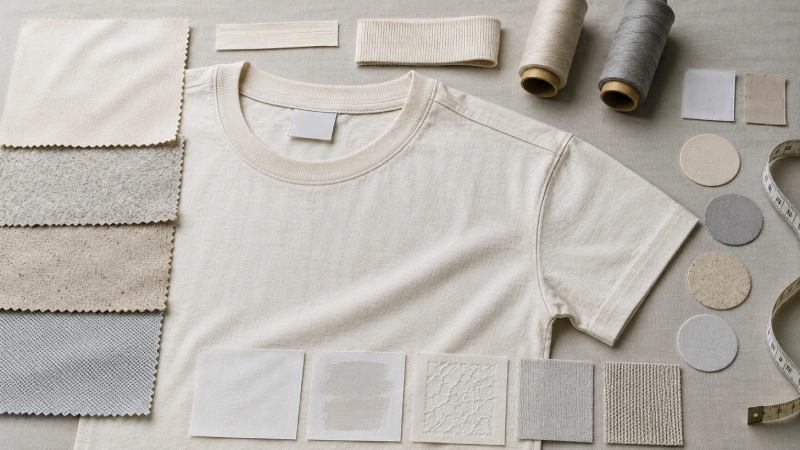
Material choice must match the product’s intended use, decoration process, care requirements, and durability targets.
| Material option | Main advantages | Issues to evaluate | Appropriate use |
|---|---|---|---|
| Organic cotton jersey | Familiar hand feel, broad print compatibility, natural fiber | Certification chain, shrinkage, GSM, pilling | Retail basics, merchandise, lifestyle T-shirts |
| Recycled cotton blend | Uses recovered cotton and may reduce demand for virgin fiber | Shorter fibers, strength, pilling, color consistency | Casual collections and textured products |
| Recycled polyester blend | Durability, moisture management, stretch options | Microfiber release, heat sensitivity, mixed-fiber recycling | Sports, uniforms, performance blends |
| Hemp-cotton blend | Distinctive texture and natural-fiber positioning | Price, softness, supply consistency, shrinkage | Premium lifestyle and natural-material collections |
| Lyocell or modal blend | Softness, drape, smooth surface | Fiber source, pilling, dimensional stability | Lightweight fashion and premium basics |
Material choice must also match the construction.
For a durable T-shirt, inspect the neck-rib composition and recovery, shoulder taping, stitch density, seam stability, fabric skew, and dimensional change after washing. A garment made from certified fiber can still become a poor product if the neckline stretches, the body twists, or the print cracks after normal use.
Brands sourcing custom jersey should include the following in their fabric and material specification:
- exact fiber percentages;
- target GSM and tolerance;
- yarn type;
- knitting structure;
- fabric width;
- color standard;
- shrinkage limit;
- spirality limit;
- pilling requirement;
- colorfastness requirement;
- and intended decoration process.
MOQ, Sampling, and Lead-Time Considerations
A published garment MOQ rarely tells the full story.
A custom T-shirt order can involve several separate minimums:
- sewing MOQ;
- fabric-knitting MOQ;
- custom-dye MOQ;
- printing MOQ;
- embroidery MOQ;
- woven-label MOQ;
- hangtag MOQ;
- and packaging MOQ.
A factory may agree to sew 50 T-shirts but still need to purchase enough custom-dyed fabric for several hundred garments. The unused fabric cost may be charged to the buyer, stored for a repeat order, or spread across a higher unit price.
Sampling should normally progress through the stages appropriate to the project:
- Fabric or swatch approval.
- Proto or development sample.
- Fit sample.
- Size-set sample when grading risk is significant.
- Print or embroidery strike-off.
- Pre-production sample.
- Bulk-production approval.
Do not assume that a publicly stated lead time starts when the inquiry is submitted. Suppliers may calculate production time only after the deposit, fabric confirmation, artwork approval, and pre-production sample sign-off.
Sustainable T-Shirt Sample Inspection Scorecard
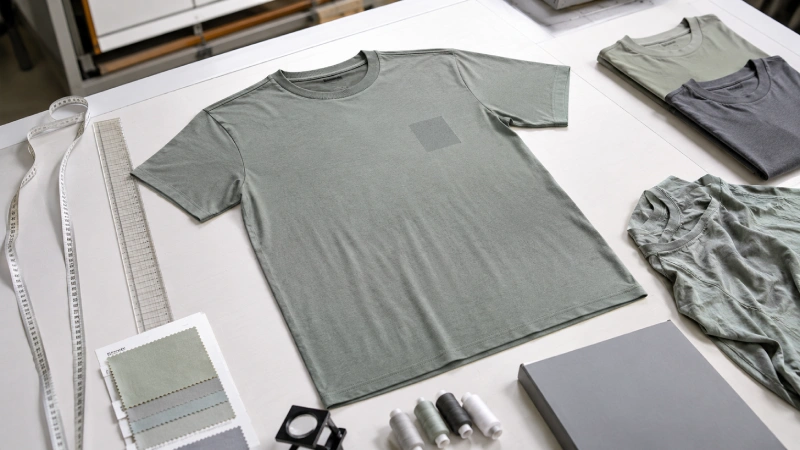
Use a written scorecard rather than approving a sample based only on appearance.
Documentation
- Does the certificate belong to the company or supply-chain stage being discussed?
- Is it current?
- Does its scope cover the quoted material or product?
- Is a transaction certificate required?
- Does the quotation use the same fiber composition as the certificate?
Fabric
- Is the measured GSM within tolerance?
- Does the hand feel match the approved swatch?
- Is the fabric opaque enough?
- Does it pill after testing?
- Does it shrink or twist after washing?
- Is the color consistent between panels?
Construction
- Does the neck rib recover after stretching?
- Are shoulder and side seams aligned?
- Are the measurements within the approved tolerances?
- Is stitch density sufficient?
- Are there puckered seams, skipped stitches, holes, or loose threads?
Decoration
- Does the print crack, bleed, or peel after washing?
- Does embroidery distort the fabric?
- Is there dye migration?
- Are artwork placement and color accurate?
- Does the chosen ink or transfer comply with the project requirements?
The sample should be approved against a specification, not simply signed as “looks good.”
Supplier Red Flags
Be cautious when a supplier:
- displays certification logos but will not provide a certificate number;
- sends an expired certificate;
- provides a certificate belonging to an unrelated trading company;
- says the fabric is organic but cannot explain chain of custody;
- claims OEKO-TEX proves organic content;
- will not identify the actual production factory;
- offers an unusually low custom MOQ without explaining fabric sourcing;
- changes the fiber composition between the quotation and care label;
- refuses to state whether production is subcontracted;
- or cannot provide basic shrinkage, measurement, or wash-test information.
A credible supplier should be able to explain the boundaries of its claims. More marketing language is not a substitute for more evidence.
FAQ
What is the difference between a sustainable blank supplier and a T-shirt manufacturer?
A blank supplier provides finished, standardized garments ready for printing or resale. A custom manufacturer develops garments according to the buyer’s pattern, fabric, measurements, construction, labels, and decoration requirements.
Does GOTS mean a T-shirt is 100% organic cotton?
Not automatically. GOTS permits different labeling categories and covers products meeting specific organic-fiber thresholds and processing requirements. Buyers should check the exact product composition, label grade, certified scope, and chain-of-custody documentation.
Is OEKO-TEX the same as an organic certification?
No. OEKO-TEX STANDARD 100 primarily confirms that a tested textile article meets its harmful-substance criteria. Organic content requires separate evidence from an appropriate organic-fiber certification or chain-of-custody system.
Can a startup order sustainable T-shirts in small quantities?
Yes, especially when using ready-made blanks or selected low-MOQ private-label programs. Fully custom knitting, dyeing, and certification may require larger material quantities even when the garment factory accepts a small sewing order.
Which sustainable T-shirt fabric is easiest to print?
A smooth, stable cotton single jersey is generally compatible with many common print methods, but results also depend on color, surface finish, pretreatment, ink system, curing temperature, and shrinkage. Always approve a print strike-off on the actual production fabric.
What information should I include in an RFQ?
Provide the T-shirt style and fit, target quantity by color and size, fabric composition and GSM, certification requirements, size chart, decoration details, labels, packaging, destination market, testing requirements, target delivery date, and requested shipping term.
Final Buyer Recommendation
Do not begin by asking which company is the most sustainable. Begin by defining what your product and business actually require.
Choose a blank supplier when speed, stock availability, and simple decoration matter more than product exclusivity. Choose a decorated-merchandise specialist when printing, traceability, or fulfillment is the main requirement. Choose a full-package manufacturer when the T-shirt needs a proprietary fit, fabric, color, construction, label, or packaging system.
Before placing an order, compare documentary evidence and physical product performance. Confirm the certificate scope, inspect a washed sample, test the decoration, and make sure every commercial condition is written into the quotation or purchase agreement.
Brands requesting a custom quotation should provide their product type, target quantity, preferred fabric, GSM, size range, printing or embroidery requirements, labels, packaging, destination market, and required delivery date. Seetime’s OEM apparel manufacturing team can then assess fabric sourcing, sampling, and production feasibility without assuming that one manufacturing route fits every project.
Discuss Your Apparel Sourcing Requirements
Whether you're launching a startup clothing brand, expanding a streetwear label, or looking for a reliable OEM apparel manufacturer, speaking directly with an experienced production team can help you avoid costly sourcing mistakes.
Talk With Our Manufacturing TeamRelated Manufacturer Guides