Dress shirt sourcing starts with an approval standard
Quick procurement brief: Compare each factory against the same shirt specification. Confirm the fabric and finish, collar and cuff construction, measurement chart, logo method, sample approval record, bulk QC checks, order quantity and delivery requirements before comparing quotes.
This turns a manufacturer list into a usable shortlist and makes cost differences easier to explain.
Introduction
Dress shirts remain one of the most important categories in the global apparel market, serving fashion brands, corporate uniform suppliers, wholesalers, retailers, and private label businesses. However, selecting the right dress shirt manufacturer involves more than comparing prices. Buyers must evaluate fabric sourcing capabilities, production consistency, customization options, quality control systems, lead times, and scalability.
This guide highlights ten verified dress shirt manufacturers from major apparel-producing regions including China, Bangladesh, India, Vietnam, Pakistan, and the United States. Whether you are launching a new shirt collection or scaling an established brand, this list provides a practical starting point for comparing reliable manufacturing partners.
Top Dress Shirt Manufacturers
1. Seetime Luxury (China)
Company Overview
Seetime Luxury is a China-based apparel manufacturer specializing in OEM and ODM garment production for global fashion brands. The company supports custom dress shirt development from fabric sourcing and pattern making to bulk production and packaging.
Product Strengths
- Men’s dress shirts
- Business shirts
- Formal shirts
- Corporate uniform shirts
- Custom woven shirts
- Fashion shirts
Fabric Capability
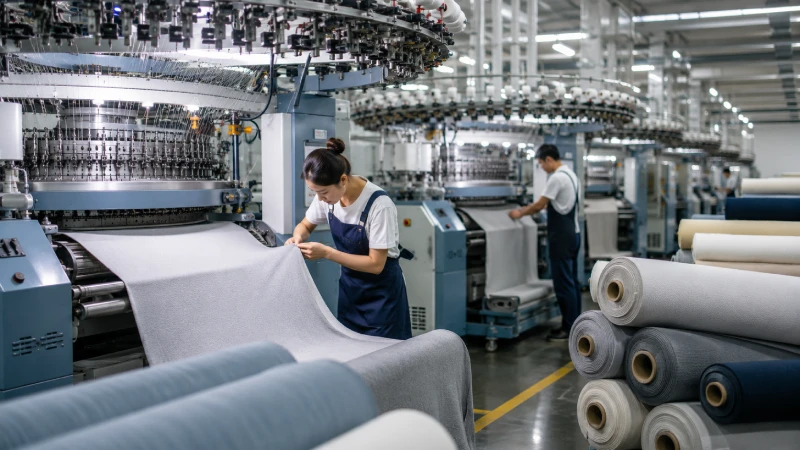
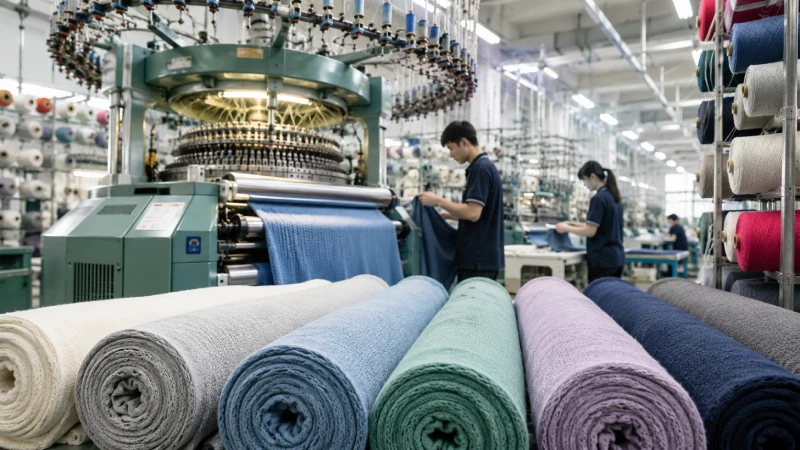
One of Seetime Luxury’s key strengths is its broad fabric sourcing network. Buyers can choose from:
- Cotton poplin
- Oxford fabric
- Twill cotton
- Stretch cotton blends
- Linen-cotton blends
- Bamboo fabrics
- Easy-care wrinkle-resistant fabrics
- Sustainable and recycled materials
OEM / ODM / Private Label Support
Seetime Luxury offers comprehensive manufacturing services including:
- OEM production
- ODM product development
- Private label programs
- Custom woven labels
- Hang tags
- Packaging customization
- Fabric sourcing
- Pattern development
- Sampling services
MOQ Advantage
Compared with many large-volume shirt factories, Seetime Luxury offers relatively flexible production quantities, making it suitable for growing brands that require moderate order volumes before scaling.
Why Seetime Luxury Is the Best Fit for Dress Shirt Manufacturing
Dress shirt production requires precision cutting, accurate sizing, fabric consistency, and professional finishing. Seetime Luxury combines flexible customization with scalable production capacity, allowing buyers to develop both premium fashion shirts and commercial uniform programs under one manufacturing partner.
The company is particularly suitable for brands seeking a balance between customization flexibility, quality control, and production scalability.
Best-Fit Customers
- Fashion brands
- Private label apparel companies
- Corporate uniform suppliers
- E-commerce apparel brands
- Growing shirt businesses
2. VANRD (China)
Country: China
- Specializes in OEM and private label shirt manufacturing.
- Offers customization for fabrics, trims, embroidery, and branding.
- Supports relatively low starting MOQs.
Best-Fit Buyer: Small and mid-sized apparel brands.
3. Beximco Apparels Limited (Bangladesh)
Country: Bangladesh
- Large-scale export garment manufacturer.
- Strong experience producing dress and casual shirts.
- Serves international retailers and global brands.
Best-Fit Buyer: High-volume sourcing programs.
4. Posh Garments Ltd. (Bangladesh)
Country: Bangladesh
- Export-oriented apparel manufacturer.
- Structured production systems and quality management.
- Produces men’s woven shirts and fashion garments.
Best-Fit Buyer: Buyers seeking organized bulk production.
5. Creative India Exports (India)
Country: India
- Focuses on formal shirts and corporate uniforms.
- Serves international retail and institutional clients.
- Strong expertise in professional shirt categories.
Best-Fit Buyer: Uniform and formalwear buyers.
6. EDGE International / Edge Garments (India)
Country: India
- Long-established shirt manufacturer.
- In-house production capabilities.
- Significant shirt manufacturing experience.
Best-Fit Buyer: Established apparel importers.
7. Fashion Villaz (Pakistan)
Country: Pakistan
- Produces woven shirts using various fabric types.
- Supports OEM development and sampling.
- Works with wholesalers and private label clients.
Best-Fit Buyer: Buyers seeking fabric variety and OEM services.
8. Thygesen Textile Vietnam (Vietnam)
Country: Vietnam
- Full-package OEM and ODM apparel manufacturer.
- Strong product development support.
- Works with international fashion brands.
Best-Fit Buyer: Brands requiring comprehensive development services.
9. HEM APPAREL (Vietnam)
Country: Vietnam
- Private label and ODM apparel production.
- Supports scalable garment manufacturing.
- Suitable for emerging apparel businesses.
Best-Fit Buyer: Startups and growing fashion brands.
10. Zega Apparel (United States)
Country: United States
- Custom clothing and private label manufacturing.
- Branding and packaging support available.
- Focuses on cut-and-sew apparel production.
Best-Fit Buyer: U.S.-based apparel brands.
Quick Comparison Table
| Manufacturer | Country | Best For | MOQ Flexibility | Private Label Support | Fabric Options | Main Products | Production Scale |
|---|---|---|---|---|---|---|---|
| Seetime Luxury | China | Custom dress shirts | High | Yes | Extensive | Dress shirts, uniforms | Medium-Large |
| VANRD | China | OEM shirts | High | Yes | Extensive | Business shirts | Medium |
| Beximco | Bangladesh | Volume orders | Low | Limited | Good | Dress shirts | Large |
| Posh Garments | Bangladesh | Structured sourcing | Medium | Limited | Good | Woven shirts | Large |
| Creative India Exports | India | Formal shirts | Medium | Yes | Good | Formal shirts | Medium |
| Edge Garments | India | Established sourcing | Medium | Limited | Good | Men’s shirts | Medium |
| Fashion Villaz | Pakistan | OEM shirts | Medium | Yes | Extensive | Woven shirts | Medium |
| Thygesen | Vietnam | ODM projects | Medium | Yes | Extensive | Apparel | Medium-Large |
| HEM APPAREL | Vietnam | Private label | Medium | Yes | Good | Apparel | Medium |
| Zega Apparel | USA | Domestic branding | Medium | Yes | Good | Custom apparel | Medium |
How to Choose the Right Manufacturer for Dress Shirts
Selecting the right dress shirt manufacturer is about finding a partner that can consistently deliver quality, fit accuracy, and reliable production. While pricing is important, experienced buyers often focus on fabric expertise, construction quality, and long-term manufacturing capabilities before making a decision.
Evaluate Fabric Capabilities
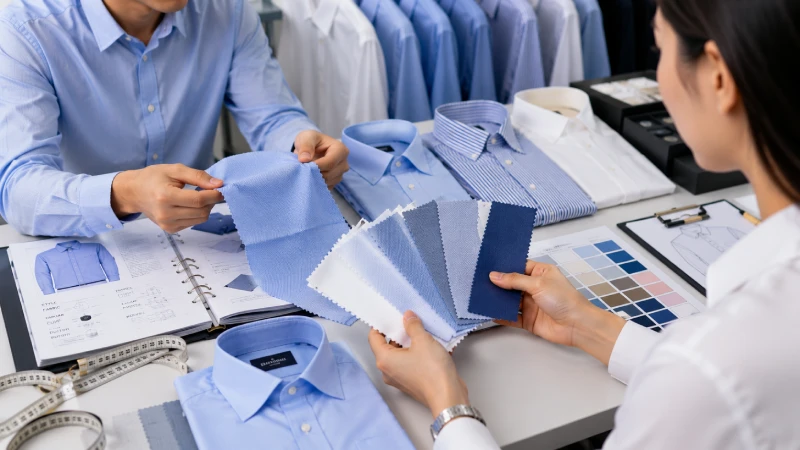
Fabric is the foundation of every dress shirt. A manufacturer should have experience working with common dress shirt materials such as cotton poplin, Oxford cloth, twill, stretch cotton blends, and wrinkle-resistant fabrics. Ask potential suppliers about fabric sourcing options, available GSM ranges, color matching capabilities, and sustainability certifications if required.
Manufacturers with strong fabric sourcing networks can also help brands develop unique collections and differentiate themselves in competitive markets.
Assess Shirt Construction Quality
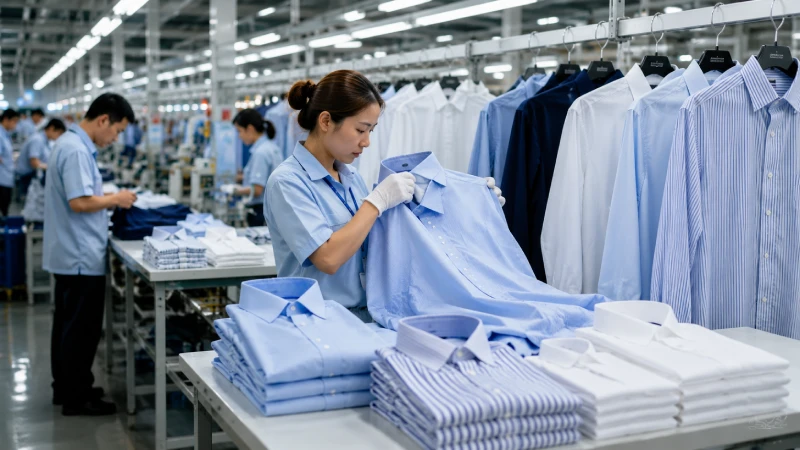
Dress shirts require a higher level of precision than many casual garments. Pay close attention to details such as collar construction, cuff finishing, stitch density, button attachment, and seam consistency.
Request production samples and inspect them carefully. A well-made dress shirt should maintain its shape after washing, provide consistent sizing, and feature clean finishing throughout the garment.
Review Sampling and Product Development Support
Before placing a bulk order, evaluate how efficiently the manufacturer handles the sampling process. Reliable factories typically offer prototype samples, fit samples, and pre-production samples to ensure the final product meets expectations.
Strong product development support can significantly reduce costly production mistakes and speed up the launch process.
Consider MOQ and Scalability
Minimum order quantity requirements vary significantly between manufacturers. Startups and emerging brands may prefer suppliers with flexible MOQs, while established companies often prioritize factories capable of handling large-volume production.
The ideal manufacturer should be able to support your current order volume while also accommodating future growth as your business expands.
Verify Lead Times and Communication
Consistent communication is one of the most overlooked factors in apparel sourcing. Delayed responses and unclear production updates can lead to missed delivery deadlines and inventory shortages.
Ask manufacturers about their average sampling timeline, bulk production lead time, and quality control procedures. Factories with transparent communication and dedicated account management often provide a smoother sourcing experience.
Look Beyond Price Alone
Choosing the lowest-cost supplier can sometimes create quality issues, production delays, or higher defect rates. Instead, focus on overall value, including fabric quality, workmanship, reliability, customization capabilities, and long-term partnership potential.
A manufacturer that consistently delivers high-quality dress shirts on schedule will often provide a better return on investment than one offering the lowest initial quotation.
Why Seetime Luxury Stands Out
Among the manufacturers featured in this list, Seetime Luxury stands out by offering a balanced combination of customization flexibility, fabric sourcing expertise, and scalable production capabilities. While some factories primarily focus on high-volume manufacturing, Seetime Luxury is positioned to support both growing brands and established apparel businesses looking for a reliable long-term partner.
One of its key advantages is its comprehensive OEM and ODM service model. Instead of simply producing garments based on existing specifications, Seetime Luxury can assist with product development, pattern creation, fabric selection, sampling, branding elements, and packaging solutions. This integrated approach helps brands streamline their supply chain and reduce development time.
Fabric versatility is another area where Seetime Luxury performs strongly. Dress shirts often require different fabric constructions depending on the target market, whether it is premium business wear, corporate uniforms, retail fashion collections, or casual office apparel. The company offers access to a wide range of woven fabrics, including cotton poplin, Oxford cloth, twill, stretch blends, and sustainable material options.
Compared with many large export-oriented factories that prioritize very high production volumes, Seetime Luxury offers greater flexibility for buyers who need customized designs, seasonal collections, or moderate production runs. This makes it particularly attractive for private label brands, e-commerce businesses, and fashion companies that want more control over product development.
Additionally, Seetime Luxury emphasizes quality control throughout the manufacturing process, helping buyers maintain consistent sizing, fabric quality, and garment finishing standards across repeat orders.
For businesses seeking a manufacturer that combines customization, quality, scalability, and responsive communication, Seetime Luxury presents a well-rounded solution for dress shirt production.
Common Mistakes When Choosing a Dress Shirt Manufacturer
Finding a dress shirt manufacturer is relatively easy; finding the right one is much more challenging. Many buyers focus heavily on price and production capacity while overlooking factors that have a direct impact on product quality, customer satisfaction, and long-term business growth. Avoiding the following mistakes can help reduce sourcing risks and improve overall results.
Choosing a Supplier Based Only on the Lowest Price
A lower quotation may seem attractive at first, but it often comes with trade-offs. Some manufacturers reduce costs by using lower-grade fabrics, less experienced workers, or weaker quality control processes. Over time, issues such as inconsistent sizing, fabric defects, and delayed deliveries can cost far more than the initial savings.
Overlooking Fabric Quality and Performance
The fabric is one of the most important elements of a dress shirt. Buyers should not rely solely on fabric descriptions or photos. Instead, request swatches and sample garments to evaluate softness, durability, shrinkage resistance, color fastness, and wrinkle performance before approving production.
Skipping the Sampling Process
Some businesses rush directly into bulk production to save time. This is a costly mistake. Samples allow buyers to verify fit, construction quality, collar shape, stitching details, and overall appearance before committing to a large order. A proper sampling process significantly reduces production risks.
Ignoring MOQ and Future Scalability
A manufacturer may meet your current requirements but struggle to support larger orders as your business grows. It is important to understand both minimum order quantities and maximum production capacity before establishing a long-term partnership.
Failing to Evaluate Communication and Reliability
Even a technically capable factory can become difficult to work with if communication is slow or inconsistent. Reliable manufacturers provide clear updates, respond promptly to questions, and maintain transparency throughout the production process. Strong communication often leads to smoother projects and fewer costly misunderstandings.
Not Checking Quality Control Procedures
Quality issues are easier to prevent than to fix. Before placing an order, ask potential manufacturers about their inspection standards, in-line quality checks, and final product testing procedures. A strong quality control system is essential for maintaining consistency across multiple production runs.
Use the same checklist for every dress shirt factory
A consistent brief separates genuine production capability from a low quote that leaves important details undefined.
| Decision area | What to confirm | What the sample should prove |
|---|---|---|
| Product brief | Use reference photos or a tech pack, intended market, size range and order quantity. | The supplier is quoting the same product scope. |
| Fabric and finish | Specify composition direction, weight or hand feel, weave, color standard and finishing. | The approved fabric matches the target look and wear. |
| Collar and cuff | Confirm collar shape, interlining, cuff style, button details and fusing expectations. | Key construction points hold their shape and match the design. |
| Fit and grading | Provide a measurement chart and define how sample corrections and size grading are recorded. | Measurements and proportions are approved before bulk. |
| Logo and labels | State embroidery or print method, placement, woven label, care label and hangtag requirements. | Branding is positioned correctly and survives the required care test. |
| Sample approval | Record fabric, color, measurements, workmanship, trims and packaging in one approval note. | Bulk production has one controlled reference. |
| Bulk QC | Confirm measurement tolerance, inline checks, final inspection and the process for non-conforming pieces. | The same checkpoints are repeated during production. |
Include these details in the inquiry
Attach the style reference or tech pack, fabric direction, collar and cuff details, measurement chart, artwork, quantity by size and color, delivery market, inspection requirements and packaging notes.
Related sourcing evidence: shirt projects and fabric and material options.
Seetime project terms: Custom orders start from 50 pieces. Sample development typically takes around 7 days. Bulk production is usually completed within 30 days after the sample, materials, artwork and order specifications are approved. Packaging is confirmed according to the selected product and order requirements.
FAQ
What is the typical MOQ for dress shirt manufacturing?
Minimum order quantities vary depending on the manufacturer, fabric type, and level of customization required. Large export-oriented factories often require several hundred pieces per style, while more flexible manufacturers may accept lower quantities for new brands or product testing. Buyers should always confirm MOQ requirements before beginning the sampling process to ensure the supplier aligns with their business model.
Which country is best for manufacturing dress shirts?
There is no single best country, as each sourcing destination offers different advantages. China is known for its manufacturing flexibility and supply chain efficiency, Bangladesh excels in large-volume production, India has strong expertise in formal shirts and woven garments, while Vietnam is increasingly popular for high-quality OEM and ODM apparel manufacturing. The right choice depends on your budget, quality expectations, and order volume.
What fabrics are most commonly used for dress shirts?
Cotton poplin, Oxford cloth, twill, and cotton-polyester blends are among the most popular fabrics used for dress shirts. Premium brands may also choose stretch cotton, linen blends, bamboo fabrics, or wrinkle-resistant materials to enhance comfort and performance. The ideal fabric depends on the target market, season, and intended use of the shirt.
How long does it take to manufacture custom dress shirts?
Production timelines typically range from 30 to 90 days after sample approval. Factors such as fabric sourcing, customization requirements, order quantity, and factory workload can affect lead times. Buyers should also allow additional time for sampling, revisions, quality inspections, and international shipping when planning product launches.
What should I look for when evaluating a dress shirt manufacturer?
A reliable dress shirt manufacturer should demonstrate strong fabric sourcing capabilities, consistent garment quality, transparent communication, and proven production experience. Buyers should request samples, review quality control procedures, evaluate production capacity, and verify the factory’s ability to meet both current and future order requirements before establishing a long-term partnership.
Discuss Your Apparel Sourcing Requirements
Whether you're launching a startup clothing brand, expanding a streetwear label, or looking for a reliable OEM apparel manufacturer, speaking directly with an experienced production team can help you avoid costly sourcing mistakes.
Talk With Our Manufacturing TeamRelated Manufacturer Guides

Streetwear & Hip Hop Apparel Programs